
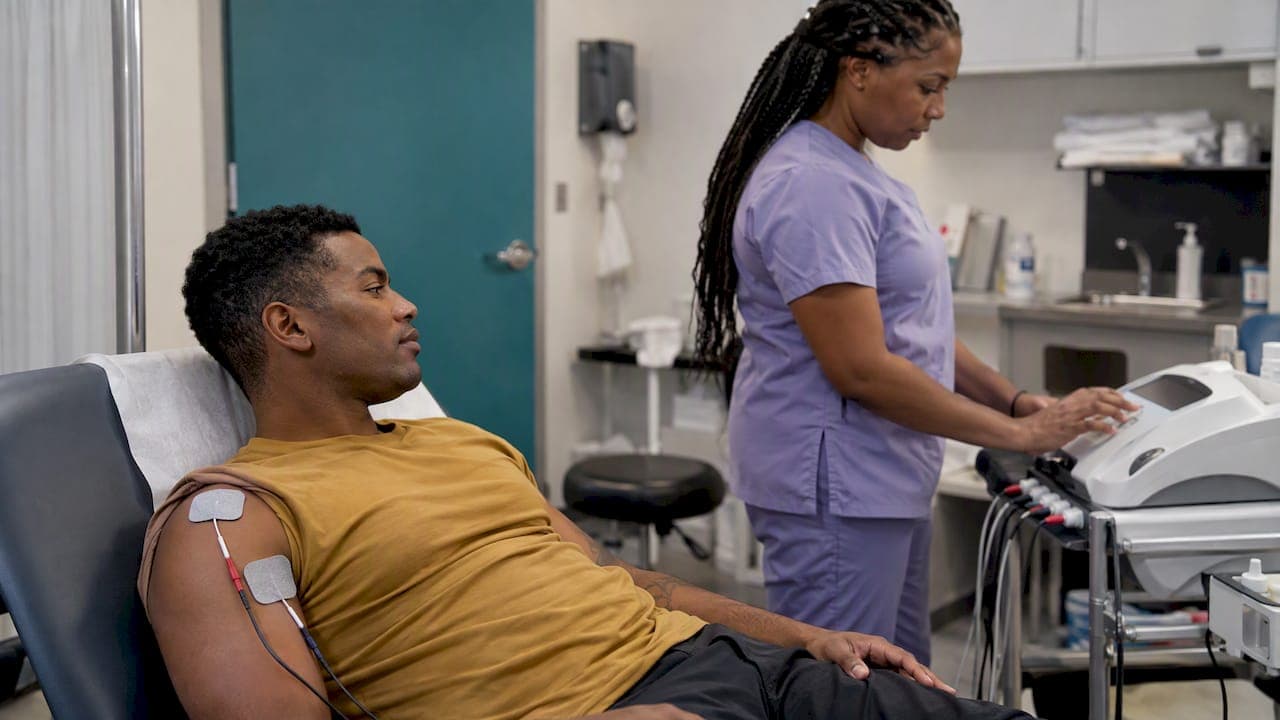
Electrotherapy after a car accident means placing small electrodes on the skin over a sore area and sending gentle electrical pulses through them. Depending on the setting, the current either calms pain signals (TENS) or makes a muscle contract and relax (electrical muscle stimulation, or EMS). It is usually one piece of a larger plan that also includes spinal adjustments, soft-tissue work and movement. A session is short, it should feel like tingling or a rhythmic tapping, and it should never hurt.
This guide explains how the two main types differ, which post-crash symptoms they are used for, what the research says, who should skip it, and what a visit looks like at our North Miami clinic.
TL;DR
- TENS is aimed at pain relief. EMS is aimed at making muscles contract, which helps with spasm, guarding and stiffness.
- Neck and back strain, muscle spasm and soft-tissue soreness are the most common reasons people receive it after a collision.
- It works best alongside other care, not by itself. Guidelines from US physician groups support TENS as an option for acute musculoskeletal pain, with a conditional recommendation.
- Do not use it with a pacemaker or other implanted electronic device, and get weakness, numbness or severe pain evaluated first.
- Spark offers electrical stimulation as part of accident care in North Miami, and chiropractic adjustments are listed at $45.
Table of Contents
- What electrotherapy is, and how TENS and EMS differ
- How electrical stimulation eases pain and spasm
- Post-accident problems it is commonly used for
- What the research says
- What a session looks like
- Safety: who should skip it or get checked first
- Our perspective: why we use it as part of a bigger plan
- What care costs at Spark
- Book an accident evaluation in North Miami
- How to get the most out of your sessions
- FAQ
- Sources
What electrotherapy is, and how TENS and EMS differ
"Electrotherapy" is an umbrella word. In an accident-injury clinic it almost always means one of two things, and the difference matters for what you should expect.
TENS (transcutaneous electrical nerve stimulation) is built for pain control. A review in the medical literature describes TENS and EMS as both using adjustable electrical currents, but TENS is mainly for analgesia and pain modulation, while EMS is designed to elicit muscle contractions for neuromuscular rehabilitation.
EMS (electrical muscle stimulation), sometimes called e-stim or NMES when it targets the nerve-muscle connection, makes the muscle itself work. A critical review explains that neuromuscular electrical stimulation differs from passive modalities because it stimulates muscles to contract. After a crash, muscles around an injured joint often clamp down to protect it. EMS gives them a rhythm of contracting and releasing that many patients find loosens that guarded feeling.
A quick comparison:
| TENS | EMS / e-stim | |
|---|---|---|
| Main goal | Reduce pain | Relax or activate muscle |
| What you feel | Buzzing or tingling | Rhythmic tightening and release |
| Typical use after a crash | Sore neck, back or shoulder | Spasm, stiffness, muscle guarding |
| Often paired with | Adjustments, heat or cold | Adjustments, massage, stretching |
Both are non-invasive. There are no needles, and you stay clothed apart from the area being treated.
How electrical stimulation eases pain and spasm
The science is still being refined, but the leading explanation is straightforward. MedlinePlus lists electrical stimulation among non-drug pain treatments that can change or block pain signals sent to the brain.
For conventional TENS, the pain-science literature describes high-frequency, low-intensity currents of roughly 50 to 100 Hz that stimulate large non-painful nerve fibers and inhibit pain transmission. Think of it as giving the nervous system a competing, harmless signal so the pain message has a harder time getting through.
Muscle spasm is a separate problem. When a collision whips your neck or jolts your lower back, nearby muscles tighten reflexively. That tightness can limit movement and make adjustments or exercises harder to tolerate. Rhythmic stimulation of the muscle is one way clinicians interrupt that cycle so you can move more comfortably and take part in the rest of your care.
Post-accident problems it is commonly used for
Electrotherapy is not a treatment for every injury. It is typically used for the soft-tissue and muscular side of a crash:
- Neck tightness and stiffness after the sudden back-and-forth motion of a rear-end collision.
- Mid and lower back spasm that makes sitting, driving or bending difficult.
- Shoulder and upper back soreness from seat belt loading or gripping the wheel.
- Muscle guarding around a joint that is healing, where surrounding muscles have tightened up.
- Work and slip-and-fall strains, where the mechanism is different but the tight, sore muscle pattern is similar.
It is not a stand-in for imaging or a medical exam. Fractures, disc injuries, concussions and internal injuries need to be ruled out or managed by the right professional, and a good clinic will tell you so up front.
What the research says
Here is a plain reading of the evidence, so your expectations match reality.
In 2020, the American College of Physicians and the American Academy of Family Physicians issued a guideline for acute pain from musculoskeletal injuries other than low back pain. It suggests that clinicians may treat these patients with TENS to reduce pain. The recommendation is conditional and based on low-certainty evidence, which is the guideline's way of saying it is a reasonable option to try rather than a guaranteed fix.
A 2021 appraisal of 169 reviews and 49 meta-analyses in the Journal of Pain Research found that those with sufficient data demonstrated benefit, and the authors recommended TENS as a treatment option. The same authors point out that repeated methodological shortcomings in trials have made it harder to draw firm conclusions.
Why do results vary? A 2023 comparative review notes that protocols, dosing and study populations differ widely between studies. In practice that means the details matter: electrode placement, current type, intensity and how it is combined with other care. A Cochrane review of electrotherapy for neck pain likewise found that the quality of the existing trials was too low to make definitive statements. The takeaway for you is a practical one: choose a clinic that individualizes the settings, tracks how you respond, and combines electrotherapy with hands-on care and movement instead of running the same machine on every patient.

What a session looks like
A typical visit follows a simple pattern.
- Evaluation. The provider reviews how the accident happened, your symptoms and your history, including any implanted devices, skin problems or pregnancy.
- Placement. Small adhesive pads or electrodes go on clean skin around the sore area, such as either side of the spine or over the shoulder.
- Ramp-up. The provider slowly raises the intensity. Research on TENS notes that the best pain relief tends to come from a strong but comfortable, non-painful tingling beneath the electrodes. Tell us if it feels sharp, burning or uncomfortable and we will adjust it.
- Treatment. You rest while the current runs, often combined with heat or cold. Many patients find this the most relaxing part of the visit.
- Next steps. Stimulation is commonly followed by an adjustment, massage, traction or guided movement, when the muscles are looser and easier to work with.
How many visits you need depends on the injury, how long ago the crash was and how you respond. We would rather map this out with you at an exam than promise a number in an article.
Safety: who should skip it or get checked first
Electrotherapy is widely used, but it is not for everyone.
- Implanted devices. Device labeling is clear on this point. One FDA-cleared pain therapy device summary states it should not be used with a cardiac pacemaker, implanted defibrillator or other implanted metallic or electronic device, because of the risk of shock, burns or interference. If you have one, tell your provider before anything is placed on your body.
- Skin and placement. Pads should not go over broken or irritated skin, and your provider will avoid areas such as the front of the neck.
- Pregnancy, seizure disorders and heart conditions. Ask your medical doctor before starting, and tell the clinic at intake.
- Warning signs. Sudden weakness, spreading numbness, loss of bladder or bowel control, severe headache or confusion after a crash need urgent medical care, not a stimulation session. MedlinePlus, for example, advises that anyone whose arm feels weak right after a sudden shoulder injury should seek medical evaluation as soon as possible.
Never start with a home device on a fresh crash injury without an exam. A first-time user benefits from an experienced practitioner setting it up, and a professional can tell you whether stimulation is appropriate at all.
Our perspective: why we use it as part of a bigger plan
We have spent more than 20 years treating people hurt in collisions, and what we see is that pain after a crash is rarely one problem. A stiff neck is joint restriction, tight muscle and an irritated nervous system all at once. Treating only one of those usually leaves the others in charge.

That is why electrical stimulation sits next to our other tools instead of replacing them. Stimulation calms the guarding, an adjustment restores motion to a restricted segment, and therapies such as ultrasound, traction and massage address the surrounding tissue. Patients who feel less pain and less tightness tend to move more freely, and moving freely is what recovery requires.
We also believe accident care should be reachable. We offer support in English, Spanish and Creole, and we arrange Uber Health transport in North Miami for patients who need a ride. We document injuries thoroughly, which matters if you are dealing with an insurance claim, and we work with insurance billing where it applies. Ask our front desk what your plan covers before your first visit.
— Spark
What care costs at Spark
Price should not be a mystery after an accident, so here is what we publish.
- Chiropractic adjustment: $45 per visit.
- Shockwave therapy: $75 per session.
- Monthly wellness plans: Essential at $149 per month, Performance at $249 per month and Elite at $399 per month.
- Electrical stimulation, ultrasound, massage, traction and decompression, and auto accident evaluation: no published price. Call us for details.
Prices are as listed on our site and we encourage you to check the pricing page for the current numbers.
Book an accident evaluation in North Miami
If you were hurt in a crash, a fall or a work incident, the sooner someone examines you and documents what is going on, the better your options. At Spark we start with an evaluation, explain what we find in plain language, and build a plan that may include electrical stimulation, adjustments and other therapies. You can see everything we offer on our services page, or start with a chiropractic adjustment if your main goal is relief now.

Bring any paperwork from the accident, a list of your symptoms and a list of medications. Tell us about any implanted devices. If transportation is the obstacle, ask about Uber Health when you book.
How to get the most out of your sessions
A few habits make electrotherapy more effective, whatever clinic you choose.
- Start early. Muscle guarding and stiffness tend to settle in when you avoid moving. Early evaluation gives you a plan before bad habits form.
- Describe what you feel in specifics. "Sharp pain when I turn left while parking" helps more than "my neck hurts". It guides electrode placement and the rest of your plan.
- Speak up about intensity. The goal is a comfortable, strong tingle or contraction, not pain.
- Keep moving gently. Short walks and the stretches your provider gives you matter as much as the machine.
- Track your progress. Note how long you can sit, drive or sleep comfortably. Those markers show whether the plan is working and support your documentation.
- Show up consistently. A plan works when it is followed through. If scheduling or transport gets in the way, tell us so we can adjust.
Chiropractor, physical therapist or medical doctor?
All three can be part of recovery. A medical doctor or emergency department rules out serious injury, orders imaging when needed and handles medication questions. A chiropractor focuses on spinal and joint motion and soft-tissue care. A physical therapist focuses on structured rehabilitation and exercise. Many patients use more than one, and a good clinic coordinates instead of competing. If your symptoms suggest something beyond soft tissue, we will refer you.
FAQ
Does electrotherapy hurt?
It should not. Most people feel tingling, buzzing or a rhythmic tightening of the muscle. If the sensation turns sharp, burning or uncomfortable, tell your provider right away, because the intensity can be lowered or the pads repositioned.
How soon after a car accident can I have electrotherapy?
That depends on your injuries. Get checked first, especially if you have severe pain, numbness, weakness, headache or dizziness. After an exam rules out anything urgent, a provider can decide whether stimulation suits your stage of healing.
What do chiropractors do after a car accident?
We evaluate your spine and soft tissues, document your injuries, and build a care plan. That may include gentle adjustments, electrical stimulation, ultrasound, heat or cold, traction, massage and home exercises. We refer you for imaging or medical care when your symptoms call for it.
Is electrotherapy safe for everyone?
No. People with a pacemaker, implanted defibrillator or other implanted electronic or metallic device should not receive it, and those who are pregnant or have seizure disorders or heart conditions should ask their doctor first. Always share your full history at intake.
Can I use a TENS unit at home?
Home units exist, but the settings and placement matter, and a fresh crash injury should be examined first. Ask your provider whether a home device suits you and have them show you how to use it.
Sources
- Latest advancements in transcutaneous electrical nerve stimulation (PMC)
- Neuromuscular electrical stimulation critical review (PMC)
- Non-Drug Pain Management, MedlinePlus
- TENS: mechanisms and clinical use (PMC)
- ACP and AAFP guideline on acute musculoskeletal pain, 2020
- Does TENS reduce the intensity of acute and chronic pain? (PMC)
- Do electrical stimulation devices reduce pain? (PMC)
- Electrotherapy for neck pain, Cochrane
- FDA 510(k) summary for a pain therapy device
- Rotator Cuff Injuries, MedlinePlus