

Most people think a chiropractor just "cracks your back" and sends you home. That picture misses almost everything. Chiropractors are trained musculoskeletal specialists who assess, diagnose, and manage a wide range of injuries, from whiplash after a rear-end collision on Biscayne Boulevard to a slip-and-fall at a North Miami grocery store. They coordinate with medical doctors and physical therapists, order imaging when needed, and build recovery plans tailored to you. If you have been putting off care because you are unsure what a chiropractor actually does, this article walks you through the real scope, the science, and the practical steps to get the most from your recovery.
Table of Contents
- Why local chiropractors matter after accidents and falls
- Core methods and how chiropractic care works
- Evidence: What science says about chiropractic effectiveness
- Getting the most from your chiropractic care
- A fresh perspective: The realities of chiropractic care most people miss
- Find the right chiropractic care for you
- Frequently asked questions
Key Takeaways
| Point | Details |
|---|---|
| Local chiropractors provide frontline care | They help with recovery from accidents, slips, and musculoskeletal pain before referring to other providers if needed. |
| Evidence supports short-term benefit | Research shows chiropractic care helps most for pain and disability in the early phase of recovery. |
| Multimodal approach works best | Chiropractic care combined with exercise and self-management yields better outcomes than one therapy alone. |
| Know limits and risks | Most side effects are mild, but it's important to be evaluated for underlying issues that need medical referral. |
Why local chiropractors matter after accidents and falls
When a car accident or a bad fall happens, the first question most people ask is: "Should I go to the ER or just wait it out?" There is a third option that often gets overlooked. A local chiropractor can serve as your first-contact provider for the kind of soft tissue and musculoskeletal injuries that emergency rooms are not set up to manage long-term.
Think about what typically happens after a rear-end collision. Your neck snaps forward and back. You feel stiff and sore, but nothing is visibly broken. The ER clears you for fractures and sends you home with pain medication. Two weeks later, you are still in pain. That gap, between "nothing is broken" and "I feel fine," is exactly where chiropractic chiropractic injury care fits in.
Here are the most common scenarios where a North Miami chiropractor can step in right away:
- Rear-end collisions causing whiplash or neck strain
- Slip-and-fall accidents resulting in low back pain or hip misalignment
- Sports mishaps like a tackle or awkward landing that strains the spine
- Work-related injuries involving repetitive strain or a sudden awkward lift
- Pedestrian or cyclist accidents with soft tissue impact
Chiropractors are especially effective for Grades I-III whiplash and soft tissue injuries common in auto accidents and slips. They complement physical therapy and medical care and refer out when red flags appear.
"The right chiropractor does not just treat your pain. They act as a navigator, helping you understand what is wrong, what needs immediate medical attention, and what can be managed conservatively."
Knowing when to refer is just as important as knowing how to treat. If you show signs of a fracture, significant neurological deficits like numbness or weakness spreading into your limbs, or a Grade IV whiplash injury, a good chiropractor will send you to the right specialist immediately. That kind of clinical judgment is what separates a thorough provider from one who simply adjusts everyone the same way.
Coordination matters too. Many patients in North Miami are seeing both a chiropractor and a physical therapist at the same time, and that is often the smartest approach. Shared notes, aligned goals, and consistent communication between providers lead to faster, more complete recovery.
Core methods and how chiropractic care works
Walking into a chiropractic clinic for the first time can feel uncertain if you do not know what to expect. The process is more structured than most people realize.
Here is a typical care flow from your first visit to discharge:
- Intake and history — You describe how the injury happened, your symptoms, and your health background.
- Physical and orthopedic exam — The chiropractor tests your range of motion, reflexes, posture, and specific orthopedic markers.
- Imaging if needed — X-rays or an MRI referral may be ordered to rule out fractures or disc issues.
- Treatment plan — A schedule is set, often 2-3 visits per week tapering as you improve.
- Manual interventions — Spinal adjustments, mobilization, and soft tissue work begin.
- Adjunctive therapies — Ultrasound, electrical stimulation, or heat may be added.
- Home exercise program — You receive specific stretches and strengthening moves to do between visits.
- Outcome measurement and discharge — Progress is tracked with tools like the Neck Disability Index, and care ends when goals are met.
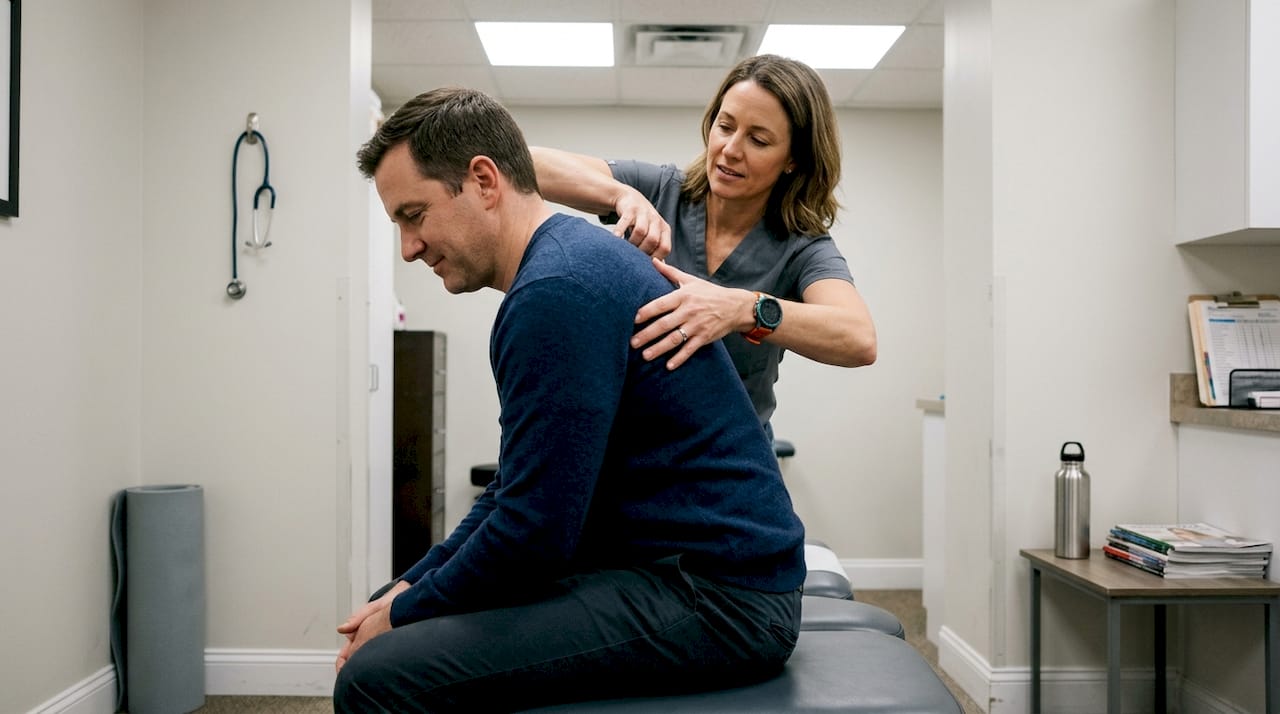
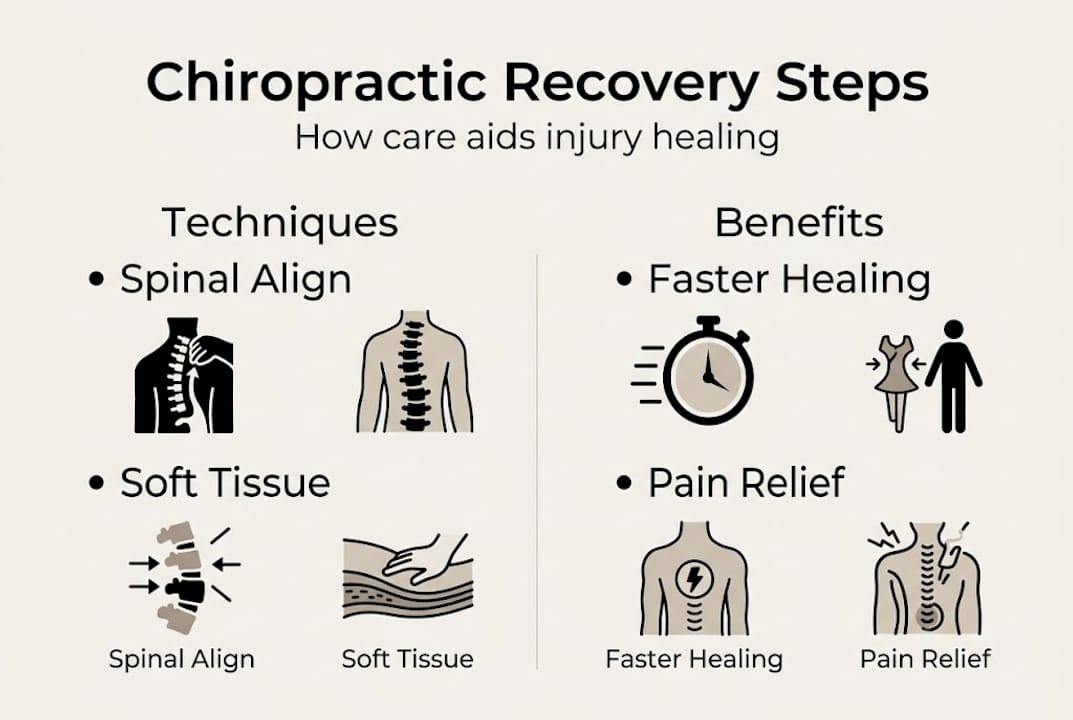
The core chiropractic methodologies include spinal manipulation, soft tissue therapy like myofascial release, adjunctive therapies, rehabilitative exercises, and progress tracking. No single tool works for every patient, which is why experienced chiropractors combine methods based on what your body actually needs.
| Technique | What it does | Best used for |
|---|---|---|
| Spinal manipulation | Restores joint motion, reduces nerve irritation | Neck and back pain, whiplash |
| Myofascial release | Breaks up muscle tension and scar tissue | Soft tissue strains, chronic tightness |
| Electrical stimulation | Reduces pain signals and muscle spasm | Acute injury, post-accident soreness |
| Rehabilitative exercise | Rebuilds strength and stability | All injury recovery stages |
Pro Tip: Before your first visit, write down three specific things: where your pain is, what makes it worse, and what you cannot do because of it. This helps your chiropractor build a more accurate treatment plan from day one and saves time during the intake process.
Knowing what to expect from chiropractic visits helps you show up prepared, ask better questions, and stay engaged in your own recovery. That engagement is not optional. It is one of the strongest predictors of a good outcome.
Evidence: What science says about chiropractic effectiveness
Skepticism about chiropractic is healthy, and the research gives you a solid foundation to evaluate it honestly. The evidence is neither a blanket endorsement nor a dismissal. It is nuanced, and that nuance matters for your decisions.
Here is what the data actually shows:
- Short-term pain relief is well-supported. Spinal manipulation provides a small but meaningful pain reduction of about 4 points on a 100-point scale for chronic low back pain compared to other therapies.
- Disability improvement is measurable in the short term for both neck and low back conditions.
- Cost-effectiveness is strong for acute neck pain, with an ICER under $50,000 per QALY, which is within the accepted threshold for cost-effective care.
- Guidelines recommend spinal manipulation combined with exercise for neck pain and as a frontline option for low back pain.
- Long-term evidence is weaker. Most studies show benefits fading at 6 to 12 months without ongoing self-management.
- Placebo and contextual effects may contribute to perceived benefits, which is why high-quality clinical trials matter more than clinic testimonials.
Risks are generally low. Mild muscle soreness after an adjustment is the most common side effect. Serious adverse events are rare but do exist, which is why a thorough intake and screening process is essential before any hands-on treatment begins.
For comparison, physical therapy and home exercise programs show similar short-term outcomes for many spinal conditions. The advantage of chiropractic is often speed of access and the hands-on nature of care that some patients respond to better. The honest answer is that for many North Miami residents recovering from chiropractic research reviews injuries, the best outcomes come from combining approaches rather than choosing just one.
The takeaway is not that chiropractic works for everything. It is that for the right conditions, with the right provider, it is a clinically sound and cost-effective part of your recovery.
Getting the most from your chiropractic care
Knowing the evidence is one thing. Putting it to work in your actual recovery is another. Here is how to get the most out of every visit.
Be an active participant, not a passive patient. The research is clear that integrating exercise and self-management with chiropractic care produces better long-term outcomes than hands-on treatment alone. Do your home exercises. They are not optional extras.
Here are the most important steps to protect your recovery:
- Set clear goals with your chiropractor — Ask specifically: "What does success look like at four weeks?" A good provider will have a measurable answer.
- Track your own progress — Keep a simple pain and function journal. Note what improved, what did not, and what changed after each visit.
- Know when to escalate — If you develop new numbness, weakness, or bladder or bowel changes, stop chiropractic care and see a medical doctor immediately.
- Avoid overreliance — Chiropractic is not meant to be a lifelong maintenance program for most patients. If you are not improving after 6 to 8 visits, ask why and consider a second opinion.
- Communicate with all your providers — If you are seeing a local chiropractic provider alongside a physical therapist or physician, make sure they are sharing information. Fragmented care is one of the biggest barriers to recovery.
Pro Tip: Ask your chiropractor to explain the goal of each treatment technique they use. If they cannot give you a clear, plain-language answer, that is a signal to ask more questions or seek a second opinion. Transparency is a marker of a trustworthy provider.
Finally, do not ignore the lifestyle factors. Sleep, hydration, stress levels, and movement habits outside the clinic all affect how fast your tissues heal. Your chiropractor can only do so much in a 30-minute visit.
A fresh perspective: The realities of chiropractic care most people miss
Here is something most articles will not tell you. The patients who recover fastest are rarely the ones who show up, get adjusted, and leave. They are the ones who treat chiropractic as one piece of a larger recovery puzzle.
We have seen this pattern repeatedly in North Miami. Someone comes in after a car accident, gets significant short-term relief, and then stops coming once the pain fades. Six months later, the stiffness is back because the underlying muscle weakness was never addressed. Chiropractic reduced the pain. Exercise and self-management were supposed to fix the root cause. That second step got skipped.
The realities of chiropractic care that most people miss is this: the evidence is not all or nothing. It supports chiropractic strongly for certain conditions and weakly for others. The provider's experience, communication style, and willingness to refer out when needed matter as much as the technique itself. Skepticism is smart. But dismissing chiropractic entirely because of outdated stereotypes means missing a clinically valid, affordable tool for recovery. Choose your provider carefully, stay engaged in your own healing, and treat the process as a partnership.
Find the right chiropractic care for you
If you are dealing with pain after a car accident, a slip and fall, or a nagging musculoskeletal injury in North Miami, the next step does not have to be complicated.

Spark Chiropractic has over 20 years of experience helping local residents recover from exactly these kinds of injuries, with evidence-based care, advanced equipment, and treatment plans built around your specific situation. Whether or not you have insurance, affordable chiropractic care is available with transparent pricing and no surprises. Recovery starts with one visit. Reach out today to schedule your intake and take the first real step toward feeling like yourself again.
Frequently asked questions
What injuries can chiropractors treat after a car accident?
Chiropractors commonly treat whiplash, soft tissue strains, and musculoskeletal pain from car accidents but refer out for suspected fractures or neurological injuries.
Is chiropractic care covered by insurance for accident recovery?
Most insurance plans cover chiropractic care for accident-related musculoskeletal injuries, but coverage details vary so always check with your provider before your first visit.
How soon after an injury should I see a chiropractor?
Visiting a chiropractor within a few days of an accident may help speed recovery by addressing acute pain early before compensatory movement patterns set in.
Are there any risks to chiropractic care?
Risks are generally low and most adverse events are mild soreness; serious effects are rare but proper screening before treatment is essential.
Can chiropractic care replace medical treatment after accidents?
Chiropractic is a valuable part of musculoskeletal recovery but not a substitute for emergency medical or surgical treatment when those are needed.