

After an auto accident or slip and fall, your body is dealing with more than just pain. Inflammation, muscle tension, and hidden soft tissue injuries can quietly worsen if you wait too long to seek care. Delaying chiropractic treatment increases the risk of chronic pain and higher long-term healthcare costs. The good news is that walking into your first chiropractic appointment fully prepared can make a real difference in how fast and how well you recover. This guide walks you through exactly what to bring, how to document your symptoms, how to prepare your body and mindset, and what to expect when you arrive.
Table of Contents
- What to bring to your first chiropractic appointment
- How to document your symptoms and history
- Preparing your body and mindset for the visit
- What to expect during your first chiropractic evaluation
- A better first visit: What most articles don't tell you
- Get expert chiropractic care in North Miami
- Frequently asked questions
Key Takeaways
| Point | Details |
|---|---|
| Bring required documents | Having all paperwork and medical records ensures a smoother initial chiropractic evaluation. |
| Track your symptoms | A clear record of symptoms and history leads to more effective and targeted care. |
| Prepare physically and mentally | Rest, hydration, comfortable clothes, and the right expectations improve your first visit outcomes. |
| Early care is critical | Prompt chiropractic care after an injury can prevent chronic pain and speed recovery. |
What to bring to your first chiropractic appointment
Knowing exactly what to bring can prevent unnecessary stress and help your chiropractor understand your situation from the very first minute. Think of it like showing up to a job interview. The more prepared you are, the better the outcome.
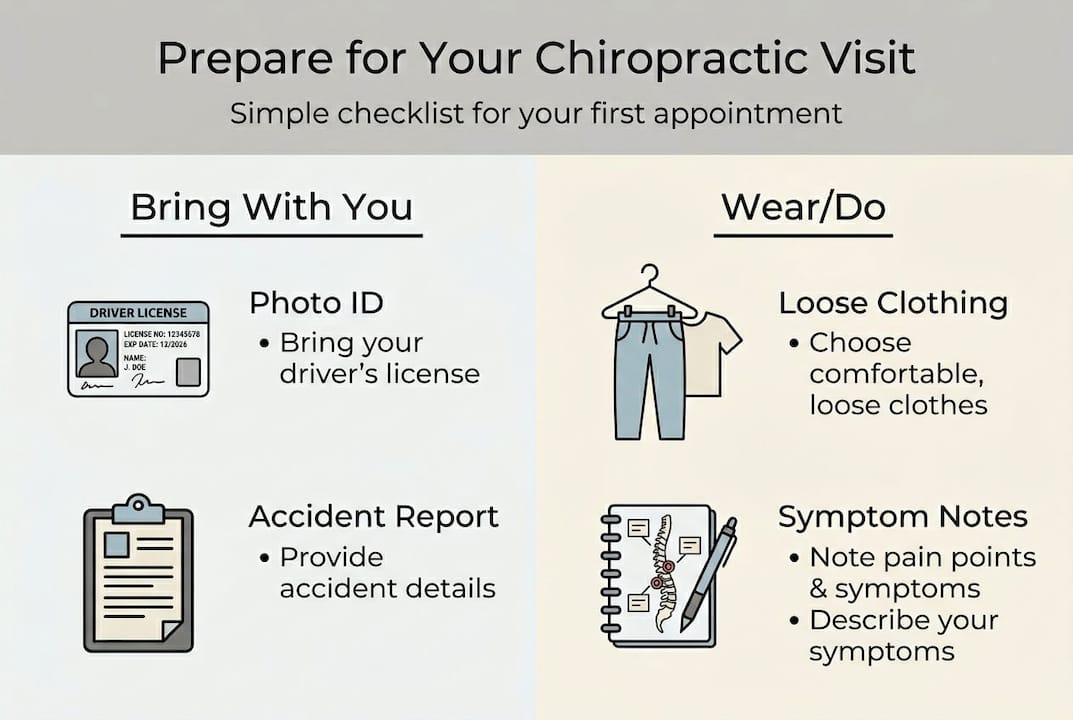
Essential documents to bring:
- Government-issued photo ID
- Health insurance card (if applicable)
- Police or accident report from the incident
- Any existing medical records related to your injury
- Imaging results such as X-rays or MRI scans if you have them
- A list of current medications and supplements
- Contact information for your attorney or insurance adjuster if relevant
Detailed documentation and symptom notes directly improve the accuracy of chiropractic evaluations, which means better treatment decisions from day one. You can also review chiropractic insights to understand what kind of information is most useful before your visit.
Beyond paperwork, think about what you wear. Loose, comfortable clothing allows the chiropractor to assess your posture, range of motion, and areas of tenderness without restriction. Avoid tight jeans, belts, or anything that limits movement around your spine, hips, or shoulders.
If your mobility is significantly affected, bring a trusted friend or family member. They can help you move around the office, remember information the chiropractor shares, and provide a second set of ears when you're in pain and potentially overwhelmed.
Quick-reference checklist:
| Item | Why it matters |
|---|---|
| Photo ID | Required for patient intake |
| Insurance card | Speeds up billing and coverage verification |
| Accident report | Establishes timeline and mechanism of injury |
| Medical records | Prevents duplicate testing and informs diagnosis |
| Symptom journal | Helps chiropractor understand pain patterns |
| Comfortable clothing | Allows full physical examination |
| Support person | Assists with mobility and information retention |
Pro Tip: Start a simple notes app entry on your phone the day of your accident. Log your pain levels, sleep quality, and any new symptoms daily. This becomes your symptom journal and is one of the most valuable tools you can hand your chiropractor.
How to document your symptoms and history
Once you have your materials in order, effective communication of your condition is next. The way you describe your symptoms can directly shape your diagnosis and treatment plan.
Start by tracking your symptoms systematically. For each symptom, record the following:
- Date and time the symptom first appeared or worsened
- Location on your body where you feel pain, numbness, or stiffness
- Severity on a scale of 1 to 10, where 1 is barely noticeable and 10 is unbearable
- Triggers such as sitting, turning your head, or lying down
- Relief factors like heat, ice, rest, or over-the-counter medication
- Duration of each episode
Clear, early symptom reporting is one of the most effective ways to prevent the development of chronic pain and allow for timely, targeted care. This is especially true for whiplash, which often does not produce obvious symptoms immediately after impact.
Also document your full health history. Include any prior injuries to the same area, previous surgeries, existing conditions like arthritis or disc disease, and all current medications. This context helps your chiropractor avoid techniques that might aggravate a pre-existing condition.
For the accident itself, write down everything you remember. The direction of impact, your body position at the time, whether you braced for impact, and any immediate symptoms you noticed. This is important not only for your care but also for any insurance or legal processes that may follow.
"The more specific your symptom history, the less guesswork your chiropractor has to do. Precision in reporting equals precision in treatment."
Pro Tip: Use a simple scale consistently. If you rate your neck pain as a 7 on Monday and a 4 on Thursday, that progression tells your chiropractor something meaningful. Inconsistent descriptions make it harder to track real improvement. Check out whiplash recovery tips for more guidance on tracking post-accident symptoms.
Preparing your body and mindset for the visit
Documenting your symptoms is half the battle. Preparing both your body and mindset sets you up for long-term healing and makes your first session more productive.

Physically, a few small habits make a big difference. Drink plenty of water before your appointment. Hydration keeps your spinal discs and soft tissues more pliable, which can make adjustments more comfortable and effective. Eat a light meal beforehand so you are not lightheaded or distracted by hunger during the examination.
Avoid strenuous exercise or heavy lifting on the day of your appointment. Your body needs to be in a relatively neutral state so the chiropractor can accurately assess your baseline. Arriving tense from a morning workout can skew the physical exam.
Entering care with realistic expectations and proper preparation measurably improves patient satisfaction and treatment outcomes. Many people expect immediate relief after one session. In reality, recovery from accident injuries often takes multiple visits over several weeks. Understanding this upfront reduces frustration and helps you stay committed to the process.
Dos and don'ts before your first visit:
- Do drink at least 16 ounces of water before your appointment
- Do eat a light snack or small meal within two hours of your visit
- Do wear loose, comfortable clothing
- Do arrive 15 minutes early to complete intake forms
- Don't schedule intense physical activity right after your appointment
- Don't take strong pain medication immediately before the visit, as it may mask symptoms
- Don't assume one visit will fix everything
Mindset matters too. You may feel anxious about being touched in areas that are already painful. That is completely normal. Communicating openly with your chiropractor about your comfort level allows them to adjust their approach. You are always in control of the session. Review first visit preparation to understand what your care options look like before you walk in.
Pro Tip: Write down your top three goals before your visit. Whether it is sleeping through the night, returning to work, or being able to drive again, sharing these goals gives your chiropractor a clear target and helps personalize your care plan.
What to expect during your first chiropractic evaluation
You have prepared. Now here is what really happens in the office on day one.
The visit typically starts with check-in and intake paperwork. Even if you brought documents, you will likely fill out forms covering your health history, the nature of your accident, and your current symptoms. This usually takes 10 to 15 minutes.
Next, the chiropractor will review your history and ask follow-up questions. Be honest and thorough. Then comes the physical examination, which may include:
- Posture and spinal alignment assessment
- Range of motion testing for your neck, back, and affected joints
- Orthopedic tests to identify specific injury patterns
- Neurological checks such as reflexes and sensation testing
- Palpation, which means the chiropractor uses their hands to feel for muscle tension, spasms, and joint restrictions
| Evaluation method | What it identifies |
|---|---|
| Manual palpation | Muscle tension, joint fixation, soft tissue damage |
| Range of motion testing | Functional limitations and pain triggers |
| Orthopedic tests | Specific injury patterns like disc herniation or ligament strain |
| Imaging referral (if needed) | Fractures, structural damage, or advanced disc issues |
Early chiropractic evaluation improves outcomes and can significantly reduce long-term healthcare costs. After the exam, your chiropractor will explain their findings and recommend a care plan.
"Your first visit is a two-way conversation. The chiropractor is gathering information, and so should you."
Questions to ask at your first visit:
- What specific injuries do you believe I have?
- What does my treatment plan look like and how long will it take?
- What should I do and avoid at home between visits?
- Will you coordinate with my primary care doctor or specialist?
- What signs should prompt me to contact you between appointments?
Do not worry about manipulation on day one. Many chiropractors use the first visit purely for assessment. If any adjustment is performed, it will be gentle and targeted. Learn more about the team at Spark Chiropractic who specialize in exactly these types of accident-related evaluations.
A better first visit: What most articles don't tell you
Most guides focus on paperwork and logistics. But there is an emotional side to your first chiropractic visit that rarely gets discussed, and it matters just as much.
Auto accidents and falls are traumatic events. Even if you feel "fine" emotionally, your nervous system has been through a shock. Arriving at your appointment carrying anxiety, fear, or even anger about the accident is completely normal. Acknowledging that to your chiropractor is not weakness. It is useful clinical information. Stress and emotional tension directly affect muscle tone and pain perception.
Another overlooked factor is the value of coordinated care. Chiropractic works best when it is part of a broader recovery plan. If you are also seeing a physical therapist, orthopedic specialist, or primary care physician, let your chiropractor know. Ask directly whether they can coordinate with those providers. A team-based approach consistently produces better patient outcomes than any single provider working in isolation.
Finally, bring an advocate. A trusted friend or family member who attends your visit can ask questions you forget, remember details you miss, and help you feel less alone in a clinical setting. That emotional support is not a small thing. It can genuinely change the quality of care you receive.
Get expert chiropractic care in North Miami
Now that you know how to prepare, choosing the right local provider ensures a comfortable and effective healing journey. At Spark Chiropractic in North Miami, we have over 20 years of experience helping accident victims recover from whiplash, back injuries, and soft tissue damage. We understand the physical and emotional toll these events take, and we build personalized care plans designed around your specific injuries and goals.

We also offer affordable chiropractic care with flexible options for patients with or without insurance. You should not have to choose between your health and your budget. Whether you were in a car accident last week or a slip and fall last month, our team is ready to help you heal the right way.
Frequently asked questions
Why is it important to prepare for a chiropractic visit after an accident?
Preparation helps your chiropractor make an accurate diagnosis faster, which speeds recovery and reduces the risk of chronic pain. Early preparation and care is directly linked to better long-term outcomes.
What clothes should I wear to my chiropractic appointment?
Wear comfortable, loose-fitting clothes that allow the chiropractor to assess your posture and perform a physical examination without restriction.
How soon after an auto accident or fall should I see a chiropractor?
Seek care as soon as possible, ideally within days of the incident. Delaying care increases the risk of chronic pain and limits how effective treatment can be.
What questions should I ask at my first chiropractic visit?
Ask about your specific diagnosis, what your treatment plan involves, how long recovery will take, and what activities to avoid between visits.
Do I need to bring my accident report or imaging to the visit?
Yes, bringing all relevant documents including accident reports and any imaging helps your chiropractor build the most accurate care plan. Detailed records improve the quality and accuracy of your evaluation.