

No single app replaces Instagram perfectly. The platforms people are actually switching to in 2026 each solve a different piece of the puzzle, and the smartest move is picking two or three that match what you actually want from social media.
Here is a quick look at the strongest options:
- Pixelfed — Ad-free, open-source, chronological feed. Best for privacy-first users who miss what Instagram used to feel like.
- BeReal — One spontaneous daily photo, front and rear cameras simultaneously. Best for authentic, low-pressure sharing.
- Flickr — Long-running photography community with portfolio hosting and licensing. Best for serious photographers.
- VSCO — Quality editing tools and a curated aesthetic community. Best for photographers who care about visual style.
- Pinterest — Long-term content discovery and inspiration boards. Best for creators who want posts to keep driving traffic for years.
- TikTok — Short-form video with 1.99 billion monthly active users. Best for organic reach and trend-based growth.
- Bluesky + Flashes/Pinksky — Decentralized network with photo-first client apps. Best for users who want open-protocol social media.
- Behance — Adobe-owned portfolio platform with unlimited free project sharing. Best for creative professionals.
- 500px — Photography marketplace and community. Best for photographers seeking licensing income.
- Tumblr — Creative blogging with active niche communities. Best for varied content formats and subcultures.
- Glass — Premium photography-focused community. Best for enthusiasts who want quality feedback.
- Vero — Curated feeds with creator-friendly controls. Best for creators tired of noisy algorithmic timelines.
- LinkedIn — Professional networking with content sharing. Best for B2B creators and thought leaders.
What makes each Instagram alternative worth your time?
The platforms above are not interchangeable. Each one has a distinct audience, content culture, and set of trade-offs worth understanding before you commit time to building a presence there.
| Platform | Best For | Privacy / Data | Creator Tools | Mobile App |
|---|---|---|---|---|
| Pixelfed | Privacy-first photo sharing | Collects no personal data; ad-free | Chronological feed, stories, DMs | iOS and Android |
| BeReal | Authentic daily sharing | No ad targeting | Minimal; spontaneous format | iOS and Android |
| Flickr | Photography portfolios | Standard data collection | Licensing, groups, stats | iOS and Android |
| VSCO | Aesthetic photo editing | Limited ad exposure | Editing presets, curated grid | iOS and Android |
| Long-term content discovery | Ad-supported | Shopping, analytics, idea pins | iOS and Android | |
| TikTok | Video reach and growth | Ad-supported; ByteDance-owned | Creator Fund, live, analytics | iOS and Android |
| Bluesky | Open-protocol social | Decentralized; AT Protocol | Multiple client apps | iOS and Android |
| Flashes | Photo-first Bluesky client | Inherits Bluesky's open model | Interoperable with Bluesky | iOS |
| Pinksky | Former Instagram users | Bluesky-based; open protocol | Stories-style interface | iOS |
| Behance | Creative portfolios | Adobe account required | Unlimited free project sharing | iOS and Android |
| 500px | Photography licensing | Standard data collection | Marketplace, licensing | iOS and Android |
| Tumblr | Creative blogging | Ad-supported | Multimedia posts, niche tags | iOS and Android |
| Glass | Photography community | Subscription-based; minimal ads | Community feedback, portfolio | iOS and Android |
| Vero | Curated creator feeds | No algorithmic manipulation | Feed controls, content types | iOS and Android |
| Professional networking | Microsoft-owned; ad-supported | Articles, newsletters, analytics | iOS and Android | |
| Cara | Creative niche communities | Privacy-focused | Tailored discovery | iOS and Android |
| Medium | Long-form writing | Minimal tracking | Partner Program, analytics | iOS and Android |
| EyeEm | Photography with licensing | Standard data collection | Licensing marketplace | iOS and Android |
| Community discussion | Ad-supported | Subreddit communities | iOS and Android | |
| Dribbble | Design portfolios | Standard data collection | Job board, inspiration | iOS and Android |
| YouTube | Video content | Google-owned; ad-supported | Monetization, memberships | iOS and Android |
| Imgur | Casual image sharing | Ad-supported | Viral/meme community | iOS and Android |
| Grainery | Niche visual storytelling | Not publicly listed | Storytelling-focused features | Not publicly listed |
| Cosmos | Community-driven discovery | Not publicly listed | Niche community tools | Not publicly listed |
| Foto.app | Photo organization | Not publicly listed | Photo management tools | Not publicly listed |
| Site of Sites | Content aggregation | Not publicly listed | Multi-platform aggregation | Not publicly listed |
| Bluescreen | Video on Bluesky | Bluesky-based | Video sharing, Bluesky ecosystem | Not publicly listed |
| Vero | Authentic social sharing | No algorithmic feed | Creator controls | iOS and Android |
| X (formerly Twitter) | Real-time news and discourse | Ad-supported; Elon Musk-owned | Creator subscriptions, analytics | iOS and Android |
A few platforms deserve more than a table row.
Pixelfed is the closest thing to Instagram's original experience. It is ad-free and open source, runs on ActivityPub (the same protocol as Mastodon), and defaults to chronological feeds. The catch: you choose an instance when you sign up, and that instance sets the rules, storage limits, and moderation style. Pick a well-moderated one and it feels like a tight-knit photo club rather than a corporate platform.
Flashes and Pinksky are both built on Bluesky's AT Protocol, which means users can tap into their existing Bluesky network from day one. Pinksky specifically targets former Instagram users with a familiar Stories-style interface at the top of the feed. Flashes, built by developer Sebastian Vogelsang alongside a Twitter-like app called Skeets and a video app called Bluescreen, limits posts to four photos or videos up to one minute, matching Bluesky's own constraints.
VSCO stands apart from every other photo app because its business model actually works in users' favor. Revenue from in-app preset and editing tool purchases funds continuous development, which is why the app has stayed genuinely good for years. PetaPixel describes it as "without parallel" for casual users and photographers who want a classier alternative to Meta's ecosystem.
Behance offers unlimited free project sharing and connects directly to Adobe's creative tools. For designers, illustrators, and photographers who want professional exposure without paying for portfolio hosting, it is hard to beat. The trade-off is that it rewards polished, finished work rather than the casual daily posting Instagram encourages.
Pro Tip: Glass charges a subscription fee, which filters out casual users and keeps the community focused on serious photography. If you want quality feedback rather than likes, that friction is a feature.
Why are people actually leaving Instagram in 2026?
The frustration is real and specific. Instagram's parent company Meta runs a pay-or-consent model in European regions, charging €7.99 per month to use Instagram without ads, or forcing users to accept either personalized ads with more data processing or unskippable ad breaks. US users do not face that exact choice, but the underlying data collection and ad experience is the same.
Key reasons driving the shift:
- Unskippable ads interrupt the feed in ways users find more disruptive than traditional banner ads.
- Algorithmic feeds bury content from people you follow in favor of recommended posts and Reels, reducing the sense of genuine connection.
- Mental health concerns tied to addictive design patterns and content that prioritizes engagement over wellbeing.
- Data collection by Meta links personal information across Facebook, Instagram, and WhatsApp, creating a detailed profile that users have no practical way to opt out of.
- Creator frustration with organic reach declining as Instagram pushes paid promotion.
Privacy experts increasingly describe the movement away from Meta platforms as "DeMeta," a deliberate choice to reclaim data sovereignty and healthier engagement habits. Decentralized platforms like Pixelfed collect none of the personal data Instagram links to your account, which is a meaningful difference for users who have read the fine print.
Why a multi-platform strategy beats looking for one replacement
There is no single Instagram replacement in 2026, and that is actually fine. The mix-and-match approach works better: TikTok for organic reach, Pinterest for long-term content discoverability, and a privacy-focused app like Pixelfed or Bluesky for community and data control.
Marketing strategists note that creators are moving away from algorithm-dependent platforms toward owned publishing spaces, using a combination of tools rather than betting everything on one feed. The logic is straightforward: if one platform changes its algorithm or bans your account, you still have an audience elsewhere.
Bluesky's AT Protocol makes this easier than it sounds. Because Flashes, Pinksky, and Bluescreen all run on the same underlying network, posting on one client surfaces content across the others. You build one network, access it through multiple apps.
- Use TikTok for discovery and reach with new audiences.
- Use Pinterest for content that compounds over time, since pins keep driving traffic for months or years.
- Use Pixelfed or Bluesky for community engagement without algorithmic manipulation.
- Use Behance, Flickr, or 500px if portfolio quality and professional credibility matter more than follower counts.
- Use LinkedIn or Medium if your content is professional or long-form.
Pro Tip: Cross-posting the same image to Flickr, VSCO, and Glass takes five minutes and reaches three distinct photography communities. You do not need to create separate content for each.
A successful digital presence in 2026 typically means using a suite of specialized platforms rather than relying on one. The fediverse, which connects Pixelfed, Mastodon, and other ActivityPub-based apps, presents a particularly compelling option for users who want community-run alternatives that align with data sovereignty and user control.
Sparkmed takes a different approach to building an online presence
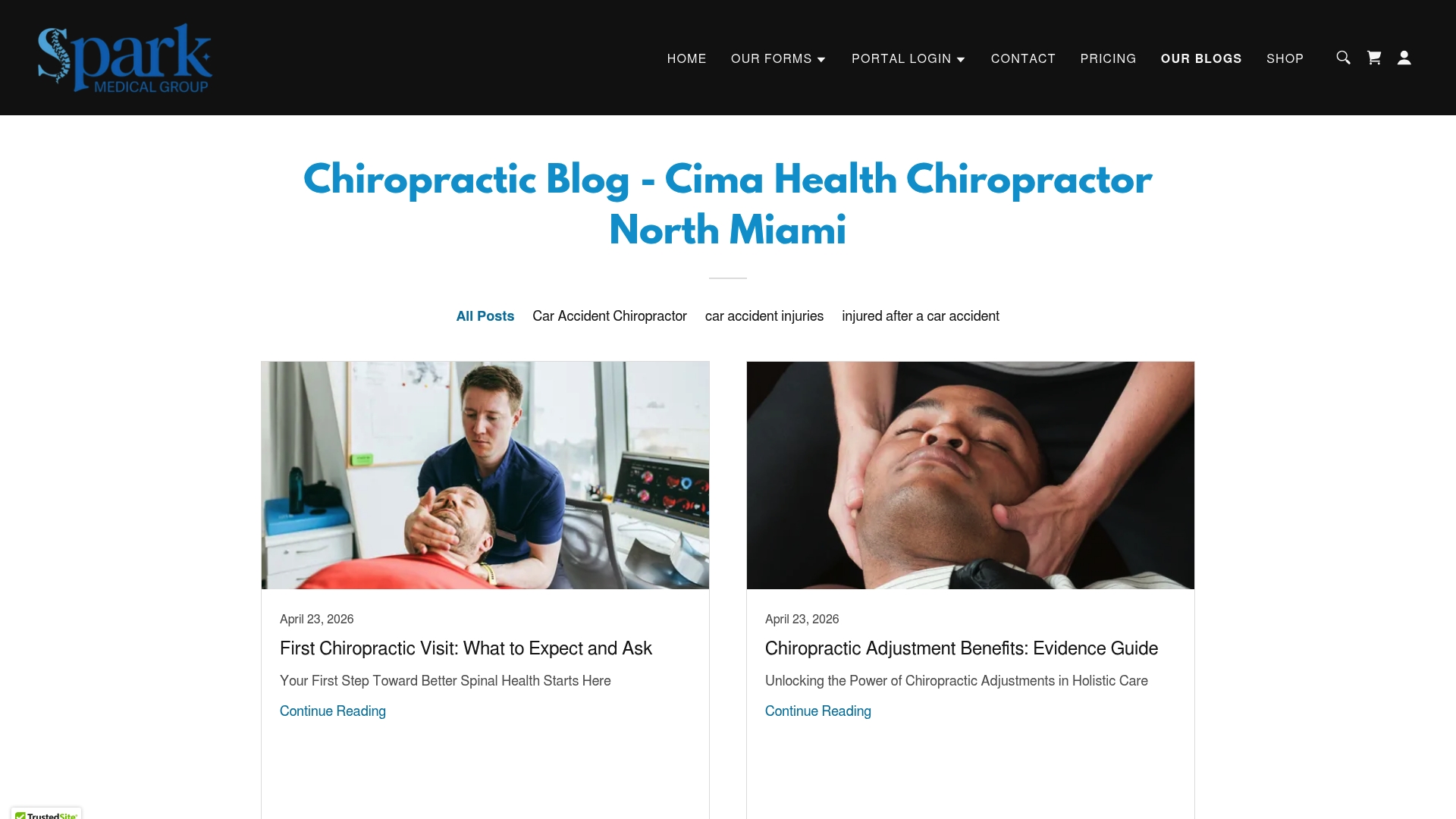
The platforms covered here are built for social media audiences. Sparkmed is built for something more direct: connecting North Miami patients with chiropractic care after car accidents, without the noise of algorithmic feeds or ad-driven discovery. If you are a healthcare provider thinking about how to reach patients online, the lesson from the social media shift is the same one Sparkmed applies: people respond to clear, accessible, trustworthy information, not viral content strategies.
Sparkmed offers chiropractic adjustments starting at $25, no insurance required, with multilingual support in English, Spanish, and Creole. That kind of direct, low-barrier access is what builds real community trust, whether online or off. Learn more at Sparkmed's accessibility statement or explore the Sparkmed blog for more on building a credible health and wellness presence.
Key Takeaways
No single platform replaces Instagram; the most effective approach in 2026 is a targeted mix of two or three platforms chosen by privacy needs, content type, and audience goals.
| Point | Details |
|---|---|
| No single replacement exists | Users in 2026 adopt a mix of platforms suited to different goals: reach, privacy, or community. |
| TikTok leads on scale | TikTok has 1.99 billion monthly active users, making it the strongest option for organic reach. |
| Pixelfed for privacy | Pixelfed collects no personal data, runs ad-free, and defaults to chronological feeds. |
| Open protocols ease multi-platform use | Bluesky's AT Protocol connects Flashes, Pinksky, and Bluescreen so one network spans multiple apps. |
| Sparkmed's approach | Sparkmed builds patient trust through direct, accessible healthcare information rather than social media algorithms. |