

A chiropractic lien lets you get treated now and pay from your settlement later. The catch: you sign a promise that the provider gets paid first out of that settlement, and if the money comes up short, you can still owe the balance yourself. State law shapes how enforceable that promise actually is, so the fine print matters more than most patients realize.
TL;DR:
- Chiropractors' liens are contracts, not statutory rights, so enforceability depends on specific language and attorney review before signing.
- The timeline from intake to settlement involves verification, treatment documentation, record transmission, and disbursement, with delays possible if processes are inconsistent.
- If a settlement falls short, patients remain responsible for unpaid amounts, especially when liability is contested or other liens take priority.
- State laws vary on lien enforceability, with some relying solely on contract language due to lack of statutory provisions for chiropractors.
- Customers should ask about lien terms, fee structure, and dispute procedures upfront, and keep copies of all signed documents to avoid surprises.
Table of Contents
- Understanding Chiropractic Liens vs. Insurance Billing
- How Lien-Based Treatment Works From Intake to Settlement
- What You're Financially Responsible for if the Settlement Falls Short
- Why State Law Changes the Outcome
- How to Protect Yourself Before You Sign a Chiropractic Lien
- What Trauma-Focused Chiropractic Care Looks Like Done Right
- Why Transparent Lien Care Protects Everyone Involved
- Get Trauma-Focused Chiropractic Care Without the Guesswork
- Sources
Understanding Chiropractic Liens vs. Insurance Billing
A chiropractic lien is a contract, not a government form. Most chiropractors aren't listed in state statutory lien laws the way hospitals or ambulance services often are, so the agreement you sign is usually what controls whether the provider gets paid. That's why the enforceability of a chiropractic lien depends on contract language rather than an automatic legal right.
You'll typically encounter a few related documents at intake, not just one:
- Lien agreement: the core contract assigning part of your future settlement to the provider
- Assignment of benefits: directs any insurance payout toward the bill
- Letter of protection: a promise, usually from your attorney, that the provider will be paid from case proceeds
- Records release authorization: lets the clinic send your chart to your lawyer or the insurer
Clinics use liens when a patient has no health insurance, exhausted PIP benefits, or can't afford out-of-pocket care while a case is pending. It's a bridge, not a discount.
How Lien-Based Treatment Works From Intake to Settlement
Lien care runs on a predictable sequence, and knowing the order helps you spot delays before they become disputes.
- Intake and verification. The clinic confirms you have an attorney (or plan to hire one) and that the injury has a clear cause, like a documented car accident.
- Treatment and documentation. Every visit generates objective findings: range-of-motion measurements, imaging results, and progress notes tied to the mechanism of injury.
- Records transmission. Bills and clinical notes go to your attorney as the case develops, usually building toward a demand package.
- Settlement and disbursement. When the case resolves, the settlement check typically routes through the attorney's trust account, which pays the lien before releasing the remainder to you.
That fourth step is where most confusion happens. Insurers in liability cases average roughly 96 days to resolve a bodily injury claim once a demand is submitted, though disputed liability or extended treatment can stretch that timeline well past three months. Clinics that treat lien billing as a tracked process, with standardized intake and case review, tend to see fewer payment delays than those that handle it case by case.
What You're Financially Responsible for if the Settlement Falls Short
Signing a lien means the provider has a legitimate claim on your settlement, but it doesn't erase your personal obligation to pay the bill. If the settlement doesn't cover everything, you can remain liable for the difference, the same way you would with any unpaid medical debt.
A few things determine how much cushion you actually have:
- Whether liability is contested (a disputed at-fault determination shrinks the settlement pool)
- How much of the settlement other liens, like hospital bills, claim first
- Whether your attorney negotiates a reduced payoff with the chiropractor before disbursing funds
- Gaps in your treatment record, which insurers use to argue the injury wasn't serious
Fee reductions do happen, but they should be negotiated in writing and tied to the actual outcome of the case, not promised verbally upfront. If you're paying anything out of pocket outside a lien arrangement, federal rules under the No Surprises Act generally entitle you to a good-faith estimate before treatment starts.
Pro Tip: Ask your attorney for a running total of every lien against your case at least once a month. Settlements often involve two or three medical liens, not one, and the math changes fast.
Why State Law Changes the Outcome
Where you live changes what a lien can actually do. Some states maintain statutory lien lists that name specific provider types, mostly hospitals, and sometimes physicians, with filing deadlines and payment priority rules baked into the statute. Most of these lists don't include chiropractors by name.
That gap matters because it shifts the entire arrangement onto contract law. Academic and legal literature on lien ethics points out that without a statutory backstop, enforceability rests almost entirely on the written agreement and whether the attorney handling disbursement actually honors it.
A few practical consequences follow from that:
- If your state has no chiropractic lien statute, ask directly whether your provider's lien is contract-only
- Filing deadlines under statutory liens can determine who gets paid first when multiple providers have claims
- Coverage sources like PIP or workers' compensation interact differently with liens depending on the state, since some states require exhausting PIP before lien billing applies
- When in doubt, ask your attorney to review the lien language before you sign, not after
How to Protect Yourself Before You Sign a Chiropractic Lien
Treat the intake meeting like a negotiation, not paperwork. A few pointed questions separate a well-run clinic from one that's improvising.
- Who legally holds the lien, and does my attorney need to countersign it?
- What's the fee schedule, and is it the same rate billed to insurance or a different lien rate?
- When and how will I get an accounting of what's owed if the case settles?
- What happens to the lien if my case doesn't settle or gets dismissed?
Red flags to walk away from: no written lien at all, vague or shifting fee quotes, a clinic that resists letting your attorney review the agreement, or any promise made only verbally. A rock-solid written lien with attorney acknowledgment protects you as much as it protects the provider.
Before defaulting to a lien, check whether PIP, health insurance, or a payment plan covers your care instead. Liens make the most sense when those options are exhausted or unavailable, not as the automatic first move.
Pro Tip: Keep a copy of every signed document yourself, not just at your attorney's office. If your case changes law firms mid-treatment, you don't want to be tracking down paperwork from a filing cabinet you no longer have access to.
What Trauma-Focused Chiropractic Care Looks Like Done Right
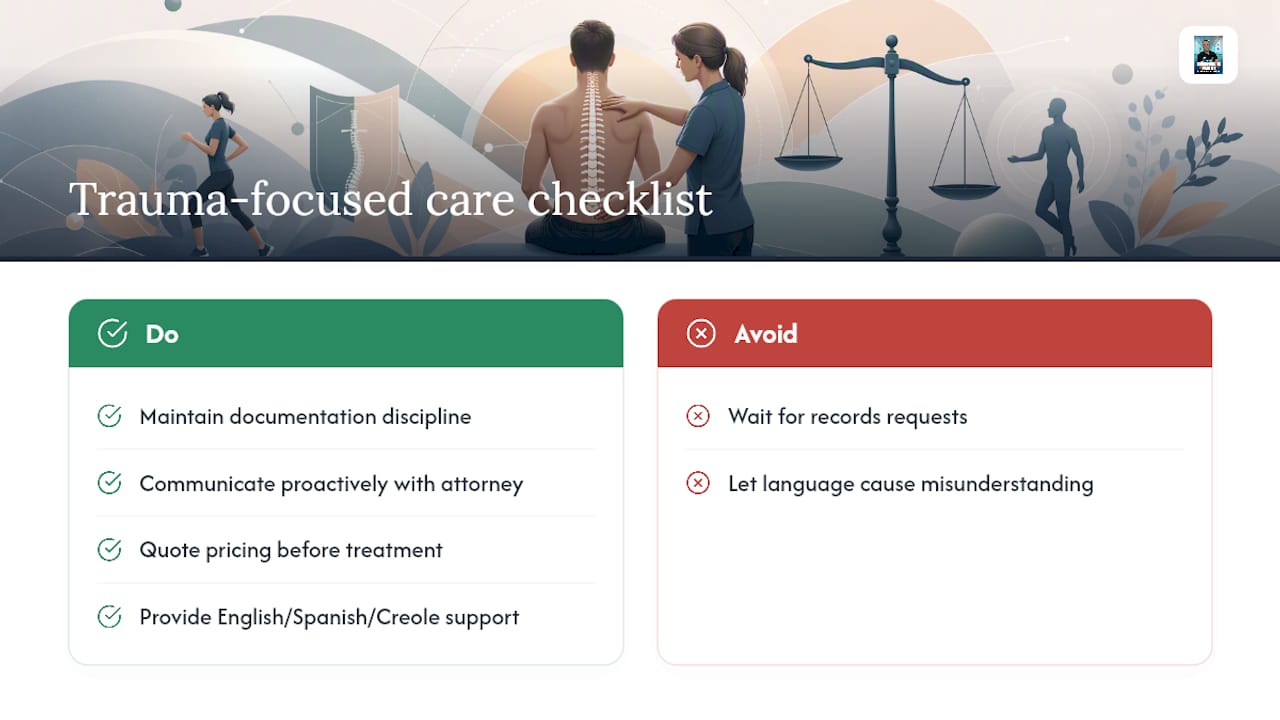
Sparkmed treats a high volume of car accident patients in North Miami, and lien-based cases follow the same documentation discipline as any other visit: objective findings, imaging where warranted, and progress notes that connect directly to the mechanism of injury from the crash. That consistency is what actually protects settlement value.
A well-run clinic keeps intake organized, communicates with your attorney's office proactively rather than waiting for records requests, and quotes pricing clearly before treatment starts. Multilingual support in English, Spanish, and Creole also matters in a market like North Miami, where language shouldn't be the reason a patient misunderstands what they signed. Ask any clinic offering lien care whether they can show you the same.
Why Transparent Lien Care Protects Everyone Involved
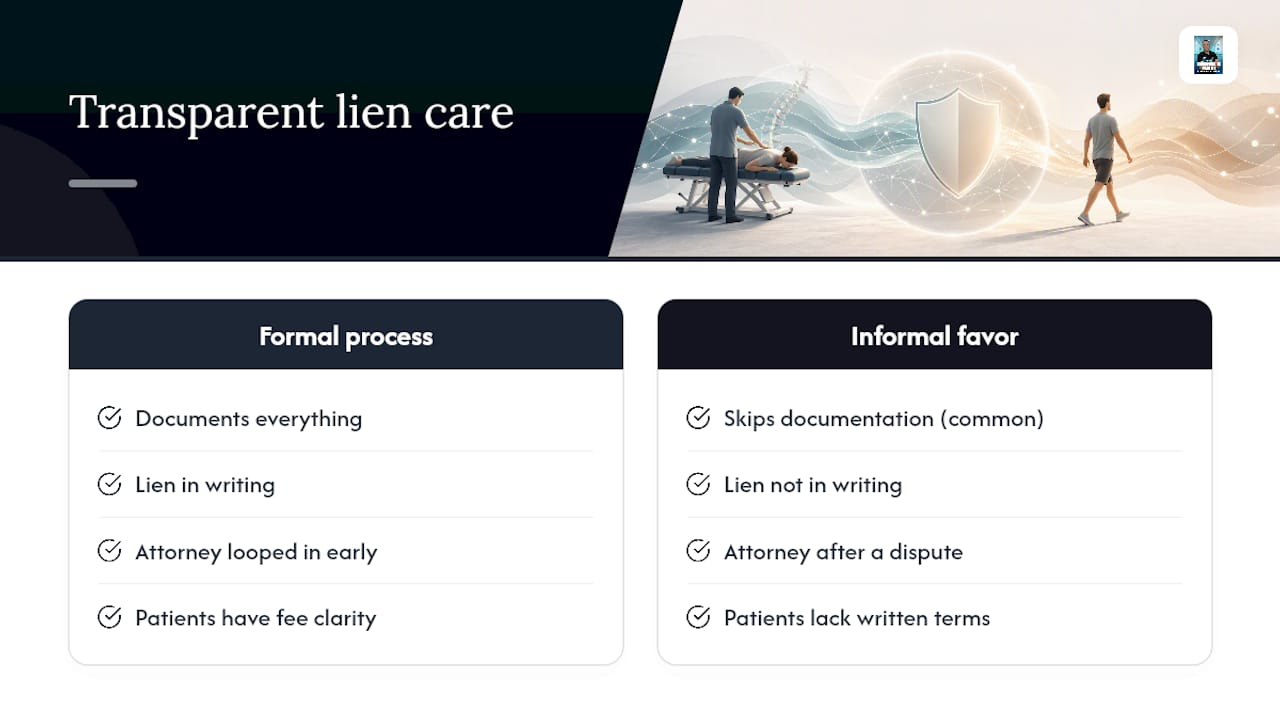
Lien-based treatment works when it's treated as a formal process, not an informal favor. The clinics that get this right document everything, put the lien in writing, and loop in the attorney early rather than after a dispute starts. The ones that get it wrong tend to skip exactly one of those steps, usually documentation, and that's the step insurers exploit hardest during negotiation.
Patients deserve the same clarity providers expect from each other. If a chiropractor doesn't put fees and terms in writing before treating you, that's information too.
— Spark
Get Trauma-Focused Chiropractic Care Without the Guesswork
If you've just been in an accident, the last thing you need is confusion about how you'll pay for care while a claim is pending. Sparkmed treats accident patients in North Miami on a documented, transparent basis, with clear pricing, including a $25 chiropractic adjustment that doesn't require insurance, so you're never signing something you don't understand.

Bring your driver's license, any accident report you have, and your attorney's contact information to your first visit if you're already represented. Sparkmed's team documents objective findings at every session and coordinates directly with your attorney's office so your treatment records support your case instead of leaving gaps an insurer can use against you. Uber Health transport is available if getting to appointments is a barrier after your accident. Reach out through Sparkmed's blog and resources to see current pricing and book your first visit.
This article is general information, not a substitute for advice from a qualified doctor. Consult a qualified healthcare professional about your own circumstances before acting on anything here.
Sources
- To Lien or Not to Lien? (Illinois Chiropractic source)
- Legality and ethics of lien uses in medicine — PMC article
- Personal injury claims: Why some DCs succeed and some don't — Chiropractic Economics