
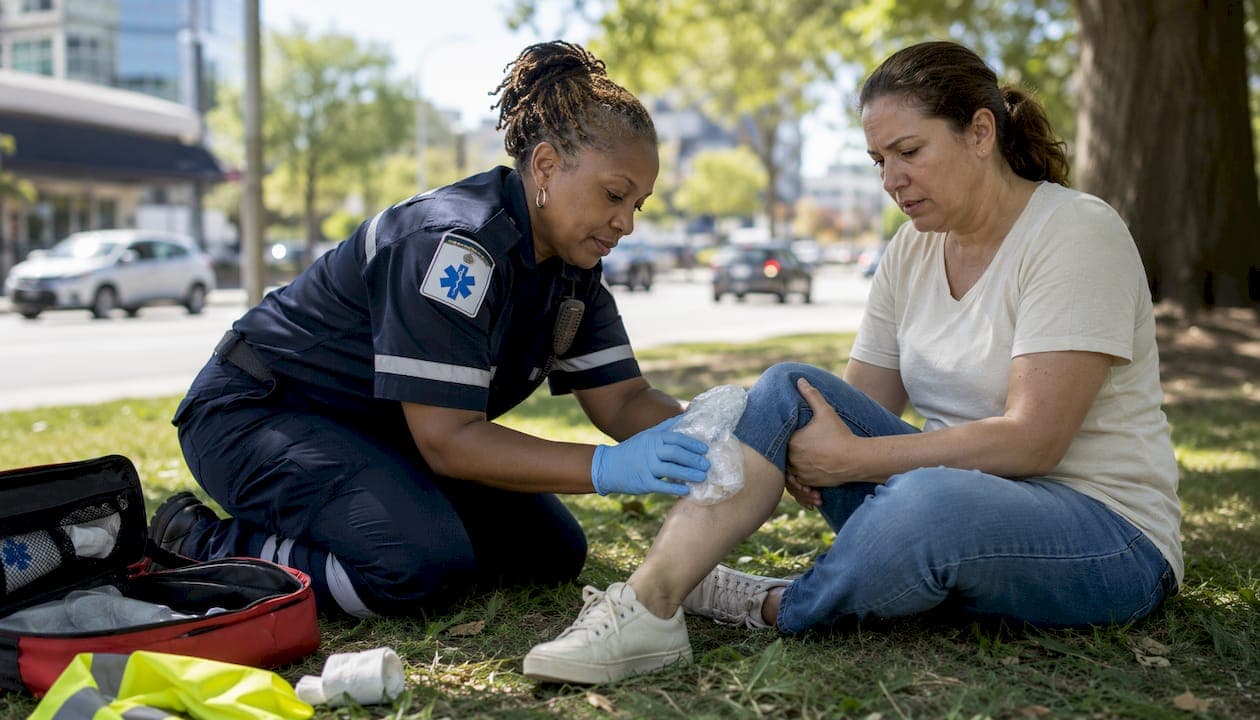
Acute injury care is the immediate management of sudden musculoskeletal trauma, typically within the first few days after an injury occurs. After a car accident, that window matters more than most people realize. The goals are straightforward: control inflammation, reduce pain, and stabilize the injury before it gets worse or becomes a chronic problem.
Common auto accident injuries that fall into this category include:
- Sprains (ligament tears from sudden force)
- Strains (muscle or tendon overstretching)
- Contusions (deep tissue bruising from impact)
- Fractures (partial or complete bone breaks)
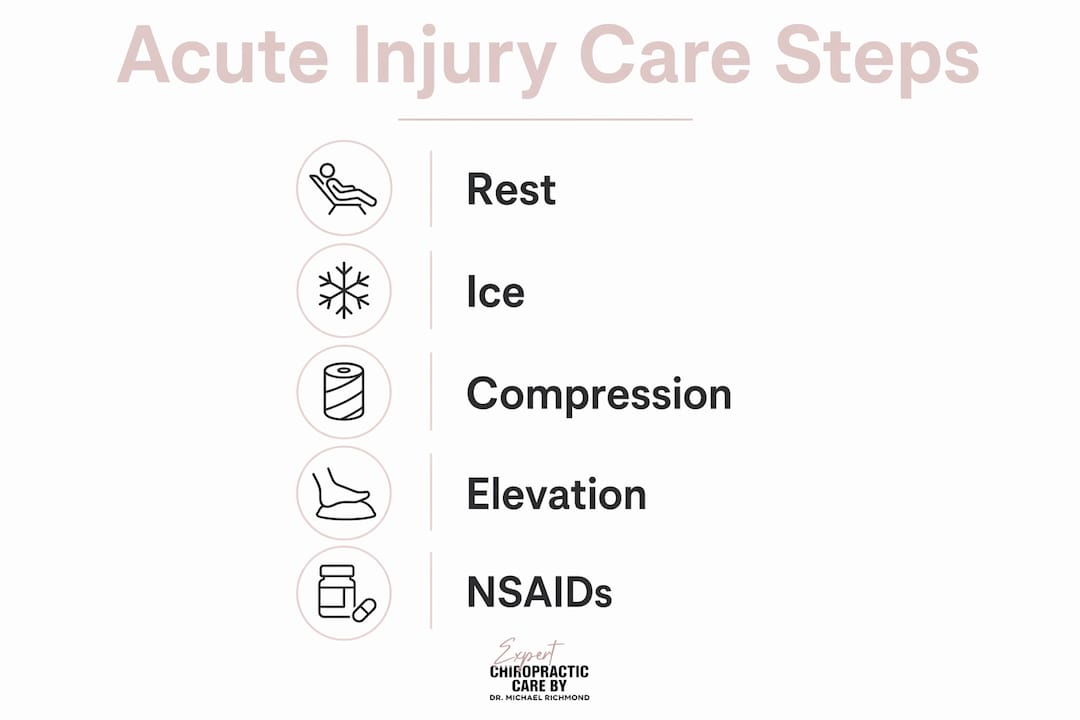
The two most recognized immediate-care protocols are the RICE method (Rest, Ice, Compression, Elevation) and NSAIDs (nonsteroidal anti-inflammatory drugs like ibuprofen or naproxen) for pain and swelling. Getting these steps right in the first few hours sets the foundation for everything that follows, including whether you recover fully or carry that injury for years.
Table of Contents
- What to do immediately after an auto accident injury
- How chiropractic care fits into clinical management of acute injuries
- Why coordinated follow-up care determines your long-term outcome
- What happens when acute injuries go untreated
- Sparkmed offers specialized chiropractic care for accident recovery
- Key Takeaways
What to do immediately after an auto accident injury
The American Red Cross Check, Call, Care protocol is the standard emergency response framework after a major accident:
- Check: Assess the scene for safety, then check the injured person's Airway, Breathing, and Circulation (ABCs).
- Call: Contact EMS immediately if there is loss of consciousness, severe bleeding, suspected fracture, or inability to move.
- Care: Provide first aid until professional help arrives. Do not move someone with a possible spinal injury.
For soft tissue injuries confirmed as minor, the RICE protocol applies during the first 48–72 hours after injury: rest the injured area, apply ice for 15–20 minutes every 2–3 hours (never overnight), use a compression bandage to limit swelling, and elevate the limb above heart level when possible.
Red flags that require emergency care, not home treatment:
- Visible deformity or bone protrusion
- Inability to bear weight on a limb
- Severe or rapidly worsening pain
- Numbness, tingling, or loss of sensation
- Significant swelling within minutes of impact
Over-the-counter NSAIDs can manage mild-to-moderate pain during this phase, but they address symptoms, not structural damage. They buy you time to get properly assessed.
Pro Tip: Never leave an ice pack on while sleeping. Ice should be applied for 15–20 minutes each time, every 2–3 hours, for up to the first 48–72 hours after injury. Set a timer, and keep a thin cloth between the ice and your skin.
How chiropractic care fits into clinical management of acute injuries
Once the immediate emergency phase passes, clinical management takes over. The goal shifts from stabilization to structured recovery, and this is where chiropractic care plays a direct role.

Modern guidelines, including the PEACE & LOVE framework published in the British Journal of Sports Medicine, have moved away from prolonged rest. Prolonged immobilization causes joint stiffness and muscle atrophy. The current standard prioritizes Protection early, then progressive Load and Exercise as healing allows.
| Phase | Timeframe | Primary Goals | Chiropractic Role |
|---|---|---|---|
| Acute | Early phase | Reduce inflammation, stabilize injury | Assessment, gentle soft tissue work |
| Subacute | 1–2 weeks | Restore range of motion, begin rehab | Mobilization, manual therapy, exercise guidance |
| Chronic | — | Rebuild strength, prevent recurrence | Active rehab, spinal adjustments, functional training |
X-rays and MRI scans are used to rule out fractures, dislocations, and serious soft tissue damage before any hands-on treatment begins. A chiropractor working without that diagnostic picture is working blind.
Early mobilization through gentle range-of-motion exercises, as soon as the patient can tolerate them, consistently produces faster recovery than bed rest. Passive modalities like ice and heat provide symptom relief that makes participation in active therapy possible, but they do not repair tissue on their own. The active work does.
Early physical therapy and chiropractic intervention also help reduce opioid use and lower the risk of long-term disability, which matters significantly for accident patients navigating both physical and legal recovery processes.
Why coordinated follow-up care determines your long-term outcome
A single ER visit does not constitute a recovery plan. What happens in the weeks after an accident, and who is communicating with whom, shapes whether you heal completely or develop chronic pain.
Fragmented or conflicting advice from different providers stalls recovery. When your ER physician, primary care doctor, and chiropractor are aligned on the same treatment goals, you move faster and with more confidence.
Effective follow-up care after an auto accident injury typically includes:
- Gradual return to activity guided by symptom response, not a fixed calendar
- Exercise programs progressing from range-of-motion to strength to functional movement
- Regular chiropractic check-ins to adjust treatment as the injury evolves
- Patient education on posture, movement mechanics, and self-care between visits
- Scheduled medical reviews at 5–7 days post-injury, then as clinically indicated
Early intervention during the acute phase directly reduces long-term health service use. Patients who receive consistent, coordinated care in the first weeks after injury are far less likely to require extended treatment months later.
What happens when acute injuries go untreated
Skipping care after an auto accident injury is not a neutral choice. Untreated acute injuries carry real consequences:
- Chronic pain: Unresolved inflammation and scar tissue formation can create persistent pain lasting months or years.
- Reduced range of motion: Joints that are not properly mobilized during recovery often stiffen permanently.
- Muscle weakness and atrophy: Prolonged disuse without guided rehab leads to strength deficits that affect daily function.
- Nerve damage: Untreated compression injuries can progress from temporary numbness to lasting neurological impairment.
- Psychological impact: Chronic pain from neglected injuries is strongly associated with anxiety and depression.
Understanding musculoskeletal injury recovery helps patients recognize that what feels manageable at day three can become debilitating at month three without proper care.
Sparkmed offers specialized chiropractic care for accident recovery
Sparkmed, based in North Miami, specializes in chiropractic care for patients recovering from automobile accident injuries. The clinic combines experienced practitioners with modern treatment techniques, including spinal adjustments, manual therapy, and personalized rehabilitation plans designed specifically for acute trauma recovery.
One practical advantage: Sparkmed offers chiropractic adjustments starting at $25, with no insurance required. For patients navigating the financial stress of a recent accident, that removes a real barrier to getting care early, when it matters most.
The clinic also provides educational resources in English, Spanish, and Creole, making care accessible to North Miami's diverse patient community. If you were recently in an accident and are unsure where to start, book an assessment at Sparkmed to get a clear picture of your injuries and a treatment plan built around your recovery.
Key Takeaways
Acute injury care in the first 48–72 hours after an automobile accident directly determines whether you recover fully or develop lasting chronic conditions.
| Point | Details |
|---|---|
| Act within 48–72 hours | The acute phase is the critical window for controlling inflammation and preventing long-term damage. |
| RICE for minor soft tissue injuries | Apply ice for 15–20 minutes every 2–3 hours; never leave it on overnight. |
| Early mobilization beats rest | Gentle range-of-motion exercises as soon as tolerable produce faster recovery than immobilization. |
| Coordinated care prevents chronic pain | Consistent messaging across ER, primary care, and chiropractic providers accelerates rehabilitation. |
| Sparkmed for accident recovery | North Miami's Sparkmed provides chiropractic adjustments from $25, no insurance required, with multilingual support. |