
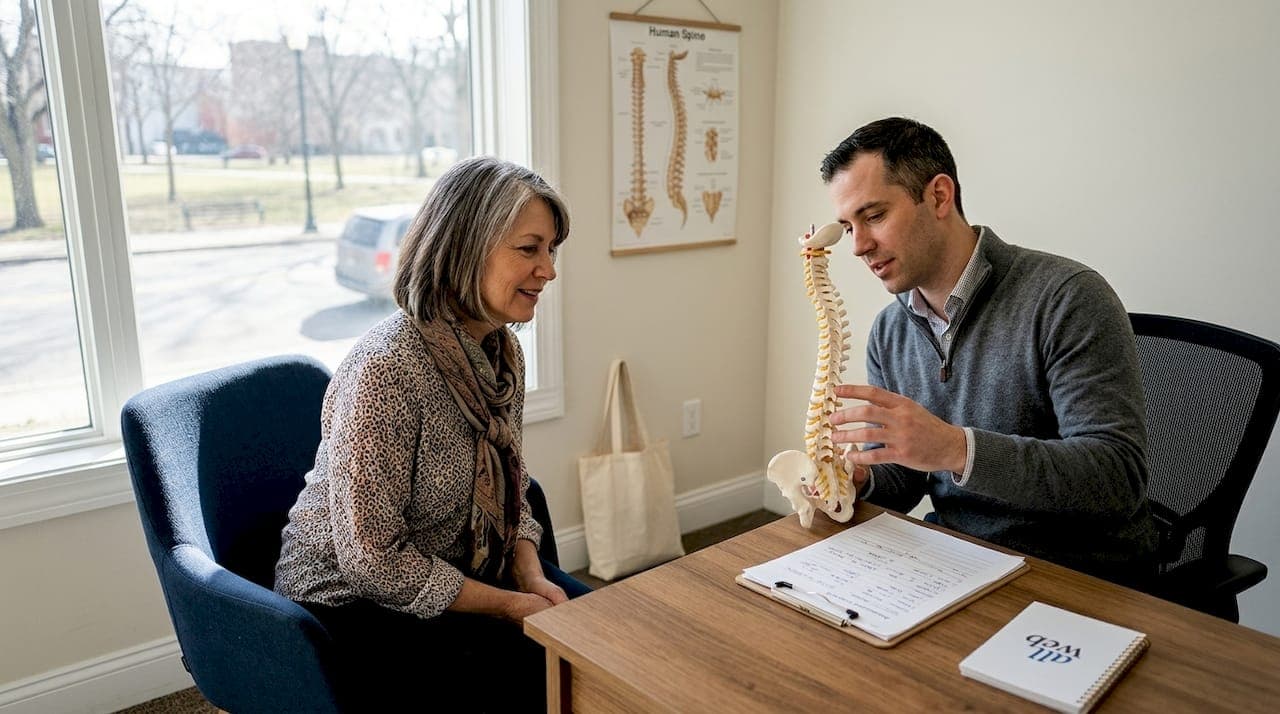
After an auto accident or slip-and-fall, the pain hits fast and the answers come slow. You may be dealing with neck stiffness, back pain, or limited movement, and you're not sure which treatments actually work versus which ones just sound good. Chiropractic care gets a lot of attention in North Miami, but separating real benefits from overpromised results is harder than it looks. This article breaks down what chiropractic wellness actually offers, what the research supports, how it compares to other options, and how to make a smart decision for your recovery.
Table of Contents
- What chiropractic wellness really offers after injuries
- Pain relief and mobility: What the research says
- Comparing chiropractic to other recovery options
- Cost, safety, and special situations: What to know
- Our perspective: The real role of chiropractic in post-accident recovery
- Ready to see if chiropractic care fits your recovery?
- Frequently asked questions
Key Takeaways
| Point | Details |
|---|---|
| Evidence-based benefits | Chiropractic care can reduce pain and improve mobility for accident-related injuries, but works best as part of a larger plan. |
| Small but real effects | Research supports modest short-term relief for neck and back pain, especially with spinal manipulative therapy. |
| Safety and cost | Most patients tolerate chiropractic care well and find it cost-effective, though always confirm with your provider for your unique case. |
| Compare your options | Chiropractic, physical therapy, and standard care offer similar outcomes—choose what fits your injury and preferences. |
| Personalized recovery | Blending chiropractic approaches with other therapies often delivers the best results after accidents. |
What chiropractic wellness really offers after injuries
To start, let's nail down what modern chiropractic care actually includes and what it's proven to address.
Chiropractic care is not just "cracking your back." It covers a range of hands-on and movement-based therapies designed to reduce pain and restore function after musculoskeletal injuries. Chiropractic care primarily involves spinal manipulative therapy, soft tissue therapy, adjustments, massage, and rehabilitation exercises to address injuries like whiplash, muscle strains, and back or neck pain.
Here's a quick breakdown of the main techniques and what they target:
- Spinal manipulative therapy (SMT): Controlled force applied to spinal joints to reduce stiffness and pain. Most researched technique in chiropractic.
- Soft tissue therapy: Hands-on work on muscles, tendons, and ligaments to reduce tightness and inflammation after trauma.
- Chiropractic adjustments: Targeted corrections to joint alignment, often used for neck and lower back complaints after accidents.
- Therapeutic massage: Supports circulation, reduces muscle tension, and helps the body move through the healing process.
- Rehabilitation exercises: Customized movement programs to rebuild strength and range of motion after injury.
For common post-accident injuries, including whiplash from rear-end collisions or back strain from a fall, these techniques are often combined. Evidence on SMT shows it can be effective for musculoskeletal pain, though results vary by person and injury type. What works well for one patient may be less effective for another, which is why your provider should tailor your plan.

It's also worth knowing that chiropractic care has strong evidence for musculoskeletal issues. Claims about treating conditions beyond muscles, joints, and nerves, like internal organ problems, are not well supported by current research. Understanding how chiropractors help injury recovery helps you set realistic expectations from day one.
Pro Tip: Always ask your chiropractor to walk you through your specific treatment plan, including what each technique is meant to do and what progress should look like at each stage.
Pain relief and mobility: What the research says
Now that we've covered what chiropractors actually do, let's look at how well these therapies work for real-world pain relief and movement.
The numbers are encouraging for certain injury types. For acute neck pain, which is common after whiplash in auto accidents, SMT reduces pain with a mean difference of 1.53 on a standard pain scale, improves cervical range of motion, and decreases disability with a mean difference of 6.20. That's a meaningful improvement in how much your neck moves and how much it hurts.
For chronic low back pain, which can develop after a fall or accident, SMT provides small short-term pain relief and moderate improvement in physical function. The effects are real but modest, and they tend to be strongest in the weeks right after starting care.
Here are practical steps you can take to get the most out of chiropractic treatment:
- Show up consistently. Skipping appointments slows progress. Stick to your scheduled visits, especially in the first few weeks.
- Do your home exercises. Your chiropractor may give you stretches or strengthening moves. These aren't optional extras—they're part of the treatment.
- Track your symptoms. Keep a simple daily note on your pain level and mobility. This helps your provider adjust your plan.
- Communicate openly. If something isn't improving or feels worse, say so. Your provider needs that feedback to fine-tune your care.
- Combine with rest and nutrition. Recovery is a full-body process. Sleep and anti-inflammatory foods support what your chiropractor is doing.
Results are not one-size-fits-all. People with acute injuries often respond faster than those with long-standing chronic pain. Injury severity, your overall health, and how quickly you start care all influence outcomes. Before your first visit, preparing for a chiropractic visit can help you walk in with the right questions and documentation.
Comparing chiropractic to other recovery options
But how does chiropractic stack up against your other choices for accident recovery? Here's a direct comparison.
| Treatment option | Best for | Strengths | Limitations |
|---|---|---|---|
| Chiropractic care | Neck, back, joint pain | Hands-on, personalized, non-invasive | Variable evidence, cost varies |
| Physical therapy | Muscle weakness, post-surgery | Evidence-based rehab, functional focus | Less joint-specific |
| Standard medical care | Acute trauma, fractures | Diagnosis, medication, imaging | Less focus on function/movement |
| Self-care | Mild strains | Low cost, accessible | Easy to miss serious injuries |
Chiropractic stands out for its hands-on, individualized approach to musculoskeletal recovery. Physical therapy often overlaps in scope but tends to focus more on exercise-based rehab than manual joint work. Standard medical care is essential for ruling out fractures or internal injuries, but it may not address the stiffness and movement problems that linger after those are cleared.
Here's an important note on expectations:
Research shows that SMT effects over sham treatment are small and not always clinically meaningful for chronic back pain, and results differ little compared to other therapies. Placebo response is real in manual therapy. Realistic expectations lead to better outcomes.
For whiplash specifically, conservative treatment evidence suggests that multiple approaches, including chiropractic, exercise, and education, tend to work better together than any single method alone. The smartest recovery plan usually blends more than one approach.
Exploring chiropractic insights from real patient experiences in North Miami can help you understand how different combinations have worked for people with injuries similar to yours.
Cost, safety, and special situations: What to know
Of course, between insurance, bills, and ensuring care is safe for everyone, you also need the facts on cost, safety, and special cases.
| Scenario | Avg. cost per visit | Insurance coverage | Cost-effectiveness |
|---|---|---|---|
| Acute neck pain (whiplash) | $65 to $120 | Often covered by auto insurance | High, ICER under $50k/QALY |
| Chronic low back pain | $65 to $120 | Varies by plan | Mixed vs. usual care |
| Slip-and-fall injuries | $65 to $120 | Liability or health insurance | Case-dependent |
For acute neck pain, chiropractic is considered cost-effective, meaning the benefit per dollar spent falls within an acceptable range compared to standard care. For chronic back pain, the picture is more mixed, and your provider should help you weigh the ongoing cost against your progress.
Safety is a common concern, especially for older adults or those with complex medical histories. Research shows that musculoskeletal manipulations in older adults are generally safe, with mild to moderate side effects like temporary soreness being the most common outcome, and no catastrophic events reported in reviewed studies.
Here are key safety points to keep in mind:
- Mild soreness after an adjustment is normal and usually resolves within 24 to 48 hours.
- Serious adverse events are rare but more likely if you have conditions like osteoporosis, blood clotting issues, or spinal instability.
- Always disclose your full medical history before starting care.
- If you're a senior or managing multiple health conditions, ask your provider about modified techniques.
For affordable options in North Miami, check pricing and plans to understand what care looks like without insurance or with limited coverage. Knowing your costs upfront prevents surprises and helps you stay consistent with treatment.
For older adult outcomes, emerging research continues to support the safety profile of chiropractic care when delivered by trained providers who screen patients carefully.
Pro Tip: Ask your chiropractor about their safety screening process before your first adjustment. A good provider will review your imaging, health history, and any red flags before applying any manual technique.
Our perspective: The real role of chiropractic in post-accident recovery
After all the research and comparisons, here's our candid take based on real patient journeys and current science.
We've worked with North Miami accident victims for over 20 years, and the pattern is consistent. The people who recover best are not the ones who rely solely on chiropractic, and they're not the ones who dismiss it either. They're the ones who treat it as one strong tool in a broader recovery plan.
The honest truth is that high-quality reviews show chiropractic effects are often small or short-term, and some clinic claims around faster healing or chronic pain prevention go beyond what the data supports. We say this not to discourage you, but because setting accurate expectations is what actually builds trust and leads to better outcomes.
What we see in practice is that chiropractic care is especially valuable for reducing early stiffness, improving neck and back mobility, and helping patients feel in control of their recovery. Those are real, meaningful wins. Combined with exercise, good communication with your provider, and patience, it works. Explore chiropractic recovery stories to see how others in your situation have navigated this process honestly.
Ready to see if chiropractic care fits your recovery?
If you've made it this far, you now know what chiropractic care can realistically offer, how it compares to other options, and what to watch for on cost and safety. The next step is getting a personalized assessment from a provider who will be straight with you.

At Spark Chiropractic, we specialize in helping North Miami residents recover from auto accidents and slip-and-fall injuries with honest, evidence-informed care. Whether you have insurance or not, you can check pricing and plans to find an option that fits your situation. Book a visit and let's build a recovery plan that actually makes sense for your injury, your health, and your life.
Frequently asked questions
Is chiropractic care safe after a car accident or fall?
Chiropractic care is generally safe for most post-accident injuries. Musculoskeletal manipulations in reviewed populations showed only mild to moderate side effects like temporary soreness, with no catastrophic events reported.
How soon should I start chiropractic treatment after my accident?
Early evaluation within days to a week is ideal. Chiropractic care that starts promptly can identify injuries and begin targeted treatment before symptoms become chronic.
Does insurance cover chiropractic care for accident injuries?
Many plans do cover it, especially for accident-related injuries. For acute neck pain, chiropractic is cost-effective with an ICER under $50,000 per quality-adjusted life year, which supports coverage decisions.
Can chiropractic treatment prevent chronic pain after an accident?
Evidence is mixed on this. High-quality reviews note that effects are often small or short-term, and claims about preventing chronic pain go beyond what current data consistently supports.
Is chiropractic better than physical therapy for auto injuries?
Neither is clearly superior for all injury types. SMT effects show little difference compared to other therapies for chronic back pain, so the best choice depends on your specific injury and preferences.
Recommended
- How local chiropractors aid recovery after injuries
- How to Prepare for Your Chiropractic Visit After an Accident
- Spark Chiropractic
- Pricing | Affordable Care at Spark Chiropractic
- Non-surgical orthopedic treatments: your step-by-step relief guide
- Ice Baths: Chilling Out for Post-Workout Relief – LifeUnlocked