
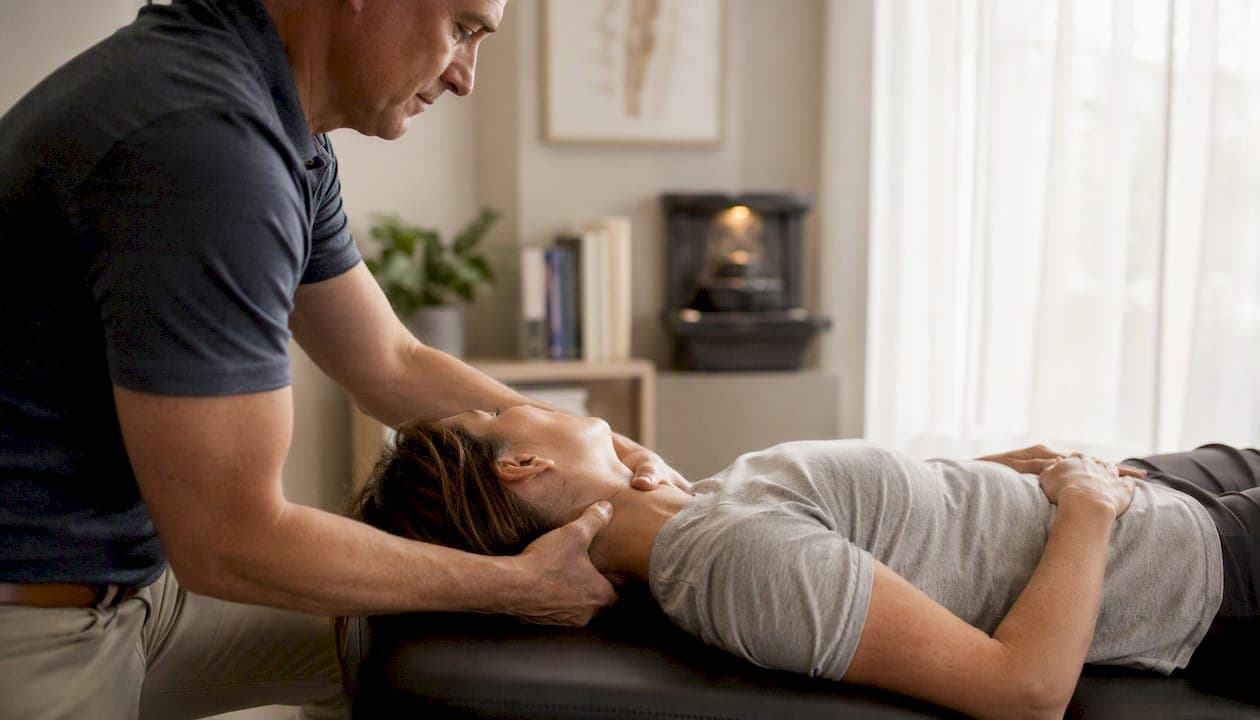
A solid personal injury rehabilitation plan follows five steps: baseline exam, phased multimodal treatment, a structured home program, measurable progress checkpoints, and clear escalation criteria. Start within the first 72 hours if possible. Waiting even a week can let compensatory movement patterns set in, making recovery longer and harder.
Your first 7 days:
- Book a clinical assessment and bring any imaging, police reports, or ER discharge notes you already have.
- Record your pain on a 0–10 numeric rating scale (NRS) daily.
- Note which movements hurt and which directions feel restricted.
- Watch for red flags (see below) and go to the ER immediately if any appear.
At your first visit, your clinician should measure cervical range of motion (ROM), run a neurological screen, and score your disability with a validated tool like the Neck Disability Index (NDI). These baseline numbers are your starting point for every progress check that follows. Early assessment and a coordinated team approach are linked to faster, more complete recovery after car collisions.
Key Takeaways
A personal injury rehabilitation plan built on objective measures and phased progression gives you the clearest path from acute pain to full function.
| Point | Details |
|---|---|
| Start within 72 hours | Early assessment prevents compensatory patterns and establishes baseline ROM, NDI, and NRS scores. |
| Match treatment to phase | Acute care uses gentle adjustments and isometrics; reconditioning adds progressive strengthening and functional drills. |
| Track measurable outcomes | Repeat ROM and NDI scores at each phase transition to confirm progress and justify continued care. |
| Know your red flags | Progressive neurological deficits, bowel/bladder changes, or uncontrolled pain require immediate ER escalation. |
| Sparkmed North Miami | Provides the full exam-to-reconditioning workflow with multilingual staff and transparent per-session pricing. |
Pro Tip: Bring a written pain diary (daily NRS scores and movement notes from your first week) to your Sparkmed assessment. It gives your clinician a richer baseline than memory alone and speeds up the planning conversation.
Table of Contents
- How Sparkmed builds your personal injury recovery plan, phase by phase
- Sparkmed North Miami: your first step toward structured recovery
- Sources
How Sparkmed builds your personal injury recovery plan, phase by phase
Sparkmed's approach starts with one priority: control healing without suppressing it. That distinction matters clinically. Aggressive early mobilization can irritate inflamed tissue; complete rest lets scar tissue organize poorly. The goal is guided, stage-appropriate movement from day one.
A clinical practice guideline on neck pain and whiplash-associated disorders (WAD) recommends multimodal care — manual therapy, supervised exercise, and self-management — with the intensity and type of exercise matched to the recovery stage. Sparkmed follows that same structure across three phases:
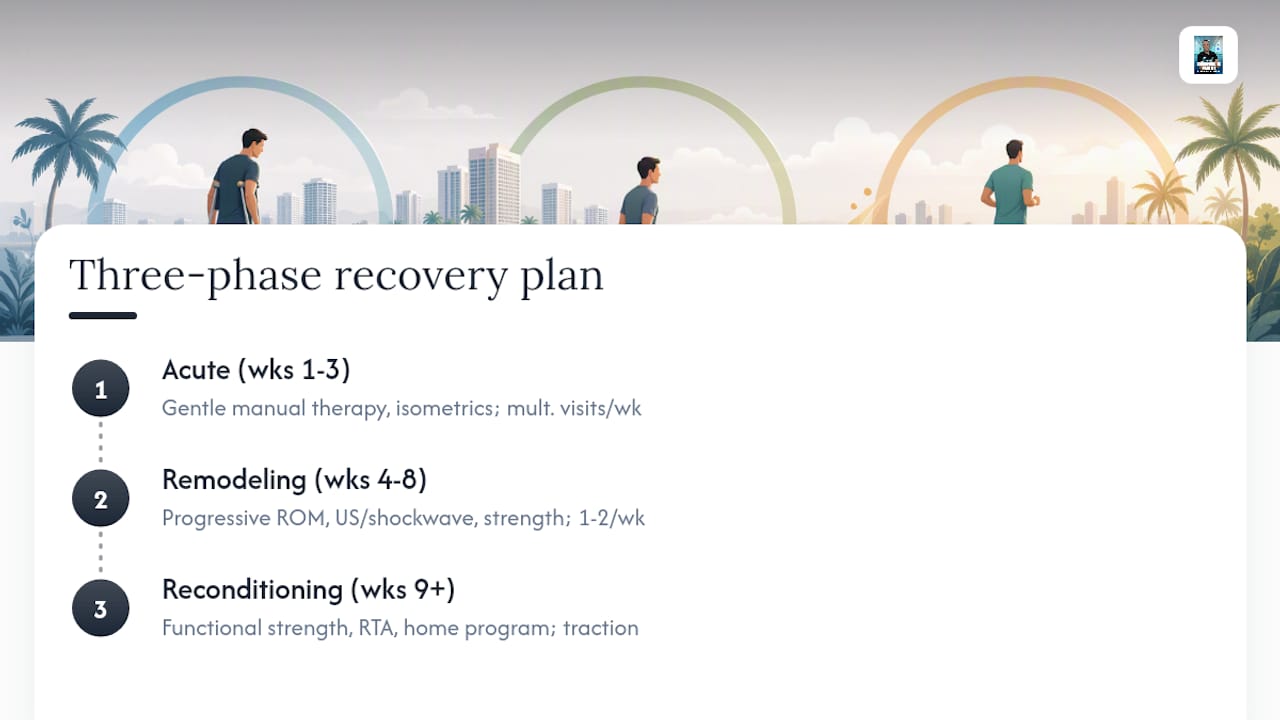
Acute (weeks 1–3): Gentle spinal adjustments, soft-tissue work, cryotherapy, and early isometric deep neck flexor retraining rather than heavy loading. Visits are typically multiple times per week.
Remodeling (weeks 4–8): Progressive ROM exercises, ultrasound or shockwave therapy, and graded strengthening as pain and mobility improve. A staged rehabilitative template maps this transition from inflammation control through fibroblastic activity to reconditioning. Visit frequency drops to 1–2 times per week.

Reconditioning (weeks 9+): Functional strengthening, return-to-activity protocols, and a customized home program to maintain gains. Some patients with persistent hypolordosis after an MVC benefit from structural rehabilitation; cervical extension traction has shown promise in select case series for restoring lordosis and reducing disability.
Progress is tracked with repeat ROM measurements and NDI scores. A systematic review of chiropractic care for WAD found that chiropractic treatment can improve both cervical ROM and pain. For cases requiring extended rehabilitation, a multicenter retrospective series using CBP® spinal rehabilitation reported large reductions in pain and NDI scores in a select post-MVC sample after a mean of 31.6 weeks of care. Sparkmed's multilingual staff (English, Spanish, Creole) and coordination with massage therapists, kinesiologists, and counselors mean the plan can address psychological stress alongside physical recovery.
Sparkmed North Miami: your first step toward structured recovery
Sparkmed performs the full baseline exam, builds your phased plan, and supervises every progress check in one North Miami clinic.
Your first visit covers a detailed history, cervical ROM and neurological testing, NDI scoring, and an imaging referral when indicated. Acute-phase visits run about 3 times per week; subacute care typically drops to 1–2. Per-session pricing is transparent and affordable, with a $25 adjustment option that requires no insurance. Uber Health transport is available for patients who need it. Staff speak English, Spanish, and Creole. Book your assessment at Sparkmed and bring any existing imaging or medical records to your first appointment.
Sources
The plan above draws on peer-reviewed guidelines and clinical studies. Here is a short reading list with the key takeaway each source offers patients:
- The Treatment of Neck Pain-Associated Disorders and Whiplash-Associated Disorders: A Clinical Practice Guideline
- A systematic review of chiropractic management of adults with Whiplash-Associated Disorders: recommendations for advancing evidence-based practice and research
- CBP spinal rehabilitation for post-MVC neck pain: multicenter retrospective series
- Cervical lordosis change after MVC and structural rehabilitation (case series)
- Monograph 1 ~ A Basic Rehabilitative Template
- Exercise therapy following motor vehicle trauma — part 1
- Injured in a car accident? What you need to know about recovery and chiropractic care after a motor vehicle collision | Momentum Health
This article is general information, not a substitute for advice from a qualified doctor. Consult a qualified healthcare professional about your own circumstances before acting on anything here.