

Getting hurt in a car accident and then spending days calling clinics, struggling with insurance questions, and second-guessing your pain is one of the most exhausting experiences imaginable. Many people in North Miami delay or skip chiropractic care simply because they don't know where to start or assume it will cost too much. The truth is, chiropractic care is often a more effective alternative to surgery for many auto accident injuries, and getting care fast can make a real difference in how completely you recover. This guide walks you through every step, from recognizing your symptoms to walking confidently into your first appointment.
Table of Contents
- Assessing your needs after an auto accident
- Comparing chiropractic care options in North Miami
- Verifying qualifications and insurance for affordable care
- Making your first appointment and what to expect
- What most guides miss about local chiropractic care
- Take the next step toward recovery with Spark Chiropractic
- Frequently asked questions
Key Takeaways
| Point | Details |
|---|---|
| Start recovery early | Seeking chiropractic help soon after an accident can speed up healing and prevent chronic pain. |
| Compare your options | Use location, cost, reviews, and insurance to find the right provider for your needs. |
| Verify credentials | Always check state licensing and insurance coverage before booking an appointment. |
| Prepare for your visit | Bring all documentation and ask questions about treatment and costs upfront. |
| Personalize your care | Maintain open communication with your chiropractor to ensure your recovery plan stays on track. |
Assessing your needs after an auto accident
Before you start searching for a chiropractor, you need to take a clear look at what your body is telling you. Auto accident injuries are notorious for hiding. You might walk away from a collision feeling fine, only to wake up two or three days later with a stiff neck, shooting pain down your arm, or a nagging headache that won't quit. These delayed symptoms are common because adrenaline masks pain in the hours immediately after a crash.
Common signs that you need chiropractic evaluation after an accident:
- Neck or back pain, even if mild at first
- Headaches that start or worsen after the accident
- Shoulder stiffness or limited range of motion
- Tingling, numbness, or weakness in your arms or legs
- Dizziness or difficulty concentrating
- Pain that shifts locations or seems hard to pinpoint
- Muscle tension that doesn't ease with rest
These aren't signs to push through or ignore. Musculoskeletal injuries (meaning injuries to muscles, joints, and the spine) respond much better to early treatment. Research confirms that chiropractic care speeds recovery and relieves persistent pain from exactly these kinds of injuries. Waiting weeks to seek help often means dealing with scar tissue buildup, chronic stiffness, and a much longer road back to normal.
Immediate steps to take right after the accident:
- Seek emergency medical attention for any life-threatening symptoms first.
- Document everything: photographs of vehicles, the scene, and any visible injuries.
- Request a copy of the police report.
- Write down your symptoms the same day, even if minor, because memory fades fast.
- Notify your auto insurance company within 24 hours.
- Keep all medical receipts, prescriptions, and records in one folder.
This documentation does double duty. It protects your insurance claim and gives your chiropractor an accurate picture of what happened to your body, which directly shapes your treatment plan.
Pro Tip: If soreness appears only in one specific area but gradually spreads or gets worse over three to five days, that pattern often signals a structural issue like a herniated disc or joint misalignment, not just ordinary muscle soreness. Don't wait until the pain becomes severe before calling a clinic.
Comparing chiropractic care options in North Miami
Once you've confirmed that chiropractic care is the right move, the next challenge is figuring out which clinic is the best fit for your situation. Not all chiropractic offices are the same. Some specialize in sports injuries. Others focus on general wellness. For auto accident recovery specifically, you want a provider experienced with trauma cases, familiar with personal injury documentation, and ideally one that offers flexible payment options.
Step-by-step process for researching and shortlisting providers:
- Start with a simple Google search for "chiropractor auto accident North Miami" and note the top results.
- Check Google Maps reviews specifically for mentions of accident recovery and billing clarity.
- Visit each clinic's website to confirm whether they specialize in car accident injuries.
- Verify hours of operation and whether they offer same-week or next-day appointments.
- Call two or three offices to ask specific questions about fees, insurance, and treatment plans before committing.
One factor that often gets overlooked is local chiropractor experience with cases similar to yours. A clinic that regularly treats accident patients will know how to document your care for both medical and legal purposes, which matters if you pursue a personal injury claim later.
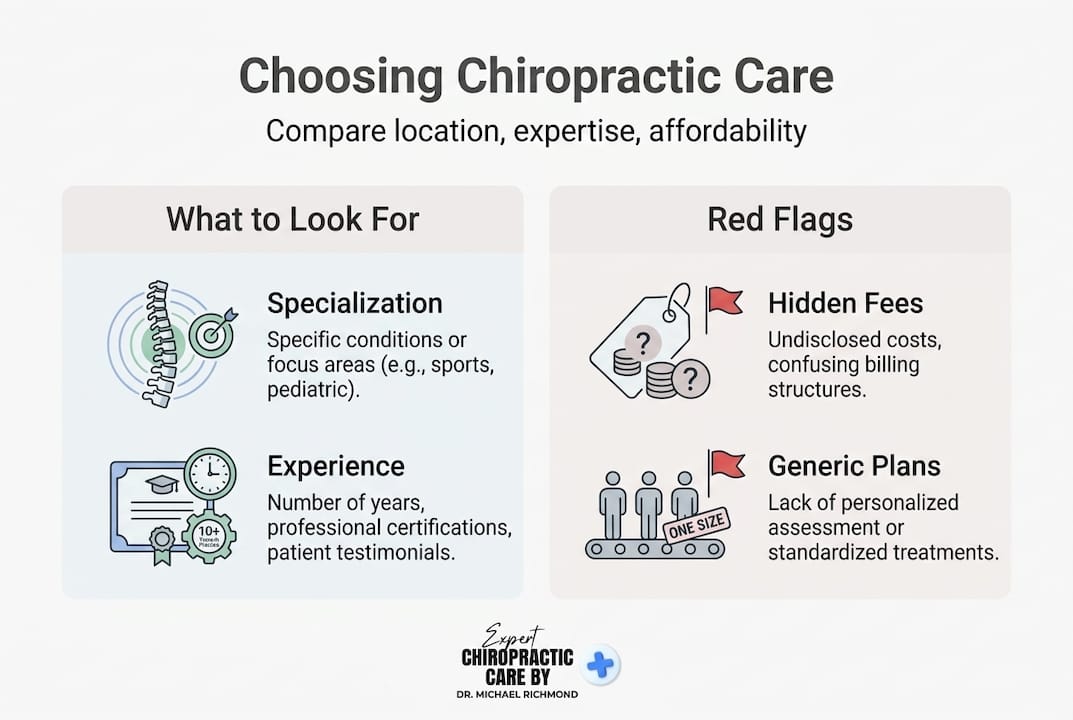
Here's a practical side-by-side look at key comparison factors when evaluating North Miami chiropractic providers:
| Criteria | What to look for | Red flags |
|---|---|---|
| Specialization | Accident recovery, spinal care | General wellness only |
| Pricing transparency | Flat rates or itemized fee lists | Vague or verbal-only estimates |
| Insurance accepted | Personal injury, PIP, self-pay options | Cash-only with no alternatives |
| Appointment availability | Same-week or urgent slots | Wait times over two weeks |
| Patient reviews | Consistent 4+ star ratings | Repeated billing complaints |
| Location | Close to home or on your commute | Far with no public transit access |
Affordability and accessible location are consistently among the top factors patients cite when choosing a clinic after an accident, and for good reason. If the clinic is hard to reach or too expensive to maintain consistent visits, your recovery suffers.
Pro Tip: Read Google Maps reviews in detail, not just the star rating. Look for patterns in what patients say about staff communication, wait times, and how the clinic handled billing after accidents. These specifics reveal far more than an overall score.
Verifying qualifications and insurance for affordable care
You've got a shortlist. Now it's time to dig deeper before making your final choice. Credentials matter in chiropractic care, just as they do in any healthcare setting. In Florida, all practicing chiropractors must be licensed by the Florida Board of Chiropractic Medicine. You can verify a provider's license status online through the Florida Department of Health website in minutes.
Steps to verify a chiropractor's qualifications:
- Search the Florida Department of Health license verification portal using the provider's name.
- Confirm they hold a Doctor of Chiropractic (D.C.) degree from an accredited program.
- Look for additional certifications in trauma, rehabilitation, or sports medicine.
- Check for disciplinary actions or complaints in the licensing database.
- Read patient testimonials that specifically mention accident recovery outcomes.
Beyond credentials, understanding the financial side upfront saves you from painful billing surprises down the road. Confirming insurance coverage and transparent pricing upfront prevents billing surprises that can derail your care plan mid-treatment.
Here's a quick reference for what to confirm before your first visit:
| Question to ask the clinic | Why it matters |
|---|---|
| Do you accept PIP (Personal Injury Protection) insurance? | Required in Florida auto insurance; covers accident injuries |
| What is your per-visit cost without insurance? | Helps you plan if coverage runs out |
| Are payment plans available? | Important for ongoing care with limited funds |
| Will you provide documentation for my injury claim? | Needed for legal and insurance purposes |
| What happens if my claim is disputed? | Clarifies risk and clinic support level |
Important: Never assume a clinic accepts your specific insurance plan just because they say they "work with most insurers." Always get confirmation in writing or a direct call to your insurer before your first appointment. Hidden fees for assessments, X-rays, or supplements can add up quickly if you haven't asked in advance.
What to bring to your first visit to streamline everything:
- Government-issued ID
- Insurance card and policy number
- Accident police report
- Any imaging reports (X-rays, MRI, CT scans)
- A written list of your current symptoms and when they started
- Contact information for your auto insurance adjuster
Preparing for your chiropractic visit this thoroughly signals to the clinic that you're an organized patient, which actually tends to speed up intake and get your treatment started faster. Clinics that see accident patients regularly will appreciate the completeness and move more efficiently through your paperwork.
Making your first appointment and what to expect
With a qualified, affordable chiropractor selected, the actual booking process should be straightforward. But going in prepared means you won't waste your first visit on confusion or incomplete paperwork.
Step-by-step guide to booking and preparing:
- Call the clinic directly to confirm availability for accident-related injury evaluations.
- Ask whether a new patient intake form is available online so you can fill it out before arriving.
- Confirm the address and parking situation, especially if you're in pain and mobility is limited.
- Arrive 15 minutes early to handle any remaining paperwork without rushing.
- Bring every document listed in the previous section. All of it.
- Be honest and specific when describing your symptoms. Don't minimize pain to seem tough.
Your first appointment will likely include a detailed health history intake, a physical examination focused on the spine and affected areas, and possibly on-site imaging like X-rays. The chiropractor will ask about the accident, your symptoms, daily activities, and any prior injuries to the same areas. This information shapes your entire treatment plan, so the more detail you can provide, the better.
Bringing proper documentation to your first visit directly improves care quality by giving your provider a complete picture of your condition from day one rather than piecing it together over multiple visits.
After the exam, your chiropractor will typically review their findings with you, explain what they found, and propose a treatment plan. That plan might include spinal adjustments, soft tissue therapy, therapeutic exercises, or a combination depending on your injuries. Ask them to walk you through the expected timeline and what progress should look like at each stage.
What a typical first chiropractic visit looks like:
- Health history review: 10 to 15 minutes covering the accident, symptoms, and medical background.
- Physical exam: Postural assessment, range of motion testing, and hands-on spinal evaluation.
- Imaging: X-rays if needed to rule out fractures or confirm structural issues.
- Treatment overview: A proposed care plan with visit frequency and timeline.
- Initial adjustment (sometimes): Some clinics begin treatment during the first visit if appropriate.
Pro Tip: Keep a simple pain journal after every appointment. Rate your pain on a scale of 1 to 10, note what activities were easier or harder that day, and log any new symptoms. This data is invaluable at follow-up visits and helps your chiropractor adjust the plan. It also creates a real record if your claim goes further than expected.
Missing follow-up appointments is one of the most common reasons people plateau in their recovery. Consistent care builds on itself, meaning each adjustment reinforces the progress from the last. Think of it less like taking a single pill and more like retraining your body's alignment over time.
What most guides miss about local chiropractic care
Most guides stop at "find a qualified provider near you" and call it done. But the step that actually determines whether your recovery succeeds or stalls is the relationship you build with your provider. Ongoing, honest communication with your chiropractor is arguably more important than any single credential or price point. If something isn't working, you need to say so clearly, and your provider needs to be the kind of person who listens and adjusts accordingly.
We've seen real-world recovery stories where patients with modest budgets made faster progress than patients at expensive clinics, simply because they communicated openly with their chiropractor and stayed consistent with their visits.
The other thing most guides ignore is that even affordable care must be personalized. Cookie-cutter treatment plans, where every accident patient gets the same adjustment sequence regardless of their specific injuries, do not deliver the same results as care tailored to your body, your lifestyle, and your recovery pace. When evaluating clinics, ask how often they reassess their treatment plans. A good provider adjusts your care as you improve, not just at the beginning.
Beyond cost and convenience, prioritize the benefits of personalized care and a provider who views you as a patient with a unique recovery arc, not just another accident case to process quickly. That distinction is what separates a good recovery from a great one.
Take the next step toward recovery with Spark Chiropractic
Finding trustworthy, affordable chiropractic care after an accident doesn't have to be overwhelming. Spark Chiropractic in North Miami specializes in exactly this situation: real patients with real injuries who need effective, accessible care without financial strain.
Whether you're dealing with neck pain, back stiffness, or lingering soreness from a recent collision, our team has the experience and tools to help you recover fully. We offer affordable pricing options, including a $25 adjustment that doesn't require insurance, so cost doesn't have to be a barrier to starting your recovery. Ready to take the first step? Book an appointment at Spark Chiropractic today and let us build a care plan designed specifically for your injury and your life.
Frequently asked questions
How soon after an auto accident should I see a chiropractor?
You should see a chiropractor as soon as possible, ideally within the first few days, because early chiropractic evaluation significantly improves recovery outcomes and helps identify hidden injuries before they become chronic.
Does insurance cover chiropractic care for auto accident injuries?
Many insurance plans, including Florida's required Personal Injury Protection coverage, do cover chiropractic care for accident injuries, but you should always confirm your specific coverage before starting treatment. Confirming insurance coverage upfront prevents unexpected out-of-pocket costs that can disrupt ongoing care.
What documents should I bring to my first chiropractic appointment?
Bring your accident police report, any imaging results, your insurance card, and a written summary of your current symptoms. Bringing complete documentation streamlines your check-in process and helps the clinic file your insurance claim accurately.
How do I know if a chiropractor is trustworthy?
Verify their Florida state license through the Department of Health portal, read detailed patient reviews focused on accident recovery cases, and confirm that the clinic has clear and transparent pricing before your first appointment.