
Track physical recovery after a traumatic injury by combining validated patient-reported outcome measures (PROMs) with three repeatable objective tests, reassessing every 4–8 weeks, and keeping date-stamped notes your chiropractor can use for treatment decisions and insurance documentation.
Your starting checklist:
- Baseline PROMs: Complete the Neck Disability Index (NDI) for neck injuries, Oswestry Disability Index (ODI) for low back, or PROMIS-29 for broader health status
- Pain score: Rate pain 0–10 on the Numeric Rating Scale (NRS) or Visual Analog Scale (VAS) at rest and with movement
- Range of motion (ROM): Record degrees for the affected joint at baseline
- Grip strength: Measured in pounds with a hand dynamometer
- Single-leg balance: Time in seconds, eyes open and closed
- Walking tolerance: Minutes walked or distance covered (6-Minute Walk Test format)
- Postural photo: Taken with PostureScreen Mobile at intake and each formal reassessment
- Home exercise adherence: Log each session of your home exercise program (HEP) daily
First steps to take at your initial Sparkmed visit:
- Ask your clinician to record all baseline scores in writing
- Set a specific functional goal (e.g., return to work, drive 30 minutes without pain)
- Agree on a reassessment date, typically 4–6 weeks out
- Start a simple symptom diary that night
Pro Tip: Bring a copy of your accident report, any imaging, and a written symptom list to your first visit. The more your clinician knows at baseline, the more meaningful your follow-up numbers will be.
Key takeaways
Tracking physical recovery after trauma requires a small, repeatable set of validated PROMs, objective tests, and date-stamped documentation reviewed every 4–8 weeks to distinguish real improvement from measurement noise.
| Point | Details |
|---|---|
| Start with validated PROMs | Use NDI, ODI, or PROMIS-29 matched to your injury; meaningful change requires meeting the reliable change index, not just feeling better. |
| Reassess every 4–8 weeks | Formal rechecks of ROM, grip, balance, and PROMs show whether care is working or the plan needs adjustment. |
| Know the red flags | Seek urgent re-evaluation for new neurologic weakness, bowel or bladder changes, progressive numbness, or worsening gait. |
| Document for claims | Date-stamped scores, postural photos, and PROM exports from CareResponse strengthen insurance and legal files. |
| Sparkmed tracks it all | Sparkmed provides baseline testing, serial PROMs, objective rechecks, and progress summaries in North Miami. |
Table of Contents
- How Sparkmed clinicians measure and interpret your progress
- Sparkmed North Miami: get your baseline and start tracking today
- Research and resources to share with your clinician
- Sources
How Sparkmed clinicians measure and interpret your progress
At Sparkmed, progress tracking starts at the first visit and follows a structured cadence, not a gut feeling. Every measure is chosen because it is repeatable, validated, and defensible if your case goes to an insurer or attorney.
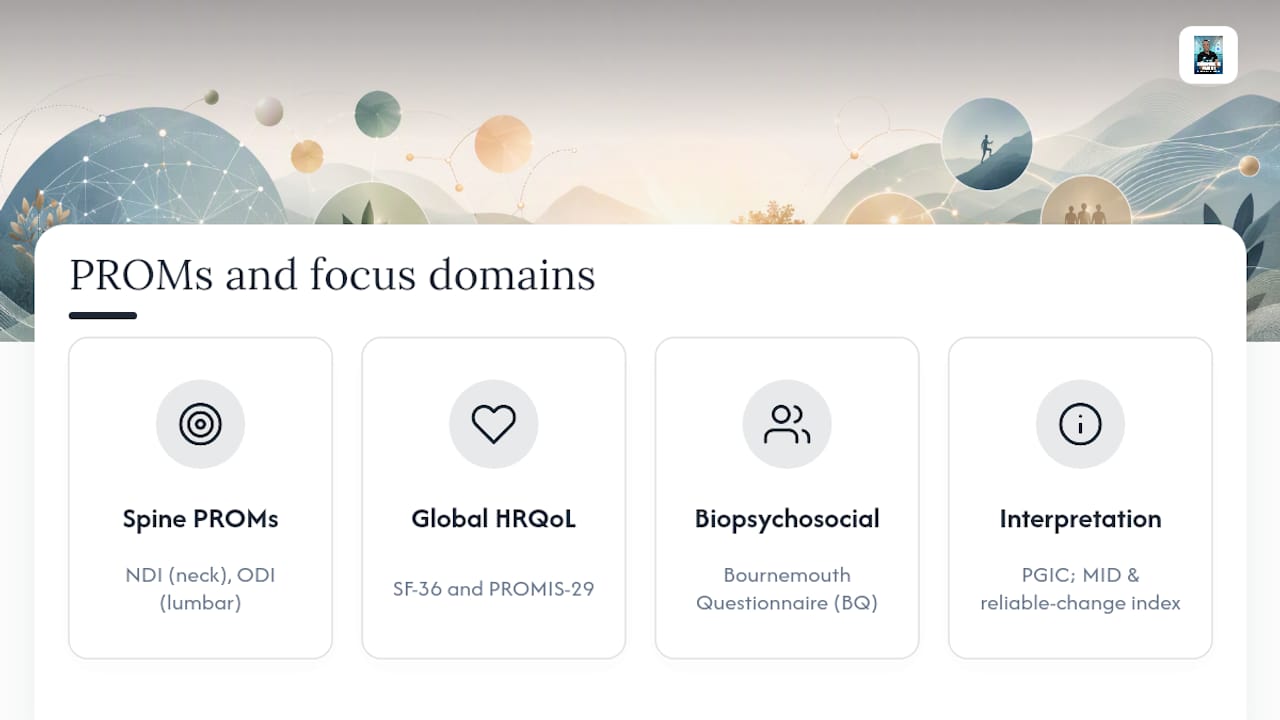
Validated PROMs and how to read change. Care pathways for chiropractic management recommend selecting PROMs matched to the complaint: NDI for neck, ODI for lumbar spine, SF-36 or PROMIS-29 for overall health-related quality of life, and the Bournemouth Questionnaire (BQ) for biopsychosocial tracking. The Patient Global Impression of Change (PGIC) captures the patient's own sense of shift. What counts as real improvement? Clinicians use the Minimal Important Difference (MID) and the reliable change index. A PROMIS-based study found responder rates of 13%–30% over three months depending on domain, which means group averages routinely mask whether you improved. Individual reliable-change calculations tell the true story.
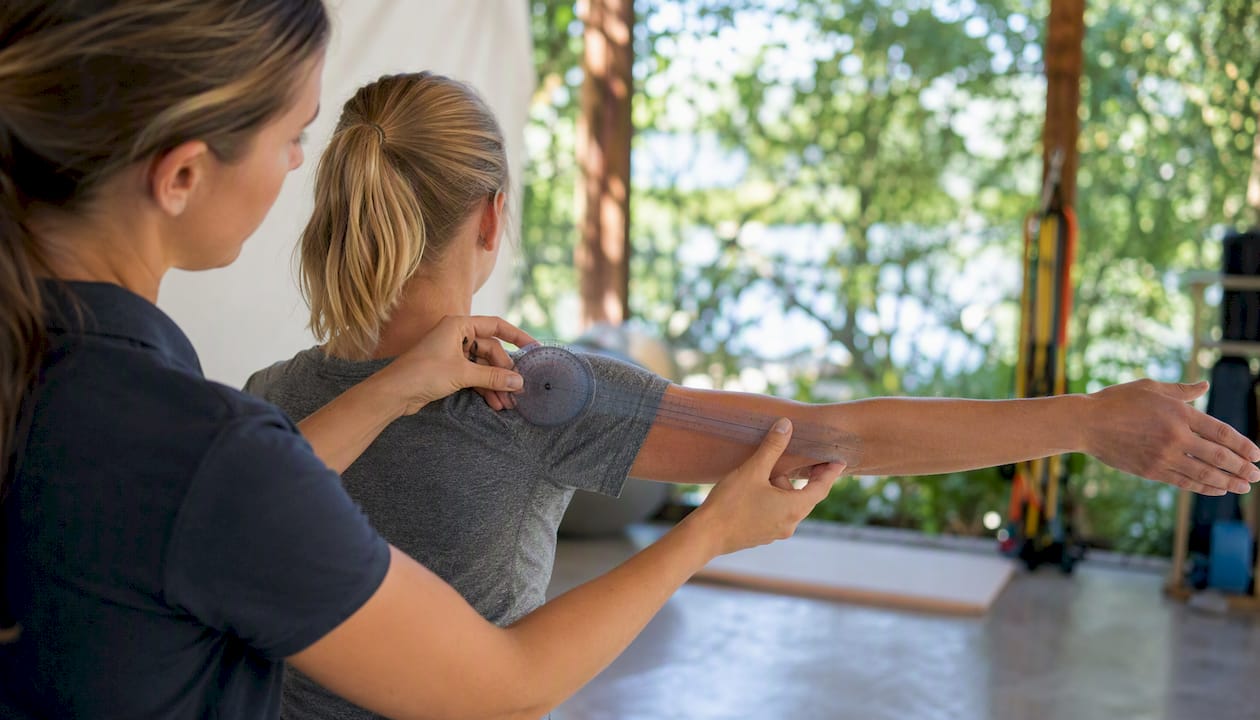
Objective tests with numbers. Clinicians record active ROM in degrees by joint, grip strength in pounds via dynamometer, single-leg balance in seconds, and timed walking. Postural photos through PostureScreen Mobile give a visual, date-stamped baseline. A published case report following a rear-impact MVC patient documented aligned gains in PROMs, grip, balance, and ROM across a multimodal program, with improvements holding at 10 months. That kind of longitudinal record is what separates a credible rehab file from a stack of visit notes.
Reassessment schedule and yellow flags. Formal reassessments typically occur at baseline, weeks 4–8, end of a treatment course, and optionally at 3 and 10 months. A 3-month chiropractic cohort study found statistically significant but modest average improvements, and introduced the concept of Maximum Therapeutic Improvement (MTI): the point where gains plateau and the clinician shifts to maintenance or discharge. Yellow flags, such as fear-avoidance beliefs or compensatory movement patterns spotted during exam, trigger a plan adjustment toward motor control work rather than pain suppression alone.
Pro Tip: CareResponse delivers PROM questionnaires by email at 14, 30, and 90 days, then exports date-stamped scores. Those exports, combined with objective baseline documentation, form the core of a persuasive insurance or legal package.
Sparkmed North Miami: get your baseline and start tracking today

Sparkmed, located in North Miami, runs the full tracking protocol described above from the first visit: baseline PROMs administered via CareResponse or in-clinic forms, objective tests with calibrated equipment, PostureScreen Mobile postural photos, and a written home exercise plan with adherence check-ins at every follow-up. Progress summaries, including date-stamped outcome scores and clinical notes, are packaged for insurers or legal teams on request. Multilingual support (English, Spanish, Creole) and Uber Health transport remove two common barriers to consistent care. To book, visit Sparkmed's clinic page, bring your accident report, any imaging, and your current symptom diary. Your first reassessment date gets set before you leave.
Research and resources to share with your clinician
The sources below are worth printing or forwarding to your treating chiropractor to align on measurement choices:
- PROMIS responder rates and reliable-change indices (PMC6459736) — explains why individual change matters more than group averages; research
- 3-month chiropractic cohort and MTI concept (PMC8667562) — realistic timelines and maintenance-care decision point; research
- 10-month MVC case report with objective measures (PMC10732608) — clinical example of aligned PROM and objective improvement; research
- Home recovery tracking framework — short daily check-in format for patients; practical guide
- CareResponse — clinic-side PROM delivery and export tool used for serial tracking and claims documentation
- PostureScreen Mobile — postural photo tool used for date-stamped baseline and follow-up imaging
Share the PMC articles with your chiropractor and keep the practical guides for your own daily log. Consistent use of home PT exercises between visits is one of the strongest predictors of durable gains.
This article is general information, not a substitute for advice from a qualified doctor. Consult a qualified healthcare professional about your own circumstances before acting on anything here.
Sources
- Pmc
- Pmc
- Pmc
- Subjective and Objective Improvement in a 39-Year-Old Male Suffering From Severe Chronic Pain and Disability Using Chiropractic BioPhysics® Protocols Following Rear-Impact Motor Vehicle Crash With a 10-Month Long-Term Follow-Up - PMC
- How to Document Function After a Crash - %