

Getting from the crash scene to feeling like yourself again is rarely a straight line. This guide to post-accident wellness covers what actually works: the immediate steps most people skip, the rehabilitation methods that speed healing, and the mental health strategies that rarely make it into discharge paperwork. Whether you're dealing with whiplash, back pain, or the anxiety that follows a traumatic event, physical and mental recovery after injury requires more than rest and painkillers. You deserve a clear, honest plan that addresses your whole health.
Table of Contents
- Key takeaways
- Your guide to post-accident wellness starts here
- Physical rehabilitation after an accident
- Mental health and trauma after an accident
- Holistic practices that support your recovery
- What I've learned from watching people recover
- Sparkmed is here for your recovery
- FAQ
Key takeaways
| Point | Details |
|---|---|
| Act within 14 days | Seek medical care fast to protect your Florida PIP benefits and catch hidden injuries early. |
| Chiropractic care accelerates healing | Consistent chiropractic follow-up helps patients recover significantly faster after car accidents. |
| PTSD is more common than people think | About 26% of road traffic accident survivors develop PTSD, so mental health screening matters. |
| Sleep is a recovery tool | Poor sleep worsens pain sensitivity, so fixing your sleep habits directly speeds physical rehab. |
| Holistic practices fill the gaps | Nutrition, breathing exercises, and gentle movement support healing that medical appointments alone cannot cover. |
Your guide to post-accident wellness starts here
The moments right after an accident can feel chaotic. Your adrenaline is high, pain might be masked, and the last thing on your mind is scheduling appointments. But the decisions you make in those first hours and days set the entire foundation for how well and how quickly you recover.
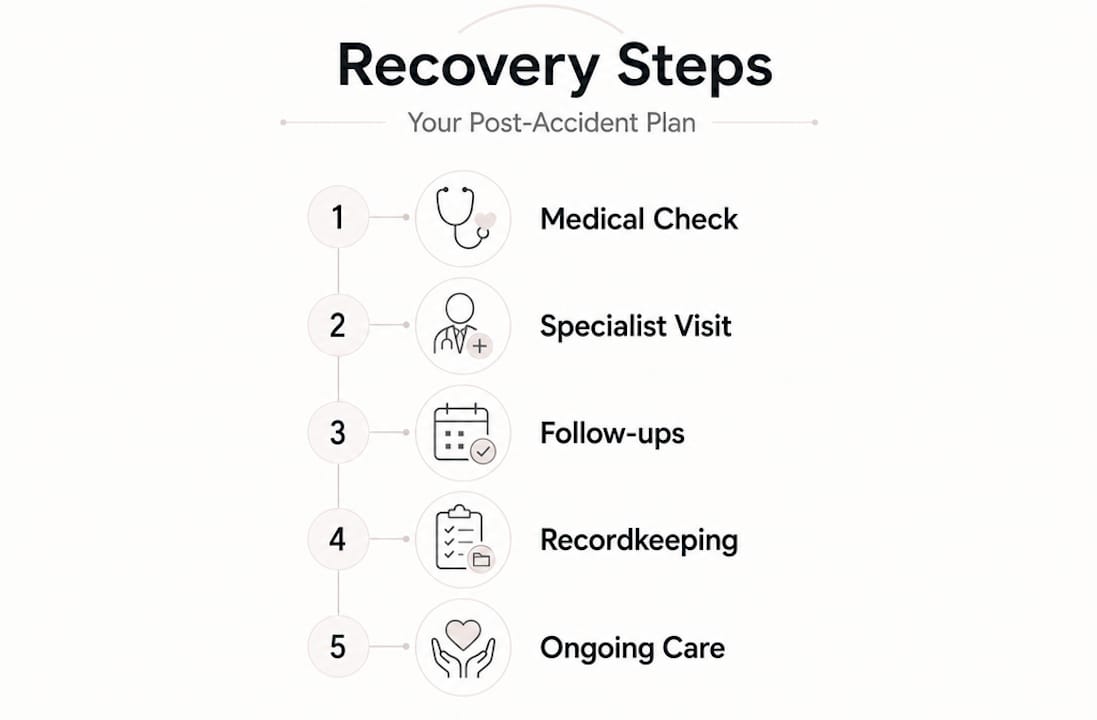
Step 1: Get evaluated immediately, even if you feel fine. Injuries like soft tissue damage, spinal misalignment, and concussions often do not produce obvious pain until 24 to 72 hours after impact. A same-day medical evaluation creates a documented baseline that both protects your health and supports any future insurance or legal claims.
Step 2: See a specialist within the critical window. In Florida, treatment within 14 days is required to preserve your Personal Injury Protection benefits. Missing that window can mean paying out of pocket for care that should have been covered.
Step 3: Schedule follow-up appointments before you leave your first visit. Recovery requires continuity. Ask your provider to map out a care plan during your initial consultation, whether that involves chiropractic adjustments, physical therapy, or specialist referrals.
Step 4: Keep records of everything. Save every receipt, treatment note, and symptom log. Gaps in your medical record can complicate both your recovery and any claims you file.
Pro Tip: If you experienced chest trauma, clinical guidelines recommend a follow-up appointment within one week of discharge. Do not wait for pain to worsen before making that call.
Physical rehabilitation after an accident
Rehabilitation is where recovery truly happens. Rest alone rarely restores full function. The goal of rehab is to rebuild strength, reduce inflammation, and retrain your nervous system to move normally after trauma.
Why timing matters for physical therapy
Early physiotherapy referral within 24 hours of a chest injury is now a clinical standard in trauma care. The same principle applies broadly: the sooner you begin guided movement, the less scar tissue forms, the less your muscles compensate in unhealthy ways, and the faster you regain your normal range of motion.
Common physical rehab techniques used after auto accidents include:
- Spinal mobilization and adjustments: Restores alignment in the vertebral column after whiplash or collision impact
- Therapeutic massage: Reduces muscle tension, improves circulation, and breaks down adhesions in soft tissue
- Stabilization exercises: Rebuilds core strength to support the spine and prevent re-injury
- Stretching and range-of-motion work: Counters the stiffness that develops when injured people naturally guard and restrict movement
- Dry needling and TENS therapy: Addresses localized pain points that resist manual treatment alone
How chiropractic care fits into rehabilitation
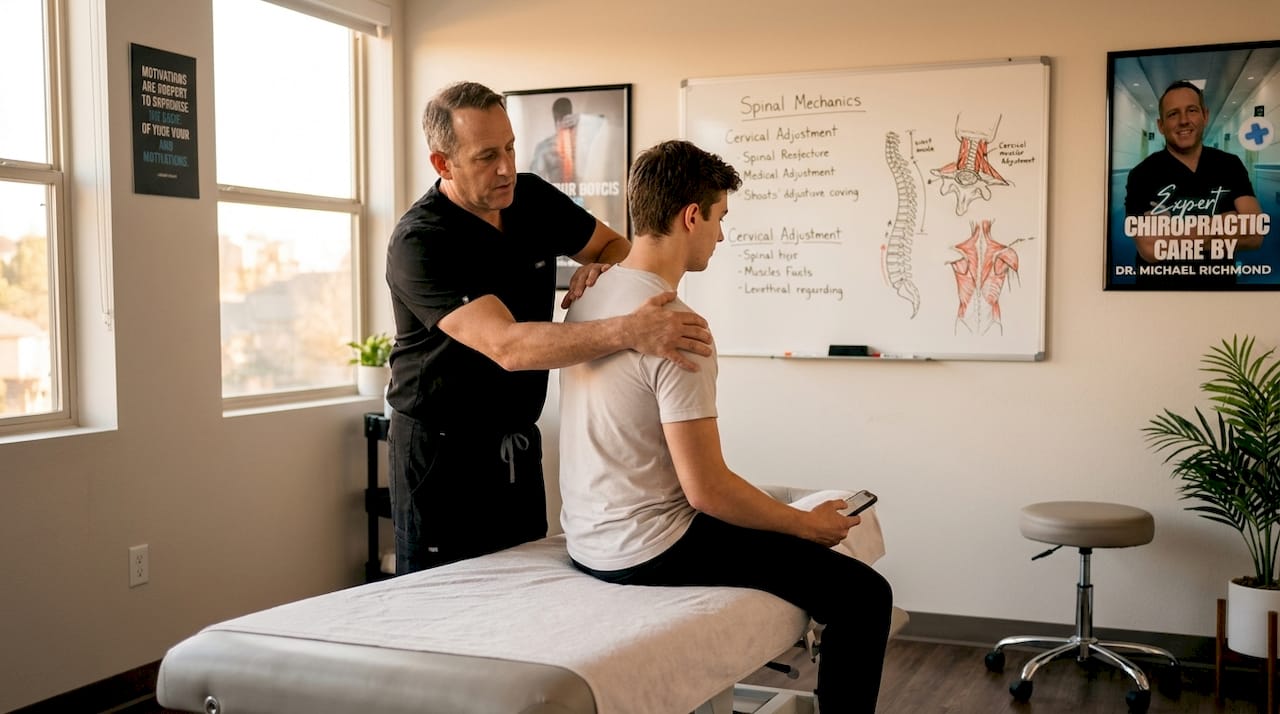
Chiropractic care is one of the most misunderstood tools in post-accident recovery. Many people think of it as optional or supplementary. In reality, it addresses spinal misalignment at the structural level, which is exactly where collision forces tend to do their damage. Patients who receive consistent chiropractic care after accidents report faster pain resolution and better long-term mobility outcomes.
| Rehabilitation method | Best for | Key benefit |
|---|---|---|
| Chiropractic adjustment | Spinal misalignment, neck/back pain | Restores alignment, reduces nerve pressure |
| Physical therapy | Muscle weakness, limited mobility | Rebuilds strength and functional movement |
| Therapeutic massage | Soft tissue pain, muscle spasms | Reduces tension and improves circulation |
| Stabilization exercises | Core instability post-injury | Protects the spine from further injury |
Pro Tip: Do not wait until pain becomes unbearable to start rehabilitation. Early, gentle movement under professional guidance produces better outcomes than extended bed rest.
Mental health and trauma after an accident
Here is what most people are not told at discharge: the psychological impact of a car accident can be as serious as the physical injuries, and it often takes longer to surface. About 26% of road traffic accident survivors develop PTSD globally, and the condition does not always appear immediately. Delayed PTSD is common after road traffic crashes, with symptoms sometimes emerging months after the event.
Anxiety, depression, intrusive memories, and avoidance of driving are all normal nervous system responses to trauma. They are not signs of weakness. Educating yourself about these responses can reduce their power and help you avoid the shame spiral that often delays people from seeking help.
Therapy options that work
Psychotherapy is the most evidence-backed approach for accident-related PTSD and anxiety. Specifically:
- Cognitive Behavioral Therapy (CBT): Retrains thought patterns that fuel anxiety and avoidance. Both trauma-focused and non-trauma-focused CBT show meaningful effectiveness for accident survivors, including those with traumatic brain injuries.
- EMDR (Eye Movement Desensitization and Reprocessing): Processes traumatic memories so they lose their emotional charge. Often faster than traditional talk therapy for specific trauma events.
- Psychoeducation: Learning how your nervous system responds to trauma reduces self-blame and helps you engage with recovery more proactively.
The sleep connection you cannot ignore
Sleep is where your brain and body do most of their repair work. Yet 60% of TBI patients and 67 to 88% of chronic pain sufferers struggle with sleep disturbances after injury. Poor sleep intensifies pain sensitivity and slows emotional recovery. The good news is that Cognitive Behavioral Therapy for Insomnia (CBT-I) has an 81% chance of improving your pain experience when sleep is targeted directly.
Sleep hygiene is not a soft recommendation. It is a clinical lever. Fixing your sleep habits is one of the fastest ways to improve both your pain levels and your emotional resilience during recovery.
Practical steps to protect your sleep during recovery include establishing a consistent bedtime, limiting screen exposure an hour before sleep, keeping your bedroom cool and dark, and discussing any pain-related nighttime waking with your provider.
Holistic practices that support your recovery
Medical appointments cover a fraction of your waking hours. What you do between those appointments determines a significant portion of your outcome. Wellness after an accident means building habits that keep your body and mind moving in the right direction every day.
Here are the practices with the most real-world impact:
- Anti-inflammatory nutrition: Focus on whole foods, omega-3-rich sources like salmon and walnuts, and colorful vegetables. Processed foods and excess sugar amplify inflammation and slow tissue repair.
- Hydration: Your intervertebral discs are mostly water. Staying well-hydrated supports spinal health and reduces joint stiffness, particularly important after whiplash or back injuries.
- Diaphragmatic breathing: Deep, controlled breathing reduces cortisol, calms the nervous system, and is one of the few practices that directly addresses both pain and anxiety simultaneously.
- Gentle yoga and stretching: Even 10 minutes of gentle movement daily maintains circulation and prevents the muscle atrophy that sets in quickly during sedentary recovery.
- Journaling your symptoms: Tracking daily pain levels, mood, sleep quality, and energy gives you and your care team data to adjust your treatment plan in real time.
Managing setbacks is a critical piece of how to heal post-accident that almost no guide addresses honestly. Recovery is not a steady upward climb. You will have days that feel like regression. Emotional and physical setbacks after accidents are normal neurological adaptations, not signs that something has gone permanently wrong. Building that expectation into your plan prevents the demoralization that causes people to give up on care too early.
Pro Tip: Consider working with a multidisciplinary care team that includes a chiropractor, physical therapist, and mental health counselor. Coordinated care consistently produces faster and more durable outcomes than treating each system in isolation.
What I've learned from watching people recover
In my experience working with accident survivors, the biggest mistake I see is waiting. People wait for pain to peak before seeking care. They wait for anxiety to become unbearable before talking to a therapist. They wait to see if things resolve on their own. And in almost every case, waiting costs them time, money, and quality of life.
What I've also learned is that recovery is profoundly personal. Two people with identical injuries from the same type of crash can have wildly different timelines. The difference is almost always in the consistency of their care and the breadth of their approach. The person who only treats the physical injury while ignoring sleep, stress, and nutrition almost always takes longer to recover than the person who addresses all of it together.
My honest take: the guidelines for accident recovery that work are not complicated. But they require showing up for yourself before you feel ready. Start before you feel certain. Ask for help before you feel desperate. And do not let anyone convince you that struggling emotionally after a traumatic event is something to push through alone.
— Spark
Sparkmed is here for your recovery
At Sparkmed in North Miami, recovery is not a one-size-fits-all program. The team specializes in post-accident chiropractic care and rehabilitation, with treatment plans built around your specific injuries, symptoms, and goals. From spinal adjustments to structured accident recovery care, Sparkmed offers affordable options including a $25 chiropractic adjustment that does not require insurance. If you were recently in an accident, the window for effective early intervention is open right now. Explore Sparkmed's blog for continued guidance on wellness after an accident, and book your first appointment before that critical 14-day window closes.
FAQ
What should I do immediately after a car accident?
Seek medical evaluation the same day, even if you feel fine, because many injuries are not immediately apparent. In Florida, you must begin treatment within 14 days to keep your Personal Injury Protection benefits active.
How long does post-accident recovery typically take?
Recovery timelines vary widely depending on injury severity, age, and how quickly care begins. Most soft tissue injuries resolve in weeks to months, but psychological symptoms like PTSD can persist for much longer without professional support.
Is chiropractic care effective after a car accident?
Yes. Studies show patients who receive consistent chiropractic follow-up after accidents recover 40% faster, with improvements in spinal alignment, pain reduction, and overall mobility.
Can I develop PTSD after a car accident?
Approximately 26% of road traffic accident survivors develop PTSD, and symptoms can appear weeks or months after the crash. Early mental health screening and therapy, particularly CBT, significantly reduce the risk of chronic PTSD.
Why is sleep so important during accident recovery?
Poor sleep intensifies pain sensitivity and slows both physical and emotional healing. Between 60 and 88% of trauma patients experience sleep disruption, and addressing it directly through CBT-I has an 81% success rate in improving pain outcomes.