
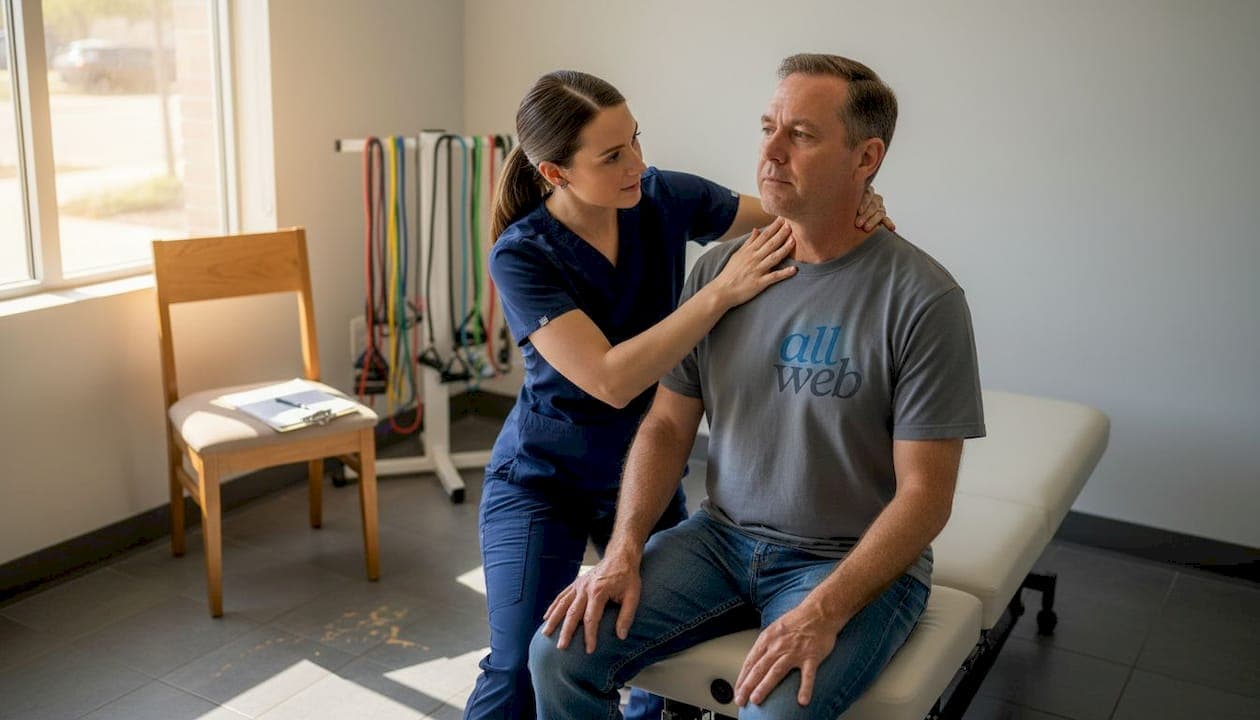
After an auto accident or slip and fall in North Miami, the fear of needing surgery can feel overwhelming. But here's what most people don't realize: chiropractic care can resolve whiplash, herniated discs, and soft tissue injuries without going under the knife. Surgery is not the automatic answer for most accident injuries. In fact, the evidence strongly favors starting with non-invasive chiropractic treatment first. This article breaks down the real comparison between chiropractic care and surgery, including outcomes, costs, safety, and when surgery is actually necessary, so you can make a confident, informed decision about your recovery.
Table of Contents
- Understanding auto and fall injuries: Why non-invasive first matters
- Chiropractic vs surgery: Efficacy, safety, and recovery compared
- Costs and opioid risks: Why chiropractic leads for affordability and safety
- When is surgery really necessary? Clarifying the exceptions
- Why most people in North Miami benefit from non-invasive care first
- Explore safe, effective chiropractic solutions in North Miami
- Frequently asked questions
Key Takeaways
| Point | Details |
|---|---|
| Non-invasive value | Most accident injuries heal effectively with chiropractic care, minimizing risks. |
| Comparable outcomes | Outcomes for pain and function are similar between chiropractic and surgery for many injuries. |
| Lower costs | Chiropractic treatment is much more affordable than surgery and reduces opioid reliance. |
| When surgery is needed | Surgery is only necessary for rare, severe cases like fractures or spinal instability. |
Understanding auto and fall injuries: Why non-invasive first matters
After a car accident or a bad fall, your body takes a serious hit. The most common injuries we see in North Miami patients include whiplash, herniated or bulging discs, muscle strains, ligament sprains, and nerve irritation along the spine. These injuries can cause lasting pain, limited movement, and real disruption to your daily life.
The good news is that most of these injuries respond very well to non-invasive care. Chiropractic treatment uses HVLA and manual adjustments (high-velocity, low-amplitude spinal manipulation) to realign the spine, restore nerve function, and reduce pain without medication or cutting. When the spine is properly aligned, the body's natural healing process works faster and more effectively.
Here are the most common injuries that respond well to chiropractic care:
- Whiplash: Neck strain from sudden impact, very common in rear-end collisions
- Disc herniation: When the soft center of a spinal disc pushes outward and irritates nearby nerves
- Muscle and ligament strains: Overstretched or torn soft tissue from impact or awkward falls
- Nerve compression: Pinched nerves causing pain, tingling, or numbness in the arms or legs
- Joint dysfunction: Misaligned spinal joints that restrict movement and cause chronic pain
Understanding the chiropractic wellness benefits of starting non-invasive care early can make a real difference in how fast you recover. Patients who begin chiropractic treatment shortly after an accident typically return to normal activity faster than those who wait or go straight to surgical consultations.
That said, getting an MD evaluation right after any accident is always the right first step. A medical doctor can rule out fractures, internal injuries, or other serious conditions that need immediate attention. Once serious trauma is cleared, chiropractic care becomes a powerful primary treatment option.
Pro Tip: If you're unsure what to bring or expect at your first appointment, reading up on preparing for a chiropractic visit after an accident can help you feel more confident walking in.
Knowing what to expect from chiropractic after a car accident also helps you understand your legal and medical rights as an injury victim in Florida.
Chiropractic vs surgery: Efficacy, safety, and recovery compared
Now that we've seen which injuries are most common and why non-invasive care is often the first choice, let's compare what actually happens with chiropractic care versus surgery.
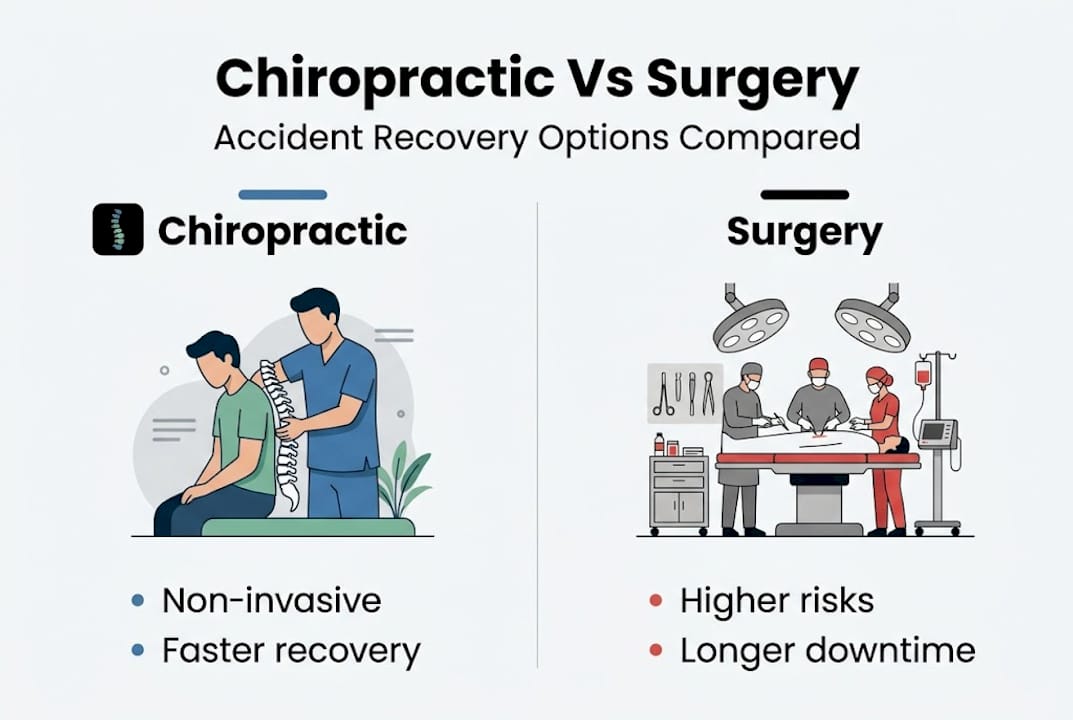
The data tells a clear story. Lumbar fusion surgery carries a 10 to 40% risk of failed back surgery syndrome, a condition where pain persists or worsens after the operation. That's a significant risk when you're already dealing with the stress of an accident injury. Chiropractic care, by contrast, has a very low rate of serious complications.

Research also shows that SMT provides similar relief to surgery for disc herniations and back pain, with 60 to 80% of disc herniations resolving without any operation in clinical trials. That number should change how you think about surgery as a first option.
| Outcome | Chiropractic care | Surgery |
|---|---|---|
| Pain relief | High, comparable to surgery | High, but with longer recovery |
| Functional improvement | Steady, within weeks | Slower, often months |
| Serious complication risk | Very low | 10 to 40% (failed back syndrome) |
| Recovery time | Days to weeks | Months |
| Repeat procedures needed | Rarely | Sometimes required |
Here's a step-by-step look at what each approach actually involves:
- Chiropractic care: Initial evaluation, spinal adjustment sessions, soft tissue therapy, guided rehab exercises, and gradual return to activity over weeks
- Surgery: Pre-surgical testing, anesthesia, the procedure itself, hospital stay, wound healing, physical therapy, and a recovery period that often spans three to six months
"Most musculoskeletal injuries from accidents heal equally well or better with non-invasive chiropractic care, and the evidence for spinal manipulation is strong enough that it should be the first-line treatment before surgical options are considered."
For a closer look at how local chiropractor recovery works in practice, you can see what a structured treatment plan looks like from start to finish. Reviewing chronic low back pain data from large clinical reviews also reinforces why non-invasive care is the smarter starting point for most patients.
Costs and opioid risks: Why chiropractic leads for affordability and safety
Understanding which approach works better is vital, but cost and safety often seal the decision, especially after an accident. Let's break down the numbers.
Chiropractic care is dramatically more affordable than surgery. Studies show 28x lower surgery rates among patients who start with chiropractic, with cost-effectiveness ratios well under $50,000 per quality-adjusted life year (QALY), and compensation costs that are roughly ten times lower than surgical pathways. That's not a small difference. That's a financial argument that's hard to ignore.
| Cost factor | Chiropractic care | Surgery |
|---|---|---|
| Initial treatment cost | Low to moderate | Very high |
| Hospitalization needed | No | Yes |
| Follow-up care costs | Minimal | Often significant |
| Lost work time | Days to weeks | Months |
| Opioid prescription costs | Rarely needed | Frequently prescribed |
The opioid issue is especially important. After accidents, many patients end up on prescription painkillers to manage post-surgical pain, which carries its own serious risks. Chiropractic care reduces opioid adverse event risk by 71%, with a relative risk of just 0.29 compared to patients who don't use chiropractic. That's a massive safety advantage.
Here's what makes chiropractic more cost-effective in real-world terms:
- No hospital admission or surgical facility fees
- No anesthesia costs or post-surgical monitoring
- Faster return to work means less lost income
- Lower need for prescription medications
- Fewer follow-up specialist visits
Pro Tip: If you don't have insurance, don't let that stop you. Many chiropractic clinics, including chiropractic providers in North Miami, offer no-insurance adjustment options so cost doesn't become a barrier to your recovery.
You can also review the cost-effectiveness findings from peer-reviewed research to see exactly how the numbers compare across different injury types and treatment pathways.
When is surgery really necessary? Clarifying the exceptions
While most people see positive results from chiropractic care, there are situations where surgery becomes unavoidable. Here's how to recognize those rare cases.
Surgery is genuinely necessary in a small set of serious scenarios. Cases requiring surgery include fractures with instability, cauda equina syndrome (a medical emergency involving loss of bladder or bowel control), spinal tumors, severe nerve compression that doesn't respond to conservative care, and traumatic spinal instability. These are the exceptions, not the rule.
Here are the red-flag symptoms that signal you need emergency or surgical evaluation right away:
- Loss of bladder or bowel control after an accident
- Severe weakness or paralysis in the arms or legs
- Visible bone deformity or suspected fracture
- Progressive neurological decline despite conservative treatment
- Diagnosed spinal tumor or infection
"The vast majority of accident injuries, including most disc herniations, nerve irritation, and soft tissue damage, respond well to chiropractic care first. Surgery is reserved for the cases where structural damage is too severe for any other approach."
This is exactly why a medical evaluation right after your accident is so important. A doctor can confirm whether you're in that small category of patients who need surgery, or whether you're among the majority who will do better starting with how chiropractors help after injuries through targeted, non-invasive treatment.
At Spark Chiropractic, we always work alongside your medical team to ensure you're getting the right level of care for your specific injury. If surgery is truly needed, we'll tell you honestly. But in most cases, you won't need it.
Why most people in North Miami benefit from non-invasive care first
Here's the uncomfortable truth: many people in North Miami still hesitate to choose chiropractic first, not because the evidence is weak, but because of outdated cultural beliefs about what "real" treatment looks like. Surgery feels decisive. It feels like action. Chiropractic care, to some, still sounds like an alternative option rather than a primary one.
That mindset is costing people time, money, and unnecessary pain.
The data is clear. The outcomes are comparable or better. The costs are dramatically lower. The risks are far smaller. And yet, the bias toward surgery persists in some medical circles and in the minds of patients who were never given the full picture.
Our experience working with accident victims shows that fear of under-treatment is the biggest barrier. People worry that choosing chiropractic means they're not taking their injury seriously. The opposite is true. Choosing evidence-based, lower-risk care first is the most responsible decision you can make.
If you've been in an accident, the smart move is to get your MD evaluation, rule out fractures, and then start chiropractic recovery as soon as you're cleared. Don't wait for pain to become chronic before acting.
Explore safe, effective chiropractic solutions in North Miami
If you've been injured in an auto accident or slip and fall, you deserve care that's both effective and safe. At Spark Chiropractic, we've spent over 20 years helping North Miami patients recover from exactly these kinds of injuries, without surgery and without opioids.
Our team uses advanced spinal adjustment techniques, personalized wellness plans, and hands-on soft tissue therapy to get you back to your life faster. We work with accident victims, handle no-insurance cases, and offer flexible scheduling so recovery fits your life. Whether you're dealing with whiplash, a herniated disc, or persistent back pain after a fall, we're ready to help. Visit Spark Chiropractic in North Miami today to schedule your evaluation and take the first step toward real, lasting recovery.
Frequently asked questions
Is chiropractic care as effective as surgery for whiplash and disc injuries?
For most accident-related whiplash and disc injuries, chiropractic care offers similar pain relief and functional outcomes compared to surgery, with less risk and faster recovery.
Does chiropractic really lower the need for opioids and surgery?
Yes, people who start with chiropractic after injuries are 28 times less likely to need surgery and have a 71% lower risk of opioid-related complications.
How do I know if I need surgery after an accident?
Surgery is usually only required for severe injuries like fractures or cauda equina syndrome. Most accident injuries resolve well with chiropractic and conservative care.
What are the risks of chiropractic vs surgery?
Chiropractic risks are rare and minor. Surgery carries a 10 to 40% risk of failed back surgery syndrome, plus potential infection and nerve damage.