

Yes, delayed pain after a car accident is common. It often surfaces 24 to 72 hours after the crash, and most of it comes from treatable muscle, joint, or soft-tissue injuries. Some signs, though, point to something more serious. The first move is simple: get evaluated by a medical professional soon, and write down exactly when each symptom started.
TL;DR:
- Most delayed pain after a car accident develops within 24 to 72 hours due to inflammation, muscle guarding, and structural changes, not immediate impact.
- Red flags requiring urgent care include severe headaches, neurological deficits, chest pain, loss of bladder control, or symptoms in someone on blood thinners.
- Imaging is typically only necessary when clinical signs suggest bone injury, while most soft-tissue injuries improve with conservative management within weeks.
- Start treatment early by booking a medical exam, documenting symptoms, and using cold in the first 48 hours, followed by gradual activity and heat therapy.
- Recovery generally takes days to 12 weeks, but older age, high initial pain, nerve symptoms, and psychological stress can prolong the healing process.
Table of Contents
- Why Delayed Pain After a Car Accident Happens
- Common Delayed Symptoms and What They Usually Mean
- Red Flags That Mean You Need Emergency Care Now
- What to Do in the First Days After Symptoms Appear
- How Long Recovery Takes and Who's at Higher Risk
- How Clinicians Evaluate Delayed Pain and Where Conservative Care Fits
- A Clinician's Note on Acting Early
- Sources
- FAQ
Why Delayed Pain After a Car Accident Happens
Your body is not lying to you when it feels fine at the scene, only to hurt like it got hit by a truck two days later. Adrenaline and other stress hormones flood your system during a collision and blunt pain signals almost immediately. That chemical shield fades within hours, and what's underneath becomes obvious.
Inflammation follows a slower timeline. Swelling and tissue irritation typically build over 24 to 72 hours, which is exactly when whiplash symptoms tend to peak according to Mayo Clinic. Muscles also start guarding an injured area almost reflexively, tightening up to protect it, and that guarding itself creates new stiffness and soreness days later. A few mechanisms explain most delayed pain cases:
- Stress-hormone masking: adrenaline and endogenous opioids suppress pain at impact.
- Inflammatory buildup: swelling and chemical irritation intensify over the following days.
- Muscle guarding: protective tightening spreads discomfort to nearby areas.
- Slow structural changes: disc irritation or internal injuries can worsen gradually rather than announce themselves at once.
Common Delayed Symptoms and What They Usually Mean
Different symptoms point to different tissues, and knowing the pattern helps you describe what's happening when you see a clinician.
- Neck pain, stiffness, and headaches. This is classic whiplash territory. Reduced range of motion and a dull ache at the base of the skull often show up a day or two after the crash and can take at least 12 hours to appear.
- Low-back pain with leg or buttock symptoms. Strain or disc irritation in the lumbar spine can radiate downward, sometimes mimicking sciatica, as swelling around a nerve root builds.
- Headache, nausea, or sensitivity to light and noise. These can signal a concussion, and Cleveland Clinic notes that head-injury symptoms frequently trail the impact by hours or days rather than appearing instantly.
- Chest or abdominal bruising and stiffness. Seatbelt pressure during a hard stop can bruise soft tissue that only becomes painful once inflammation sets in.
- Numbness, tingling, or weakness in an arm or leg. These sensory changes suggest nerve involvement and deserve prompt attention rather than a wait-and-see approach.
Red Flags That Mean You Need Emergency Care Now
Most delayed pain is manageable and improves with conservative treatment. A smaller set of symptoms means you should not wait for a scheduled appointment.
- A severe or rapidly worsening headache, confusion, repeated vomiting, or fainting.
- New or spreading weakness, numbness, or loss of coordination in an arm or leg.
- Chest pain, shortness of breath, or new abdominal tenderness, especially where a seatbelt crossed your body.
- Loss of bladder or bowel control, or severe tenderness along the center of your spine.
- Any new symptom in someone who takes blood thinners or briefly lost consciousness in the crash.
Research on chronic widespread pain after motor vehicle collisions found that a measurable subset of patients followed a trajectory toward persistent, widespread pain rather than a normal recovery curve. That number is a strong argument for treating red flags seriously and getting ahead of problems early, rather than assuming everything will settle on its own.
What to Do in the First Days After Symptoms Appear
The choices you make in the first week matter more than most people realize, both for your recovery and for how an insurance claim eventually gets evaluated.
- Book a medical exam quickly and write down your timeline. Note the exact day and time each symptom started. That record becomes evidence, not just memory.
- Tell the clinician everything about the crash. Speed, direction of impact, whether you braced for it, and how your symptoms have changed since. This context shapes the exam.
- Expect imaging only when it's warranted. Clinicians reserve X-rays or MRIs for red-flag signs or exams that suggest something beyond a soft-tissue strain; most cases start with conservative management instead.
- Use cold for the first 24 to 48 hours, then switch to heat. Gentle movement and gradually increasing activity tend to outperform strict rest for whiplash-type injuries. Over-the-counter NSAIDs or acetaminophen can help in the meantime, taken as directed.
- Document any gaps in care. If you miss an appointment or delay treatment for a real reason, write down why. Insurers frequently treat unexplained treatment gaps as evidence against a claim, so a documented reason protects you later.
Pro Tip: Keep a simple daily notebook or phone note for the first two weeks: date, symptom, severity on a 1 to 10 scale, and what made it better or worse. That log is worth more to a clinician, and to an insurer, than trying to reconstruct it from memory a month later.
How Long Recovery Takes and Who's at Higher Risk
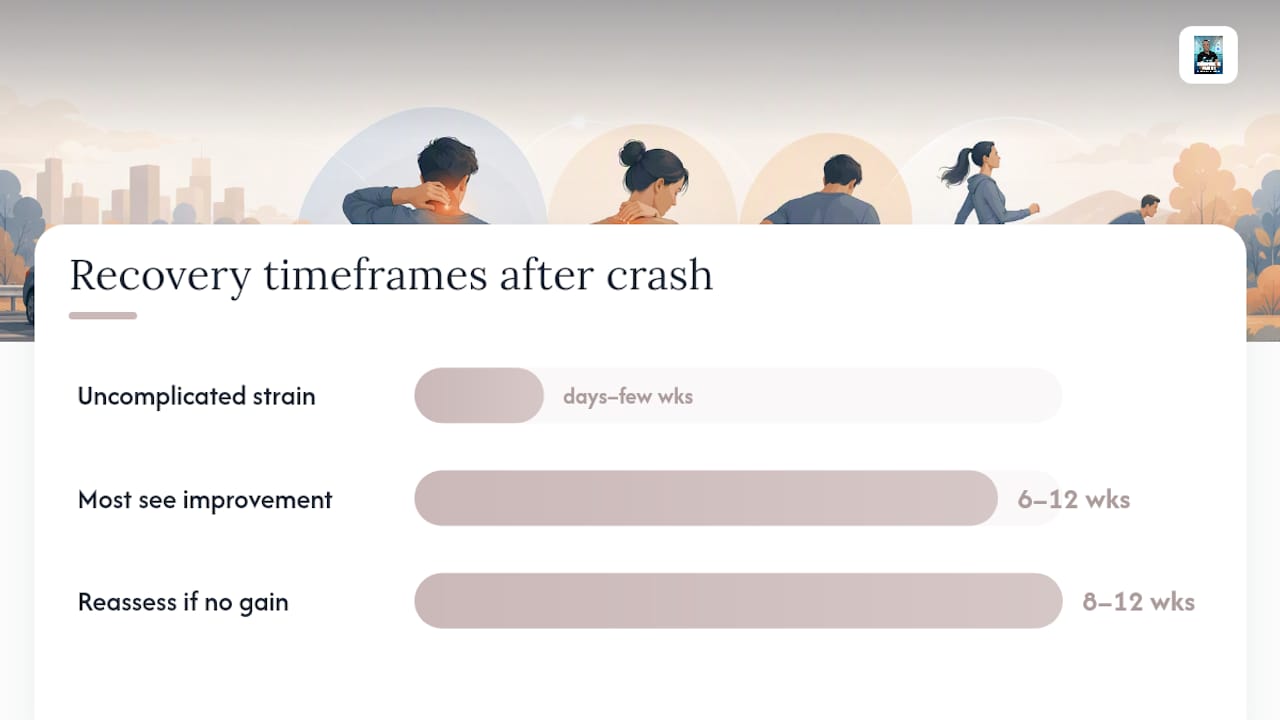
Most soft-tissue injuries from a crash improve within days to a few weeks, and a large share of people feel substantially better within 6 to 12 weeks. That's the typical course, not a guarantee.
Certain factors predict a slower road: high pain intensity right after the crash, symptoms that radiate into an arm or leg, older age, a higher body mass index, and psychological stress in the aftermath. Anxiety and post-traumatic stress are not side issues here. They can amplify how pain is perceived and processed, and they show up repeatedly in patients whose recovery stalls.
- Days to weeks: typical course for uncomplicated muscle and soft-tissue strain.
- 6 to 12 weeks: window where most people see meaningful improvement.
- A notable share of patients in one cohort study followed a non-recovery path toward chronic widespread pain over a full year.
If you've hit the 8 to 12 week mark with no meaningful improvement, that's the point to ask for a broader reassessment, possibly involving more than one type of provider, rather than continuing the same plan indefinitely.
How Clinicians Evaluate Delayed Pain and Where Conservative Care Fits
A thorough post-crash exam starts with the mechanics of the collision. How fast, from what angle, whether you braced. From there, a clinician checks range of motion, runs a basic neurological screen, and orders on-site X-rays when the exam suggests bone involvement rather than soft tissue alone.
Conservative care remains the backbone of treatment for most delayed injuries. Early, guided motion and manual therapy tend to outperform prolonged rest for whiplash, and progressive exercise combined with modalities like ultrasound or electrical stimulation can ease pain while function improves. Clinics still refer out for advanced imaging or specialist input when red flags appear or progress stalls.
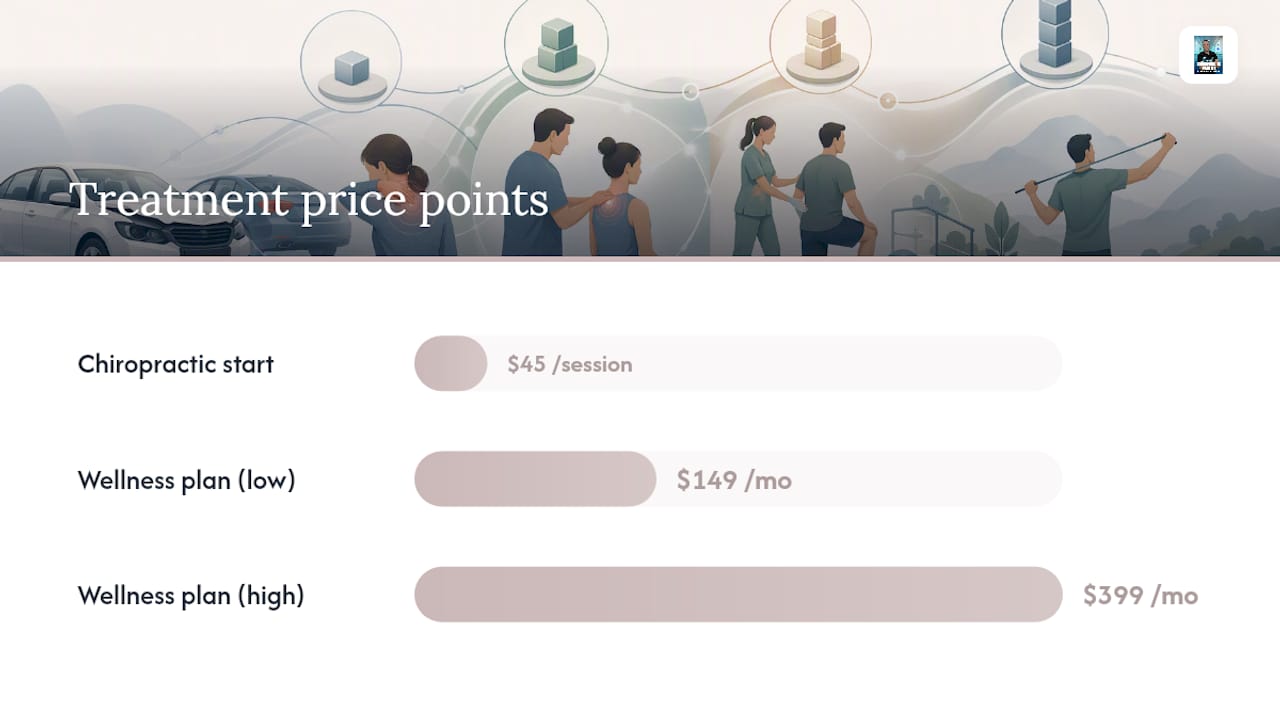
Sparkmed treats a steady stream of North Miami patients working through exactly this kind of delayed pain, with bilingual support in English, Spanish, and Creole and pricing built around accident recovery. Chiropractic adjustments start at $45 per session, and structured wellness plans run from $149 to $399 a month depending on how much hands-on care and modality work a recovery plan needs.
- History and mechanism of injury review
- Range-of-motion and neurological screening
- On-site X-rays when clinically indicated
- Progressive, active rehabilitation over passive rest
A Clinician's Note on Acting Early
Pain that shows up two days after a crash is not a sign you're overreacting. It's your body catching up to what actually happened. Get checked early, stay active within reason, and most delayed injuries respond well to conservative care within a matter of weeks.
— Spark
This article is general information, not a substitute for advice from a qualified doctor. Consult a qualified healthcare professional about your own circumstances before acting on anything here.
Sources
- Whiplash - Symptoms and causes | Mayo Clinic
- Development of chronic widespread pain after motor vehicle collision — PMC
- Whiplash - Symptoms and causes | Cleveland Clinic
FAQ
How Long After a Car Accident Can Pain Occur?
Pain commonly appears 24 to 72 hours after a crash, though whiplash symptoms can take at least 12 hours to show up. Some symptoms, especially from disc or nerve irritation, can develop gradually over days to weeks.
What Could Be Causing Delayed Back Pain After a Car Accident?
Delayed back pain usually comes from muscle strain, ligament injury, or disc irritation that worsens as inflammation builds. If pain radiates into your buttock or leg, it may signal nerve involvement and is worth a prompt medical exam.
What Are Delayed Symptoms After a Car Accident?
The most common delayed symptoms are neck stiffness, headaches, low-back pain, and concussion-related signs like nausea or sensitivity to light, which Cleveland Clinic notes often trail the crash by hours or days. Bruising from a seatbelt and numbness or tingling in a limb can also show up late.
How Do You Heal Your Body After a Car Accident?
Early evaluation, gentle movement, and a mix of cold then heat therapy support recovery for most soft-tissue injuries in the first weeks. Progressive exercise and conservative treatments like manual therapy tend to work better than strict rest, and documenting your symptom timeline protects both your health and any related claim.