

If you were just in a crash, the most important symptoms to watch for fall into five clusters: musculoskeletal pain (neck, back, joints), head and concussion signs (headache, dizziness, confusion), numbness or tingling in the arms or legs, chest or abdominal pain that could signal internal injury, and emotional or cognitive changes like anxiety, brain fog, or sleep disruption. According to the National Safety Council, motor vehicle accidents resulted in millions of medically consulted injuries in the United States in recent years, with total associated costs reaching hundreds of billions of dollars. You are far from alone, and many of those injuries were not obvious at the scene.
For anything short of those red flags, get a medical evaluation within 24–72 hours and start a symptom journal today. Write down the date, time, location of pain, intensity on a 1–10 scale, and any activity that makes it worse or better.
Pro Tip: Take photos of any visible bruising, swelling, or vehicle damage before you leave the scene. Timestamps on those photos become useful documentation later.
Key Takeaways
Delayed symptoms after car accidents are common, and patients who begin structured care within the first two weeks have the best chance of avoiding chronic pain.
| Point | Details |
|---|---|
| Symptoms often appear hours to days later | Adrenaline masks early pain; inflammation and nerve compression peak 24–72 hours post-crash. |
| Five main symptom clusters to watch | Head/concussion signs, neck/whiplash, back/spine, chest/abdomen, and emotional or cognitive changes. |
| Know the red flags | Loss of consciousness, unequal pupils, severe chest pain, worsening abdominal pain, or sudden limb weakness require 911 or an ER visit. |
| Two-week threshold for follow-up | Patients still in moderate-to-severe pain at two weeks are likely to remain symptomatic at eight weeks without structured care. |
| Sparkmed for early crash care | Sparkmed in North Miami offers chiropractic evaluation, therapeutic modalities, and documented recovery plans starting at $25, no insurance required. |
Table of Contents
- Why do some injury symptoms show up hours or days later?
- What are the most common physical symptoms after a car accident?
- When do symptoms typically appear after a crash?
- What emotional and cognitive symptoms should you watch for after a crash?
- Red flags: when should you call 911 or go to the ER?
- How do clinicians evaluate crash injuries?
- What treatments and recovery timelines can you expect?
- How Sparkmed approaches early care for crash patients
- Practical notes on costs, insurance, and documenting your injuries
- A note from Sparkmed to anyone who was just in a crash
- Sparkmed offers early crash evaluation in North Miami
- Sources
Why do some injury symptoms show up hours or days later?
Delayed symptoms are common after crashes, and the biology behind them is straightforward. The moment of impact triggers a surge of adrenaline and cortisol. Those stress hormones suppress pain perception acutely, which is why many people walk away from a serious collision feeling surprisingly fine. The real picture emerges later, as hormone levels drop and the body's inflammatory response builds.
Soft-tissue injuries in particular follow this pattern. Muscle guarding, ligament swelling, and disc irritation often peak 24–72 hours after the event, not at the moment of impact. Nerve irritation can take even longer: as surrounding tissue swells, it gradually compresses nearby nerve roots, producing numbness or tingling that wasn't present in the first hours. Concussive effects can also evolve over a day or two as the brain's metabolic response to trauma unfolds.
Common crash mechanics that produce delayed symptoms include:
- Rear-end collisions: The classic whiplash mechanism. The head snaps back and forward faster than the muscles can react, and stiffness often sets in the next morning.
- Side-impact (T-bone) crashes: Lateral forces stress the thoracic spine and ribs; chest-wall soreness may not register until the day after.
- Rollovers: Multiple force vectors mean injuries can be distributed across the spine, shoulders, and head, with symptoms appearing in stages.
The clinical implication is real: a normal-looking scene exam or an initial CT that shows nothing acute does not mean you are uninjured. Evolving inflammation and slow-onset nerve compression can produce findings that simply weren't there yet. That is why early follow-up matters even when you feel okay at discharge.
Pro Tip: Keep a daily symptom log for at least two weeks after any crash. Note new symptoms as they appear, not just the ones you had on day one. That log is evidence if your condition evolves.
What are the most common physical symptoms after a car accident?
Physical symptoms after a crash span several body systems. The main ones are head and brain, neck, back and spine, extremities and joints, chest and abdomen, and peripheral nerves. Recognizing which system is involved helps you describe symptoms accurately to a clinician and to your insurance adjuster.
Head and brain
Concussion signs include headache, dizziness, nausea, sensitivity to light or noise, blurred vision, feeling "foggy," memory gaps around the event, and brief confusion. You do not have to lose consciousness to have a concussion. Some patients describe "seeing stars" or a brief blank period they can't account for. Symptoms typically appear within minutes to hours, though some cognitive effects surface over the first day or two. The cervical spine's role in concussion-like symptoms is worth understanding: neck dysfunction can mimic or worsen head-injury signs, which is why a combined head-and-neck evaluation matters.
Neck and whiplash
Neck pain, stiffness, and reduced range of motion are the hallmark signs of whiplash-type neck sprain. Headaches that originate at the base of the skull (occipital headaches), shoulder and upper-back tightness, and radiating pain or tingling down one or both arms are all common. Symptoms often don't peak until 24–48 hours post-crash, and some patients don't notice the stiffness until they wake up the morning after.

Back and spine
Low back pain is one of the most frequently reported post-accident complaints. When a disc is irritated or herniated, pain can radiate down the leg in a sciatica-like pattern, with numbness, tingling, or weakness below the knee. Thoracic (mid-back) pain is less common but can follow side-impact or rollover crashes.
Extremities and joints
Swelling, bruising, and joint pain in the shoulders, knees, wrists, or hips can indicate sprains, strains, or fractures. A limb that looks deformed, cannot bear weight, or cannot be moved through its normal range needs imaging promptly.
Chest and abdomen
Chest pain and shortness of breath after a crash can reflect rib fractures, a pneumothorax, or cardiac contusion. Abdominal pain, especially if it is spreading or accompanied by a rigid belly, raises concern for internal organ injury or slow internal bleeding. These symptoms warrant emergency evaluation, not a wait-and-see approach.
Nerve symptoms
Numbness, tingling, burning, or weakness that follows a specific pattern down an arm or leg suggests nerve root involvement (radiculopathy). Diffuse tingling across both hands or feet is a different signal and may indicate a more central issue. Either way, the distribution of symptoms matters: tell your clinician exactly where the sensation starts and where it travels.
Pro Tip: When describing symptoms to a doctor or for an insurance report, use this format: location (e.g., left side of neck), character (sharp, aching, burning), intensity (1–10), triggers (turning head, sitting), and functional impact (can't turn to check blind spot while driving). That structure gets you better care and better documentation.
When do symptoms typically appear after a crash?
Symptoms after car accidents follow recognizable timing windows. Knowing them helps you match new complaints to likely injury mechanisms and decide when to seek re-evaluation.
| Symptom / Injury Type | Typical Appearance Window |
|---|---|
| Concussion signs (headache, dizziness, confusion) | Immediate to 24–48 hours |
| Whiplash neck pain and stiffness | Hours to 3 days |
| Low back pain and muscle strains | Hours to 72 hours |
| Nerve compression / radiculopathy | Days to weeks |
| Internal bleeding (abdominal/chest) | Immediate to days |
| PTSD and anxiety symptoms | Days to months |
| Chronic widespread pain (non-recovery pattern) | Weeks onward |
Research on post-collision pain trajectories shows that patients who present with a high burden of body pain immediately after the crash are at elevated risk for a non-recovery trajectory for chronic widespread pain, meaning early widespread pain that does not remit over follow-up. That finding argues strongly for early intervention rather than waiting to see if things resolve on their own.
A practical threshold: if you are still reporting moderate-to-severe pain at two weeks post-crash, structured follow-up is warranted. Patients still symptomatic at two weeks are likely to remain symptomatic at eight weeks without targeted care. For a step-by-step look at recovery timelines after auto accidents, Sparkmed's recovery guide covers the progression from acute pain to functional milestones.
What emotional and cognitive symptoms should you watch for after a crash?
Emotional and cognitive symptoms are common after crashes and often appear later than physical ones. PTSD, anxiety, and depression can develop days to months after the event, and brain fog or sleep disruption may be the first signs that something is wrong neurologically or psychologically.
Common cognitive symptoms include:
- Brain fog and slowed thinking
- Poor concentration or difficulty following conversations
- Memory lapses, especially around the crash itself
- Sleep disruption (trouble falling asleep, frequent waking, nightmares)
- Headaches that worsen with mental effort
Common emotional responses include:
- Anxiety about driving or riding in vehicles
- Irritability and mood swings that feel out of character
- Nightmares or intrusive memories of the crash
- Emotional numbness or detachment
- Depressive symptoms: low mood, loss of interest, fatigue
PTSD symptoms can emerge weeks or even months after a traumatic event, not just immediately. Research from the APA also links motor vehicle accidents with later PTSD and depressive symptoms, particularly when the crash was sudden, severe, or involved injury to others. If you are avoiding driving, having recurring nightmares, or feeling persistently numb more than a month after the crash, ask your primary care provider for a mental health screening or a referral to a psychologist or psychiatrist.
One distinction worth knowing: cognitive rest for a concussion (limiting screens, noise, and mental exertion) is different from treating anxiety or PTSD. Both may be present at the same time, but they need different management approaches. Do not assume brain fog is purely psychological, and do not assume emotional distress is purely a concussion effect.
Pro Tip: If you notice mood changes, avoidance behaviors, or sleep problems starting weeks after the crash, mention them at your next medical visit even if they feel unrelated. They are part of the injury picture.
Red flags: when should you call 911 or go to the ER?
Seek emergency care immediately for any of the following. Do not drive yourself.
- Loss of consciousness, even for a few seconds
- Headache that is severe, sudden, or getting progressively worse
- Repeated vomiting after the crash
- Unequal pupils or sudden vision changes
- Weakness or numbness that comes on suddenly in an arm or leg
- Slurred speech or worsening confusion
- Severe chest pain or difficulty breathing
- Abdominal pain that is spreading, worsening, or accompanied by a rigid belly
- Seizure
- Loss of bladder or bowel control
The CDC's transportation safety resources and Mayo Clinic guidance both emphasize that neurological red flags after a crash require immediate evaluation because conditions like intracranial hemorrhage and spinal cord injury can worsen rapidly if not treated.
One practical note on scene safety: if you suspect a spinal injury in yourself or someone else, do not move the person unless there is an immediate life threat (fire, submersion). Moving someone with an unstable cervical fracture can convert a partial injury into a complete one.
How do clinicians evaluate crash injuries?
No single test rules everything out. Clinicians combine a detailed history, a focused physical exam, and targeted imaging or labs to build the picture. What you tell them about the crash mechanics, the timeline of symptoms, and your functional limits is as diagnostically important as any scan.
A typical evaluation includes:
- Focused neurologic screen: Reflexes, sensation, strength, and cranial nerve checks to identify nerve root or brain involvement.
- Musculoskeletal exam: Palpation of the spine, joints, and soft tissue; range-of-motion testing; provocative tests (Spurling's for cervical radiculopathy, straight-leg raise for lumbar nerve root).
- Mental status and concussion assessment: Orientation, memory, concentration, and standardized concussion tools (SCAT5 or similar).
- Functional tests: Gait, grip strength, and basic ADL capacity.
Common imaging and tests, and what each is for:
- X-ray: Rules out bony fractures and gross alignment problems; fast and widely available.
- CT scan: Best for acute head injury, chest trauma, abdominal injury, and complex fractures; shows bleeding and structural damage quickly.
- MRI: Best for soft tissue, discs, ligaments, and brain parenchyma; often ordered days to weeks after the crash when soft-tissue injury is suspected but X-ray is normal.
- Ultrasound / FAST exam: Used in trauma bays to detect free fluid (internal bleeding) in the abdomen and chest rapidly.
- Nerve conduction study / EMG: Ordered weeks to months later when radiculopathy or peripheral nerve injury is suspected and needs confirmation.
Bring the following to your evaluation: any ER paperwork from the scene, a written timeline of when each symptom appeared, photos of bruising or swelling with timestamps, and your current medication list. Early imaging may look normal even when a real injury is present, because disc herniation and nerve compression can take days to become visible on MRI as inflammation evolves. That is not a reason to skip imaging; it is a reason to follow up if symptoms persist or worsen.
For a deeper look at acute injury care after auto accidents, Sparkmed's guide covers the progression from the initial exam to ongoing management.
What treatments and recovery timelines can you expect?
Most soft-tissue injuries improve with early activity modification, appropriate pain control, and graded movement. Concussions and internal injuries follow different paths and need specialist oversight.
Immediate measures: For sprains and strains, the PRICE framework (Protection, Rest, Ice, Compression, Elevation) applies in the first 48–72 hours. Avoid prolonged immobilization; gentle movement within pain tolerance helps prevent stiffness and muscle guarding.
Pain control: NSAIDs (ibuprofen, naproxen) and acetaminophen are the first-line options for musculoskeletal pain. Muscle relaxants are sometimes added short-term for severe spasm. Opioids carry dependency risk and are generally reserved for severe acute pain under close supervision.
Physical therapy and graded exercise: Structured rehab is the backbone of recovery for whiplash, back injuries, and post-concussion syndrome. A therapist builds a program around your specific deficits, progressing from pain-free range of motion to strength and then to functional tasks.
Chiropractic and manual therapy: Spinal adjustments and soft-tissue techniques are well-suited to the musculoskeletal patterns common after crashes, particularly cervical and lumbar strain. For a detailed look at chiropractic methods that aid healing after car accidents, Sparkmed's guide covers the evidence and clinical rationale.
Targeted procedures: Epidural steroid injections or nerve blocks may be appropriate for persistent radiculopathy that does not respond to conservative care. Surgery is reserved for structural instability, significant disc herniation with neurologic deficit, or serious fractures.
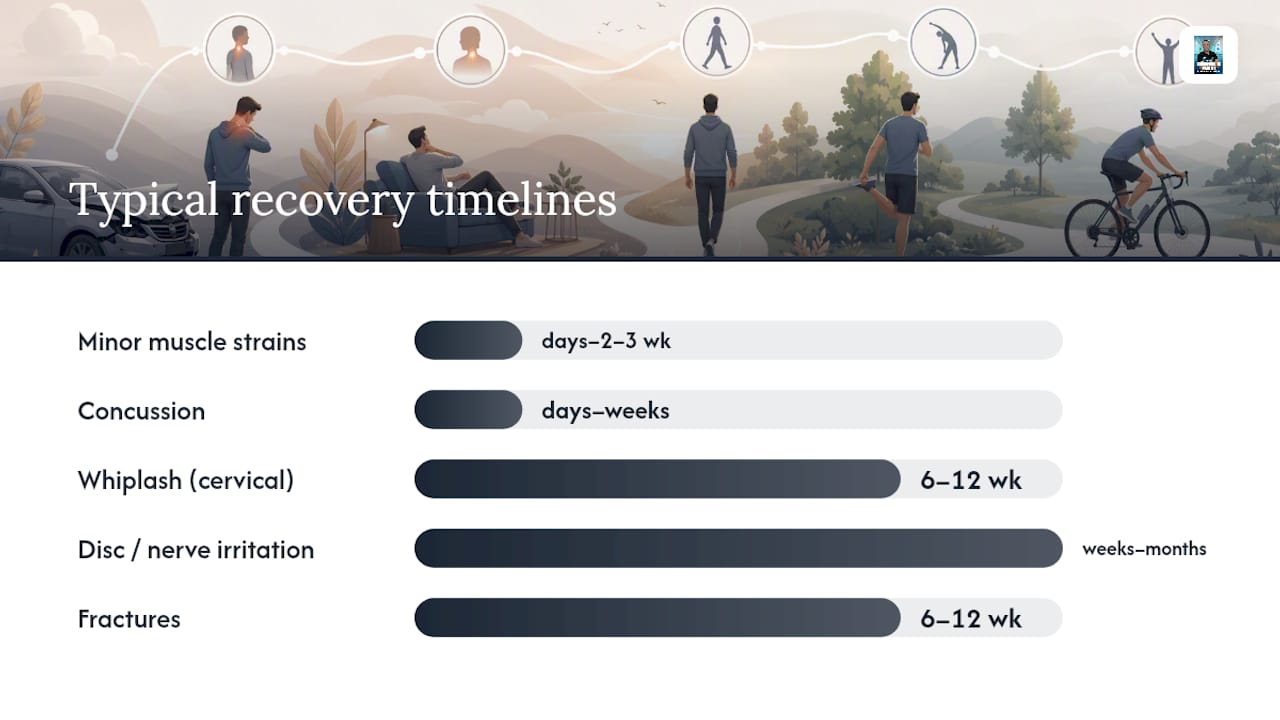
Typical recovery windows:
- Minor muscle strains: days to 2–3 weeks
- Whiplash (cervical strain): 6–12 weeks; some cases extend to 3–6 months
- Concussion: days to weeks for most; post-concussion syndrome can persist months
- Disc or nerve root irritation: weeks to several months
- Fractures: 6–12 weeks depending on bone and severity
Staged rehab goals give you a practical roadmap: first, restore sleep and basic daily activities; then return to light work tasks; then full-duty or sport. If you are not progressing between stages, that is a signal to reassess the treatment plan, not to push harder. For strategies on preventing chronic pain after an accident, early intervention is the clearest lever the evidence supports.
Pro Tip: Track functional milestones, not just pain scores. "I can now sit for 30 minutes without needing to stand" is more useful to your care team than "pain is a 5 out of 10." Functional markers drive treatment decisions.
How Sparkmed approaches early care for crash patients
Early, structured evaluation reduces the risk of persistent pain and speeds functional recovery. That is the core claim behind Sparkmed's approach to crash patients, and it is grounded in the same research that shows a non-recovery trajectory for chronic widespread pain in patients who don't receive timely intervention.
At a first visit, the Sparkmed team conducts a triage and focused musculoskeletal exam, establishes a baseline of functional capacity, and documents findings in a format that supports insurance and legal claims. When imaging is indicated, referrals are made promptly. From there, an individualized care plan is built around the specific injury pattern.
Evidence-based components the clinic uses include:
- Spinal adjustments targeting cervical and lumbar strain patterns common after crashes
- Therapeutic modalities: ultrasound therapy, shockwave therapy, and heat/cold therapy for soft-tissue recovery
- Graded rehabilitation to restore range of motion, strength, and functional capacity
- Patient education on symptom monitoring, activity pacing, and red-flag recognition
- Multilingual support (English, Spanish, Creole) so nothing gets lost in translation
- Uber Health transport assistance for patients who cannot drive after an injury
At follow-up visits, the team tracks functional milestones, adjusts interventions based on progress, and maintains documentation that reflects the real trajectory of recovery. That documentation matters for claims. For more on why chiropractic care matters for auto accident recovery, Sparkmed's guide covers the clinical rationale in detail.
Pro Tip: Bring your symptom journal to every clinic visit. A written record of how your symptoms have changed since the crash gives your care team a clearer picture than memory alone and strengthens your documentation for any insurance claim.
Practical notes on costs, insurance, and documenting your injuries
Document everything from day one. That is the single most important practical step after a crash, and it applies whether or not you think you will need to file a claim.
What to compile:
- ER discharge paperwork and any imaging reports
- Names and contact information for all providers seen
- A daily symptom journal (pain location, intensity, triggers, sleep quality, work tolerance)
- Photos of bruising, swelling, or skin injuries with timestamps
- Photos of vehicle damage
- Witness contact information and the police report number
- Employer notes if you missed work or had reduced capacity
Common cost and insurance pathways:
- Auto insurance medical payments (MedPay): Covers medical bills regardless of fault; available in most states.
- Personal injury protection (PIP): Required in no-fault states; covers medical costs and lost wages up to policy limits.
- Personal health insurance: Can be used for medical care; coordination with auto insurance varies by state and policy.
- At-fault driver's liability: If another driver caused the crash, their liability coverage may cover your medical costs after a claim or settlement.
Documentation template for daily notes: Date and time, pain location and intensity (1–10), new symptoms since last entry, medications taken, activities attempted and how they went, sleep quality, and any medical appointments or calls with insurers.
Keep itemized bills from every provider. Ask for visit summaries in writing. Billing codes on an itemized bill tell the story of what was treated; a generic receipt does not. If you receive an explanation of benefits from your insurer that doesn't match what you were billed, request clarification in writing before paying anything.
A note from Sparkmed to anyone who was just in a crash
Crashes are frightening, and the hours and days after one can feel disorienting. Pain that wasn't there at the scene shows up the next morning. You're not sure whether to go to the ER or wait. You're worried about insurance paperwork and whether you'll be believed if symptoms develop later.
Those experiences are normal, and they are exactly what Sparkmed's team in North Miami is set up to help with. Multilingual staff, transport support through Uber Health, and a focused crash-recovery evaluation mean you can get the care you need without the logistical barriers that often delay treatment. Call to schedule an evaluation, bring your symptom notes, and let the clinical team document your condition from the start.
Sparkmed offers early crash evaluation in North Miami
When post-accident pain is developing and you need structured care fast, Sparkmed gives you a concrete alternative to navigating a general ER or waiting weeks for a specialist appointment. The clinic's $25 chiropractic adjustment offer requires no insurance, which removes the most common barrier to early care.

Services relevant to crash recovery at Sparkmed include chiropractic spinal adjustments, shockwave therapy, therapeutic ultrasound, heat and cold therapy, graded rehabilitation plans, multilingual patient support (English, Spanish, Creole), and Uber Health transport for patients who can't drive after an injury. The focus is on early, documented, evidence-based care that addresses the musculoskeletal and neurological patterns most common after collisions.
For patients whose symptoms are evolving or who were told at the ER that imaging was normal but still feel pain, that is exactly the scenario where structured chiropractic and rehab care makes the most difference. Visit the Sparkmed accessibility and booking page to find contact details and schedule your evaluation. Early care is the clearest lever for avoiding the chronic pain patterns that become genuinely hard to reverse.
Sources
The following sources were used in this article and are worth bookmarking for deeper reference:
- National Safety Council — Motor vehicle overview
- Chronic Widespread Pain after Motor Vehicle Collision: ED-based cohort study (PMC)
- CDC — Transportation safety
- Mayo Clinic — Concussion: Symptoms and causes
- NIMH — PTSD