

Rib pain after a car accident usually means one of two things: a bruised chest wall or an actual rib fracture. Both need medical evaluation, even if you feel like you can "walk it off." Do three things today: get checked by a doctor or ER within 24 to 72 hours (sooner if any red flags below apply), start basic pain control while avoiding rib taping, and document everything for your records. Rib fractures show up in roughly 30% of people who suffer significant chest trauma, including car crashes, which is a big reason not to guess at this one.
- Seek emergency care immediately if you have trouble breathing, chest pain that's getting worse, or a visibly deformed chest wall.
- See a doctor within 24 to 72 hours for any persistent rib pain, even if it seems minor.
- Avoid taping your ribs; use a pillow against your chest when coughing or sneezing instead.
Key Takeaways
Rib pain after a car accident requires prompt medical evaluation because roughly 30% of significant chest trauma cases involve an actual fracture, and complications like pneumonia are preventable with early breathing exercises.
| Point | Details |
|---|---|
| Get evaluated fast | See a doctor within 24 to 72 hours, or go to the ER immediately if red flags like breathlessness appear. |
| Skip the tape | Use pillow splinting when coughing instead of taping ribs, which restricts breathing and raises pneumonia risk. |
| Breathe on purpose | Practice deep breaths or use an incentive spirometer hourly while awake to prevent lung complications. |
| Know your timeline | Bruised ribs heal in 4 to 8 weeks; fractures often take 12 weeks or longer. |
| Document everything early | Photograph injuries, save medical records, and consider legal advice if bills or disability persist. |
| Consider rehab after clearance | Sparkmed offers post-crash chiropractic care, including a $25 adjustment, once a physician rules out serious injury. |
Table of Contents
- How Car Accidents Cause Rib Injuries
- What Types of Rib Injuries Happen in Car Crashes?
- Bruised Ribs or Broken Ribs: What Are the Symptoms?
- How Do Doctors Diagnose a Rib Injury After a Crash?
- What Complications Can Rib Pain Signal After an Accident?
- How Long Does Rib Pain Take to Heal, and What Treatment Helps?
- What Should You Do After the Crash Besides See a Doctor?
- When Is Chiropractic Care Appropriate for Rib Pain Recovery?
- What Post-Crash Advice Gets Overlooked?
- Ready for Rehab Once You're Medically Cleared?
- Frequently Asked Questions
- Sources
How Car Accidents Cause Rib Injuries
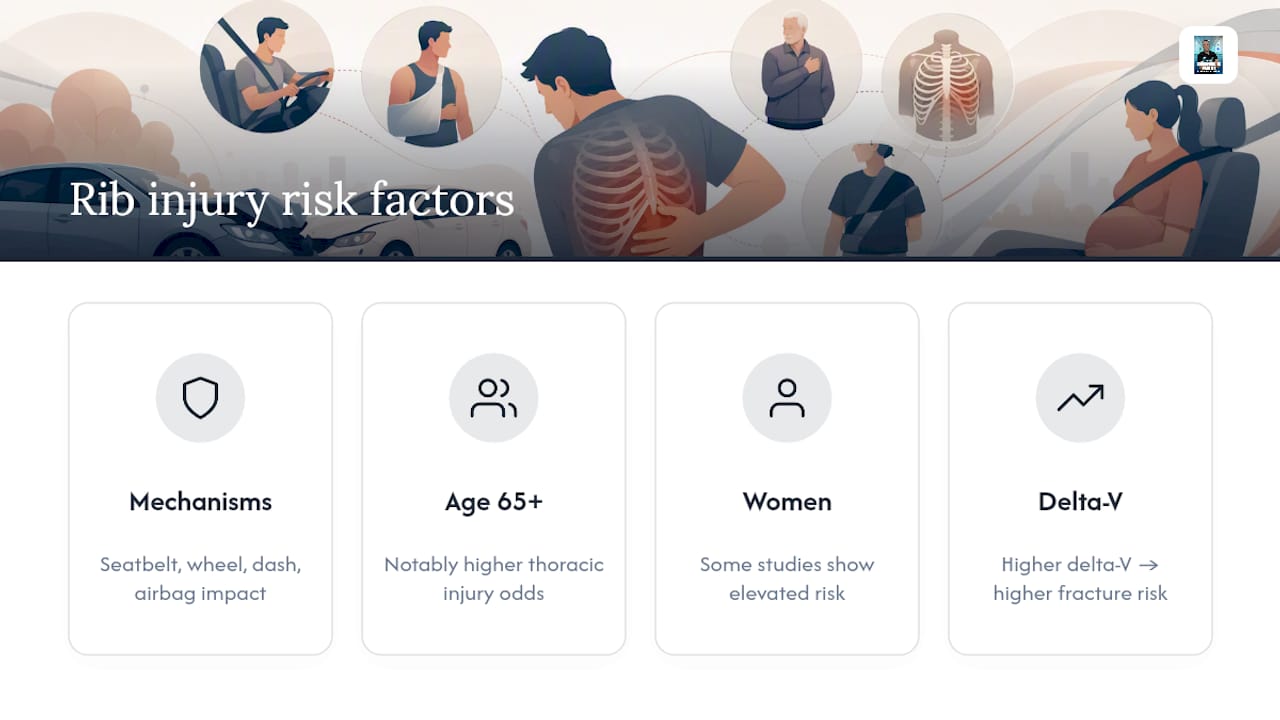
Ribs take a beating in a crash from several directions at once. The seatbelt that keeps you alive also compresses your chest wall hard enough to bruise or crack ribs, especially in higher-speed collisions. The steering wheel and dashboard cause direct blunt trauma in frontal impacts, and airbags, while lifesaving, deploy with enough force to injure the chest and sternum on their own.
Not everyone faces equal risk. Research on frontal crashes found that age and crash severity (measured as delta-V, the change in velocity during impact) strongly predict rib and sternum fracture risk, with occupants 65 and older facing notably higher odds of thoracic injury, and some studies showing elevated risk for women as well.
Mechanism matters for what happens next in the emergency room. A low-speed fender bender with mild seatbelt bruising rarely needs advanced imaging. A high-energy, first-rib, or multi-rib impact is a different story: those patterns raise suspicion for injury to the lungs or major blood vessels underneath, which is why doctors ask detailed questions about how the crash happened, not just where it hurts.
What Types of Rib Injuries Happen in Car Crashes?
Not all rib pain comes from the same injury, and the distinction changes how you're treated.
- Bruised chest wall (contusion) or intercostal strain. The muscles and soft tissue around the ribs take the hit, but the bone stays intact. This is the most common outcome and generally the least serious.
- Nondisplaced rib fracture. The bone cracks but stays in place. Painful, but usually manageable without surgery.
- Displaced rib fracture. The broken ends shift out of alignment, raising the risk of injury to nearby lung tissue.
- Costochondritis. Inflammation where rib cartilage meets the sternum, often triggered by seatbelt or airbag pressure, and it can mimic a fracture almost exactly.
Multiple fractures, or any injury involving the sternum or first rib, push doctors to look harder for internal injury. Those bones are protected by so much surrounding structure that breaking them signals real force was involved.
Bruised Ribs or Broken Ribs: What Are the Symptoms?
Right after the crash, adrenaline can mask a lot. Watch for these patterns as the hours pass.
- Immediate signs: sharp, focal pain that worsens with a deep breath or cough, tenderness when you press on one spot, and visible bruising or swelling.
- Delayed signs: pain that intensifies 24 to 48 hours later as adrenaline wears off, or shortness of breath that creeps in rather than hitting all at once.
- Fracture clues: a bony "step off" you can feel under the skin, a grinding or crackling sensation (crepitus), or pain concentrated at one exact point.
- Bruise or strain clues: soreness spread across a wider area rather than one precise spot, without any deformity you can feel.
None of these signs is a substitute for an exam, but they help you describe what's happening when you talk to a clinician.
How Do Doctors Diagnose a Rib Injury After a Crash?
The exam starts simple: a doctor checks your breathing rate, oxygen level, blood pressure, and presses along your rib cage to find the exact source of pain. This alone tells them a lot about how serious things are.
Imaging is where people get surprised. A standard chest X-ray is often the first step, but it frequently misses nondisplaced rib fractures because a hairline crack doesn't always show up clearly on a flat image. CT scans catch far more, and they're the go-to when a doctor suspects injury beyond the bone itself, such as bruising to the lung.
Certain findings shift care from "watch and treat" to urgent intervention:
- Signs of tension pneumothorax, such as sudden severe breathlessness and a rapidly dropping blood pressure.
- Unstable vital signs that don't improve with basic measures.
- A flail chest segment, where a section of ribs moves independently from the rest of the chest wall.
What Complications Can Rib Pain Signal After an Accident?
The chain reaction that causes most serious problems starts small: pain makes you breathe shallowly, shallow breathing lets parts of the lung collapse (atelectasis), and collapsed lung tissue is a breeding ground for pneumonia. More fractures and older age both raise this risk substantially.

Beyond pneumonia, rib injuries can mask or accompany more urgent problems: a pneumothorax (collapsed lung), a hemothorax (blood collecting around the lung), or, particularly with lower rib fractures, injury to the spleen or liver.
Call 911 or go to the emergency room if you experience:
- Sudden or worsening shortness of breath
- Coughing up blood
- A racing heart paired with dizziness or a dropping blood pressure
- Blue-tinged lips or fingertips
- Severe, unrelenting chest pain
The PMC data on chest-trauma patients underscores why these signs deserve immediate attention rather than a wait-and-see approach: rib fractures are common enough after a crash that emergency staff take chest pain seriously by default.
How Long Does Rib Pain Take to Heal, and What Treatment Helps?
Treatment for rib pain leans less on dramatic intervention and more on consistency. Here's the practical rundown:
- Control pain daily with NSAIDs or acetaminophen as directed, apply ice for swelling, and rest without becoming sedentary.
- Skip the tape. Rib taping is discouraged in current clinical guidance because it restricts the deep breaths your lungs need to stay clear. Hug a pillow against your chest instead when you cough or sneeze.
- Practice pulmonary hygiene. Take slow, deep breaths and cough deliberately once every hour while awake, using an incentive spirometer if one is provided. The AMA notes this single habit does more to prevent pneumonia than almost anything else in recovery.
- Move early. Gentle walking and normal activity, within your pain tolerance, keeps your lungs working better than staying still.
- Escalate if needed. Nerve blocks, epidural analgesia, or in rare cases like flail chest, surgical fixation, become options when pain is severe or breathing is compromised.
Pro Tip: Set a phone alarm for every hour during the day for the first week. It sounds excessive, but forcing yourself to take five deliberate deep breaths on that schedule is the single cheapest thing you can do to avoid a pneumonia diagnosis later.
Bruised ribs typically heal in four to eight weeks, while fractures often take 12 weeks or longer. Most isolated fractures are managed outpatient with pain control and breathing exercises, with a follow-up visit at six to eight weeks if symptoms haven't settled. Older adults often need closer monitoring since healing slows and complication risk climbs with age.
What Should You Do After the Crash Besides See a Doctor?
Getting evaluated is step one. What you do around that appointment matters almost as much.
- Get a formal medical evaluation even if your pain seems mild at first; some fractures don't hurt sharply until swelling sets in.
- Photograph your visible injuries and the vehicle damage before anything gets repaired or fades.
- Keep every medical record, imaging report, and bill in one folder, physical or digital.
- Track any missed work and lost income tied to your recovery.
- Report the injury to your insurer per your policy's timeline, but think twice before giving a recorded statement without guidance if your injuries are significant.
- Talk to an attorney if you're facing a disputed cause, a lasting disability, mounting medical bills, or any suspicion of internal injury beyond the ribs.
When Is Chiropractic Care Appropriate for Rib Pain Recovery?
Manual therapy has a role, but only after doctors rule out the dangerous stuff. Sparkmed's trauma-focused approach, including multilingual support for patients navigating recovery, fits into the picture once a physician clears you.
- Chiropractic and rehab work begins after imaging rules out pneumothorax, organ injury, or unstable fractures.
- Early sessions focus on breathing mechanics, gentle mobility, and posture support rather than aggressive adjustment.
- Progress moves gradually toward strengthening as pain and inflammation subside.
What Post-Crash Advice Gets Overlooked?
The advice that gets repeated most after a car accident, ice it and rest, undersells the one thing that actually prevents the worst outcome: forcing yourself to breathe deeply and cough on purpose, even when it hurts. Pneumonia from a collapsed lung segment causes more downstream misery than the fracture itself in many cases, and it's entirely preventable with an unglamorous hourly habit nobody wants to talk about.
The other gap is timing on documentation. People wait until pain lingers for weeks before they think about photos, records, or a legal consultation, and by then the paper trail is thinner than it should be. Do the boring administrative work in the first 72 hours, not the third week.
Prioritize breathing exercises over comfort measures, get imaging when the mechanism of injury was severe, and start your documentation the same day you're evaluated. Everything else, taping, rest, and even most pain control, is secondary to those three.
Ready for Rehab Once You're Medically Cleared?
Once imaging has ruled out anything dangerous, the next question is how to actually get your mobility and comfort back without dragging recovery out for months. Sparkmed's North Miami clinic focuses specifically on post-crash rehab: spinal adjustments, guided chiropractic treatment options, and wellness plans built around accident recovery rather than general aches and pains.

Sparkmed also offers a $25 chiropractic adjustment that doesn't require insurance, which matters if your claim is still working through the system and you don't want to wait on paperwork to start feeling better. If you've already been cleared by a physician and want a next step for the mobility and pain that lingers after the fracture itself has started healing, book an evaluation through Sparkmed's blog and resources to see what a session looks like for your specific injury.
Frequently Asked Questions
Should I see a doctor for rib pain after a car accident even if it feels minor? Yes. Some fractures don't hurt sharply right away, and ruling out internal injury matters more than how the pain feels in the first few hours.
How can I tell if my rib is bruised or actually broken? Focal, pinpoint tenderness with a possible bony step-off or crackling sensation points toward a fracture, while diffuse soreness across a wider area usually suggests a bruise or strain. An X-ray or CT gives the definitive answer.
What are the warning signs I shouldn't ignore? Worsening shortness of breath, coughing up blood, a racing heart with dizziness, blue-tinged lips, or unrelenting severe pain all warrant a 911 call or an ER visit.
How long does rib pain from a car accident typically last? Bruised ribs usually resolve in four to eight weeks, while fractures often take 12 weeks or more, with older adults sometimes needing longer.
Is it true that taping ribs helps them heal faster? No. Current guidance advises against taping because it limits the deep breathing your lungs need to avoid pneumonia. A pillow held against the chest during coughing works better.
This article is general information, not a substitute for advice from a qualified doctor. Consult a qualified healthcare professional about your own circumstances before acting on anything here.
Sources
- Rib fractures occur in approximately 30% of people who experience significant trauma
- What doctors want patients to know about rib injuries | AMA
- Rib fractures - Merck Manuals
- StatPearls: Rib Fracture
- Rib fracture (broken rib): symptoms, healing tips & treatment - Cleveland Clinic