
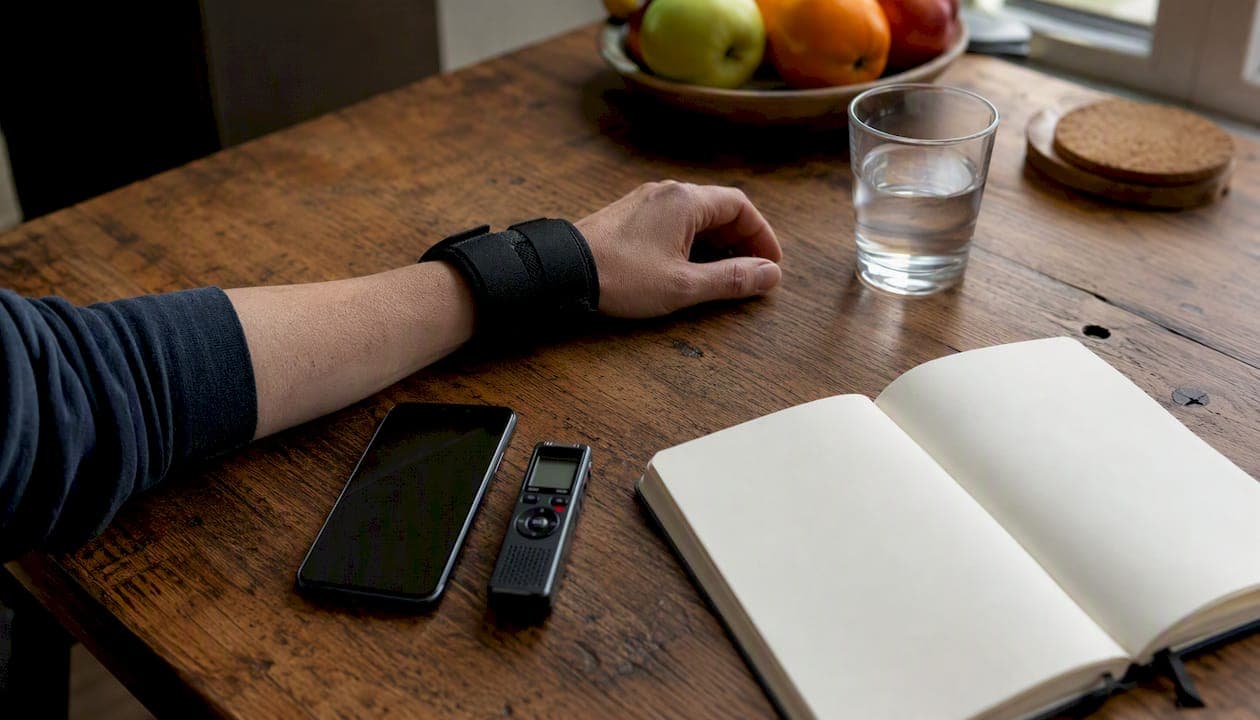
Get examined and start a dated record within 24–72 hours of your accident. That single action separates claims that settle fairly from ones that get denied or discounted. Whether you were in a car crash, a workplace incident, or a slip-and-fall, the step-by-step process for injury documentation follows the same core logic: build a clear, dated chain of evidence that connects your symptoms to the event.
Start here, right now:
- Visit an ER, urgent care, or chiropractor within 24–72 hours. Early evaluation prevents insurers from arguing your injuries are unrelated or pre-existing.
- Begin a dated symptom diary as soon as possible after your accident.
- Request the police report and any EMS run sheet from the scene.
- Ask your chiropractor to use the Neck Disability Index (NDI) at intake to establish a functional baseline.
- Know your rights: under HIPAA and most state laws, you can access your complete chart, imaging, and itemized billing at any time.
- Your provider will assign ICD-10 diagnosis codes to each visit; those codes are what insurers use to verify medical necessity.
Key Takeaways
Thorough, dated, and consistent injury documentation is the single most effective way to protect both your treatment and your claim from the moment of the accident forward.
| Point | Details |
|---|---|
| Start within 24–72 hours | Seek clinical evaluation and begin a dated symptom diary before symptoms peak or insurers argue pre-existing conditions. |
| Use SOAP notes and outcome tools | Every visit needs a SOAP note; NDI, ODI, and VAS scores at intake and 30-day intervals prove functional change. |
| Request complete records | Under HIPAA, you can access full charts, imaging (DICOM), and itemized billing; request provider-by-provider with specific date ranges. |
| Organize with a cover sheet | A one-page summary with diagnoses, ICD-10 codes, treatment timeline, and total billed gets your file reviewed instead of shelved. |
| Sparkmed documents alongside your care | Sparkmed's North Miami clinic provides structured intake, SOAP notes, imaging coordination, and adjuster-ready care summaries from day one. |
Table of Contents
- What is the step-by-step process for injury documentation?
- Which medical records do you actually need?
- How do you request your medical records?
- What should your visit notes actually capture?
- When does imaging strengthen your claim?
- How to organize and submit records to your insurer
- What your chiropractor should document at every visit
- Common documentation mistakes that weaken claims
- Why your personal injury diary matters beyond symptoms
- How to handle third-party communications
- Digital vs. physical documentation: what actually works
- How to update or amend your documentation
- The documentation detail most patients overlook
- Sparkmed helps you document your injury from day one
- Sources
What is the step-by-step process for injury documentation?
Follow this timeline from the moment of the accident through discharge.
- Day 0 (the accident): Photograph the scene, vehicles, and any visible injuries. Collect the other party's insurance and contact information. Note the exact time, location, and what happened in your own words.
- Within 24–72 hours: Seek a clinical evaluation. Your chiropractor records initial pain scores using a Visual Analog Scale (VAS) and documents functional limits. Soft-tissue symptoms often peak or first appear in this window, so the timing of your first visit matters enormously to causation.
- First week: Attend every scheduled visit. Each visit should generate a SOAP progress note (Subjective, Objective, Assessment, Plan). Complete the NDI or Oswestry Disability Index (ODI) at baseline.
- Ongoing visits: Keep your symptom diary current. Your provider should re-administer outcome measures at roughly 30-day intervals to show functional change over time.
- Mid-case (~30 days): Ask your clinician for a progress summary report. This is the document your adjuster or attorney will read first.
- Maximum Medical Improvement (MMI) / end of care: Your provider produces a final narrative report covering accident mechanics, diagnoses, treatment provided, causation, and prognosis. This is the cornerstone document for any settlement.
Pro Tip: Request your imaging on DICOM-format media or a high-resolution digital file at the time of the study. Timestamped DICOM files are harder to dispute than printed films and preserve the original acquisition date, which directly supports causation arguments.
Which medical records do you actually need?
Collect every document below. Each one serves a specific purpose in your file.
- EMS run sheet: Captures your condition at the scene, before any treatment. Adjusters use this to confirm immediate symptom onset.
- ER notes and discharge instructions: Establish first medical contact and rule out fractures or acute trauma. Request nursing notes, physician assessment, and discharge summary separately.
- Chiropractic initial assessment: Documents your baseline pain scores, range of motion (ROM), and functional limitations. This is the clinical starting point for your entire treatment timeline.
- SOAP progress notes: Show consistent treatment, medical necessity, and symptom progression visit by visit.
- Imaging reports: Radiology reads from X-ray, MRI, or ultrasound. Request both the written report and the raw images.
- Itemized billing: Lists every CPT code and charge by date. Insurers require this to verify that billed services match documented treatment.
Pro Tip: When requesting imaging, ask the facility for the DICOM files on CD or secure download in addition to the printed radiology report. Verify that the report date matches the study date before you file anything.
How do you request your medical records?
Under HIPAA and most state patient-access laws, you have the right to your complete chart, including diagnostic imaging and itemized billing. Here is how to do it correctly.
- Submit a written authorization to each provider separately. Name the provider, the specific date range, and the exact records you want: full chart, imaging files, itemized billing. A vague blanket request often returns incomplete records and can expose unrelated medical history.
- Specify the delivery format. Request portal PDF, secure email, or DICOM media. Avoid fax when possible; digital files are easier to organize and share.
- Follow up in writing if you hear nothing within 30 days. Most providers must respond within 30 days under federal HIPAA rules; some states require faster turnaround.
- Send a second written request if the first is ignored. Document the date and method of every request.
- Involve an attorney if records are withheld despite proper authorization. A letter from counsel typically resolves delays quickly.
Key patient rights to assert:
- You may request the complete chart, not just a summary.
- You may specify which records to release and to whom.
- Providers may charge a reasonable copying fee but cannot deny access because of an unpaid balance.
This article provides general information, not legal advice. If records are being withheld, consult a qualified attorney.
What should your visit notes actually capture?
Good documentation follows the SOAP format at every visit. Here is what each field should contain, with short examples.
- Subjective: Patient-reported symptoms in their own words. "Patient reports 7/10 neck pain radiating to left shoulder, worse with driving, onset immediately after rear-end collision on [date]."
- Objective: Measurable findings. Cervical ROM in degrees, muscle spasm location and grade, positive orthopedic tests (e.g., Spurling's), neurological screen results.
- Assessment: ICD-10 diagnosis codes tied to the accident. For example, S13.4XXA (sprain of ligaments of cervical spine, initial encounter). Specificity here is what insurers check.
- Plan: Modalities used (spinal manipulation, ultrasound therapy, shockwave), frequency, and next visit date.
Use standardized outcome tools at every milestone:
| Tool | What it measures | When to use |
|---|---|---|
| Neck Disability Index (NDI) | Cervical function and daily activity limits | Intake, 30 days, discharge |
| Oswestry Disability Index (ODI) | Lumbar function and disability | Intake, 30 days, discharge |
| Visual Analog Scale (VAS) | Subjective pain intensity (0–10) | Every visit |
When does imaging strengthen your claim?
X-rays are the standard first step to rule out fractures, but they rarely show soft-tissue damage. MRI and diagnostic ultrasound provide objective evidence for the injuries most common after car accidents: ligament tears, disc pathology, muscle and tendon damage.
Order imaging when you have:
- Neurological symptoms (numbness, tingling, weakness)
- Pain that does not improve after two to three weeks of care
- Positive orthopedic tests suggesting disc or ligament involvement
- Red flags (severe headache, loss of consciousness, bowel/bladder changes)
What to request from each imaging facility:
- Written radiology report with the interpreting radiologist's name and date.
- Raw images in DICOM format on CD or secure digital download.
- Confirmation that the study date matches the report date.
How to organize and submit records to your insurer
A disorganized file gets skimmed or ignored. A well-indexed file gets reviewed. Use this structure.
Folder structure:
| Folder | Contents |
|---|---|
| Active Treatment | Current SOAP notes, recent imaging, open billing |
| Archive and Reference | Police/EMS reports, ER records, prior imaging, closed billing |
File naming: Use ISO date format: 20260315_SOAPnote_Sparkmed.pdf. Consistent naming lets anyone find a document in seconds.
Cover sheet fields (one page, placed at the front of every submission):
- Accident date, time, and location
- Current diagnoses with ICD-10 codes
- Key imaging findings
- Treatment timeline (start date, visit count, current status)
- Total billed to date
The cover sheet is not a summary of the raw chart. It is a persuasive one-page document that gives an adjuster or mediator every key fact without making them read 200 pages. Clinics that build this into their workflow see fewer denials and faster resolutions. For more on presenting records to insurers, see maximizing insurance for chiropractic care.
What your chiropractor should document at every visit
Patients benefit from knowing what good clinical documentation looks like, because you can ask your provider to capture it.
- Exact accident date, time, and mechanism (rear-end, side-impact, fall direction)
- Attribution language: "Symptoms are consistent with and causally related to the motor vehicle accident of [date]."
- Objective ROM measurements in degrees for each cervical and lumbar segment tested
- Orthopedic and neurological test results (positive/negative, side, grade)
- Palpation findings: location, severity, and tissue quality of muscle spasm
- Modalities used with duration and settings (e.g., ultrasound at 1 MHz, 5 minutes, lumbar paraspinals)
- ICD-10 codes and CPT codes tied to that specific visit date
For a detailed look at chiropractic documentation standards, Sparkmed's clinical blog covers SOAP precision and coding in depth. Clinics using PI-capable EMR workflows with timestamping and lien management produce more consistent, attorney-ready records.
Pro Tip: Narrative reports should be produced at three points: initial evaluation, mid-treatment (~30 days), and discharge/MMI. Each report should include accident description, clinical findings, treatment provided, causation statement, and prognosis. Waiting until the end of care to write the first narrative is one of the most common and costly documentation errors.
Common documentation mistakes that weaken claims
- Treatment gaps without explanation: A two-week gap with no note looks like you recovered. Document every reason for a missed visit (travel, illness, financial hardship) in a dated patient diary entry.
- Inconsistent symptom descriptions: Telling your provider "7/10 pain" and your diary "mild discomfort" on the same day creates contradictions adjusters exploit. Keep descriptions consistent across all records.
- Incomplete imaging requests: Requesting only the written report without the raw images leaves you without the most defensible evidence.
- Blanket record authorizations: Releasing your entire medical history gives the opposing insurer access to unrelated conditions they can use to argue pre-existing causation. Name the provider, date range, and specific record types.
Quick audit checklist for your file:
- Every visit has a dated SOAP note
- Outcome measures completed at intake and at 30-day intervals
- All imaging requests include raw files, not just reports
- No unexplained gaps longer than two weeks
- Authorization forms name specific providers and date ranges
Why your personal injury diary matters beyond symptoms
Your diary is evidence. It captures what medical records cannot: how the injury affects your daily life. Write an entry every day, even when you feel the same.
Each entry should include:
- Date and time
- Pain level (0–10 VAS scale)
- Specific activities you could not do or had to modify (driving, sleeping, lifting, childcare)
- Medications taken and any side effects
- Emotional or cognitive effects (difficulty concentrating, anxiety, sleep disruption)
A consistent diary creates a narrative that supports both medical necessity and damages. Use Sparkmed's recovery progress tracking guide for a practical template.
How to handle third-party communications
Insurance adjusters, employers, and attorneys will all request documentation. Handle each differently.
Insurance adjusters: Provide only what they specifically request, in writing. Never give a recorded statement without legal counsel. Send records with a cover sheet (see the filing section above) and keep a copy of everything you send.
Employers: For work injuries, your employer has a right to a completed incident report and may request a fitness-for-duty evaluation. Provide factual documentation of your limitations. Do not volunteer medical records beyond what is legally required for your jurisdiction.
Attorneys: Your attorney needs the complete file: all SOAP notes, imaging, billing, diary entries, and any correspondence with insurers. Organize it using the folder structure above before handing it over.
Never sign a blanket medical release for any third party. Specify the provider, date range, and record type every time.
Digital vs. physical documentation: what actually works
Keep both. Digital files are searchable and easy to share; physical copies survive tech failures.
- Digital: Scan every document to PDF immediately. Store in a cloud folder (Google Drive, iCloud, or a HIPAA-compliant patient portal) with the ISO naming convention. Back up to an external drive monthly.
- Physical: Maintain one master binder with tabbed sections matching your digital folders. Keep original police reports, EMS sheets, and signed authorizations in physical form.
- DICOM imaging: Store on a dedicated USB drive or CD separate from your paper binder. Label the drive with your name, accident date, and the imaging facility.
For guidance on correcting or annotating records after the fact, notice of errata procedures explain how to formally flag and document changes to your chart.
How to update or amend your documentation
Conditions change. Errors happen. Both are manageable if you act quickly and correctly.
If your condition worsens or new symptoms appear: Contact your provider immediately for a new evaluation. Document the new onset date and any triggering event in your diary. Your provider should add a new SOAP note with updated ICD-10 codes.

If you find an error in a medical record: You have the right under HIPAA to request an amendment. Submit a written request to the provider naming the specific error and the correction needed. The provider must respond within 60 days. If they decline, you may add a statement of disagreement to your file. For a step-by-step amendment process, clinical documentation improvement resources cover the formal errata workflow in detail.
If treatment resumes after a gap: Document the reason for the gap and the clinical rationale for resuming care. A brief provider note explaining the gap is far more credible than silence.
The documentation detail most patients overlook
Most injury documentation guides focus on what to collect. The harder problem is consistency, and it is where most claims fall apart.
Adjusters are trained to find contradictions: a pain score that drops in the chart but stays high in the diary, a visit gap that coincides with a social media post showing physical activity, imaging ordered six weeks after the accident with no clinical note explaining the delay. Each inconsistency is a lever they use to reduce settlement value.
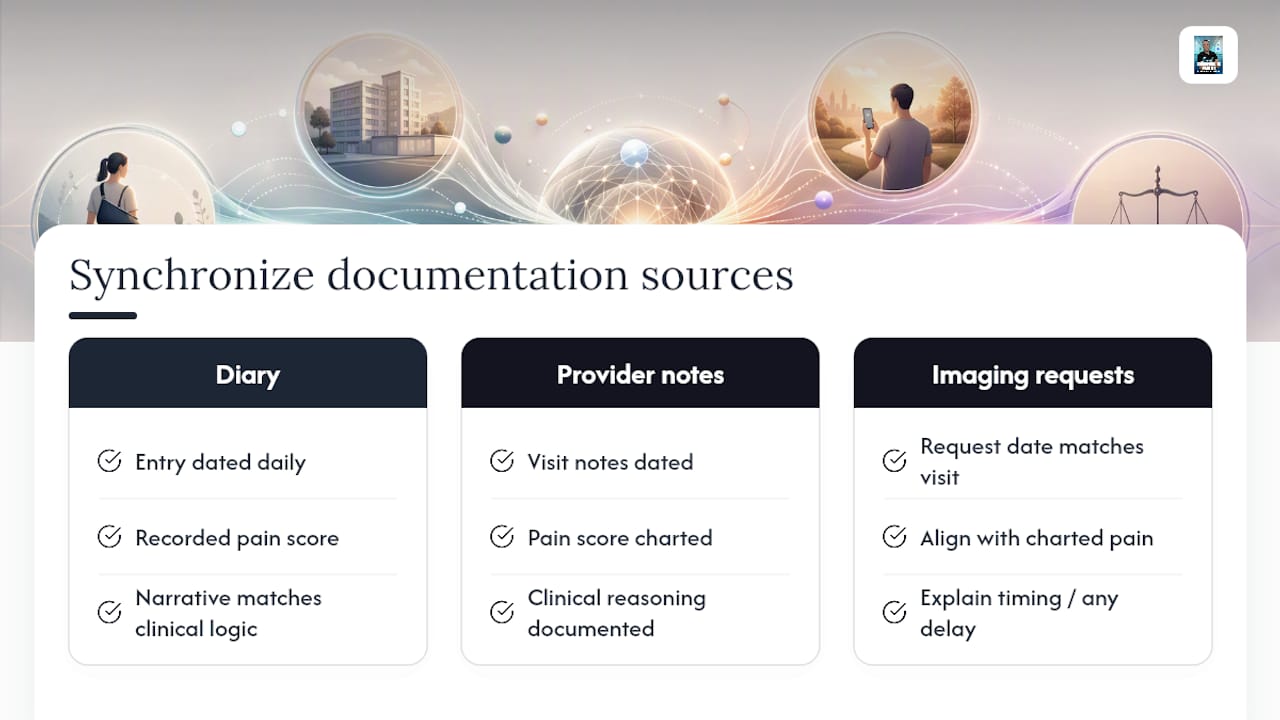
The fix is not more paperwork. It is synchronized documentation: your diary, your provider's notes, and your imaging requests should all tell the same story, dated the same way, with the same clinical logic running through them. That is what Sparkmed's intake and documentation workflow is built around, and it is what makes the difference between a file that settles and one that stalls.
Sparkmed helps you document your injury from day one
Patients injured in car accidents, at work, or in slip-and-fall incidents often arrive at Sparkmed without a single piece of documentation in hand. That is exactly the situation the clinic's intake process is designed for.

Sparkmed's clinical team in North Miami handles the documentation workflow alongside your care: structured intake chiropractic assessment, SOAP progress notes at every visit, standardized outcome measures (NDI, ODI, VAS) at baseline and intervals, imaging coordination, and concise care summaries formatted for adjusters and attorneys. The clinic also offers Uber Health transport so a lack of transportation does not create a gap in your treatment record.
If you need a chiropractor who documents your care the way insurers and attorneys expect, book your intake visit at Sparkmed today. A $25 adjustment offer is available and does not require insurance.
Sources
- Soft Tissue Injury Documentation After Car Accidents in Tulsa, OK | Dr. Justin Snyder
- Chiropractic EMR Documentation for Personal Injury Cases | PI & Auto Accident Guide
- Medical Record Organization for Injury Claims in 2026
This article is general information, not a substitute for advice from a qualified doctor. Consult a qualified healthcare professional about your own circumstances before acting on anything here.