

Recovering after an auto accident injury requires early medical attention, consistent care, and a personalized rehabilitation plan built around your specific injuries. The post-accident recovery process is the clinical term for the structured sequence of steps that takes you from the moment of impact to restored function and pain-free movement. Early treatment initiation is the single greatest factor predicting a favorable outcome. Patients who act within the first 24–72 hours consistently achieve better results than those who wait for symptoms to worsen. This guide covers every phase, from the scene of the accident to full rehabilitation.
How to recover after auto accident injury: the first steps that matter most
The actions you take in the hours after a collision directly shape your health outcome and your legal standing. Moving through these steps in order protects both.
At the scene:
- Check yourself and all passengers for injury before anything else.
- Call 911 if anyone is hurt or if vehicles block traffic.
- Move vehicles to a safe location only when it is safe to do so.
- Request a police report and get the report number before leaving.
- Exchange name, license, insurance, and contact information with all drivers involved.
- Photograph vehicle damage, road conditions, traffic signs, and any visible injuries.
- Collect contact information from witnesses.
Never admit fault at the scene, even casually. A simple "I'm sorry" can be used against you in an insurance dispute.
In the days that follow:
- Report the accident to your own insurance company promptly.
- Seek a medical evaluation within 24–72 hours, even if you feel fine.
- Track all medical expenses, mileage to appointments, and any lost wages. This documentation reduces disputes and supports fair compensation.
- Avoid posting about the accident on social media until your claim is resolved.
Pro Tip: You are not legally required to give a recorded statement to the at-fault driver's insurance company. Refusing recorded statements protects your rights, and that refusal cannot be used to deny your claim.
One more financial caution: accepting an early settlement offer before you reach maximum medical improvement can permanently reduce your compensation. Wait until your care team confirms you have recovered as fully as possible before signing anything.
What symptoms should you watch for after a car accident?
The body's stress response masks pain immediately after a collision. Adrenaline delays symptom onset, meaning neck pain, headaches, and dizziness may not appear until hours or even days after impact. This is the most common reason patients skip early evaluation and later develop chronic conditions.
Common injuries that follow auto accidents include:
- Whiplash: Neck strain from rapid forward and backward head movement. Stiffness and pain often peak 24–48 hours after the crash.
- Back pain: Compression or strain in the lumbar or thoracic spine, sometimes without visible bruising.
- Concussion: Headache, brain fog, light sensitivity, and memory gaps. Symptoms can be subtle at first.
- Dizziness and balance issues: Often linked to inner ear disruption or cervical spine injury.
- TMJ pain: Jaw pain and clicking caused by the impact force traveling through the skull.
Mild discomfort still warrants professional evaluation. A symptom that feels minor on day one can signal a soft tissue tear or nerve compression that worsens without treatment.
Pro Tip: Physiotherapy assessments can be started without a doctor's referral in many jurisdictions. You can book directly with a clinic after your accident, which removes a common barrier to timely care.
How do you build an effective rehabilitation plan after a crash?
Successful recovery plans must be personalized to your injury type, lifestyle, and physical demands. A plan built for a desk worker with whiplash looks very different from one designed for a manual laborer with a lumbar compression injury.
The three phases of post-accident rehabilitation
Phase 1: Pain relief and protection (weeks 1–3) The goal is reducing acute inflammation and protecting injured tissue. Treatment at this stage typically includes gentle manual therapy, ice and heat application, and guided rest. You avoid movements that reproduce sharp pain, but complete bed rest is counterproductive and slows healing.
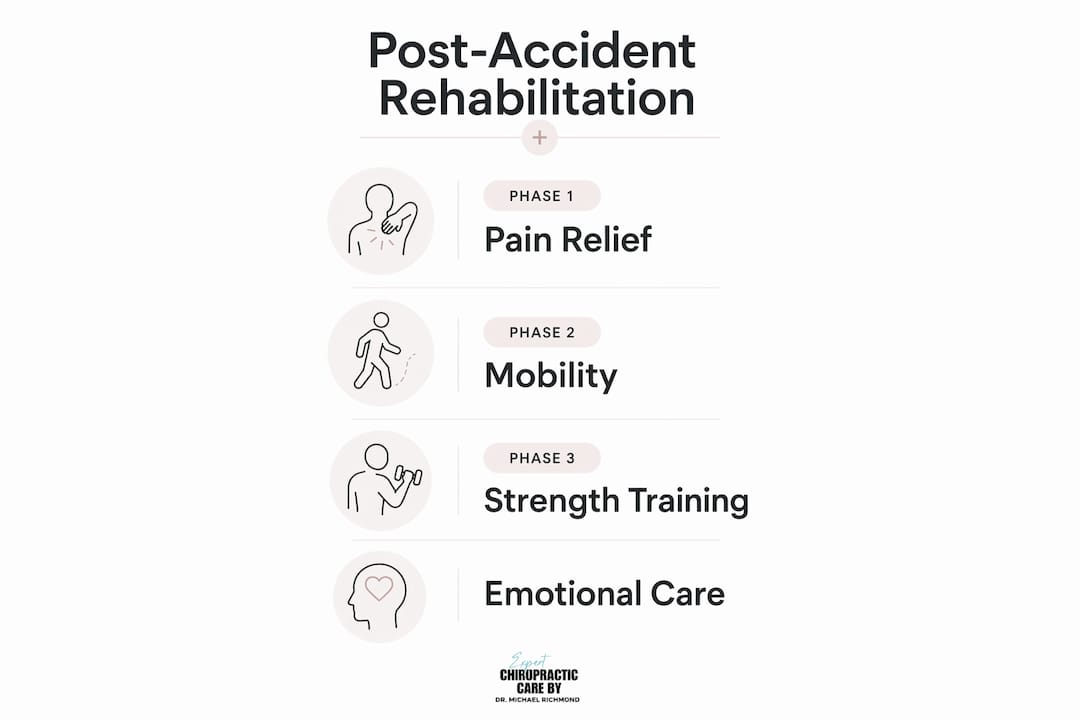
Phase 2: Mobility restoration (weeks 3–8) Once acute pain subsides, the focus shifts to recovering range of motion. Stretching protocols, joint mobilization, and progressive movement exercises rebuild flexibility without re-injuring healing tissue.

Phase 3: Strength and balance training (weeks 8 onward) The final phase rebuilds the muscular support around injured structures. Balance training, resistance exercises, and functional movement patterns prepare you to return to normal activity. Recovery timelines range from a few weeks for mild soft tissue injuries to several months for complex cases.
Emotional recovery runs alongside physical healing. Anxiety, sleep disruption, and post-traumatic stress are common after collisions. Addressing these with a counselor or psychologist is not optional. Unmanaged psychological stress slows physical recovery by elevating cortisol and disrupting sleep, both of which impair tissue repair.
Pro Tip: Skipping therapy sessions increases the risk of compensatory injuries, where healthy muscles overwork to protect damaged ones and eventually break down themselves. Consistent attendance is non-negotiable.
For a detailed breakdown of how to structure your personal recovery approach, the Sparkmed blog covers personal wellness planning after injury in depth.
What rehabilitation methods work best for accident victims?
Multidisciplinary care is the most effective model for post-accident rehabilitation. Coordinating physiotherapy, chiropractic adjustments, massage therapy, and vestibular rehabilitation addresses the overlapping symptoms that single-discipline treatment often misses.
Core treatment options
Chiropractic care targets spinal misalignment caused by impact forces. Spinal adjustments restore joint mobility, reduce nerve irritation, and relieve referred pain in the arms and legs. Sparkmed specializes in this approach for accident victims, offering spinal adjustments starting at $25 without requiring insurance.
Physical therapy rebuilds strength, flexibility, and coordination through guided exercise. A licensed physical therapist designs a program specific to your injury pattern and progresses it as you improve.
Massage therapy reduces muscle tension, improves circulation to injured tissue, and lowers pain levels. It works best as a complement to chiropractic and physiotherapy, not as a standalone treatment.
Vestibular rehabilitation addresses dizziness and balance problems caused by inner ear or cervical spine injury. This specialized therapy is critical for patients experiencing cognitive symptoms or persistent dizziness after a collision.
For managing pain between appointments, the following self-care practices support healing:
- Apply ice for the first 48–72 hours to reduce acute inflammation, then switch to heat for muscle relaxation.
- Perform prescribed home exercises daily, even when they feel easy.
- Pace activity carefully. Doing too much too soon is the most common setback in accident recovery.
- Maintain a sleep schedule. Tissue repair peaks during deep sleep.
For broader pain relief strategies that complement clinical care, current 2026 guidelines recommend integrating movement, sleep hygiene, and stress management alongside formal treatment.
When symptoms escalate, including worsening headaches, new numbness, or loss of bladder control, seek emergency evaluation immediately. These signs can indicate spinal cord involvement or intracranial pressure that requires urgent imaging.
For a full breakdown of clinical treatment options, Sparkmed's resource on accident injury treatments covers the evidence behind each approach.
Key Takeaways
Recovering from an auto accident injury requires early action, consistent professional care, and a personalized rehabilitation plan that addresses both physical and emotional health.
| Point | Details |
|---|---|
| Act within 24–72 hours | Seek medical evaluation immediately, even without obvious symptoms, to catch delayed injuries. |
| Document everything | Track expenses, mileage, and lost wages from day one to protect your insurance claim. |
| Follow a phased rehab plan | Progress through pain relief, mobility restoration, and strength training in sequence. |
| Use multidisciplinary care | Combine chiropractic, physical therapy, and massage for overlapping symptoms. |
| Protect your legal rights | Refuse recorded statements to at-fault insurers and avoid early settlement offers. |
What I've learned from watching patients delay care
The most common mistake I see is patients waiting to see if the pain "goes away on its own." It rarely does. What actually happens is the acute injury window closes, scar tissue forms around unaddressed damage, and what could have resolved in six weeks becomes a six-month problem.
The second misconception is that rest equals recovery. Complete rest after the first few days actually slows healing. The body needs controlled, progressive movement to signal tissue repair and prevent the stiffness that comes from prolonged immobilization. Guided movement, not bed rest, is the clinical standard.
Personalized care also matters more than most patients realize. Two people with whiplash from similar crashes can have completely different recovery trajectories based on their age, fitness level, prior injuries, and stress levels. A plan copied from a general guide will not account for those variables. The patients who recover fastest are the ones who communicate openly with their care team, show up consistently, and adjust their plan when something is not working.
One more thing worth saying directly: do not accept the first insurance settlement offer before your treatment is complete. Insurers move quickly. Your recovery does not.
— Spark
Sparkmed is here to support your recovery
Recovering from a car accident injury is not something you should navigate alone. Sparkmed's team in North Miami specializes in chiropractic care for accident victims, with spinal adjustment plans starting at $25 and no insurance required to get started.
Sparkmed offers personalized recovery plans built around your specific injuries, with experienced practitioners and modern equipment designed for trauma recovery. Whether you need a single adjustment or a full rehabilitation program, the clinic provides accessible, affordable care in English, Spanish, and Creole. Visit Sparkmed's recovery resources to learn more about available services and book your first appointment. For ongoing clinical guidance, the Sparkmed blog covers post-accident wellness recovery in detail.
FAQ
How soon should I see a doctor after a car accident?
See a doctor within 24–72 hours of the accident, even if you feel no pain. Adrenaline masks symptoms, and delayed injuries like whiplash or concussion often appear days later.
Can I start physical therapy without a doctor's referral?
In many jurisdictions, you can book a physiotherapy assessment directly without a referral. Early access to care significantly improves long-term recovery outcomes.
How long does rehabilitation after a car crash take?
Recovery timelines range from a few weeks for mild soft tissue injuries to several months for complex cases involving the spine, concussion, or multiple injury sites.
What is the biggest mistake people make during post-accident recovery?
Skipping therapy sessions is the most damaging mistake. Inconsistent attendance increases the risk of compensatory injuries and significantly delays healing.
Should I accept the first insurance settlement offer?
No. Accepting an early settlement before reaching maximum medical improvement can permanently reduce your compensation. Wait until your care team confirms your recovery is complete.