
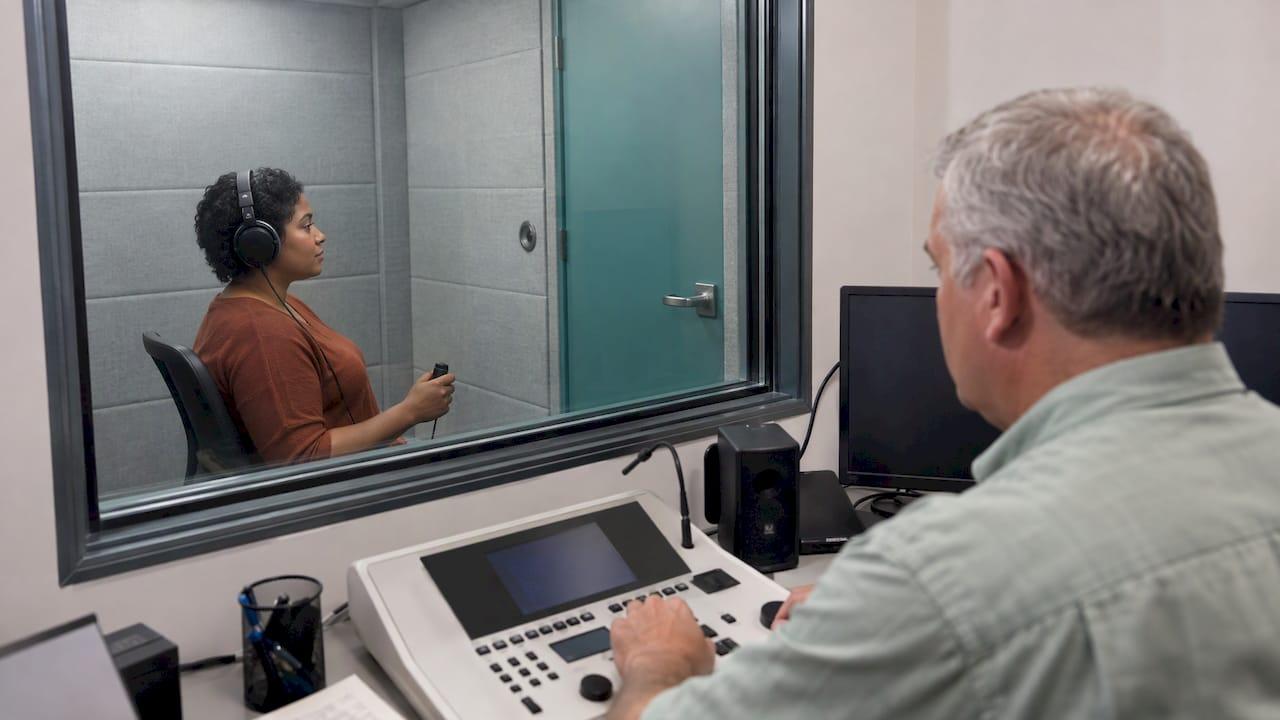
Ringing, buzzing or hissing in your ears after a crash is common, and it has several possible causes: the noise of the impact, a blow to the head, or the neck injury known as whiplash. Sudden hearing loss, ear drainage or severe vertigo needs emergency care. Otherwise, get your hearing tested by an audiologist and have your neck checked, because both can be part of the same injury.
TL;DR
- Tinnitus after a collision can come from loud noise, head trauma or neck injury. Whiplash is a recognized source of ear and balance symptoms.
- Sudden or unexplained hearing loss, blood or fluid from the ear, severe vertigo or stroke-like symptoms mean the emergency room or an ENT specialist, not a wait-and-see approach.
- Any tinnitus that lasts more than a few minutes deserves a hearing test with an audiologist.
- If your neck is stiff or painful, or dizziness changes when you turn your head, a neck exam can show whether a cervical problem is contributing.
- Keep a symptom log from day one. It helps your clinicians and any insurance claim.
Table of Contents
- Why a crash can make your ears ring
- Can whiplash cause tinnitus?
- Neck-related dizziness and why it goes with tinnitus
- Red flags: when to go to the ER or see an ENT
- What a proper evaluation looks like
- How long does it last?
- Practical steps for the first weeks
- Our perspective
- Getting your neck evaluated in North Miami
- FAQ
- Sources
Why a crash can make your ears ring
A collision hits the auditory system in more than one way, and more than one can apply to you at once.
Noise and pressure. Airbag deployment, crunching metal and shattering glass all produce sudden, very loud sound. MedlinePlus notes that sudden pressure changes from an explosion, a blow to the head or loud sounds can cause ear pain, hearing loss, dizziness, ringing and even ruptured eardrums.
Head trauma. A concussion or a direct blow can injure the inner ear or the brain pathways that process sound. Clinicians who study head injury recommend screening for tinnitus, noise sensitivity and hearing difficulty after a head injury, with referral to an audiologist or otologist, because these symptoms are often overlooked.
Neck injury. This is the cause people miss. Tinnitus UK reports that people who have had head and neck injuries, such as from a car accident, or who have neck pain and stiffness are more likely to experience tinnitus. It also points to evidence that nerve endings in the neck connect into the hearing centers of the brain. That is why moving or pressing on the neck can sometimes change how tinnitus sounds.
Stress. A frightening event can amplify how tinnitus feels. The Hearing Journal notes that after trauma, the high mental burden often produces a more severe tinnitus reaction than in non-trauma cases. Your reaction is a real part of the picture, not something to push through.

Can whiplash cause tinnitus?
Yes. NICE clinical guidance lists tinnitus and deafness among the signs and symptoms of whiplash injury, next to neck pain, headache, dizziness and jaw pain.
How often it happens depends on the study:
- A 2009 review reports that balance and hearing problems occur in 5 to 50 percent of whiplash injuries, and that about 10 percent of whiplash patients develop ear-related symptoms such as tinnitus, deafness and vertigo.
- In one study of 227 neck trauma cases with no noise exposure or other confounders, tinnitus was reported within the first three months in 55 percent of cases and hearing loss in 52 percent.
Speed is not a safeguard. The same Hearing Journal article explains that even at about 5 mph, the head experiences roughly 8.2 Gs of acceleration. The back-and-forth motion can strain ligaments, facet joints, discs, muscles and nerves in the neck. It also describes possible reduced blood flow in the arteries that feed the brainstem and inner ear, and concussion of the balance structures, as contributors to hearing and balance complaints. If your crash was minor, our guide to minor whiplash symptoms after a low-speed crash shows what to watch for.
Neck-related dizziness and why it goes with tinnitus
Many people with post-crash tinnitus also feel off balance. One cause is cervicogenic dizziness. The American Academy of Audiology defines it as dizziness, imbalance or unsteadiness related to neck movement or position, or to a stiff or painful neck. It can occur with whiplash and is often diagnosed alongside concussion.
In practice, cervicogenic dizziness tends to feel like this:
- A vague swaying or unsteadiness rather than a room-spinning spell.
- Symptoms that shift when you turn or tilt your head, or after long periods looking down.
- Neck stiffness, headaches at the base of the skull, or both.
It is not the only possible cause. In one study, 60 percent of people tested within 15 days of a whiplash injury had ongoing vestibular complaints, including cervical vertigo, positional vertigo or eye-movement abnormalities. That is why a proper exam matters more than guessing. We cover this in more detail in our posts on dizziness after a car accident and vertigo after a car accident. To see how the symptoms overlap with a head injury, read concussion vs. whiplash symptoms.
Red flags: when to go to the ER or see an ENT
Most post-crash ringing is not an emergency, but some combinations are. Go to the emergency department or see an ear, nose and throat specialist (otolaryngologist) promptly if you have any of these:
- Sudden or unexplained hearing loss, in one ear or both.
- Blood or fluid draining from the ear, or significant ear pain.
- Severe vertigo, facial weakness or drooping, or stroke-like symptoms.
- Tinnitus that pulses with your heartbeat and began suddenly.
The VA/DoD tinnitus guideline lists these as urgent referrals: neurological deficits, severe vertigo, sudden or unexplained hearing loss, recent head, neck or acoustic trauma, ear pain or drainage, and sudden pulsatile tinnitus. It advises seeing an audiologist before the ENT, ideally the same day or within 24 hours. ASHA's triage guidance likewise says that physical trauma, facial palsy or unexplained sudden hearing loss warrants emergency care or otolaryngology referral.
Time matters for sudden hearing loss. A clinical review notes that tinnitus with sudden sensorineural hearing loss calls for urgent audiometry, because it may need prompt treatment with intratympanic corticosteroids. If a test is not available right away, it should be done within two weeks. Do not wait to see whether it passes.
If you are unsure whether to go, MedlinePlus advises seeing a provider for ear pain, ringing, dizziness, hearing loss, drainage or blood from the ear, or a recent blow to the ear or head. A crash qualifies.
What a proper evaluation looks like
A good evaluation starts with your story. The VA/DoD guideline recommends recording the pitch, side, quality and loudness of the tinnitus, when and how it started, its effect on sleep and quality of life, hearing loss, and any history of head or neck injury, noise exposure, dizziness or ototoxic medications. It also says the history should cover related issues such as anxiety, insomnia, jaw problems and cervical problems.
Expect these pieces:
- A hearing test. A clinical review states that referral for a comprehensive audiologic exam is appropriate for any patient with tinnitus. Audiologists are qualified to evaluate, diagnose and manage tinnitus, and the guideline favors a team approach that considers the whole person.
- A physical exam. The same review calls a focused history and physical exam the primary tools for diagnosing tinnitus. It also notes that for one-sided, non-pulsatile tinnitus, the preferred imaging test is MRI of the head and auditory canal with and without contrast, which looks for a growth on the hearing nerve. Your physician decides whether you need it.
- A neck and balance exam. This checks how your cervical spine moves, where it hurts, and whether turning your head changes your ringing or dizziness.
Short, passing ear noise is different. The VA/DoD pocket card describes transient ear noise as a high-pitched tone lasting under five minutes, usually in one ear, and says it is common and generally does not need clinical management. Ringing that persists longer, or comes with any red flag above, is a different matter.
How long does it last?
There is no single answer, because tinnitus after a crash can come from different sources. For the whiplash part of the picture, NICE reports that in at least 40 percent of people there should be some improvement by 6 weeks, and substantial improvement in 50 percent by 12 weeks. About 50 percent recover fully within 6 months, but up to 50 percent may still have symptoms a year after the injury.
The 2009 review adds that in Germany in 1992, about 15 to 20 percent of 197,731 whiplash cases developed late whiplash syndrome, with lasting headache, vertigo, instability, nausea, tinnitus and hearing loss. These figures are why early assessment is worth it: the sooner each contributor is identified, the sooner you can address it. Our post on how long whiplash lasts lays out a typical timeline.
Practical steps for the first weeks
- Get checked the same day if you have a red flag. Otherwise book a hearing test and a medical exam within days, not months.
- Write things down. Note when the ringing started, which ear, whether it pulses, what makes it louder, and any dizziness. Dated notes help every clinician and support an injury claim.
- Protect your ears. Avoid loud environments while symptoms are fresh.
- Notice your neck. If turning your head, pressing on tight muscles or holding one posture changes the sound, tell your clinicians. It points toward a neck contribution.
- Sleep position matters. A poor position can aggravate neck pain overnight. See how to sleep with whiplash.
- Ask about tinnitus management. Audiologists can offer counseling and sound-based strategies to make tinnitus easier to live with, so you are not left to cope alone.
- Check the car, too. If you are driving again, a correctly set head restraint reduces strain in a future collision. Here is how to set a seat headrest.
A broader overview of what else may show up after a crash is in this guide to car accident injury types. For neck relief that fits alongside care, see our tips on how to relieve whiplash pain.
Our perspective
We treat people after car accidents in North Miami, and ear symptoms come up in our exam rooms more than most patients expect. Our first rule is simple: ears first. If you have sudden hearing loss, drainage, severe vertigo or stroke-like signs, you go to the ER or an ENT before you come to us. We would rather you spend an hour in an emergency department than lose hearing you could have kept.
Once that is cleared, the neck deserves a real look. Whiplash is a recognized source of tinnitus and dizziness, and a stiff, painful cervical spine often travels with both. Our work is a thorough accident evaluation: your history, how your neck moves, where it is tender and what changes your dizziness. We document it carefully so you have a clear record for your claim.
We do not promise that chiropractic care will end your tinnitus. We do offer care aimed at the neck pain, stiffness and muscle tension that can accompany it, and we work alongside the audiologists and physicians who handle the hearing side. Our team has more than 20 years of experience with accident patients, and we speak English, Spanish and Creole, so nothing gets lost in translation when you are describing symptoms.
Spark
Getting your neck evaluated in North Miami
If you have cleared the red flags and want your neck and balance symptoms examined, we start with an auto accident evaluation. Depending on what we find, care may include spinal adjustments, ultrasound, electrical stimulation, traction or decompression, massage and shockwave therapy. You can see all of it on our services page.
Our published prices: a chiropractic adjustment is $45, and a shockwave therapy session is $75. Monthly wellness plans run $149 (Essential), $249 (Performance) and $399 (Elite). The full list is on our pricing page. Transportation through Uber Health is available in North Miami, and we bill insurance directly for accident cases.

Ready to book? Start with a chiropractic adjustment or ask for an auto accident evaluation. Tell us about the ringing, the dizziness and the neck pain, and we will build the exam around them.
FAQ
Can tinnitus start days or weeks after a crash?
Yes. Symptoms can show up after the adrenaline fades, as neck inflammation develops or as stress builds. In the neck trauma study cited above, tinnitus was reported within the first three months in more than half of cases. Report any new ringing to a clinician, and treat sudden hearing change as urgent.
Why do my ears hurt after a car accident?
Causes include pressure changes from the airbag or impact, a blow to the head or ear, a ruptured eardrum, or jaw and neck strain referring pain to the ear area. MedlinePlus advises seeing a provider for ear pain after a blow to the head or ear. Blood or fluid from the ear needs prompt care.
Can a neck problem really make my ears ring?
It can. Tinnitus UK describes nerve connections between the neck and the hearing centers of the brain, and notes that neck injury and neck pain are linked with tinnitus. That is why clinicians ask about neck history, and why a neck exam belongs next to a hearing test.
Will the ringing go away?
For many people it improves, especially when it stems from neck strain or temporary noise exposure. NICE reports that about half of whiplash patients recover fully within 6 months, though up to half still have symptoms at a year. An audiologist can help you manage tinnitus that persists.
Sources
- Ear emergencies, MedlinePlus
- Concussion Management Guidelines Neglect Auditory Symptoms, PMC
- Tinnitus and TMJ, Tinnitus UK
- Hearing Matters in Whiplash Injury, The Hearing Journal
- Signs and symptoms of whiplash, NICE CKS
- Neck pain, whiplash injury, NICE CKS
- A review of the otological aspects of whiplash injury
- Ask the Expert: Concussion, American Academy of Audiology
- VA/DoD Tinnitus Pocket Card, 2024
- Tinnitus Triage Guidelines, ASHA
- Tinnitus: Diagnosis and Management, FM Hub
- VA/DoD Clinical Practice Guideline for Tinnitus, 2024
- Audiologic Guidelines for the Diagnosis and Management of Tinnitus Patients