

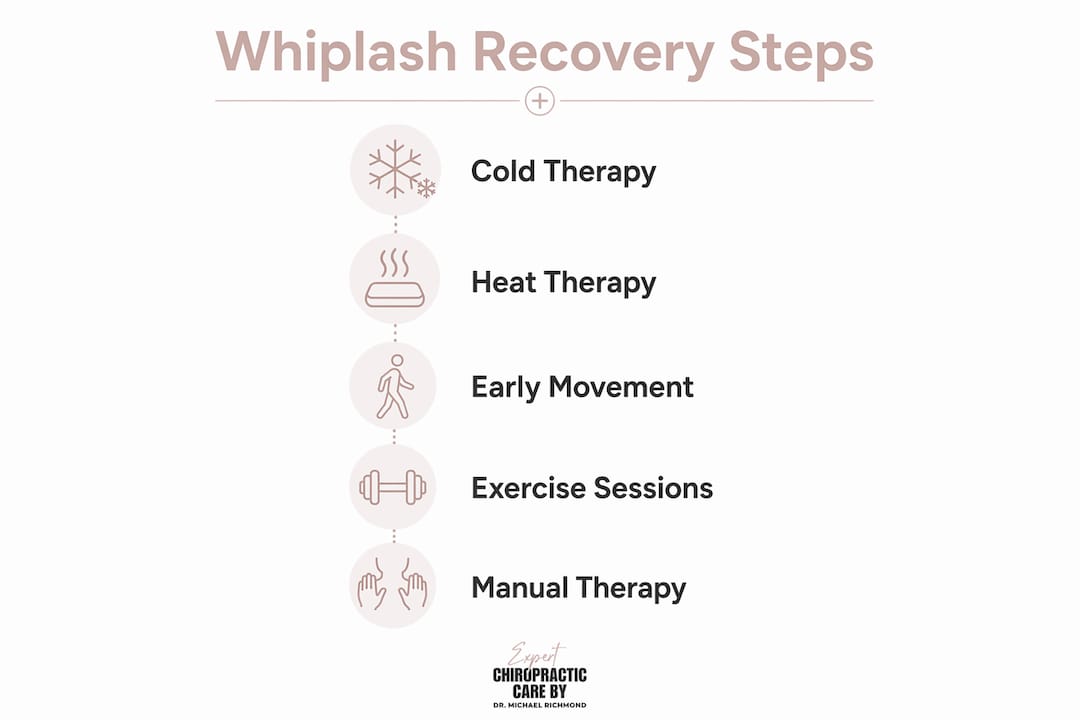
Whiplash pain relief is an active, multimodal process that combines cold and heat therapy, early movement, targeted exercises, and supportive medications to restore function and reduce discomfort. Knowing how to relieve whiplash pain correctly from day one makes a measurable difference. Most symptoms improve within 6 weeks when you follow an evidence-based recovery plan, but only if you avoid the two most common mistakes: too much rest and too much reliance on passive treatments. This guide covers every layer of that plan, from ice packs to cervical strengthening, so you can move forward with confidence.
How to relieve whiplash pain with cold and heat therapy
Cold and heat therapy are the most accessible tools you have in the first days after a whiplash injury, and using them correctly speeds up the process significantly.
Cold therapy (days 1 through 10):
- Apply a cold pack wrapped in a thin cloth for 15 minutes every 2 to 3 hours during the first 7 to 10 days post-injury.
- Cold reduces blood vessel dilation, which limits the inflammatory response in damaged soft tissue.
- Never place ice or a frozen gel pack directly on skin. A folded towel or pillowcase between the pack and your neck prevents frostbite.
- Stop immediately if you notice numbness, increased pain, or skin color changes, and consult a clinician.
Heat therapy (after the acute phase):
- Once the initial swelling has settled, typically after day 10, alternate heat and cold to increase blood flow and support tissue repair.
- A warm compress or heating pad on low for 15 minutes relaxes tight muscles and reduces protective spasm.
- Alternate with a cold pack in the same session if you still notice localized swelling.
- Avoid heat during the first 48 to 72 hours. Applying it too early can worsen inflammation.
Pro Tip: Set a phone timer for every 2 to 3 hours during the first week. Consistent application matters far more than any single long session.
The goal of both therapies is to keep you comfortable enough to move. Pain that is managed with ice or heat is pain that no longer forces you to hold your neck rigid, which is exactly what recovery requires.
Why early movement beats rest for whiplash recovery
The instinct to rest and protect your neck after a whiplash injury is understandable, but it works against you. Early active mobilization reduces pain and disability more effectively than immobilization or prolonged rest, according to randomized clinical trials.
Here is what the research shows about immobilization:
- Prolonged neck collar use weakens the deep cervical muscles and delays healing. Clinical guidelines recommend avoiding it.
- Muscles that are not used lose strength and coordination within days, making recovery harder and longer.
- Stiffness from inactivity creates a secondary pain cycle that compounds the original injury.
"Supervised exercise programs and early movement consistently outperform rest in time-to-pain reduction across randomized trials in whiplash-associated disorder." — StatPearls, Cervical Sprain
Safe early movements you can start within the first 24 to 48 hours include slow chin tucks, gentle side-to-side head rotations within a pain-free range, and shoulder rolls. None of these require equipment. All of them signal to your nervous system that the area is safe to move, which reduces the protective muscle guarding that drives so much of the ongoing pain.
The misconception that rest equals healing is one of the most damaging ideas in whiplash recovery. Movement, done gently and consistently, is the actual catalyst. Passive treatments like collars and bed rest have their place in the first hours after injury, but they should not extend beyond that window without a specific clinical reason.

Step-by-step exercises and manual therapies for whiplash
A structured exercise approach is the backbone of whiplash pain management. The key is pacing: short, frequent sessions outperform long, infrequent ones every time.
Starting with range-of-motion work
Short, frequent sessions of 30 to 90 seconds, repeated multiple times daily, maintain blood flow and mobility without triggering symptom flares. Start with these movements in the first week:
- Chin tucks: Gently draw your chin straight back, creating a slight double-chin. Hold for 5 seconds. Repeat 10 times. This activates the deep cervical flexors, the muscles most commonly inhibited after whiplash.
- Side-to-side rotation: Slowly turn your head to the right as far as comfortable, hold 2 seconds, return to center, then repeat left. Do 5 repetitions each side.
- Lateral flexion: Tilt your right ear toward your right shoulder without raising the shoulder. Hold 3 seconds. Repeat on the left. Do 5 repetitions each side.
- Shoulder rolls: Roll both shoulders backward in slow circles, 10 repetitions. This reduces upper trapezius tension that often radiates into the neck.
Progressing to strengthening
Once range-of-motion feels comfortable, typically in weeks 2 to 4, add exercises that build deep cervical muscle endurance and scapular stability:
- Isometric neck holds: Press your palm gently against your forehead and resist the pressure with your neck for 5 seconds. Repeat on each side and the back of the head. This builds strength without movement, reducing flare risk.
- Scapular retraction: Sit tall and squeeze your shoulder blades together for 5 seconds. Repeat 15 times. Weak scapular muscles force the neck to compensate, prolonging pain.
- Prone Y and T raises: Lying face down, raise your arms into a Y shape, then a T shape, with thumbs pointing up. These build the lower trapezius and rhomboids that support cervical posture.
Pro Tip: If a movement causes sharp or radiating pain down your arm, stop immediately. That pattern needs professional evaluation before you continue.
How manual therapy fits in
Manual therapy, including mobilization and massage, speeds pain reduction when it is integrated alongside active exercise, not used as a replacement for it. Chiropractic spinal adjustments, soft tissue work, and joint mobilization reduce mechanical restriction and allow you to perform exercises with better form and less guarding. Sparkmed's approach to chiropractic methods for healing after car accidents reflects exactly this model: manual care supports movement, it does not substitute for it.
| Exercise phase | Focus | Frequency |
|---|---|---|
| Week 1 to 2 | Range-of-motion, chin tucks, shoulder rolls | 5 to 8 times daily, 30 to 90 seconds each |
| Week 2 to 4 | Isometric holds, scapular retraction | 3 to 4 times daily, 2 to 3 sets |
| Week 4 onward | Strengthening, endurance, postural work | 2 to 3 times daily with progressive load |
Common mistakes to avoid: skipping sessions because you feel better (consistency matters more than intensity), doing too much too soon after a pain-free day, and treating manual therapy as the only intervention while ignoring exercise.
Medications and supportive treatments that help whiplash pain relief
Medications play a supporting role in whiplash recovery, not a primary one. NSAIDs and acetaminophen reduce pain enough to enable movement, which is their actual clinical purpose. Taking ibuprofen so you can do your chin tucks is a legitimate strategy. Taking it instead of doing them is not.
Here is how each category fits into a broader plan:
- NSAIDs (ibuprofen, naproxen): Reduce both pain and inflammation in the acute phase. Take with food and follow dosing guidelines. Most effective when used consistently for the first 5 to 7 days rather than only when pain peaks.
- Acetaminophen (Tylenol): Reduces pain without anti-inflammatory effects. Useful when NSAIDs cause stomach irritation or are contraindicated.
- Muscle relaxants (cyclobenzaprine, methocarbamol): May reduce acute muscle spasm, but evidence for their long-term benefit is limited. Use short-term only, and avoid driving while taking them.
- Massage therapy: Reduces muscle tension and improves circulation. Works best as an adjunct to exercise, not a standalone treatment. Sparkmed's resources on chiropractic massage for recovery explain how soft tissue work integrates with active rehabilitation.
- Acupuncture and electrotherapy (TENS): Can reduce pain perception in some patients, but should not replace active care.
- Injections and procedures: Reserved for chronic cases with persistent nerve involvement. Screening for neuropathic features is important before pursuing this route.
Avoid prolonged opioid use for whiplash. The risk of dependency and the sedating effects that reduce your ability to exercise make them a poor fit for most whiplash recovery plans.
Key takeaways
Effective whiplash pain management requires combining cold and heat therapy, early active movement, structured exercises, and medications used specifically to enable mobility, not replace it.
| Point | Details |
|---|---|
| Cold therapy timing | Apply cold packs for 15 minutes every 2 to 3 hours for the first 7 to 10 days to control inflammation. |
| Move early | Early mobilization reduces pain and disability faster than rest or neck collars, per clinical trial evidence. |
| Exercise in short sessions | Sessions of 30 to 90 seconds repeated throughout the day prevent flares better than long, infrequent workouts. |
| Medications enable movement | Use NSAIDs and acetaminophen to reduce pain enough to exercise, not as a substitute for active recovery. |
| Manual therapy as support | Chiropractic mobilization and massage accelerate results when combined with active exercise, not used alone. |
What I've learned about whiplash recovery that most guides miss
The patients I see who recover fastest are not the ones who rest the most or take the most medication. They are the ones who understand that fear of movement is often more disabling than the injury itself.
Fear-avoidance, the pattern where pain leads to movement avoidance, which leads to more weakness and more pain, is one of the most underaddressed factors in whiplash recovery. When someone tells me their neck "feels fragile," that belief alone can slow their progress by weeks. Education changes that. Once a patient understands that gentle movement is safe and that passive treatments alone are insufficient without active recovery, their trajectory shifts.
I have also seen too many people rely on a neck collar for comfort well past the point where it helps. It feels protective. It is not. The muscles underneath are losing strength every day it stays on.
The other thing worth saying directly: delayed flares are common and do not mean you have re-injured yourself. They often reflect nervous system sensitization rather than new tissue damage. The right response is to adjust your pacing, not to stop moving. If you hit a rough day, scale back the intensity of your exercises, not the frequency.
Patience is not passive. It means showing up for your short sessions every day, even when progress feels slow. The role of manual therapy is to make that daily work easier, not to do the work for you.
— Spark
Sparkmed supports your whiplash recovery every step of the way

Sparkmed specializes in chiropractic care for car accident recovery in North Miami, with a focus on evidence-based, movement-centered rehabilitation. Whether you are in the acute phase managing inflammation or weeks into recovery building strength, Sparkmed's team provides spinal adjustments, soft tissue therapies, and personalized wellness plans designed for accident victims. The clinic offers a $25 chiropractic adjustment with no insurance required, making professional care accessible from day one. Explore the Sparkmed blog for ongoing guides on whiplash recovery, chiropractic tips, and post-accident rehabilitation strategies backed by current clinical evidence.
FAQ
How long does whiplash pain typically last?
Most whiplash symptoms improve within 6 weeks with active recovery, and many people notice significant improvement within the first 14 days. Chronic cases lasting beyond 3 months are less common and often involve untreated psychological or neuropathic factors.
Should I use a neck collar for whiplash?
Neck collars are not recommended beyond the very early hours after injury. Prolonged collar use weakens neck muscles and delays recovery, according to clinical guidelines.
What exercises are safe for whiplash recovery?
Chin tucks, gentle head rotations, lateral neck tilts, and shoulder rolls are safe starting points in the first 48 hours. Progress to isometric holds and scapular strengthening in weeks 2 to 4, keeping sessions short and frequent.
Can I take ibuprofen for whiplash pain?
Yes. NSAIDs like ibuprofen reduce pain and inflammation to help you stay mobile during recovery. Use them to enable movement, not as a reason to avoid it, and follow standard dosing guidelines.
When should I see a professional for whiplash?
See a clinician if you experience radiating pain or numbness down your arm, severe headaches, difficulty swallowing, or if your symptoms are not improving after 2 weeks of active self-care. These signs may indicate nerve involvement that requires a tailored treatment plan.