

Yes, a car accident can cause vertigo, and it's more common than most people realize. The usual culprits are benign paroxysmal positional vertigo (BPPV), cervicogenic dizziness from whiplash, or concussion-related vestibular dysfunction. Call 911 if vertigo comes with slurred speech, facial drooping, sudden severe headache, or limb weakness. Otherwise, write down what you're feeling and get evaluated soon. Most causes are diagnosable with a bedside exam and respond well to treatment.
TL;DR:
- Post-traumatic BPPV often involves multiple canals and bilateral symptoms, requiring repeated or multi-position maneuvers for effective treatment.
- Cervicogenic dizziness is triggered by neck movement or tension from whiplash, often improving within four to twelve weeks with targeted neck therapy.
- Concussion-related dizziness can persist for months and varies widely in severity, with some cases showing symptoms beyond three months.
- Early diagnosis and treatment are crucial, especially if vertigo is accompanied by neurological signs or persists beyond the initial acute phase.
- Chronic dizziness may result from unresolved inner-ear crystals, neck issues, or brain hypersensitivity, requiring ongoing therapy and reassessment.
Table of Contents
- What Causes Vertigo After a Car Accident?
- How Does Vertigo Feel Different Depending on the Cause?
- What Should You Do in the First 24 to 72 Hours?
- How Do Doctors Diagnose Post-Accident Vertigo?
- What Treatments Actually Work for Vertigo After a Crash?
- How Long Does Recovery Take?
- When Should You See a Vestibular Specialist?
- Spark's Approach to Post-Accident Dizziness
- Can You Prevent Vertigo Episodes After a Crash?
- Living With the Psychological Side of Post-Crash Vertigo
- What Happens When Vertigo Doesn't Go Away?
- A Clinician-Minded Take on Early Recovery Mistakes
- Get Evaluated for Post-Accident Dizziness at Spark
- Sources
What Causes Vertigo After a Car Accident?
The jolt of a collision can dislodge tiny calcium crystals in your inner ear, irritate the joints and muscles in your neck, or rattle your brain hard enough to disrupt how it processes balance signals. Each mechanism produces a different flavor of dizziness, and figuring out which one you have determines everything about your treatment.
Post-traumatic BPPV happens when otoconia, the calcium carbonate crystals that normally sit in a gel-like patch in your inner ear, get knocked loose and drift into the fluid-filled canals that sense head rotation. Idiopathic BPPV (the kind that shows up randomly with age) usually affects one ear and one canal. Trauma changes the picture. Post-traumatic BPPV shows up bilaterally in roughly a quarter of cases, compared to about 2% of idiopathic cases, and it often involves more than one canal at once. That's why a single Epley maneuver sometimes isn't enough after a crash.
Cervicogenic dizziness comes from whiplash. Your neck is packed with proprioceptors, tiny sensors that tell your brain where your head sits relative to your body. When whiplash strains those tissues, the signals get scrambled and clash with what your eyes and inner ear are reporting. Turning your head, not changing position, tends to trigger this kind. Some whiplash patients also show altered vertebral artery flow on imaging, though scans frequently look normal even when symptoms are real.
Concussion and mild traumatic brain injury disrupt the brain's own processing of balance and visual input, producing dizziness, fogginess, and motion sensitivity that can appear even without a direct blow to the head. Rarer still is a perilymph fistula, a tear in the membrane separating your inner ear from the middle ear, which can cause vertigo triggered by loud sounds or straining.
- Post-traumatic BPPV: spinning tied to head position, often bilateral
- Cervicogenic dizziness: triggered by neck movement, tied to whiplash
- Concussion/mTBI: constant fogginess, motion sensitivity, cognitive slowdown
- Perilymph fistula (rare): vertigo with loud noise or pressure changes
How Does Vertigo Feel Different Depending on the Cause?
Not all "dizziness" is the same sensation, and the distinction matters for diagnosis. True vertigo feels like the room is spinning or tilting. Lightheadedness feels more like you might faint. Imbalance feels like you can't trust your footing even though your head feels clear.
Short, intense spinning episodes triggered by rolling over in bed or looking up point toward BPPV. A dull, constant rocking sensation or mental fog points more toward concussion or a neck-driven cause.
- Nausea or vomiting during episodes
- Nystagmus (involuntary eye jerking, often noticed by others before you feel it)
- Ringing in the ears (tinnitus)
- Headache, especially at the base of the skull
- Neck stiffness or pain with certain movements
- Trouble concentrating or "brain fog"
Symptoms don't always show up right away. Adrenaline can mask dizziness for hours after impact, and loosened inner-ear crystals sometimes take days to settle into a position that triggers symptoms. Delayed onset doesn't mean it's less serious.
What Should You Do in the First 24 to 72 Hours?
The initial window after a crash is when you decide whether this needs an emergency room or an outpatient visit. Don't guess. A few clear rules make that call easier.
- Go to the emergency room immediately if vertigo comes with slurred speech, facial drooping, arm or leg weakness, double vision, severe headache, or loss of consciousness.
- If none of those apply, sit or lie down when episodes hit, and avoid driving until you know your triggers.
- Track what brings on your symptoms (rolling over, turning your head, standing up) and how long each episode lasts.
- Keep copies of any accident report or ED paperwork. It speeds up your first specialist visit.
- If symptoms are mild but persistent, call your primary care provider or an urgent dizziness evaluation within a day or two rather than waiting it out.
Pro Tip: Film a short video of your eyes during an episode if someone's around to help. Nystagmus patterns are one of the fastest ways a clinician narrows down the cause, and most people never think to capture it in the moment.
Persistent or worsening headaches deserve their own attention too. If yours won't quit, read more on post-crash headaches and what they can signal.
How Do Doctors Diagnose Post-Accident Vertigo?
Diagnosis usually starts at the bedside, not in an imaging suite. The Dix-Hallpike test checks for posterior canal BPPV: the clinician moves your head and body into a specific position and watches for the eye-jerking pattern that confirms displaced crystals. The supine roll test checks the horizontal canal the same way. Because trauma-related BPPV often involves multiple canals at once, a thorough clinician tests more than one position rather than stopping at the first positive finding.
Beyond positional tests, a basic neurological exam checks reflexes, coordination, and eye movement control. Some clinics use videonystagmography (VNG) or vestibular evoked myogenic potentials (VEMP) for a more detailed look at inner-ear function, particularly when symptoms don't fit a clean pattern.
Imaging isn't automatic. A CT or MRI gets ordered when there's concern for bleeding, a vascular injury, or structural brain damage, especially if vertigo shows up alongside neurological red flags. Audiology gets involved when hearing changes accompany the dizziness. The goal of a multidisciplinary vestibular workup is matching the right test to the right suspected cause instead of running everything on everyone.
- Dix-Hallpike test for posterior canal BPPV
- Supine roll test for horizontal canal involvement
- Basic neuro exam (reflexes, coordination, eye tracking)
- VNG or VEMP for detailed vestibular function
- CT/MRI reserved for suspected bleeding, vascular injury, or structural damage
What Treatments Actually Work for Vertigo After a Crash?
Treatment depends entirely on the cause, and matching the right approach to the right diagnosis is what separates fast recovery from months of frustration.
- Canalith repositioning maneuvers. The Epley maneuver is the standard treatment for posterior canal BPPV, guiding displaced crystals back to where they belong through a sequence of head and body positions. The Gans and barbecue-roll variations treat other canal involvements. After trauma, expect to need more than one session. Multicanal involvement means one maneuver often isn't the whole answer.
- Vestibular rehabilitation therapy (VRT). This involves gaze-stabilization exercises and balance retraining that help the brain recalibrate its interpretation of visual, inner-ear, and body-position signals. Most programs run one to two sessions a week for four to eight weeks, with home exercises in between.
- Neck-focused therapy for cervicogenic dizziness. Manual therapy, targeted range-of-motion exercises, and chiropractic adjustment can ease whiplash-driven neck tension that's feeding the dizziness. This often runs alongside vestibular rehab rather than replacing it, since neck dysfunction and inner-ear symptoms frequently overlap after a collision.
- Concussion management. This means graded return to activity, monitored by a provider who tracks symptom load, plus vestibular therapy targeting the specific balance deficits the injury caused.
- Surgical repair for a confirmed perilymph fistula is rare and reserved for cases that don't resolve with rest and conservative management.
Pro Tip: If your first repositioning maneuver doesn't fully resolve symptoms, that's not a treatment failure. It's common enough after trauma that most vestibular specialists plan for a second or third session from the start.
How Long Does Recovery Take?
Isolated BPPV often resolves within one to three repositioning sessions over a couple of weeks. Post-traumatic cases can take longer and carry a higher chance of recurrence than the idiopathic kind, since multicanal involvement means round two sometimes follows round one within weeks or months.
Cervicogenic dizziness tied to whiplash tends to improve over four to twelve weeks with consistent neck therapy, though some cases drag on longer if the underlying neck dysfunction isn't addressed directly.
Concussion-related dizziness is the least predictable. Some people feel back to normal within a couple of weeks. Others report lingering symptoms past the three-month mark, particularly when dizziness overlaps with headaches and cognitive fog.
- BPPV: often resolves in one to three sessions, but trauma raises recurrence risk
- Cervicogenic dizziness: typically four to twelve weeks with active neck therapy
- Concussion-related dizziness: highly variable, with a meaningful subset symptomatic past three months
If symptoms plateau instead of improving, or new symptoms appear weeks after the crash, that's your signal to get reassessed rather than wait it out.
When Should You See a Vestibular Specialist?
Not every case needs a specialist, but plenty do. An ENT or vestibular physical therapist handles suspected BPPV that doesn't clear with an initial repositioning attempt. A physical therapist or chiropractor manages cervicogenic dizziness tied to whiplash. Neurology or a concussion clinic takes over when symptoms point to a central brain injury rather than an inner-ear or neck problem.
Multidisciplinary vestibular clinics offer something a single provider often can't: systematic positional testing across multiple canals, planned reassessment instead of a one-and-done maneuver, and coordinated rehab that treats the neck and inner ear together. One case report documented dramatically faster recovery when BPPV and neck pain were treated together instead of separately.
- Bring a symptom diary noting triggers, duration, and frequency
- Bring ED discharge paperwork or accident documentation
- Bring a current medication list
- Ask specifically whether multicanal BPPV was ruled out, not just the standard single-canal check
Spark's Approach to Post-Accident Dizziness
A focused exam, not guesswork, is how post-accident vertigo gets sorted out efficiently. Spark's approach starts with positional testing to check for BPPV, a neck assessment for whiplash-driven proprioceptive issues, and a referral pathway to vestibular rehab when central or inner-ear involvement is suspected.
- Targeted positional exam on the first visit
- Bedside repositioning when BPPV is confirmed
- Neck-focused chiropractic care for cervicogenic symptoms
- Referral coordination for vestibular rehab or neurology when needed
| Suspected cause | First-line approach |
|---|---|
| BPPV | Bedside repositioning maneuver |
| Cervicogenic (whiplash) | Neck-focused manual therapy |
| Concussion-related | Referral for vestibular rehab, graded monitoring |
Can You Prevent Vertigo Episodes After a Crash?
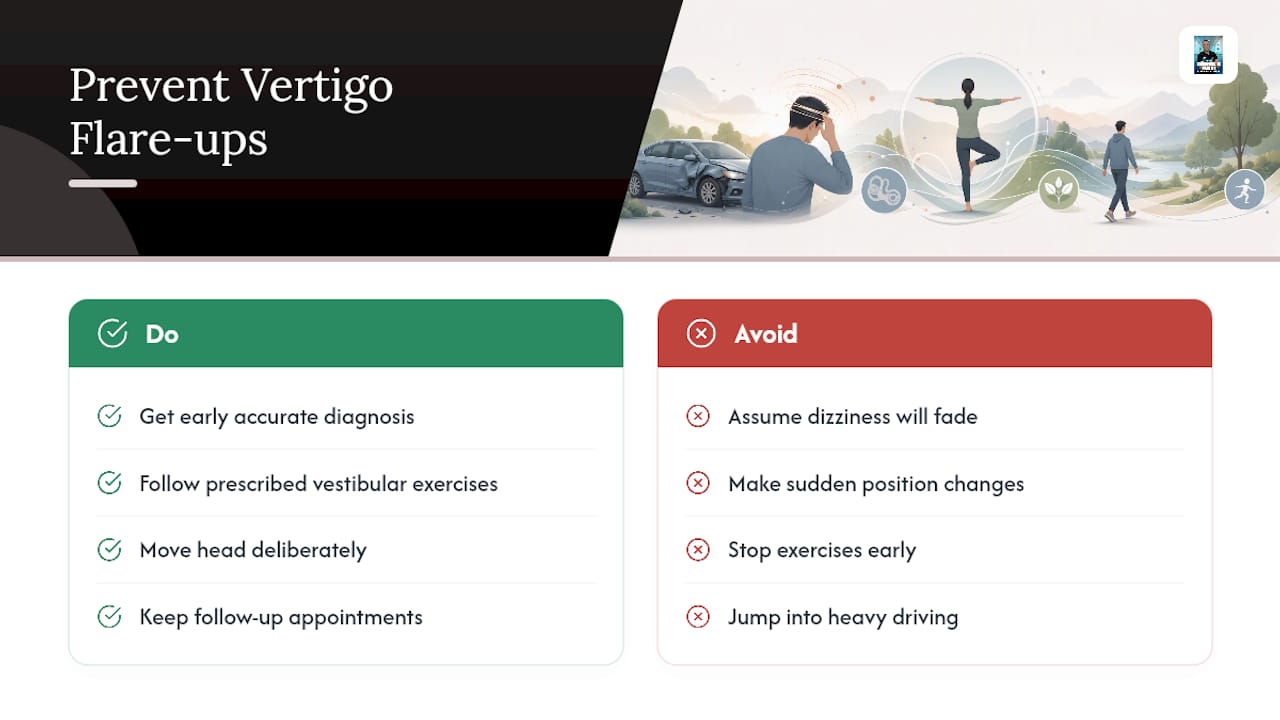
You can't undo the initial trauma, but you can reduce how often symptoms flare once you're in the recovery window. The biggest lever is getting an accurate diagnosis early instead of assuming the dizziness will just fade. Untreated cervicogenic dizziness, for example, tends to linger precisely because the neck dysfunction driving it never gets addressed directly.
Beyond that, a handful of practical habits cut down on flare-ups:
Move your head deliberately rather than snapping it side to side, especially in the first few weeks. Sudden position changes, like jumping out of bed or looking sharply upward to check a high shelf, are classic BPPV triggers. Sleeping with your head slightly elevated can reduce how much crystal debris drifts overnight for some people with confirmed BPPV, though this is a supportive measure, not a substitute for repositioning treatment.
Stay consistent with prescribed vestibular exercises even after symptoms ease. Stopping too early is one of the most common reasons dizziness resurfaces weeks later. If you were cleared to drive, ease back in gradually rather than jumping straight into rush-hour traffic, since residual imbalance can resurface under visual or cognitive load.
Hydration and steady blood sugar matter more than people expect, particularly if lightheadedness (rather than true spinning vertigo) is part of your presentation. Skipping meals or under-hydrating can amplify dizziness that's already present from a vestibular or neck injury.
Finally, keep your follow-up appointments even once you feel better. Post-traumatic BPPV recurs more often than the idiopathic kind, and a quick recheck catches a relapse before it derails weeks of progress.
Living With the Psychological Side of Post-Crash Vertigo
Vertigo after an accident isn't just physical. The unpredictability of it, not knowing when the room might tilt, breeds a specific kind of anxiety that catches people off guard. Some develop a fear of driving or even riding as a passenger, which compounds the isolation of already being sidelined from normal activity.
That reaction isn't a personal weakness. It's a completely reasonable response to your body doing something it's never done before, and to the underlying memory of the crash itself. For some, vertigo symptoms and post-traumatic stress feed each other: anxiety heightens the perception of dizziness, and dizziness reinforces the sense that something is still wrong. Sleep disruption often follows, which then worsens both the anxiety and the physical symptoms.
A few things help break that cycle. Naming it out loud to your provider matters. Tell your chiropractor, physical therapist, or physician that you're anxious about the dizziness, not just that you're dizzy. Vestibular rehab itself has a secondary benefit here: gradually retraining your balance system through supervised exposure tends to reduce the fear response over time, because you relearn that certain movements are safe rather than avoiding them indefinitely.
If anxiety, avoidance, or intrusive memories of the accident are interfering with daily life weeks after the crash, that's worth raising with a mental health provider alongside your physical treatment. Treating the vestibular symptoms without addressing the psychological weight of the trauma often leaves people only partially recovered, even after their balance testing looks normal.
What Happens When Vertigo Doesn't Go Away?
Most post-accident vertigo resolves with the right treatment, but a subset of patients deal with symptoms that stretch into months rather than weeks. Chronic dizziness at that point usually falls into one of two categories: unresolved mechanical issues (crystals that were never fully repositioned, or neck dysfunction that never got addressed) or a secondary condition called persistent postural-perceptual dizziness, where the brain gets stuck in a heightened state of motion sensitivity even after the original injury has healed.
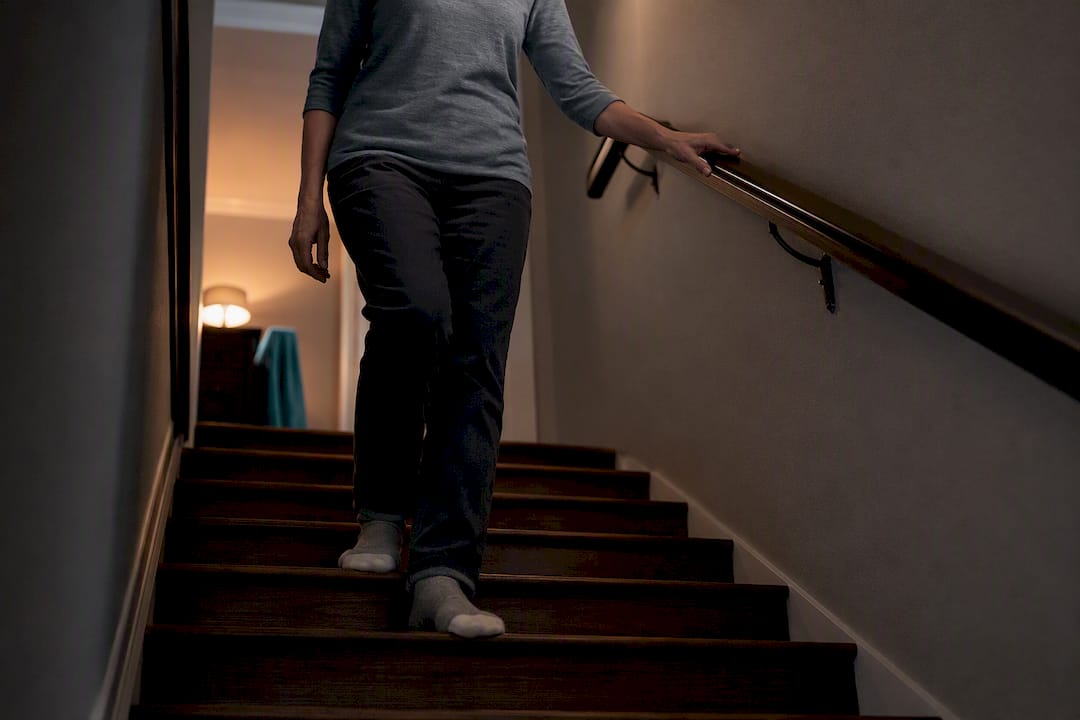
Long-term complications extend beyond the spinning itself. Chronic dizziness raises fall risk, particularly in situations involving stairs, uneven ground, or low light. It can also quietly erode work performance if your job involves screens, driving, or physical coordination, and the cognitive fog that sometimes accompanies concussion-related cases can outlast the vertigo itself.
Managing persistent symptoms usually means going back to basics rather than accepting the dizziness as permanent. That means repeat positional testing to rule out a missed or recurrent canal involvement, a fresh look at neck function if it hasn't been addressed, and continued vestibular rehab focused on habituation, the gradual process of retraining your brain's tolerance for motion and visual stimulation.
For a small number of patients, chronic symptoms require a longer-term management plan rather than a cure: modified activity, ongoing balance exercises, and periodic reassessment. That's not a failure of treatment. It's a recognition that some vestibular injuries take longer to settle than others, and pretending otherwise usually just delays the right care. The consistent thread across long-term cases is that people who stay engaged with a treatment plan tend to do better than those who give up on it after the first round of therapy doesn't fully resolve things.
A Clinician-Minded Take on Early Recovery Mistakes
The biggest mistake people make isn't ignoring vertigo. It's assuming delayed symptoms mean it's minor. Dizziness that shows up two or three days after a crash is common, not a sign you're overreacting. Get assessed early anyway. Waiting rarely makes post-traumatic BPPV or cervicogenic dizziness easier to treat, and it sometimes lets avoidable complications like chronic imbalance take hold. Track your symptoms, keep your follow-ups, and don't talk yourself out of care because the ER didn't find anything on a scan.
— Spark
Get Evaluated for Post-Accident Dizziness at Spark
Spark gives North Miami patients a faster path than waiting weeks for a specialist referral: a same-clinic exam that checks for BPPV, neck-driven dizziness, and whiplash injury in one visit, with bedside repositioning available on the spot when it's indicated. No insurance is required to get started, and the $25 chiropractic adjustment offer makes that first evaluation accessible even before your claim or coverage sorts itself out.

If you were in a collision and dizziness, neck stiffness, or headaches followed, bring whatever accident or emergency room paperwork you have. It helps the clinical team narrow down the cause faster instead of starting from scratch. Transportation assistance options are available for patients who aren't yet comfortable driving. Book a visit through Spark's services page and get a targeted exam scheduled this week rather than waiting for symptoms to resolve on their own.
Sources
- Post-traumatic BPPV (PMC)
- Whiplash, dizziness and vertebral artery findings (PubMed)
- Post‑traumatic BPPV: mechanisms and clinical pathway (Frontiers, 2026)
- Canalith repositioning procedure (Mayo Clinic)