

Types of spinal therapies are distinct treatment methods designed to reduce back pain by targeting spinal structures through non-surgical, injection-based, and surgical approaches. Back pain affects millions of Americans every year, and the range of available spinal treatment options has never been broader or better supported by evidence. Whether you are dealing with a recent injury, chronic discomfort, or post-accident pain, understanding what each therapy does and when it works best puts you in a far stronger position to recover. This guide breaks down the most important options, from physical therapy and chiropractic care to epidural injections and spinal fusion, so you can have a more informed conversation with your care team.
1. Types of spinal therapies: the full spectrum
Spinal therapies fall into three broad categories: non-surgical conservative treatments, injection-based procedures, and surgical interventions. Most clinical guidelines place non-surgical options first, escalating to injections or surgery only when conservative care fails or when there is clear structural damage. The American Academy of Family Physicians and the American Academy of Orthopaedic Surgeons both support this stepped-care model, and the evidence behind it is strong. Understanding where each therapy sits in that hierarchy helps you avoid unnecessary procedures and recover faster.
The most widely used non-surgical spinal therapies include physical therapy, spinal manipulation, massage, and acupuncture. Injection therapies include epidural steroid injections, facet joint injections, sacroiliac joint injections, and trigger point injections. Surgical options include discectomy, laminectomy, spinal fusion, and vertebroplasty. Each category serves a different patient profile, and the best spinal care methods almost always combine more than one approach.
2. Physical therapy and exercise for the spine
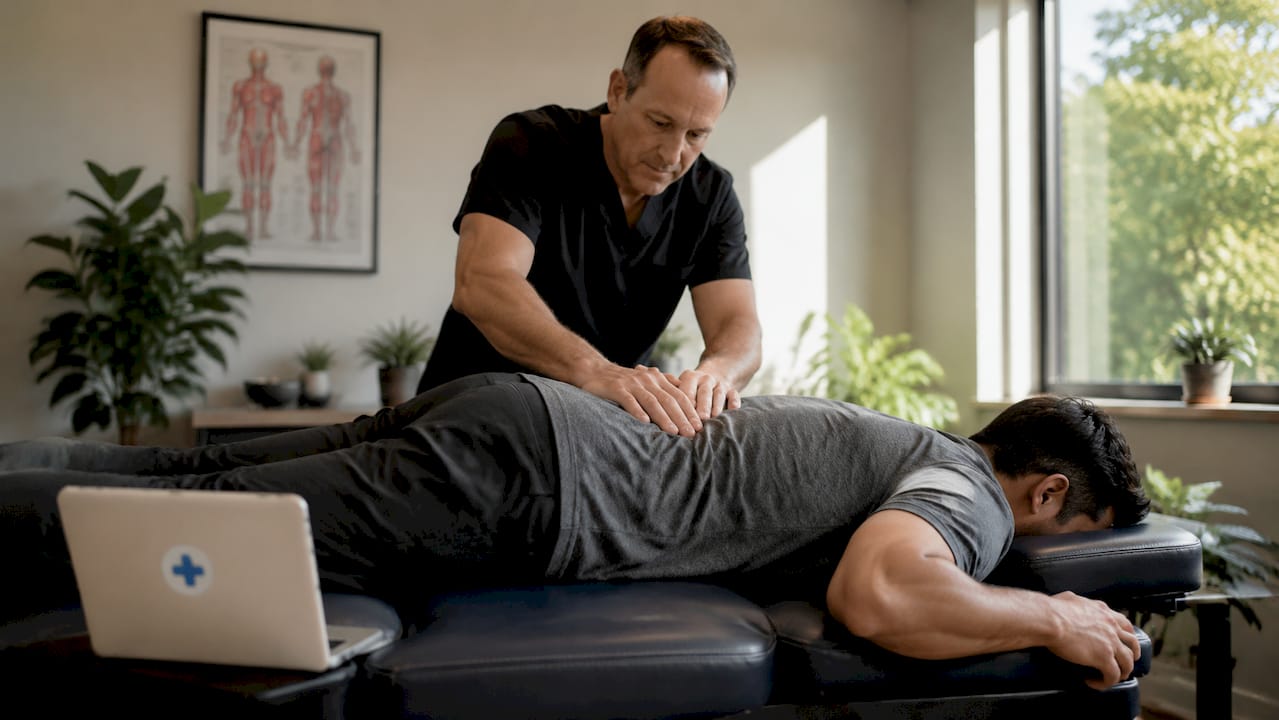
Physical therapy is the most evidence-backed non-surgical spinal therapy available. It combines active exercise with education, posture correction, and sometimes passive modalities like heat or ultrasound. For nonspecific acute low back pain, staying active improves outcomes significantly better than bed rest. That single finding overturns decades of conventional advice that told patients to rest and wait.
A standard physical therapy program for back pain typically includes:
- Strengthening exercises targeting the core, glutes, and paraspinal muscles
- Flexibility and mobility work to restore range of motion in the lumbar and thoracic spine
- Postural retraining to reduce mechanical load on spinal discs and joints
- Patient education on body mechanics, lifting technique, and activity modification
The goal is to make the spine more resilient, not just less painful in the short term. Patients who complete a full course of physical therapy consistently report better long-term outcomes than those who rely on passive treatments alone.
Pro Tip: Combine active exercise with manual techniques like spinal mobilization for faster functional gains. Research shows that neither approach alone produces the same results as the two used together.
3. Spinal manipulation and mobilization
Spinal manipulation, also called spinal manipulative therapy (SMT), is the signature technique of chiropractic care. A trained clinician applies a controlled, high-velocity thrust to a specific spinal joint to restore movement and reduce pain. Mobilization uses slower, gentler movements to achieve a similar goal without the audible "pop." Both are forms of manual therapy for the spine and are widely used by chiropractors, osteopathic physicians, and physical therapists.
For chronic low back pain, SMT produces small pain reductions and moderate functional improvements compared with sham treatments, with no serious adverse effects observed. That is a meaningful result, though it also means SMT works best as part of a broader plan rather than as a standalone fix. Clinicians who integrate SMT with active rehabilitation consistently see better outcomes than those who use it in isolation. If you want a deeper look at the evidence behind adjustments, Sparkmed's spinal adjustment evidence guide covers the 2026 research in detail.
4. Massage, acupuncture, and passive modalities
Massage therapy targets soft tissue tension around the spine, reducing muscle guarding and improving circulation to injured areas. Acupuncture, which involves inserting fine needles at specific anatomical points, has a growing body of evidence supporting its use for chronic low back and neck pain. Both are considered passive therapies because the patient is not actively moving during treatment.
The important caveat: traction therapy and several passive electro/laser/ultrasound modalities lack convincing evidence of benefit for back pain. This matters because these treatments are still widely offered and can be costly. Massage and acupuncture have better evidence profiles than TENS, ultrasound, or laser therapy, and should be prioritized if passive care is part of your plan. The key is to use passive therapies as a bridge to active rehabilitation, not as a permanent substitute for it.
5. Spinal injection therapies
Injection-based spinal therapies deliver medication directly to the source of pain, bypassing the digestive system and targeting inflamed or compressed structures with precision. They serve two roles: therapeutic (reducing pain and inflammation) and diagnostic (confirming the pain source by observing whether the injection provides immediate relief). There are four main types used in clinical practice.
Epidural steroid injections deliver corticosteroid and anesthetic into the epidural space surrounding the spinal cord. Epidural injections treat radiating arm or leg pain caused by inflamed or compressed nerves, making them the go-to option for patients with disc herniation or spinal stenosis causing sciatica.
Facet joint injections target the small joints connecting each vertebra. Facet and sacroiliac joint injections use anesthetics and corticosteroids under imaging guidance to reduce localized pain and confirm the joint as the pain source. They are particularly useful for patients with arthritis-related spinal pain or pain that worsens with extension.
Sacroiliac (SI) joint injections address the joint connecting the sacrum to the pelvis, a frequently overlooked pain source. SI joint injections under fluoroscopic guidance can provide therapeutic benefit lasting up to 37 weeks in patients who respond well. The total injectate volume is typically limited to about 2.5 mL to maintain accuracy and reduce the risk of medication spreading to unintended structures.
Trigger point injections target hyperirritable muscle knots in the paraspinal muscles. They are less anatomically complex than the other injection types but can provide significant relief for patients whose back pain has a strong myofascial component.
6. Surgical spinal therapies: when surgery becomes necessary
Surgery is not a first-line spinal treatment option. Surgery is generally reserved for patients with severe nerve dysfunction, malignancy, or structural causes that have not responded to conservative management. Most guidelines recommend at least six weeks of conservative therapy before imaging is even considered, let alone surgery. That timeline exists because most acute back pain resolves on its own with appropriate activity and care.
When surgery is warranted, the most common procedures are:
- Discectomy: Removal of a herniated disc fragment pressing on a nerve root. Recovery is typically four to six weeks for desk work, longer for physical labor.
- Laminectomy: Removal of the lamina (part of the vertebral arch) to decompress the spinal canal. Most often used for spinal stenosis.
- Spinal fusion: Joining two or more vertebrae permanently to eliminate painful motion at a damaged segment. Recovery is the longest of any spinal surgery, often six months to a year.
- Vertebroplasty and kyphoplasty: Minimally invasive procedures that stabilize compression fractures, most commonly from osteoporosis. Recovery is significantly faster than open surgery.
Pro Tip: If a surgeon recommends fusion before you have completed a structured physical therapy program and at least one injection trial, seek a second opinion. The evidence strongly supports exhausting non-surgical options first.
7. Multidisciplinary and biopsychosocial approaches
The most effective spinal care for chronic pain is not a single therapy. Multidisciplinary therapy combining physical and biopsychosocial care reduces chronic low back pain intensity and improves physical function significantly more than standard care alone. The effect sizes are clinically meaningful: a standardized mean difference of 0.55 for pain intensity and 0.41 for physical function improvement. Those numbers represent real reductions in daily suffering.
Biopsychosocial care adds psychological support, stress management, and social/occupational factors to the physical treatment plan. This matters because chronic pain rewires the nervous system and affects mood, sleep, and identity. A physical therapy program that ignores anxiety, fear of movement, or workplace stress will consistently underperform compared to one that addresses all three dimensions. Sparkmed's guide on maintaining spinal health daily covers how to integrate these elements into everyday life.
8. Comparing spinal therapy options at a glance
Choosing the right therapy depends on your diagnosis, pain duration, and functional goals. This table summarizes the key differences across the main spinal treatment options.
| Therapy type | Invasiveness | Best evidence for | Typical recovery |
|---|---|---|---|
| Physical therapy | None | Acute and chronic low back pain | Ongoing, weeks to months |
| Spinal manipulation (SMT) | Minimal | Chronic low back pain (as part of a plan) | Days to weeks |
| Massage and acupuncture | Minimal | Chronic pain, myofascial pain | Sessions ongoing |
| Epidural steroid injection | Moderate | Radiculopathy, disc herniation | Days to weeks |
| Facet/SI joint injection | Moderate | Arthritis, joint-specific pain | Weeks to months |
| Discectomy | Surgical | Herniated disc with nerve compression | 4 to 6 weeks |
| Spinal fusion | Surgical | Structural instability, refractory pain | 6 to 12 months |
No single therapy dominates every category. The best spinal care methods are those matched precisely to the patient's diagnosis, not the ones that sound most advanced or are most readily available.
Key takeaways
The most effective approach to spinal therapy combines non-surgical active treatments first, uses injections for targeted diagnostic and therapeutic relief, and reserves surgery for structural problems that conservative care cannot resolve.
| Point | Details |
|---|---|
| Start with active therapy | Physical therapy and exercise outperform rest for most acute and chronic back pain cases. |
| SMT works best in combination | Spinal manipulation produces small to moderate gains but performs better alongside active rehabilitation. |
| Injections serve dual roles | Epidural, facet, and SI joint injections both treat pain and confirm the anatomical source. |
| Surgery is a last resort | Guidelines recommend six or more weeks of conservative care before surgical evaluation. |
| Multidisciplinary care wins | Combining physical, psychological, and social treatment produces the strongest outcomes for chronic pain. |
What I've learned about choosing spinal therapies
After working with patients across a wide range of back pain presentations, the pattern I see most often is this: people arrive having already tried one or two passive therapies that didn't stick, and they're either ready to give up or convinced they need surgery. Both conclusions are usually premature.
The uncomfortable truth about spinal care is that passive treatments feel good in the moment but rarely produce lasting change on their own. Massage, heat, and even injections are tools for creating a window of relief. What you do inside that window determines whether you actually recover. Patients who use that reduced-pain period to build strength, improve movement patterns, and address the psychological weight of chronic pain are the ones who stay better.
I'm also cautious about the way "multidisciplinary" gets used as a buzzword without substance behind it. Real multidisciplinary care means your physical therapist, chiropractor, and mental health provider are communicating with each other and adjusting your plan based on shared information. It does not mean you see three separate providers who never speak. If your care team isn't coordinating, push for it.
The patients who recover fastest are not the ones who find the "best" single therapy. They are the ones who stay engaged, ask hard questions, and treat their recovery as an active process rather than something that happens to them. That mindset is the most underrated factor in spinal health, and no injection or surgery can substitute for it.
— Spark
Start your spinal recovery at Sparkmed
Sparkmed's North Miami clinic offers spinal adjustments, manual therapy, and personalized wellness plans designed for people dealing with back pain, whether from a car accident, chronic strain, or everyday wear. The team at Sparkmed combines hands-on chiropractic techniques with active rehabilitation guidance, so you leave with more than temporary relief. Appointments are accessible and affordable, including a $25 adjustment option that requires no insurance. If you're ready to understand your options and build a real recovery plan, explore Sparkmed's services and book a consultation today.
FAQ
What are the main types of spinal therapies?
The main types of spinal therapies are non-surgical treatments (physical therapy, spinal manipulation, massage, acupuncture), injection-based procedures (epidural, facet joint, SI joint, trigger point), and surgical options (discectomy, laminectomy, spinal fusion, vertebroplasty). Most care plans start with non-surgical methods and escalate only if needed.
Are non-surgical spinal therapies effective for back pain?
Yes. Physical therapy and spinal manipulation both show meaningful improvements in pain and function for chronic low back pain, especially when combined. Multidisciplinary approaches that add psychological and social support produce the strongest long-term results.
When should I consider spinal injection therapy?
Spinal injections are appropriate when pain is localized to a specific structure (a nerve root, facet joint, or SI joint) and conservative therapy has not provided sufficient relief. They also help confirm the pain source diagnostically, which guides the next step in treatment.
How long does SI joint injection relief last?
For patients who respond to SI joint injections, therapeutic benefit can last up to 37 weeks when the procedure is performed under fluoroscopic guidance with controlled injectate volume. Results vary based on the underlying cause of joint pain.
Is surgery necessary for most back pain cases?
No. Surgery is reserved for severe nerve dysfunction, structural instability, or cases where six or more weeks of conservative management have failed. The majority of back pain cases resolve with physical therapy, activity modification, and targeted manual or injection therapies.