
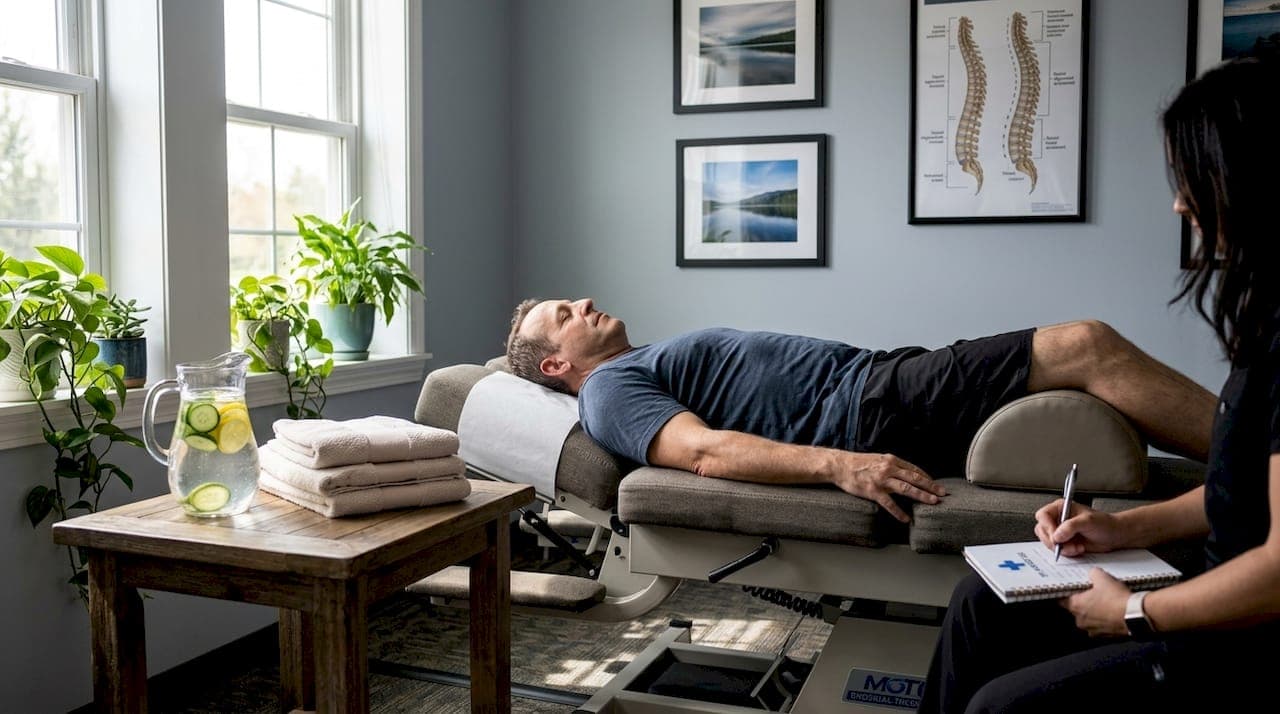
Spinal decompression is defined as any treatment that relieves pressure on the spinal cord or nerve roots to reduce pain and restore function. The term covers two fundamentally different approaches: surgical procedures that physically remove or reshape spinal structures, and non-surgical mechanical traction that gently stretches the spine to reduce pressure inside discs. If you are dealing with back pain, sciatica, or a herniated disc, understanding which type of spinal decompression is being discussed is the first and most critical step toward getting the right care.
What is spinal decompression surgery and when is it used?
Surgical spinal decompression physically removes or reshapes structures in the spine that are pressing on nerves. The goal is direct, immediate relief from compression caused by bone, disc material, or thickened ligaments. Surgeons at major spine centers use several distinct procedures depending on the source of the problem.
The four most common surgical techniques are:
- Discectomy: Removal of part or all of a herniated disc that is pressing on a nerve root. This is one of the most frequently performed spine surgeries for leg pain caused by disc herniation.
- Laminectomy: Removal of the lamina, the bony arch at the back of a vertebra, to widen the spinal canal and relieve pressure from spinal stenosis.
- Foraminotomy: Enlargement of the foramen, the opening through which nerve roots exit the spine, to relieve compression from bone spurs or disc material.
- Minimally invasive and endoscopic approaches: Newer techniques use tubular retractors and navigation tools that minimize muscle damage and aid recovery, representing a major shift from traditional open surgery.
Surgical decompression is typically recommended when neurological symptoms are present. These include progressive leg weakness, loss of bladder or bowel control, or severe pain that has not responded to conservative care over several weeks or months. Conditions like herniated discs, spinal stenosis, and bone spurs are the most common indications.
Outcomes from surgery vary by condition. Neurological improvements occur in 27% to 84% of patients treated for foot drop caused by lumbar degenerative disease, but up to 18% may not respond. That range reflects how much pathology type matters. Herniation patients and stenosis patients often recover at different rates even when their symptoms look similar before surgery, as functional improvement levels vary depending on the specific lesion.
The evolution toward minimally invasive and endoscopic methods has reduced tissue trauma and shortened recovery times significantly. The trade-off is a steep surgical learning curve and a real risk of incomplete decompression if the technique is not executed precisely.
Pro Tip: Before agreeing to any surgical procedure, ask your surgeon specifically whether the approach is open, minimally invasive, or endoscopic. Each carries different recovery timelines and complication profiles, and you deserve a clear answer.
How does non-surgical spinal decompression therapy work?
Non-surgical spinal decompression therapy uses a motorized table or traction device to apply gentle, intermittent stretching forces to the spine. The mechanism is straightforward. By slowly lengthening the spine under controlled tension, the treatment creates negative pressure within discs, which can encourage herniated or bulging disc material to retract away from the nerve it is irritating. Think of it like releasing pressure from an overfilled water balloon by gently pulling it at both ends.
The conditions most commonly treated with this approach include:
- Herniated and bulging discs: The negative intradiscal pressure created during traction can draw disc material back toward the center, reducing nerve contact.
- Sciatica: When sciatic nerve pain originates from disc compression at L4-L5 or L5-S1, physiotherapy and traction approaches can reduce the irritation driving that radiating leg pain.
- Mild to moderate spinal stenosis: Traction temporarily increases the space available for nerves within the spinal canal.
- Degenerative disc disease: Repeated sessions may improve fluid exchange within dehydrated discs, supporting tissue health over time.
Motorized traction tables are controlled by orthopedic specialists or chiropractors who adjust the angle, force, and duration of each pull based on your specific anatomy and condition. This precision matters. Generic traction and true spinal decompression therapy are not the same thing, even though both involve stretching the spine.
The advantages of non-surgical decompression are real. No incisions, no anesthesia, no medication, and minimal recovery time between sessions. Treatment plans are customized, typically running 15 to 30 sessions over several weeks. The limitation is that clinical evidence varies on long-term effectiveness, and the therapy is not appropriate for patients with severe instability, fractures, advanced osteoporosis, or conditions that require surgical correction. Understanding how chiropractic equipment is used in spinal care helps clarify why the quality of the device and the operator's skill both determine outcomes.
Pro Tip: Ask your provider whether the traction table they use is a true decompression system or a standard traction table. Certified decompression systems like DRX9000 or VAX-D use computer-controlled tension curves that standard traction devices do not replicate.
Surgical vs. non-surgical spinal decompression: a direct comparison
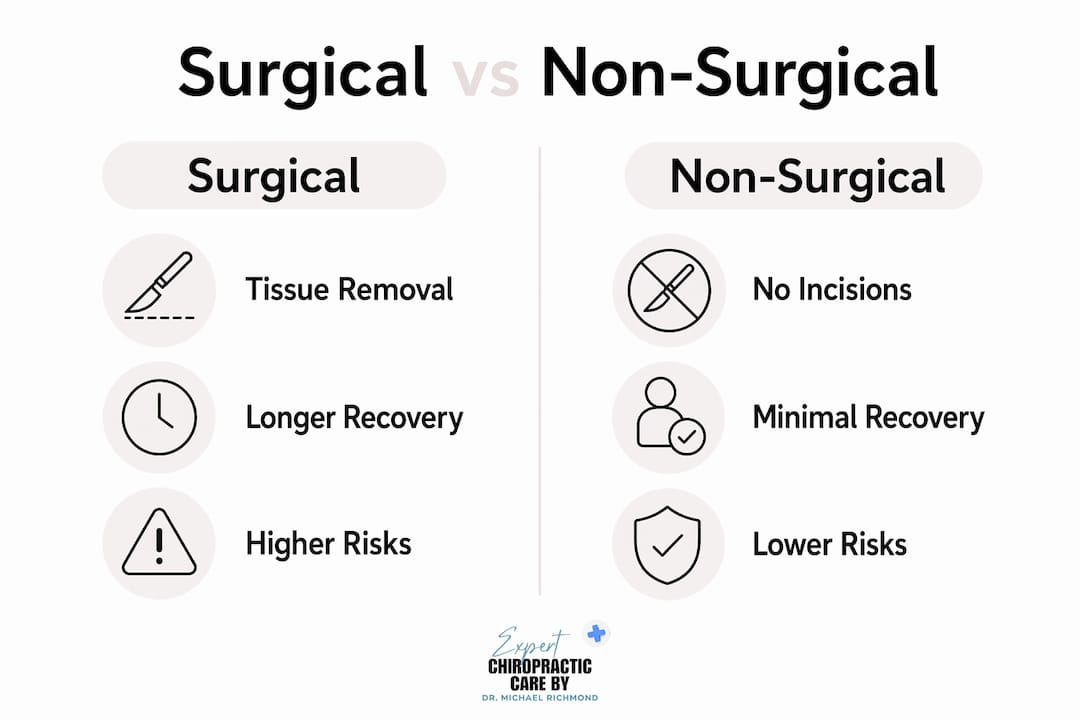
The distinction between surgical and non-surgical spinal decompression is not just technical. It determines your recovery timeline, your risk exposure, and the type of specialist you need. The table below lays out the core differences clearly.
| Category | Surgical decompression | Non-surgical decompression |
|---|---|---|
| Mechanism | Physically removes or reshapes bone or disc tissue | Applies mechanical traction to reduce intradiscal pressure |
| Invasiveness | Requires incision, anesthesia, and hospital stay | No incision, no medication, outpatient sessions |
| Best candidates | Severe compression, neurological deficits, failed conservative care | Mild to moderate disc issues, sciatica, no structural instability |
| Recovery time | Weeks to months depending on procedure type | Minimal downtime between sessions |
| Evidence base | Strong for specific indications like stenosis and herniation | Varies; effective for many patients but long-term data is mixed |
| Risk profile | Surgical risks including infection, incomplete decompression | Low risk; not suitable for all spinal conditions |
The most important takeaway from this comparison is that neither approach is universally superior. Surgery delivers direct, structural correction that traction cannot replicate. Non-surgical therapy offers a lower-risk starting point for patients whose conditions have not yet reached the threshold requiring surgery. Many patients try conservative care first and only move to surgical evaluation if symptoms persist or worsen. For a deeper look at this decision, the chiropractic vs. surgery discussion is worth reading before you commit to either path.
How to know if spinal decompression is right for you
Deciding whether spinal decompression is the right treatment requires a structured evaluation, not a self-diagnosis based on symptoms alone. Follow these steps to approach the decision clearly:
- Get a professional diagnosis first. Imaging such as MRI or CT scans identifies the exact source of compression. A clinical exam assesses neurological function, reflexes, and range of motion. Without this baseline, no treatment recommendation is reliable.
- Identify your symptom severity. Mild to moderate pain with no neurological deficits points toward non-surgical options. Progressive weakness, numbness, or loss of bladder and bowel control signals a need for urgent surgical evaluation.
- Consult the right specialist. Primary care physicians can initiate the workup and refer appropriately. Chiropractors specialize in non-surgical spinal care and can assess whether traction therapy fits your condition. Orthopedic surgeons and neurosurgeons evaluate surgical candidacy. Getting input from more than one type of provider gives you a fuller picture.
- Set realistic expectations. Non-surgical decompression typically requires multiple sessions before results are noticeable. Surgical outcomes depend heavily on pathology type, as the research on herniation versus stenosis recovery makes clear. Neither approach guarantees complete pain resolution.
- Consider complementary therapies. Spinal decompression works best as part of a broader care plan. Physical therapy, targeted exercise, and approaches like acupuncture during recovery can support healing and reduce the chance of recurrence. Daily habits also matter more than most patients realize, and a practical spinal health guide can reinforce the gains from any decompression treatment.
The role of spinal decompression in your care plan depends entirely on what is actually compressing your nerves and how severe that compression is. A provider who skips imaging and jumps straight to a treatment recommendation is not giving you the standard of care you deserve.
Key takeaways
Spinal decompression is most effective when the treatment type, surgical or non-surgical, is matched precisely to the patient's diagnosis, symptom severity, and neurological status.
| Point | Details |
|---|---|
| Two distinct treatment types | Surgical decompression removes tissue; non-surgical traction reduces intradiscal pressure without incision. |
| Surgical outcomes vary by pathology | Neurological recovery rates range from 27% to 84% depending on the specific condition being treated. |
| Non-surgical therapy suits mild to moderate cases | Conditions like herniated discs and sciatica respond well, but severe instability requires surgical evaluation. |
| Diagnosis before treatment | MRI or CT imaging is required to identify the compression source before any decompression plan is appropriate. |
| Complementary care improves results | Physical therapy, exercise, and lifestyle habits extend the benefits of any decompression treatment. |
What I've learned from watching patients navigate this decision
Working alongside patients dealing with back pain, I have seen one mistake repeat itself more than any other. People hear "spinal decompression" from two different providers and assume they are being offered the same treatment. They are not. A neurosurgeon recommending decompression surgery and a chiropractor offering decompression therapy are describing procedures that share a name and almost nothing else. That confusion costs people time, money, and sometimes leads them toward a more invasive path than their condition actually requires.
The patients who do best are the ones who ask blunt questions early. "Is this surgical or non-surgical?" "What imaging supports this recommendation?" "What happens if I do nothing for six weeks?" Those three questions alone filter out a lot of noise.
I also want to push back on the idea that surgery is always the last resort and non-surgical therapy is always the safe first step. For someone with a large central disc herniation causing progressive leg weakness, waiting months on a traction table is not conservative care. It is delay. The role of spinal decompression therapy is to serve patients with the right tool at the right time, not to follow a rigid hierarchy. Get the diagnosis right, match the treatment to the finding, and build a recovery plan that includes more than just the decompression itself.
— Spark
Explore personalized spine care at Sparkmed
If you are dealing with back pain and trying to figure out your next step, Sparkmed's team in North Miami specializes in exactly this kind of evaluation.

Sparkmed offers chiropractic care and spinal treatment options designed for people recovering from accidents and chronic back conditions alike. The clinic uses modern equipment, experienced practitioners, and individualized care plans to match treatment to your specific diagnosis. Whether you are exploring non-surgical options or need a referral pathway for more complex cases, the Sparkmed blog covers spinal health topics in depth to help you make informed decisions. You can also read about spinal recovery after car accidents to understand what a structured care plan looks like in practice.
FAQ
What is spinal decompression in simple terms?
Spinal decompression is any treatment that reduces pressure on the spinal cord or nerve roots. It includes both surgical procedures that remove compressive tissue and non-surgical traction therapy that stretches the spine to relieve disc pressure.
How does non-surgical spinal decompression therapy work?
A motorized table applies gentle, intermittent pulling force to the spine, creating negative pressure inside the disc. This negative pressure can encourage herniated disc material to retract away from the nerve it is irritating, reducing pain.
Is spinal decompression effective for herniated discs?
Non-surgical decompression is widely used for herniated and bulging discs with positive results for many patients, though long-term clinical evidence varies. Surgical discectomy shows strong outcomes for herniation cases with neurological symptoms.
What conditions make someone a candidate for surgical decompression?
Surgical decompression is indicated for severe nerve compression causing progressive weakness, numbness, or loss of bladder and bowel control, as well as for cases where conservative care has failed over an extended period.
How many sessions does non-surgical spinal decompression require?
Most non-surgical decompression treatment plans run between 15 and 30 sessions over several weeks. The exact number depends on the condition being treated, the severity of disc involvement, and how the patient responds to early sessions.