
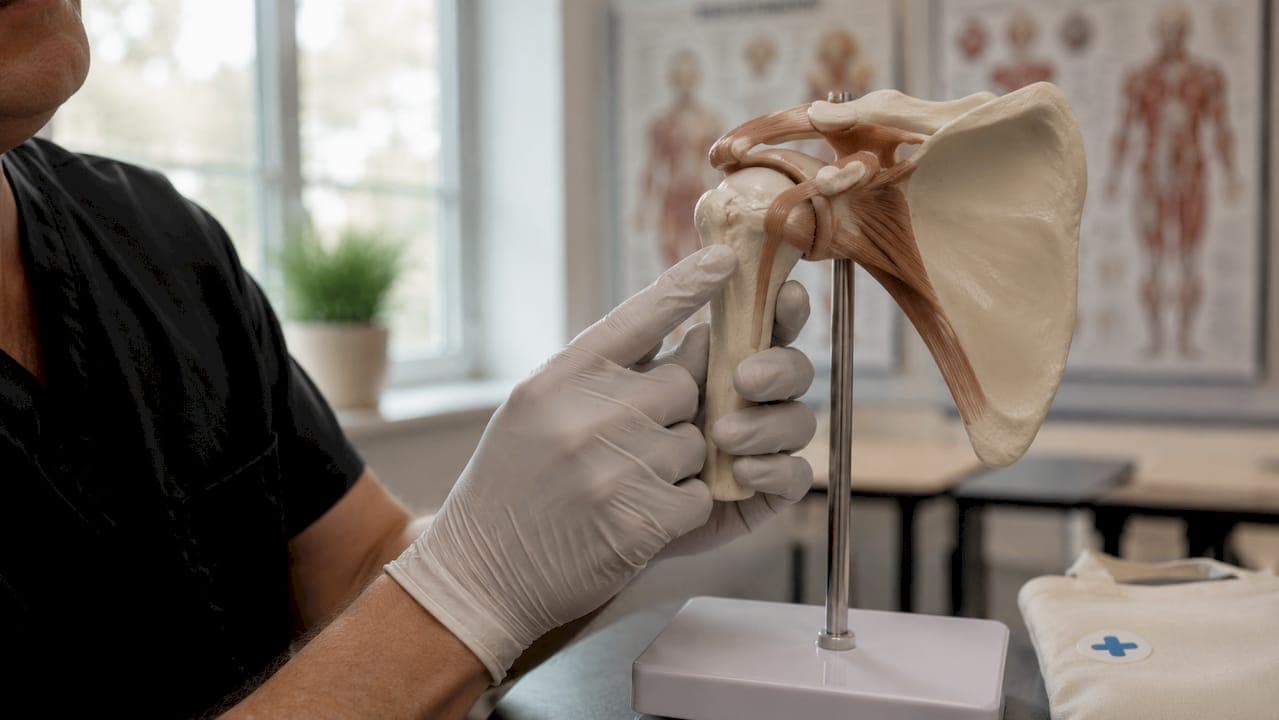
A subluxation is a partial dislocation of a joint where the bones are misaligned but still in partial contact with each other. Unlike a full dislocation, the joint surfaces have not completely separated. This distinction matters because subluxations cause real pain, instability, and long-term damage if ignored. Understanding what subluxation means gives you the knowledge to act fast and recover fully.
What is subluxation and how does it differ from dislocation?
A subluxation is defined as a partial dislocation where joint bones are misaligned but still partially in contact. A full dislocation, called a luxation, means the joint surfaces have completely separated. That difference in bone contact is what separates the two conditions on an X-ray and in clinical treatment. Subluxations are often more subtle, which is exactly why patients underestimate them.
The shoulder, knee, and finger joints are the most commonly affected areas. The patella (kneecap) is a frequent site, especially in athletes and people with structural alignment issues. The shoulder joint is particularly vulnerable because its wide range of motion comes at the cost of stability. Subluxations in these joints share one thing in common: they all disrupt the normal mechanics of movement.
How does a subluxation occur?
Subluxations result from a mix of traumatic forces and underlying physical vulnerabilities. Knowing the causes helps you identify your own risk before an injury happens.
Common causes include:
- Traumatic injuries: Car accidents, falls, and sports collisions apply sudden force that pushes a joint partially out of alignment.
- Repetitive stress: Overuse from activities like throwing, swimming, or lifting gradually loosens the ligaments that hold a joint in place.
- Joint hypermobility: People with naturally loose connective tissue are more prone to partial dislocations because their joints have less passive resistance.
- Muscle weakness: Weak muscles around a joint cannot absorb shock or maintain alignment under load, leaving the joint exposed.
- Previous injury: A joint that has been subluxed before is structurally weaker and more likely to sublux again without proper rehabilitation.
Sports like basketball, gymnastics, and football carry high subluxation risk because they combine speed, contact, and extreme joint positions. Car accidents are another major trigger, particularly for shoulder and spinal joints. Even daily activities like lifting heavy bags or sleeping in an awkward position can cause subluxation in people with pre-existing joint weakness.
Pro Tip: If you have a history of joint instability or hypermobility, targeted strengthening exercises for the muscles around vulnerable joints can significantly reduce your risk of subluxation.

What are the symptoms of subluxation and how is it diagnosed?
Subluxation symptoms range from obvious to easy to miss. Recognizing them early leads to faster, more effective care.
Symptoms of subluxation include:
- Localized pain at or around the affected joint
- Swelling and bruising in the surrounding tissue
- Visible deformity or the joint appearing "out of place"
- A feeling of joint instability or giving way
- Restricted range of motion
- Numbness or tingling if a nerve is compressed
Clinicians use physical exams and imaging to distinguish subluxation from full dislocation based on bone alignment and joint surface contact. Symptoms guide the initial assessment, but imaging confirms the degree of displacement. X-rays are the standard first step. MRI is added when soft tissue damage to ligaments or cartilage is suspected.
Subluxation vs. dislocation: key diagnostic differences
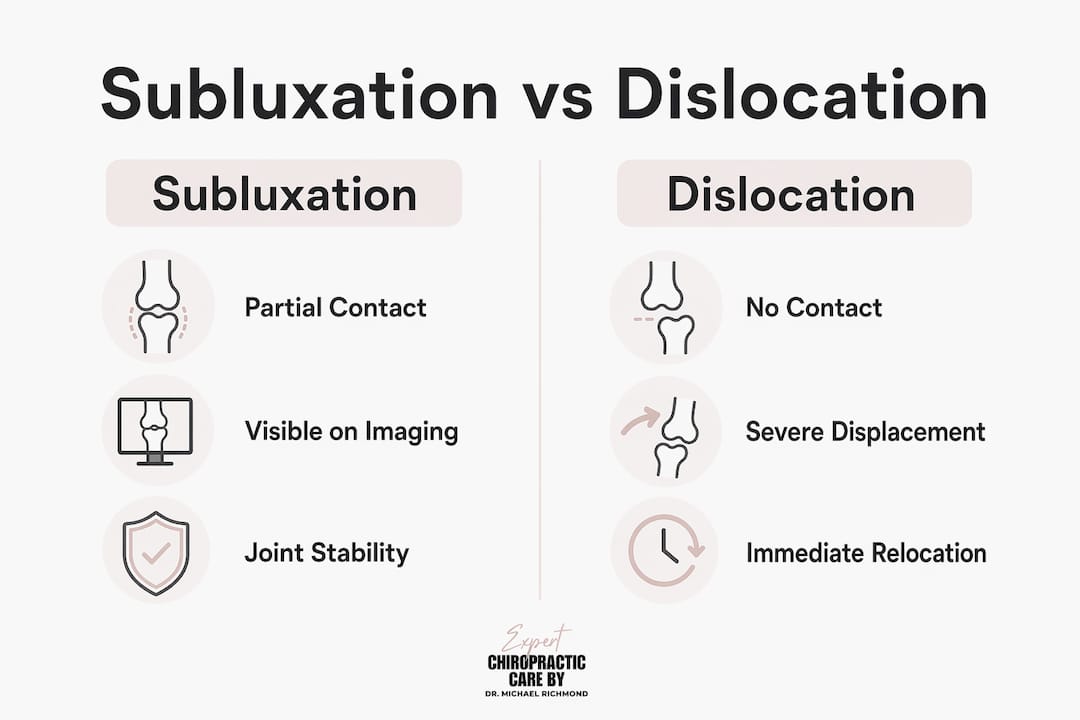
| Feature | Subluxation | Full dislocation |
|---|---|---|
| Bone contact | Partial contact remains | No contact between joint surfaces |
| Pain level | Moderate to severe | Typically severe |
| Visible deformity | Possible but subtle | Usually obvious |
| Imaging confirmation | X-ray shows partial misalignment | X-ray shows complete separation |
| Spontaneous reduction | Can resolve on its own | Rarely resolves without intervention |
The table above shows why imaging is non-negotiable. A subluxation that looks minor on the surface can still involve significant ligament damage. Seeking a professional assessment as soon as symptoms appear prevents the condition from worsening.
What are effective treatments for subluxation?
Treatment depends on the severity of the subluxation, the joint involved, and how long the condition has been present. Most cases follow a clear progression from acute care to long-term rehabilitation.
-
Apply the RICE protocol immediately. Rest the joint, apply ice for 15–20 minutes several times a day, use compression to limit swelling, and elevate the limb when possible. Initial acute management with the RICE method combined with NSAIDs reduces both pain and swelling in the first 48–72 hours.
-
Seek manual reduction if needed. A trained clinician can restore joint alignment through manual manipulation. Manual reduction techniques vary by joint and patient condition but can safely restore alignment quickly when performed by a professional. Do not attempt self-reduction.
-
Begin physical therapy. Physical therapy targets the muscles that support the joint, specifically the rotator cuff for shoulder injuries and the quadriceps for knee injuries. Physical therapy strengthens the dynamic stabilizers around the joint and is the primary tool for preventing recurrence.
-
Maintain rehabilitation beyond pain relief. Pain disappearing does not mean the joint is stable. Long-term success depends on sustained rehabilitation beyond symptom resolution. Stopping therapy too early is the most common reason subluxations recur.
-
Consider surgery for chronic cases. Surgery is reserved for patients who have failed several months of conservative care. Surgical repair addresses structural damage to ligaments and cartilage that cannot heal through exercise alone.
Pro Tip: Ask your physical therapist for a home exercise program from day one. Clinic sessions build the foundation, but daily home exercises are what actually lock in joint stability over time.
Spinal adjustments from a qualified chiropractor can also support recovery for certain joint injuries. The advantages of spinal adjustments are well-documented for reducing pain and restoring mobility in musculoskeletal conditions.
How does chiropractic subluxation differ from the medical definition?
The word "subluxation" means two different things depending on who is using it. Understanding that difference protects you from confusion and sets realistic expectations.
The medical definition requires visible structural displacement confirmed by imaging. A medical subluxation shows up on an X-ray or MRI as a measurable misalignment between joint surfaces. It causes specific, identifiable symptoms tied to that structural problem.
The chiropractic concept of "vertebral subluxation" is different. Chiropractic vertebral subluxation is controversial and not consistently supported by imaging evidence or scientific research for systemic health claims. Chiropractors use the term to describe spinal joint dysfunction that they believe affects the nervous system and overall health. Mainstream medicine does not accept this broader definition because it lacks the structural imaging evidence required for a medical diagnosis.
Key distinctions between the two definitions:
- Medical subluxation is confirmed by X-ray or MRI. Chiropractic subluxation often is not visible on imaging.
- Medical subluxation refers to a specific joint injury. Chiropractic subluxation is sometimes used to explain a wide range of health conditions.
- Subluxations visible on imaging can impinge nerves directly. Chiropractic vertebral subluxations may not show observable structural dysfunction.
- Mainstream medicine treats medical subluxations with evidence-based protocols. Chiropractic care for vertebral subluxation varies widely in approach and evidence base.
Knowing this distinction helps you ask the right questions when seeking care and evaluate treatment recommendations critically.
What are the long-term risks of untreated subluxation?
Ignoring a subluxation does not make it go away. The joint continues to function under abnormal stress, and that stress accumulates into serious damage over time.
"Chronic instability from untreated subluxation leads to tissue remodeling and weakening, resulting in degenerative changes that complicate surgical repair outcomes." — Cleveland Clinic
Recurrent subluxation causes progressive ligament and cartilage damage, increasing the risk for arthritis and impaired joint function. Each episode of partial dislocation stretches the ligaments a little further. Eventually, the joint loses its passive stability entirely.
Long-term risks of unmanaged subluxation include:
- Repeated subluxations or progression to full dislocation
- Permanent ligament laxity and joint instability
- Cartilage wear leading to early-onset arthritis
- Chronic pain that limits daily activity and work capacity
- Nerve compression causing numbness, weakness, or radiating pain
- Reduced surgical success rates if the condition is left too long before intervention
Early professional assessment and therapy can delay or prevent invasive surgery and chronic complications. The window for conservative treatment is real, and it closes as tissue damage accumulates. Acting early is not just faster. It is also less expensive and less invasive than treating a joint that has deteriorated over years.
Key Takeaways
Subluxation is a partial joint dislocation that requires prompt, sustained treatment to restore stability and prevent progressive joint damage.
| Point | Details |
|---|---|
| Medical definition | Subluxation means partial joint dislocation with bones still in contact, confirmed by imaging. |
| Common causes | Trauma, repetitive stress, muscle weakness, and hypermobility are the primary risk factors. |
| Diagnosis requires imaging | X-rays and MRI confirm displacement and rule out full dislocation or soft tissue tears. |
| Treatment is a process | RICE and manual reduction address the acute phase; physical therapy prevents recurrence. |
| Untreated risks are serious | Ignored subluxations lead to ligament damage, cartilage wear, arthritis, and chronic pain. |
What I've learned treating patients who underestimate subluxation
The pattern I see most often is this: a patient feels better after two or three weeks, stops their exercises, and comes back six months later with a joint that is significantly more unstable. Pain is a poor measure of recovery. The ligaments and muscles that stabilize a joint need months of consistent loading to rebuild their strength and coordination. Feeling good is the beginning of rehab, not the end of it.
The chiropractic versus medical subluxation debate also creates real confusion for patients. People come in having read that their "vertebral subluxation" is causing everything from headaches to digestive issues. That is a very different claim from a medically confirmed partial dislocation. Both deserve attention, but they require different evidence standards and different conversations. Patients who understand this distinction make better decisions about their care.
My strongest advice is to get a professional assessment early, commit to the full rehabilitation program, and resist the urge to stop when the pain fades. The patients who follow through completely are the ones who do not come back with the same injury. If you are unsure whether your joint pain warrants a clinical evaluation, the signs you need a chiropractor are worth reviewing before you decide to wait it out.
— Spark
Sparkmed's resources for subluxation recovery
Recovering from a subluxation takes more than rest. It takes the right guidance at every stage, from acute pain management to long-term joint stability.

Sparkmed publishes detailed, evidence-based content on injury recovery, chiropractic care, and pain prevention specifically for patients in North Miami and beyond. Whether you are managing a recent joint injury or dealing with recurring instability, the Sparkmed blog covers the practical steps that support real recovery. From understanding your treatment options to knowing what to expect from professional care, Sparkmed's content is built to help you make informed decisions and get back to full function faster.
FAQ
What does subluxation mean in medical terms?
Subluxation is a partial dislocation where joint bones are misaligned but still in partial contact. It is confirmed by imaging such as X-rays or MRI and causes symptoms including pain, swelling, and joint instability.
How is subluxation treated at home initially?
The RICE protocol (rest, ice, compression, elevation) combined with NSAIDs is the standard first response. Ice should be applied for 15–20 minutes several times a day, and manual reduction by a clinician should follow if the joint does not realign.
Can subluxation heal on its own?
Some subluxations reduce spontaneously, particularly in joints like the elbow. However, without physical therapy to strengthen the surrounding muscles, the joint remains vulnerable to repeated subluxation and long-term instability.
What is the difference between subluxation and dislocation?
A subluxation leaves the joint surfaces in partial contact, while a full dislocation completely separates them. Subluxations are often less severe acutely but carry serious long-term risks if rehabilitation is not completed.
How long does subluxation recovery take?
Recovery time varies by joint and severity, but full function typically requires months of rehabilitation. Pain may subside within weeks, but stopping therapy at that point significantly increases the risk of recurrence and chronic instability.