
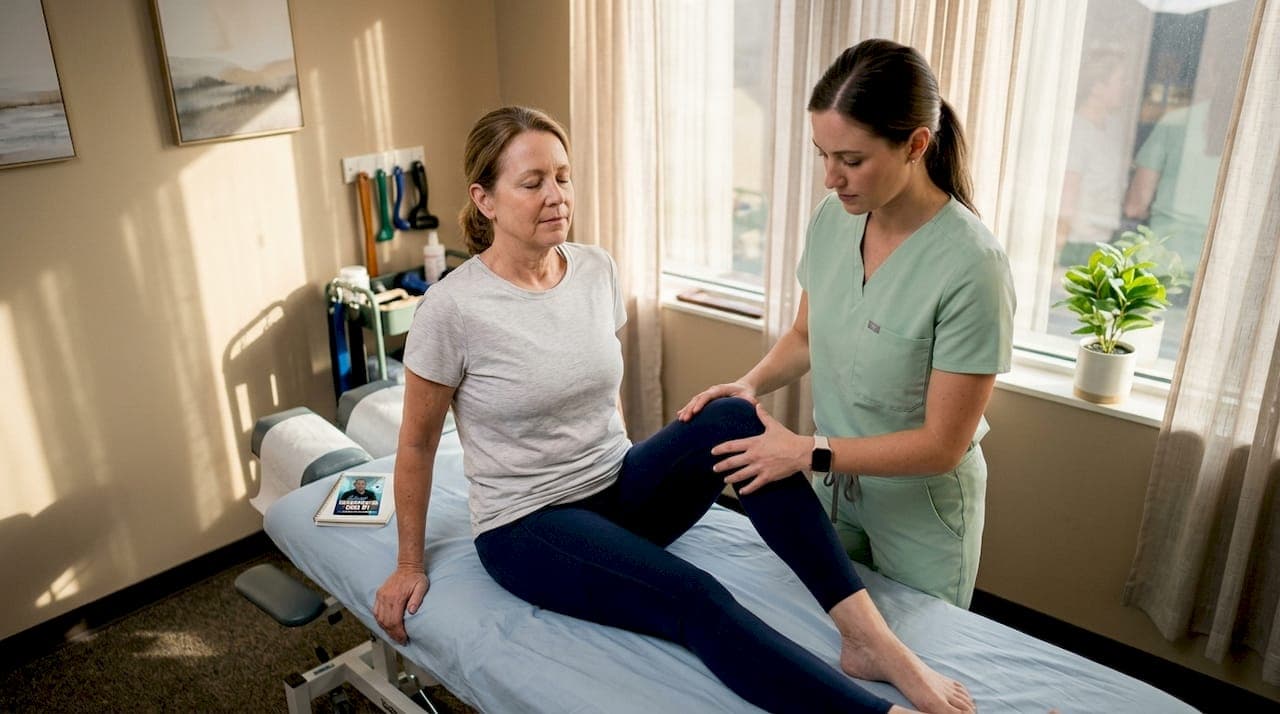
Non-invasive therapy is defined as any treatment that manages pain and supports recovery without surgery, needles, or bodily incisions. The core benefits of non-invasive therapy include lower complication risk, faster return to daily activity, and measurable improvements in both physical function and mental well-being. Approaches like physical therapy, cognitive behavioral therapy (CBT), spinal manipulative therapy (SMT), and acupuncture fall under this category. Current 2026 clinical guidelines from the Scottish Government strongly recommend these nonpharmacologic options for chronic pain, citing a solid evidence base. For anyone recovering from a car accident or managing a persistent injury, these treatments offer a real path forward without the risks that come with going under the knife.
What are the main benefits of non-invasive therapy?
Non-invasive therapy reduces pain, improves physical function, and supports mental health without exposing you to surgical risks. That combination makes it the first-line recommendation in most current pain management guidelines.
The physical benefits are well documented. A 2026 meta-analysis of 35 randomized controlled trials found that exercise therapy reduces pain in chronic low back pain with a standardized mean difference of 0.81, a clinically meaningful result. Patients who followed ACSM dosing guidelines at 75% adherence or higher saw the strongest outcomes. That tells you adherence is not optional. It is the variable that separates real results from wasted effort.
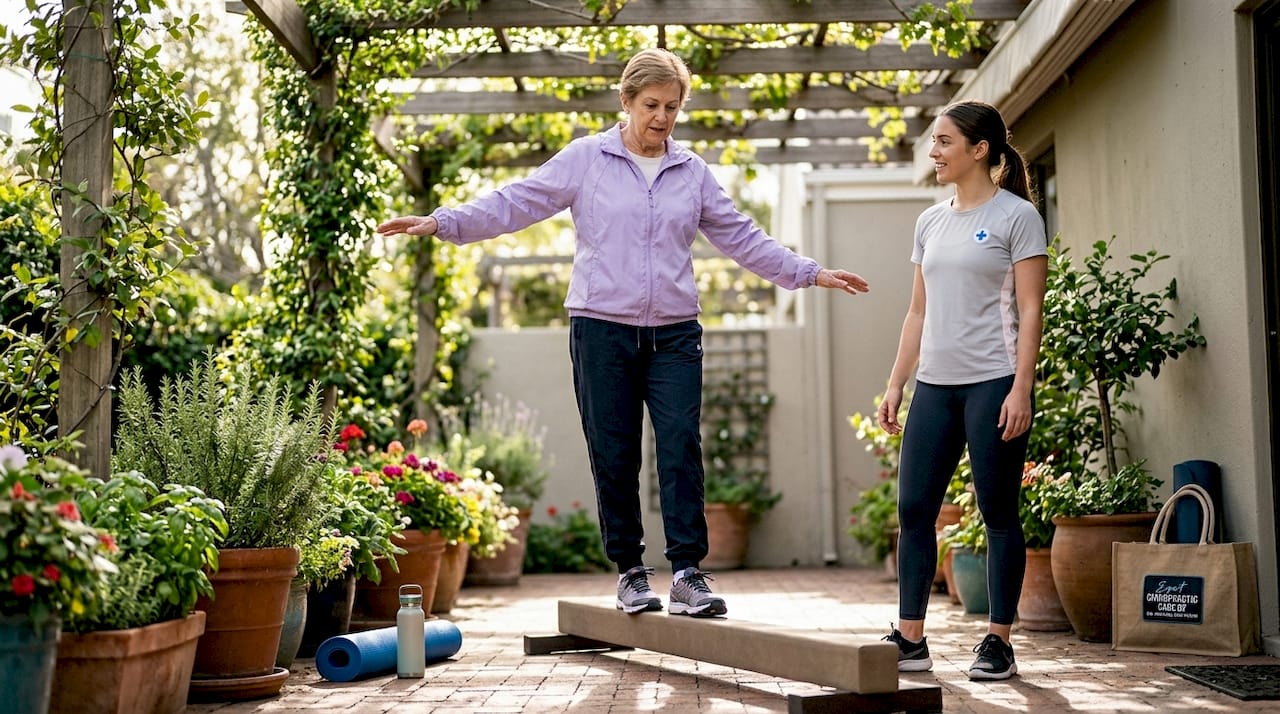
The psychological benefits are equally significant. A 2026 meta-analysis of 14 randomized controlled trials involving 2,677 patients found that CBT combined with exercise reduced pain intensity, functional disability, and pain catastrophizing with small to moderate effect sizes maintained through the short to mid term. Pain catastrophizing, the tendency to expect the worst from pain, is one of the biggest barriers to recovery. CBT directly targets it.
Here is a summary of the core advantages:
- Reduced pain intensity without medication side effects or dependency risk
- Improved daily function, including mobility, sleep quality, and work capacity
- Lower psychological distress, including reduced anxiety and fear around movement
- No anesthesia, no surgical site complications, and no lengthy post-operative restrictions
- Patient-driven recovery, where you build skills and habits that last beyond the treatment period
Pro Tip: Ask your provider about combining physical and psychological therapies from the start. Research shows the combination outperforms either approach used alone.
The safety profile of non-invasive care is one of its strongest selling points. Without incisions or anesthesia, the risk of infection, nerve damage, or adverse drug reactions drops significantly. For people managing chronic conditions or recovering from trauma, that margin of safety matters.
Non-invasive vs. invasive treatments: how do they compare?
Non-invasive treatments carry fewer risks, shorter recovery periods, and lower upfront costs than surgical options. The trade-off is that some conditions ultimately require surgery, but non-invasive care often delays or eliminates that need entirely.
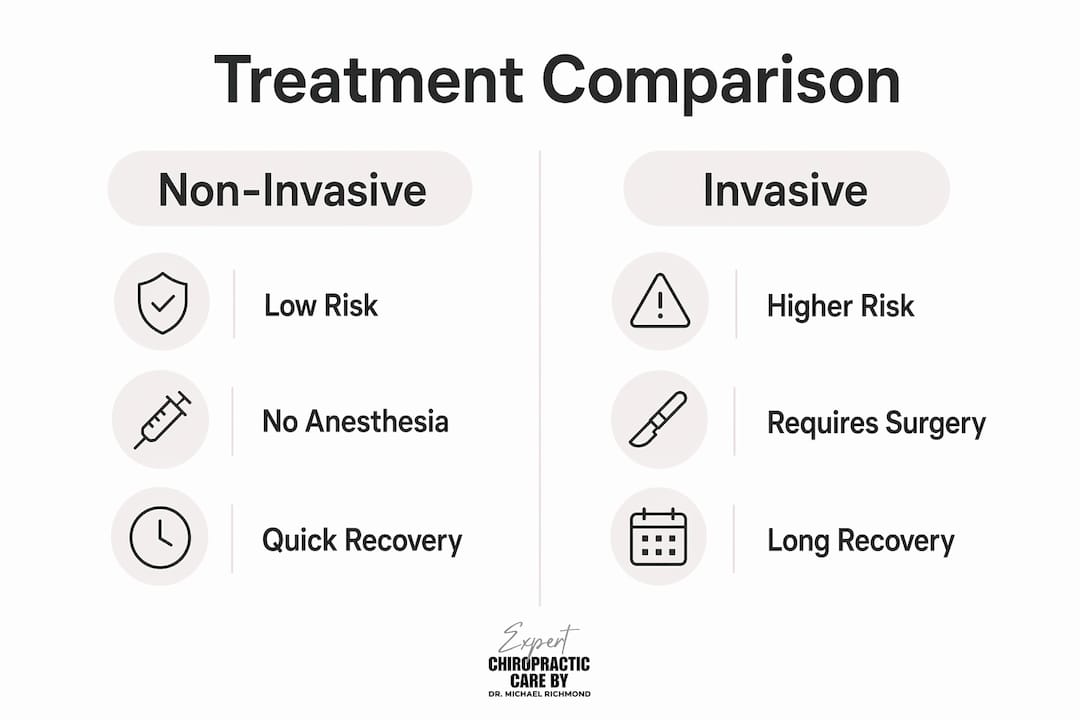
Non-invasive treatments avoid the complications that come with surgical cuts and general anesthesia, including infection, blood clots, and extended immobility. Recovery from surgery can take weeks to months. Recovery from a chiropractic adjustment or a physical therapy session is measured in hours, if there is any downtime at all.
A 2026 study on cryogenic auriculotherapy found that perioperative non-invasive strategies reduced morphine use by 44% following carpal tunnel release surgery. That figure shows non-invasive methods can reduce opioid dependence even in surgical contexts. You do not have to choose one or the other. Non-invasive care can work alongside or in preparation for surgery when surgery is genuinely necessary.
| Factor | Non-Invasive Therapy | Invasive Treatment |
|---|---|---|
| Complication risk | Low; no anesthesia or incisions | Higher; infection, nerve damage possible |
| Recovery time | Minimal to none | Weeks to months |
| Adverse effects | Mild soreness, rare reactions | Post-surgical pain, scarring, drug side effects |
| Cost | Generally lower upfront | Higher; includes surgical and hospital fees |
| Patient engagement | Active; patient builds skills | Passive; patient recovers from procedure |
| Best suited for | Chronic pain, soft tissue injury, functional decline | Structural damage requiring repair |
Non-invasive therapy also keeps you active in your own recovery. Surgery puts you on the table. Physical therapy, CBT, and spinal manipulation put you in the driver's seat. That active role builds long-term resilience, not just short-term relief.
Pro Tip: If a provider recommends surgery as the first option for chronic back pain without trialing non-invasive care, ask for a second opinion. Most guidelines recommend exhausting conservative options first.
What types of non-invasive therapies work best for pain?
The most effective non-invasive therapies for pain and injury recovery include clinician-directed exercise, CBT, spinal manipulative therapy, and acupuncture. Each targets a different dimension of pain and works best when matched to the individual's condition and goals.
Clinician-directed exercise and physical therapy
Exercise is the most evidence-backed non-invasive treatment for chronic pain. The key word is "clinician-directed." Generic gym routines do not produce the same results as a structured program built around your specific diagnosis, fitness baseline, and functional goals. The ACSM exercise guidelines provide the dosing framework that separates effective programs from ineffective ones. Frequency, intensity, and progression all matter.
For people recovering from car accident injuries, physical therapy targets the specific muscles and joints affected by the impact. It rebuilds strength, restores range of motion, and reduces the compensation patterns that lead to secondary injuries down the road.
Cognitive behavioral therapy and mindfulness
CBT works by changing how you think about and respond to pain. It is most effective when tied to concrete behavior goals, such as gradually increasing walking distance or returning to a specific daily task, rather than general stress management. Mindfulness-based approaches, including Acceptance and Commitment Therapy (ACT), teach patients to reduce avoidance behavior and re-engage with life despite residual discomfort. You can read more about holistic injury care that integrates these psychological tools alongside physical treatment.
Spinal manipulative therapy
Spinal manipulative therapy, the core technique in chiropractic care, produces small but consistent improvements in pain and function for chronic low back pain, according to a 2026 Cochrane review. The effect sizes are modest, which means SMT works best as one component of a broader plan rather than a standalone treatment. Experienced practitioners use it as a short-term tool and reassess regularly to confirm it is still producing results. Learn more about the evidence for spinal adjustments and how they fit into a recovery plan.
Acupuncture
Acupuncture is a well-established complementary non-pharmacologic option for chronic pain and injury recovery. It stimulates specific points on the body to modulate pain signals and reduce inflammation. Research supports its use for musculoskeletal pain, headaches, and post-injury recovery, particularly when combined with other non-invasive modalities.
Pro Tip: Combining two or more non-invasive modalities, such as SMT with exercise or CBT with physical therapy, consistently produces better outcomes than any single approach used alone.
How do you choose and stick with a non-invasive therapy plan?
Choosing the right non-invasive therapy plan requires honest self-assessment, a clear conversation with your provider, and a commitment to follow-through. The therapy itself is only as effective as your engagement with it.
Here is a practical framework for getting started:
- Define your goal clearly. Are you managing chronic pain, recovering from a specific injury, or trying to avoid surgery? Your goal shapes which therapies are most relevant.
- Work with a qualified provider. A chiropractor, physical therapist, or pain specialist can assess your condition and build a plan with the right dosing and progression.
- Reframe your language around movement. The 2026 Scottish prescribing guideline notes that the word "exercise" triggers fear avoidance in many chronic pain patients. Thinking of it as "movement" or "physical activity" reduces psychological resistance and improves follow-through.
- Track adherence, not just symptoms. Outcomes improve significantly at 75% adherence or higher. Keep a simple log of your sessions to stay accountable.
- Reassess at regular intervals. Non-invasive care is not a set-it-and-forget-it plan. Check in with your provider every four to six weeks to evaluate progress and adjust the approach.
The 2026 guidelines frame effective non-invasive care as personalized planning across lifestyle, psychosocial, and physical factors. Sleep, nutrition, stress, and social support all influence pain outcomes. A plan that addresses only the physical component will underperform compared to one that accounts for the full picture.
For people who are also managing anxiety or depression alongside physical pain, integrating CBT or mindfulness from the start produces better results than adding it later. You can explore chronic pain management strategies that address both dimensions together.
Pro Tip: If you feel your progress has stalled, the issue is usually adherence or dosing, not the therapy itself. Talk to your provider before switching approaches.
Key takeaways
Non-invasive therapy is the most evidence-supported first-line approach for chronic pain and injury recovery, combining physical, psychological, and manual treatments to reduce pain, restore function, and eliminate surgical risk.
| Point | Details |
|---|---|
| Safety advantage | No surgery or anesthesia means lower infection risk and faster return to daily activity. |
| Exercise dosing matters | ACSM-guided exercise at 75% adherence or higher produces the strongest pain reduction outcomes. |
| CBT adds measurable value | Combining CBT with exercise reduces pain intensity and functional disability more than physical treatment alone. |
| SMT is a short-term adjunct | Spinal manipulative therapy works best as one component of a broader plan, not a standalone treatment. |
| Personalization drives results | Plans covering physical, psychological, and lifestyle factors consistently outperform single-modality approaches. |
What i've learned from watching patients choose non-invasive care
The patients who get the most out of non-invasive therapy are not the ones with the mildest injuries. They are the ones who show up consistently and treat their recovery like a commitment rather than a convenience.
What surprises most people is how much the psychological component matters. I have seen patients with significant physical injuries recover faster than patients with milder ones, simply because the first group was willing to engage with CBT or mindfulness alongside their physical treatment. Fear of movement is real, and it slows recovery more than the injury itself in many cases.
The language shift from "exercise" to "movement" sounds trivial, but it is not. When a patient who has been in pain for months hears "you need to exercise more," they often shut down. When you reframe it as "let's find movement that feels safe for you today," the conversation changes entirely. That small shift in framing can be the difference between a patient who engages and one who drops out after two sessions.
My honest view is that the biggest gap in non-invasive care is not evidence. The evidence is strong. The gap is in helping patients understand that their active participation is the treatment. No provider can do that work for you. The therapy creates the conditions for recovery. You have to show up and do the work.
The future of pain care is moving toward more personalized, multi-modal non-invasive plans that account for sleep, stress, nutrition, and social context alongside physical rehabilitation. That is the right direction. Patients who get that kind of care see better outcomes and stay better longer.
— Spark
Start your recovery with Sparkmed
If you are researching non-invasive options after an injury or car accident, Sparkmed's team in North Miami specializes in exactly this kind of care. The clinic combines chiropractic adjustments, personalized wellness plans, and evidence-based recovery techniques designed for trauma patients.
Sparkmed offers a $25 chiropractic adjustment with no insurance required, making it easy to take the first step without financial barriers. The team works with patients in English, Spanish, and Creole to make sure nothing gets lost in translation. Explore Sparkmed's accessible health resources and learn how individualized, drug-free chiropractic care can fit into your recovery plan. Your next step does not have to be surgery. It can be a $25 appointment.
FAQ
What is non-invasive treatment for pain?
Non-invasive treatment is any therapy that reduces pain and supports recovery without surgery or incisions. Common examples include physical therapy, CBT, spinal manipulative therapy, and acupuncture.
Is non-invasive therapy effective for chronic pain?
Yes. A 2026 meta-analysis of 35 randomized controlled trials found exercise therapy produces a standardized mean difference of 0.81 in pain reduction for chronic low back pain, with the best results at 75% adherence or higher.
How does non-invasive therapy compare to surgery for injury recovery?
Non-invasive therapy carries lower complication risk, requires no anesthesia, and involves minimal to no recovery downtime. Surgery is appropriate for structural damage that cannot be addressed conservatively, but guidelines recommend exhausting non-invasive options first.
What types of non-invasive therapies are most commonly used?
The most widely used types include clinician-directed exercise, cognitive behavioral therapy, spinal manipulative therapy, and acupuncture. Combining two or more of these approaches consistently produces better outcomes than any single modality alone.
Why choose non-invasive treatments over medication?
Non-invasive treatments address the physical and psychological causes of pain rather than masking symptoms. A 2026 study found non-invasive perioperative strategies reduced morphine use by 44%, showing these approaches can reduce opioid dependence even in surgical settings.