

After an auto accident or slip and fall, most people focus on visible injuries. But hidden damage, especially to soft tissue and spinal structures, often goes unnoticed for days. Getting a chiropractic assessment within 72 hours can make the difference between catching a serious injury early and letting it quietly worsen. Beyond health, that early visit also strengthens your PIP or MedPay insurance claim. Many people walk into their first chiropractic exam expecting something casual, maybe a quick stretch and a handshake. What actually happens is a structured, medically meaningful process that shapes your entire recovery plan.
Table of Contents
- What is a chiropractic assessment and why does it matter?
- Step-by-step breakdown: The chiropractic assessment process
- Special considerations for accident and injury patients
- What do results mean? Outcomes, benchmarks, and next steps
- A reality check: What most guides miss about chiropractic assessments
- Get affordable, expert assessment at Spark Chiropractic
- Frequently asked questions
Key Takeaways
| Point | Details |
|---|---|
| Structured assessment matters | A chiropractic evaluation uses a formal process that improves outcomes and claim success. |
| Early evaluation is critical | Getting assessed early uncovers hidden injuries and ensures better insurance coverage. |
| Know your measures | Tools like ODI and NDI track your progress and guide your recovery plan. |
| Insurance documentation is key | Thorough notes and proper timing maximize your benefit from PIP or MedPay claims. |
What is a chiropractic assessment and why does it matter?
A chiropractic assessment is not just a checkup. It is a formal, sequential evaluation designed to identify the root cause of pain, document injury severity, and build a recovery plan that holds up both clinically and legally. Unlike a general physician visit focused on prescribing medication, a chiropractic evaluation zeroes in on musculoskeletal function, nerve involvement, and biomechanical imbalances.
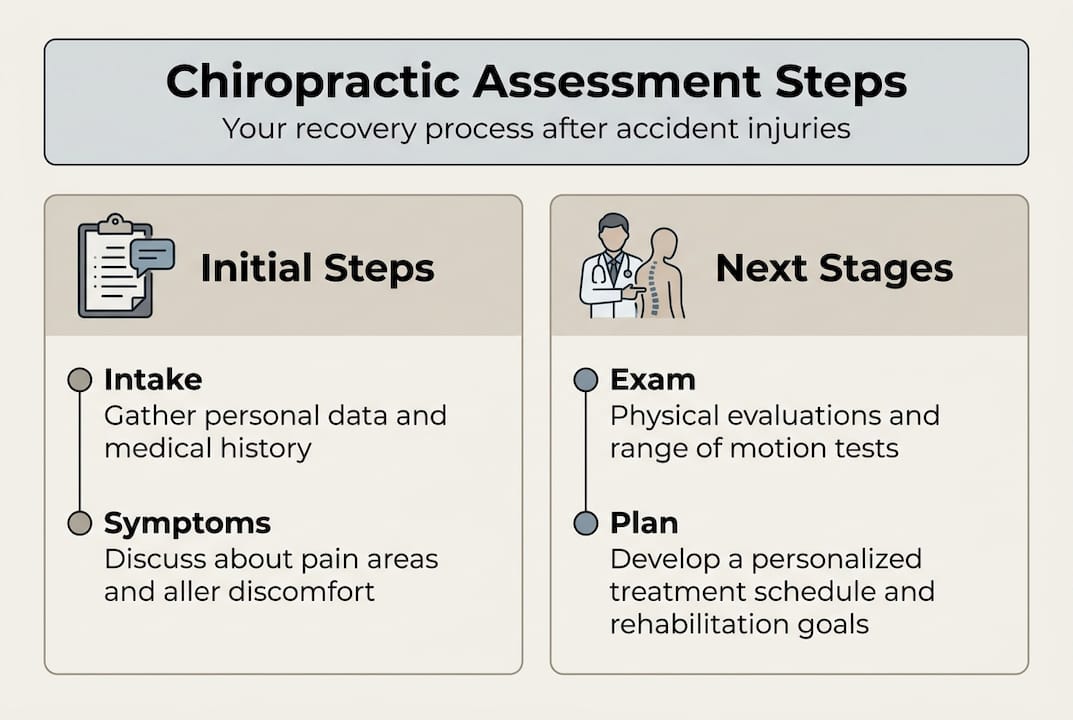
The assessment follows a structured process: administrative intake, subjective history-taking, objective examination, clinical assessment, and a documented treatment plan. Each step feeds into the next. Skipping one weakens the whole picture, both for your health and for your insurance records.
Here is what each major component covers:
- Administrative intake: Your personal and insurance information, accident timeline, and prior medical history
- Subjective history: How the injury happened, where you hurt, what makes it worse or better
- Objective examination: Physical tests including range of motion, orthopedic evaluations, and neurological screening
- Assessment: Clinical diagnosis based on findings
- Plan: A tailored treatment protocol with frequency, modalities, and measurable goals
Why does accuracy matter so much here? Because your PIP (personal injury protection) and MedPay coverages require documented medical necessity. Vague notes or incomplete exams give insurers a reason to deny or reduce your claim. Thorough, well-organized records protect you.
Patient satisfaction with chiropractic care after auto injuries is notably high, with 83 to 94% of patients reporting positive outcomes from structured assessments and follow-up care. That is not a coincidence. It reflects what happens when evaluation is done right from the start.
Before your appointment, read up on preparing for your first visit so nothing catches you off guard.
Pro Tip: Write down every symptom you feel, even minor ones like jaw tightness or difficulty sleeping. Accident-related injuries can show up in unexpected ways, and your chiropractor needs the full picture to assess accurately.
Step-by-step breakdown: The chiropractic assessment process
Knowing what to expect removes the anxiety. Here is how a standard chiropractic evaluation unfolds, stage by stage.
- Check-in and administrative intake: You complete forms covering your health history, the accident details, and your current insurance coverage. This is not just paperwork. The accident mechanism, speed of impact, your seating position, whether you braced before impact, all of it shapes the clinical picture.
- Subjective history: Your chiropractor listens carefully as you describe your symptoms, where the pain is, when it started, and what triggers or relieves it. This becomes the "S" in the SOAP note format.
- Objective examination: The "O" involves measurable, repeatable tests. Expect palpation (pressing along the spine to detect tenderness or misalignment), range of motion measurements, orthopedic tests for specific joints or ligaments, and neurological checks for sensation and reflexes.
- Assessment: The chiropractor synthesizes findings into a diagnosis. Common post-accident diagnoses include cervical strain, lumbar subluxation, or disc involvement.
- Plan: You receive a clear treatment proposal with session frequency, expected duration, and goals.
Two key frameworks guide how findings are recorded and verified. The SOAP format and PART(S) protocol structure the documentation: SOAP stands for Subjective, Objective, Assessment, Plan, while PART(S) covers Pain, Asymmetry, Range of Motion, Tissue texture, and Special tests. Documenting at least two PART elements is required for Medicare-compliant records, and it is simply good practice for any injury claim.
| Assessment stage | What happens | What to expect as a patient |
|---|---|---|
| Intake | Forms, insurance info, accident details | 10-15 minutes of paperwork |
| Subjective history | Symptom description, timeline | Conversation, no touching yet |
| Objective exam | Palpation, ROM, ortho/neuro tests | Gentle physical evaluation |
| Assessment | Diagnosis formulated | Chiropractor explains findings |
| Treatment plan | Protocol, frequency, goals | Written or verbal plan provided |
You can find additional chiropractic evaluation insights at our blog, covering real patient experiences from North Miami cases.
Special considerations for accident and injury patients
Trauma cases are not standard chiropractic visits. The stakes are higher, the injury patterns are more complex, and the documentation requirements are stricter. Here is what changes when you are coming in after an auto accident or slip and fall.
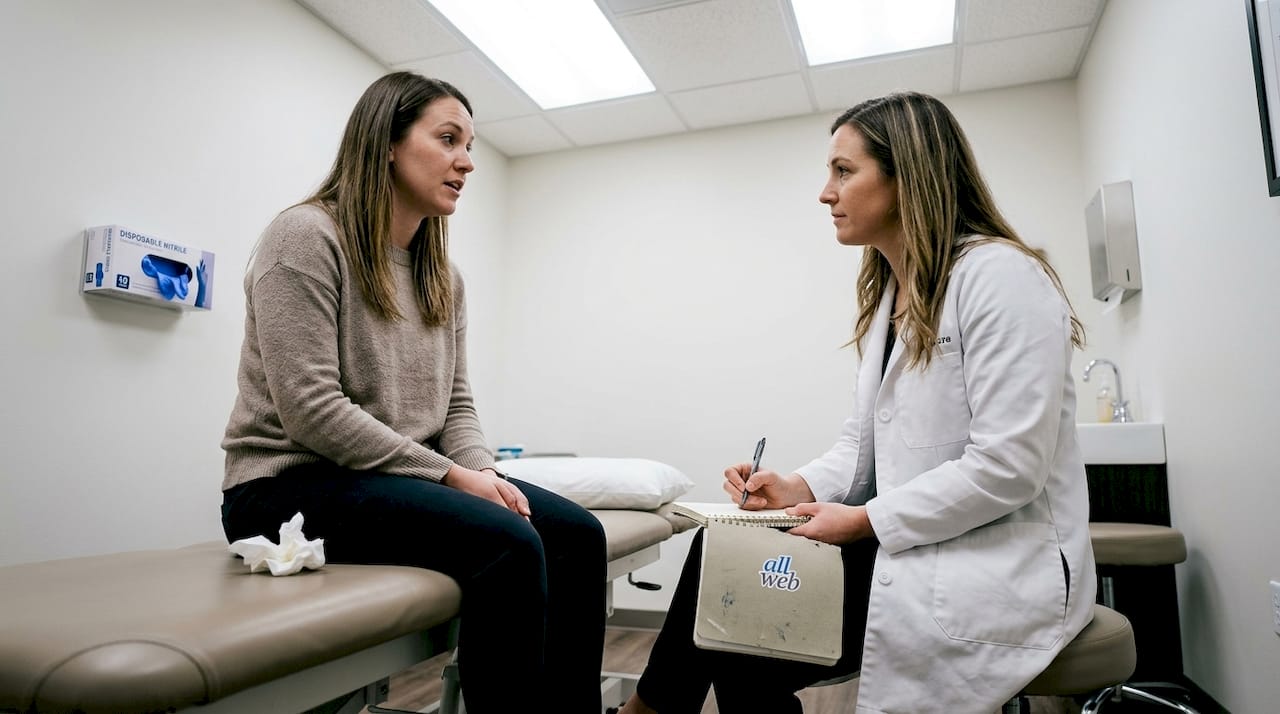
Early assessment is critical. Whiplash and soft tissue injuries frequently have delayed symptom onset. You might feel fine the morning after a crash and wake up three days later unable to turn your head. Waiting too long gives insurers grounds to argue your injury was not accident-related. Getting evaluated quickly protects both your health and your claim.
Trauma-specific assessment emphasizes mechanism documentation, whiplash grading (using the Quebec Task Force scale from Grade 0 to Grade 4), red flag screening for fractures or neurological compromise, and imaging referral when necessary.
| Feature | General MSK assessment | Trauma-focused assessment |
|---|---|---|
| Focus | Chronic pain, wellness | Acute injury, accident recovery |
| Documentation depth | Standard | Highly detailed for legal use |
| Whiplash grading | Rarely needed | Routine |
| Imaging referral | Selective | More common |
| Insurance coordination | Basic | PIP, MedPay, legal collaboration |
Red flag screening is non-negotiable. Chiropractors are trained to identify signs that require immediate referral, such as severe neurological deficits or suspected fractures. This keeps you safe and ensures care stays appropriate to your actual condition.
Key things a trauma assessment must document:
- Exact mechanism of injury (direction of impact, speed estimate, seatbelt use)
- Onset and progression of every symptom
- Whiplash grade with clinical justification
- Functional limitations affecting daily life
- Referral recommendations if imaging is needed
Pro Tip: Ask the clinic upfront whether they regularly handle auto accident and slip-and-fall claims. A practice experienced with injury cases knows which forms to file, how to communicate with adjusters, and how to structure notes that hold up under review.
For a deeper look at recovery options, see our comparison of chiropractic vs surgery after accidents and learn how local chiropractors aid recovery at every stage.
What do results mean? Outcomes, benchmarks, and next steps
After your assessment, you will likely hear terms like ODI and NDI. These are not just abbreviations. They are standardized tools that measure how much your injury is affecting your life and how much ground you are gaining with treatment.
- ODI (Oswestry Disability Index): Measures how lower back pain limits daily activities like lifting, sitting, and traveling
- NDI (Neck Disability Index): Same concept applied to neck pain and cervical injury
- VAS (Visual Analog Scale): A simple 0-10 pain scale used to track improvement over time
- GROC (Global Rating of Change): Asks how much better or worse you feel overall compared to before treatment
Patient-reported outcomes like ODI and NDI are powerful because they quantify impairment objectively. Research shows pain reduction of 30% or greater occurs in 94% of cases with structured chiropractic care. That is a meaningful benchmark and one your insurer may reference when evaluating your claim.
"Early chiropractic intervention after trauma not only reduces pain faster but also decreases the likelihood of chronic pain development, making the timing of your first visit one of the most consequential decisions in your recovery."
After your results are reviewed, your next steps typically fall into one of three paths. You may begin a course of chiropractic treatment, get referred to another specialist such as an orthopedist or neurologist, or be scheduled for a re-evaluation if the picture is not yet clear. All three are valid. The assessment is not the finish line. It is the starting point.
Understanding your results also helps you engage more actively in chiropractic wellness throughout your recovery, not just passively show up for appointments.
A reality check: What most guides miss about chiropractic assessments
Most articles on chiropractic assessments stop at listing the steps. Here is what they skip.
Static posture analysis, where a chiropractor takes a photo of how you stand, is still widely used. But evidence favors dynamic assessment methods over static visual checks. How you move under load, how your body compensates during walking or rotation, tells a more accurate story than a snapshot. Be a little skeptical if posture photos are the centerpiece of your evaluation.
Chiropractic assessments are also very safe. Serious adverse events are genuinely rare. But no honest practitioner tells you that chiropractic fixes everything. For complex neurological problems, organ-based conditions, or fractures, referral is the right call. A good chiropractor knows their lane.
Finally, do not expect every trace of pain to disappear after one session. Significant progress is common and often happens faster than patients expect, but recovery from trauma is a process. The assessment at Spark Chiropractic is designed to give you honest expectations alongside real results, not to sell you on something unrealistic. Documentation and evidence-based practice are what make the difference between care that holds up and care that falls apart under scrutiny.
Get affordable, expert assessment at Spark Chiropractic
If you are in North Miami and recovering from a car accident or slip and fall, the assessment you get in the first few days shapes everything that follows. At Spark Chiropractic, we specialize in exactly these cases. Our team understands PIP and MedPay documentation, whiplash grading protocols, and how to build a clinical record that supports your recovery and your claim.

We work with patients whether they have insurance or not, and we move quickly so you are not left waiting while pain and claim deadlines pile up. Book a chiropractic assessment with us today and get clarity on your injuries, your options, and your path forward.
Frequently asked questions
How long does a chiropractic assessment take after an accident?
Most evaluations last 30 to 60 minutes depending on injury complexity and documentation requirements. A comprehensive intake and examination takes more time than a routine visit, but that thoroughness is exactly what protects your claim.
Does insurance cover chiropractic assessments for auto or slip/fall injuries?
Most insurance plans, including PIP and MedPay, cover assessments when documentation is thorough and claims are submitted promptly. Early assessment supports PIP coverage and helps prevent your injury from becoming a chronic, harder-to-treat condition.
What are the most important things to bring to my first chiropractic visit?
Bring your accident report, insurance information, a list of every symptom you have noticed, and any prior medical records. Accident mechanism and history are vital inputs for an accurate assessment and a credible insurance claim.
Are chiropractic assessments safe after trauma?
Yes. Chiropractic assessments are generally very safe, and red flag screening is routine to catch any contraindications before treatment begins. Serious adverse events are rare, and a qualified chiropractor will refer you out if your condition requires a different kind of specialist.