
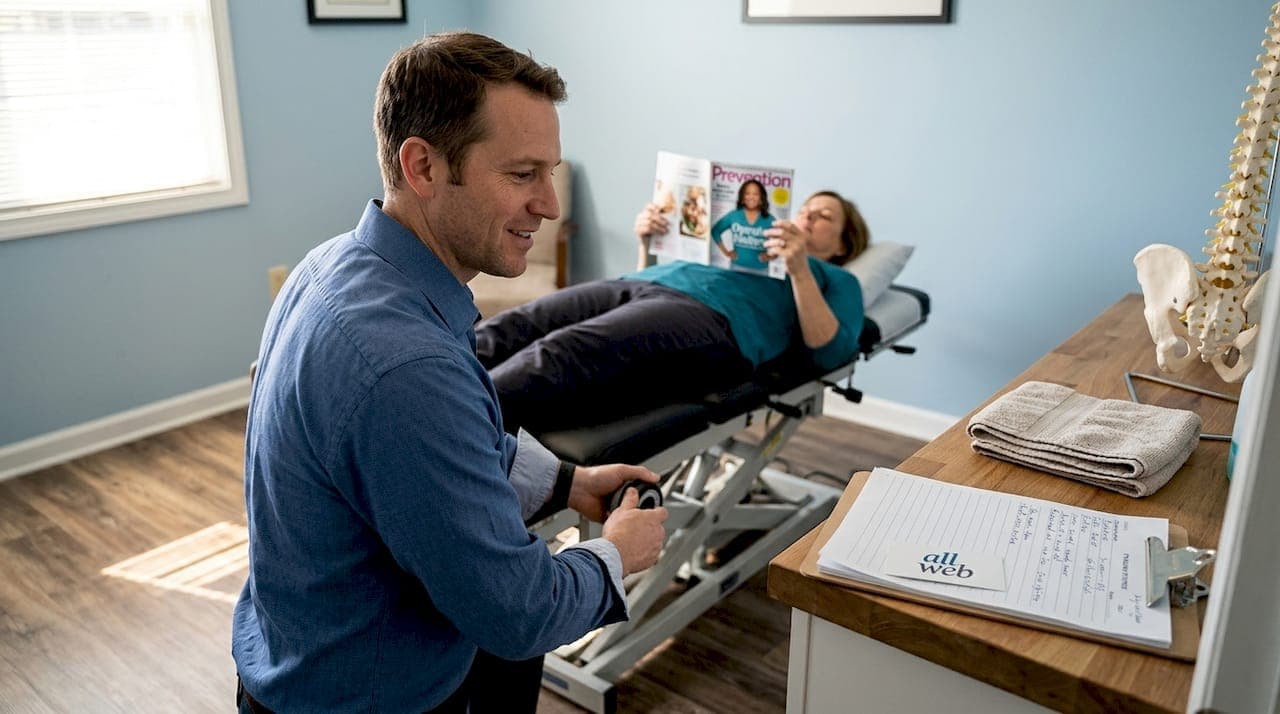
After a car accident or slip and fall, most people expect weeks of grinding pain and slow progress. That assumption is wrong more often than you'd think. Modern chiropractic clinics now use specialized equipment that targets disc injuries, deep tissue inflammation, and nerve compression in ways that hands-on adjustments alone simply cannot reach. Tools like spinal decompression tables, flexion-distraction systems, and High Energy Inductive Therapy (HEIT) devices are changing what recovery looks like for accident victims in North Miami. This guide breaks down how each technology works, who benefits most, and what you can realistically expect from a course of treatment.
Table of Contents
- Why equipment matters: Beyond hands-on adjustments
- How spinal decompression and flexion-distraction work
- High Energy Inductive Therapy (HEIT): Powering deeper repair%3A-powering-deeper-repair)
- Evidence, outcomes, and caveats: What studies say
- Our perspective: What most guides miss about chiropractic technology
- Discover advanced chiropractic care in North Miami
- Frequently asked questions
Key Takeaways
| Point | Details |
|---|---|
| Specialized equipment accelerates healing | Chiropractic technology like decompression tables and HEIT speeds pain relief and recovery after traumatic injuries. |
| Different tools target different injuries | Spinal decompression, flexion-distraction, and HEIT each address unique aspects such as disc bulges, nerve pressure, or inflammation. |
| Evidence supports but does not guarantee results | Studies show high rates of relief, but combining these tools with expert care and rehab is key for lasting outcomes. |
| Safety is high with proper supervision | Advanced equipment is generally safe, but outcomes depend on professional assessment and personalized treatment. |
Why equipment matters: Beyond hands-on adjustments
Most people picture a chiropractor cracking backs and realigning spines. That image is not wrong, but it is incomplete. Manual adjustments are effective for many conditions, but trauma from auto accidents and slips and falls often creates injuries that go deeper than a skilled pair of hands can reach alone. Disc herniations, compressed nerve roots, and chronic soft tissue inflammation need targeted mechanical intervention.
Think of it this way: a manual adjustment is like resetting a stuck door hinge. But if the door frame itself is warped, you need more than a quick fix. That is where specialized equipment steps in.
Here are the core equipment types used in modern chiropractic care for trauma injuries:
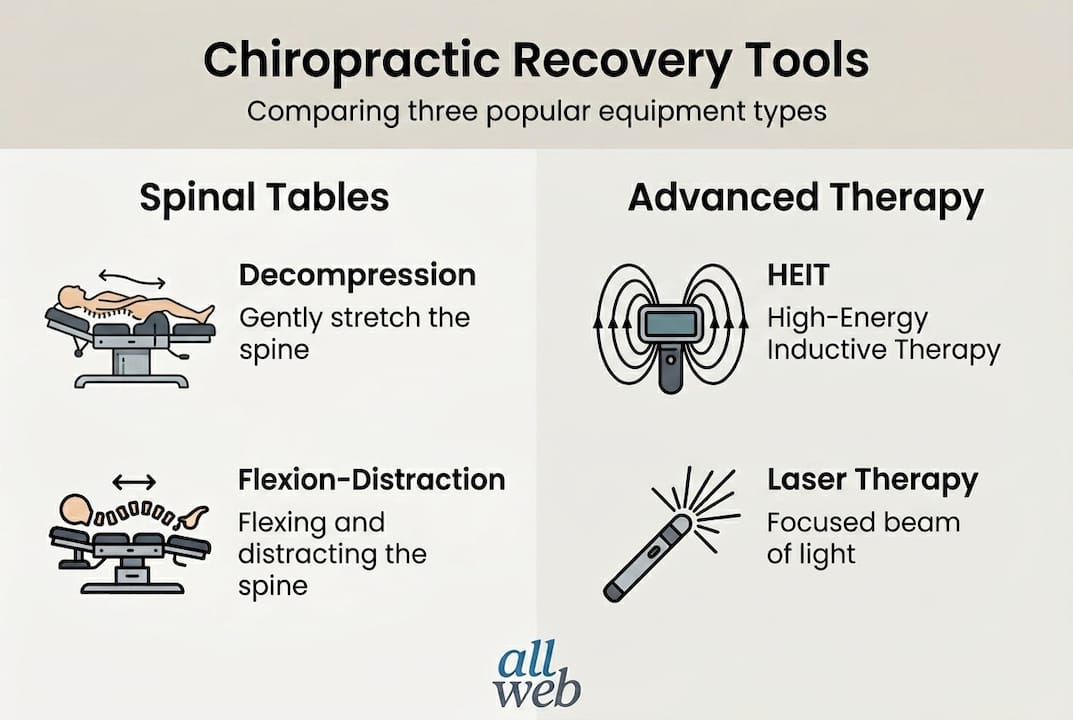
- Spinal decompression tables (such as the DRX9000 and Mettler ME4100 Neural-Flex systems): Use motorized traction to create negative pressure inside spinal discs, helping retract herniations and draw in healing fluids.
- Flexion-distraction tables: Apply rhythmic, gentle movement to separate spinal segments and relieve nerve compression without high-force thrusting.
- High Energy Inductive Therapy (HEIT) devices: Deliver electromagnetic energy deep into tissue without any physical contact, stimulating repair at the cellular level.
"Chiropractic equipment such as spinal decompression tables, flexion-distraction tables, and HEIT devices play a key role in treating auto accident and slip and fall injuries, reaching structures that manual care alone cannot address."
Understanding the chiropractic wellness benefits of these tools helps you ask better questions when choosing a clinic. Equipment-enabled care is not a luxury add-on. For complex trauma cases, it is often the difference between plateauing at 60% recovery and getting back to full function.
Pro Tip: When calling a clinic, ask specifically whether they use decompression tables or HEIT technology. Clinics that invest in these tools tend to treat more complex injury cases and have staff trained for post-accident recovery.
How spinal decompression and flexion-distraction work
Spinal decompression sounds intense, but the experience is actually quite gentle. You lie on a motorized table, and a harness secures your pelvis. The table then applies carefully calibrated traction, pulling your spine apart by small, precise amounts. This creates negative intradiscal pressure, which acts like a vacuum inside the disc. Herniated material gets drawn back toward the center, and oxygen-rich fluid moves in to support healing.
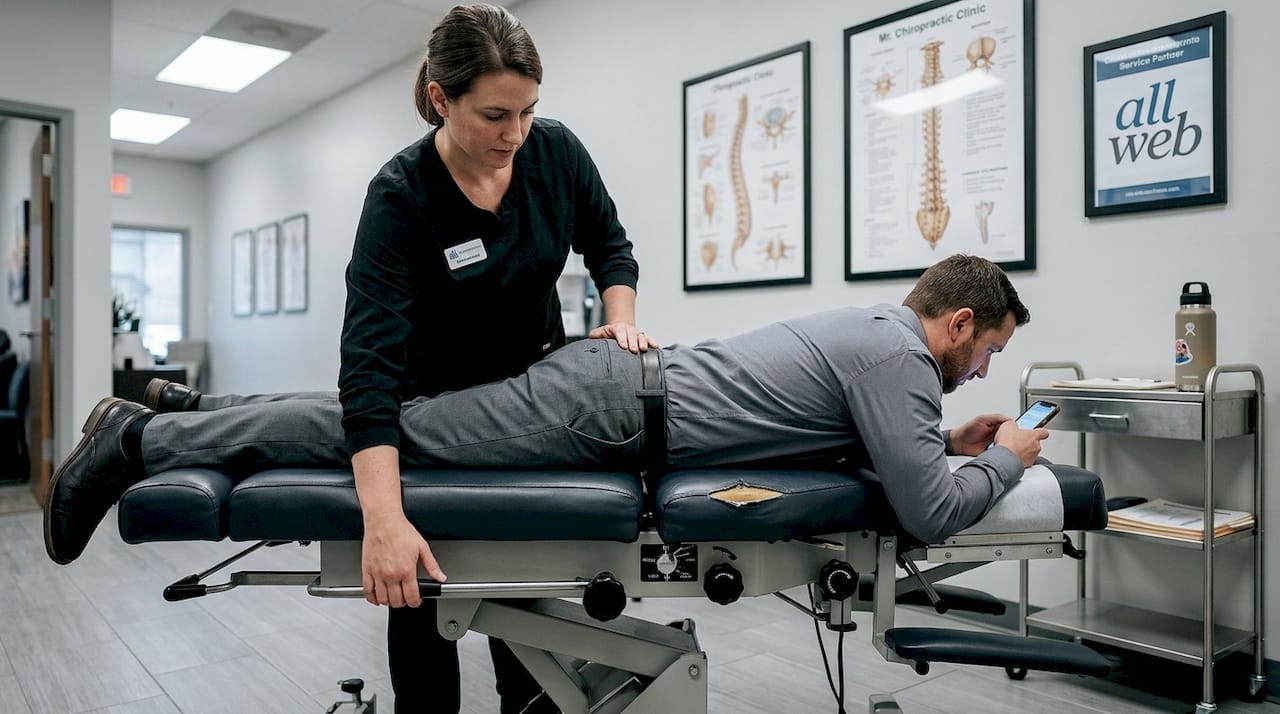
Flexion-distraction works differently. Instead of sustained traction, the table's lower half moves in a rhythmic pumping motion while you lie face down. This gentle flexion separates each spinal level one at a time, reducing pressure on pinched nerves. It is especially effective for sciatica and lumbar disc herniations where patients cannot tolerate stronger interventions.
Comparing the two approaches:
| Feature | Spinal decompression | Flexion-distraction |
|---|---|---|
| Mechanism | Motorized traction | Rhythmic manual flexion |
| Best for | Disc herniations, DDD | Sciatica, nerve compression |
| Session feel | Gentle sustained pull | Slow rhythmic movement |
| Typical sessions | 15 to 20 sessions | 12 to 20 sessions |
| Contact level | Harness-assisted | Table-assisted, hands-on |
The DRX9000 case results from a published case series showed an 80% reduction in pain, a 50% improvement in disability scores, and measurable disc height gains of 1 to 1.6mm. Those are not trivial numbers for people who had been told surgery was their only option.
Here is what a typical decompression session looks like:
- Assessment: The chiropractor reviews imaging and identifies target spinal levels.
- Positioning: You are placed face-up on the table with the harness secured around your pelvis.
- Gradual tension: The table applies increasing traction in cycles, usually 30 to 60 seconds on and 30 seconds off.
- Relaxation phase: Tension releases fully between cycles, allowing the disc to absorb nutrients.
- Post-session care: Ice, stretching, or electrical stimulation may follow to reduce any soreness.
For local chiropractors for accident recovery, pairing decompression with flexion-distraction often produces faster results than either approach alone. You can also explore flexion-distraction table details to understand how different table designs affect treatment quality.
High Energy Inductive Therapy (HEIT): Powering deeper repair
HEIT stands apart from every other tool in a chiropractic clinic because it never touches you. The device generates a pulsed electromagnetic field at frequencies below 150Hz, and that field penetrates several inches into your body without any physical contact. For someone who just walked out of a car accident with bruised, swollen, and hypersensitive tissue, that is a major advantage.
Here is what HEIT does at the tissue level:
- Boosts local circulation: Increased blood flow delivers oxygen and clears inflammatory byproducts faster.
- Reduces inflammation: The electromagnetic field interrupts the inflammatory signaling cascade that keeps pain going long after the initial injury.
- Activates muscle and tissue repair: Cells exposed to therapeutic electromagnetic fields show increased ATP production, which is the energy currency cells use to rebuild.
- Stimulates nerve regeneration: Useful for patients with numbness or tingling after nerve compression injuries.
The clinical data on HEIT is compelling. In resistant cases where standard care had already failed, HEIT treatment outcomes showed greater than 75% symptom reduction after 14 sessions. A head-to-head comparison also found that HEIT reduced pain VAS scores more effectively than acupuncture alone in a matched group.
HEIT vs. other adjunct therapies:
| Therapy | Contact required | Depth of penetration | Good for acute trauma |
|---|---|---|---|
| HEIT | No | Deep (several inches) | Yes |
| Ultrasound therapy | Yes (gel probe) | Shallow to moderate | Limited |
| Acupuncture | Yes (needles) | Localized | Moderate |
| TENS/electrical stim | Yes (pads) | Surface level | Yes |
Pro Tip: If you have tried chiropractic care before and hit a wall with your recovery, HEIT is worth asking about specifically. It is designed for exactly those resistant, complex pain cases where other methods plateau.
For patients dealing with chiropractic for tissue repair, HEIT is often the missing piece that finally moves the needle on stubborn inflammation and nerve pain.
Evidence, outcomes, and caveats: What studies say
The research behind these technologies is promising, but it is important to be honest about where the evidence stands. Here is a clear-eyed look at what the data actually shows.
What the studies support:
- DRX9000 case series: p<0.001 improvements in pain and disability scores, with measurable structural changes in disc height.
- Randomized controlled trial data: Traction-based care outperformed standard treatment for pain and function in lumbar osteoarthritis patients (p<0.05).
- HEIT adjunct therapy: Reduced pain scores more than acupuncture alone in a comparative study.
- HEIT safety profile: Non-contact delivery makes it well-tolerated even in acute, early-stage trauma cases.
"The evidence base for equipment-assisted chiropractic care is still growing. These are not experimental gimmicks, but they also are not magic. The best outcomes happen when technology is paired with clinical skill, patient compliance, and a structured rehab plan."
For context on how these outcomes compare to surgical alternatives, the chiropractic vs surgery outcomes data is worth reviewing before making any major treatment decisions. And if you are just getting started, knowing how to approach your first visit matters too. Reading about preparing for chiropractic care can help you get more out of every session.
A few important caveats:
- These tools work best for musculoskeletal injuries, disc problems, and nerve compression. They are not appropriate for fractures, active infections, or certain vascular conditions.
- Equipment quality varies widely between clinics. A DRX9000 operated by a trained clinician produces very different results than a generic traction table.
- Spinal manipulation safety research consistently shows that adverse events are rare when care is properly supervised, but proper screening is non-negotiable.
- Combining equipment-based care with exercise, stretching, and lifestyle adjustments consistently outperforms equipment alone.
Our perspective: What most guides miss about chiropractic technology
After working with accident injury patients for over 20 years in North Miami, we have seen one pattern repeat itself: patients who plateau with manual care alone often break through when the right technology is introduced at the right time. Equipment is not a shortcut. It is a precision tool.
What most guides miss is that the technology itself is only half the equation. A decompression table in the wrong hands, or used on the wrong patient, produces mediocre results. The real value comes from a clinician who knows when to use HEIT versus decompression, how to sequence treatments, and when to pull back.
We have also seen patients chase the newest device without following through on the rehab work between sessions. That is where recovery stalls. The pain relief case studies that show the best outcomes always involve patients who stayed consistent with their movement and home care protocols.
Pro Tip: Choose a clinic that customizes which tools they use based on your specific imaging and injury history, not one that runs every patient through the same protocol.
The best chiropractic care in 2026 is not about having the most machines. It is about using the right ones, in the right order, for the right patient.
Discover advanced chiropractic care in North Miami
If you are recovering from an auto accident or slip and fall injury and standard care has not delivered the relief you expected, it may be time to explore what equipment-enabled chiropractic can do for you. Modern clinics in North Miami now offer spinal decompression, HEIT, and flexion-distraction as part of personalized recovery plans built around your specific injury.
At SPARK Chiropractic, we combine over 20 years of clinical experience with advanced chiropractic therapies to create treatment plans that actually match your injury. From your first consultation through your full recovery, our team uses the right tools at the right time. No cookie-cutter protocols. No guesswork. Schedule your consultation today and find out which technologies are right for your recovery.
Frequently asked questions
What is the difference between spinal decompression and flexion-distraction tables?
Spinal decompression uses motorized traction to create negative pressure inside discs, pulling herniated material back toward center, while flexion-distraction uses rhythmic manual movement to gently separate spinal segments and reduce nerve pressure without sustained traction.
Is HEIT safe for acute injuries?
Yes. Because HEIT is non-contact, it is one of the safest options for patients in the early, acute phase of trauma recovery when direct pressure or manipulation would be too uncomfortable or risky.
How fast can I expect pain relief with chiropractic equipment?
Clinical data shows 80% pain reduction in decompression case series, and over 75% of resistant cases responded positively to HEIT after 14 sessions, though individual timelines depend on injury severity and consistency of care.
Are there risks to advanced chiropractic equipment?
Serious risks are rare. Adverse events are uncommon when patients are properly screened and treatment is supervised by a qualified clinician, but skipping the assessment phase significantly increases the chance of poor outcomes.
Should I combine these treatments with physical therapy?
Absolutely. The strongest outcomes in decompression and HEIT research consistently come from patients who pair equipment-based sessions with structured rehab, movement, and home exercise between appointments.