
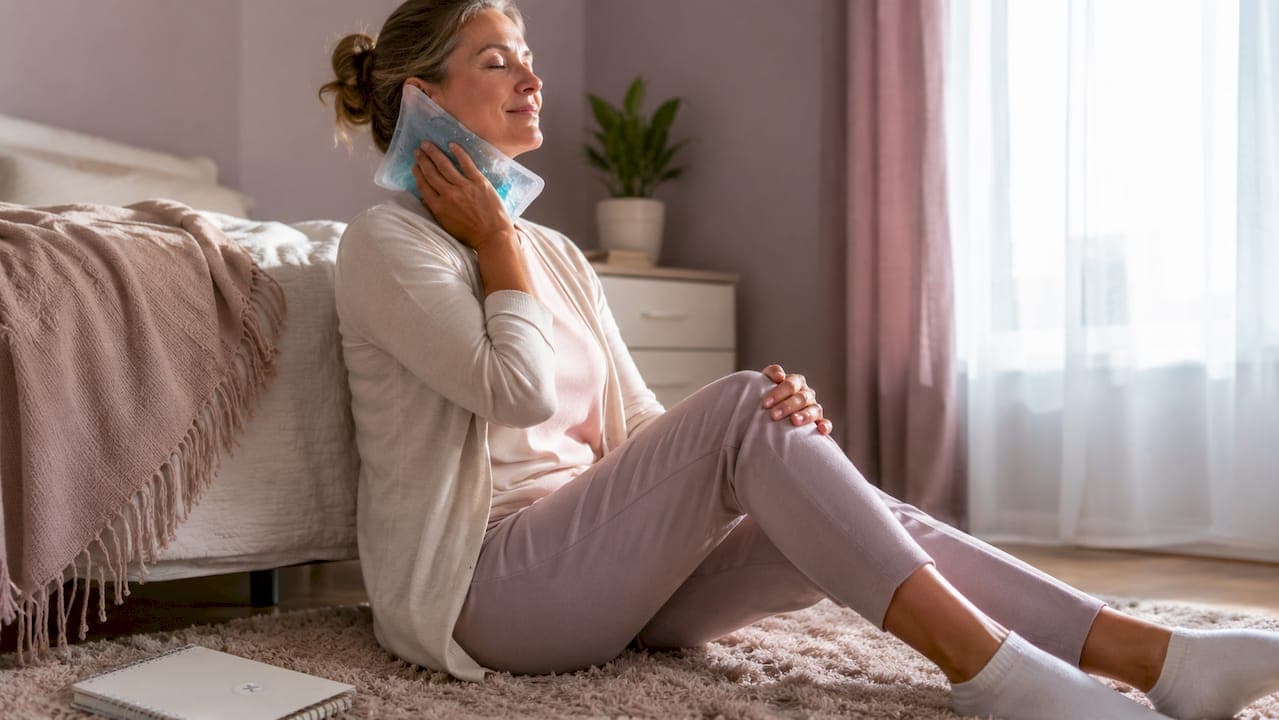
Natural neck pain relief is the process of reducing cervical discomfort through self-applied methods such as cold therapy, heat therapy, targeted stretching, and micro-exercises. These techniques address the root causes of pain, including inflammation, muscle tension, and poor circulation, without requiring medication or clinical intervention. Self-management strategies like heat, exercise, and relaxation improve self-efficacy and often remove the need for further medical treatment in non-specific neck pain. Knowing how to relieve neck pain naturally gives you real tools to act on, starting today.
How to relieve neck pain naturally with cold and heat therapy
Cold and heat therapy are the two most evidence-backed home remedies for neck pain, and timing determines which one works. Apply the wrong one at the wrong stage and you can slow your recovery instead of speeding it up.
Cold therapy: the first 48 hours
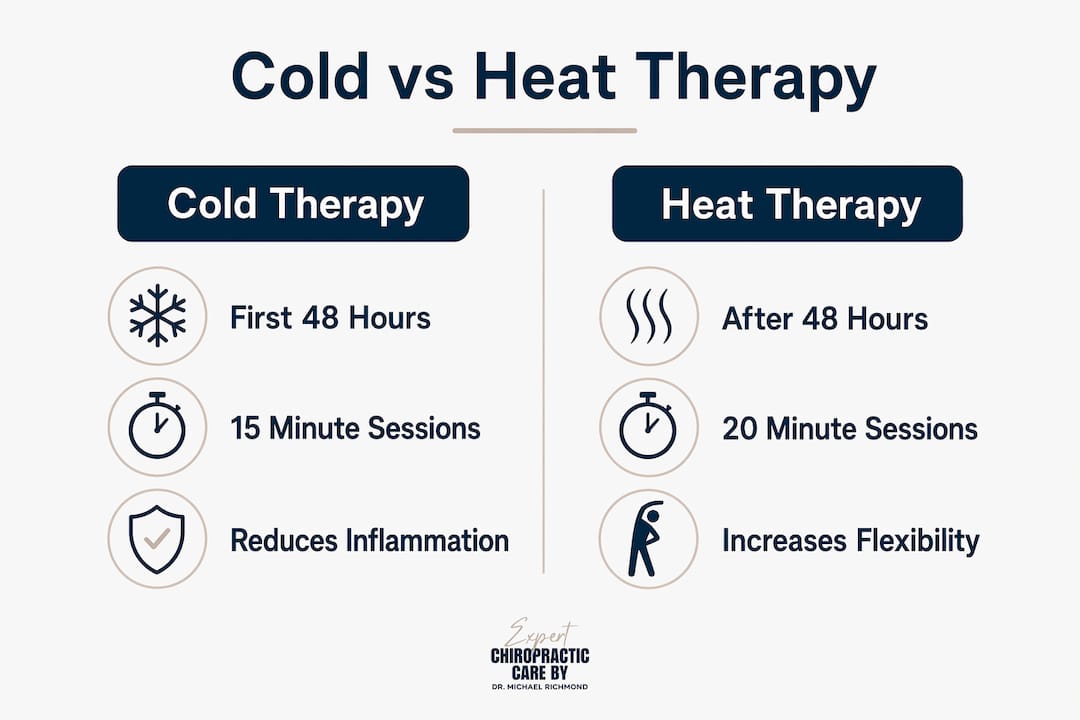
Ice is the right choice immediately after pain begins. Applying ice packs for 15 minutes every 3 to 4 hours during the first 48 hours reduces inflammation in acute neck pain. Cold constricts blood vessels, which limits swelling and numbs the area to reduce sharp pain signals. Wrap the ice pack in a thin cloth to protect your skin, and never apply it directly.
Heat therapy: after inflammation settles
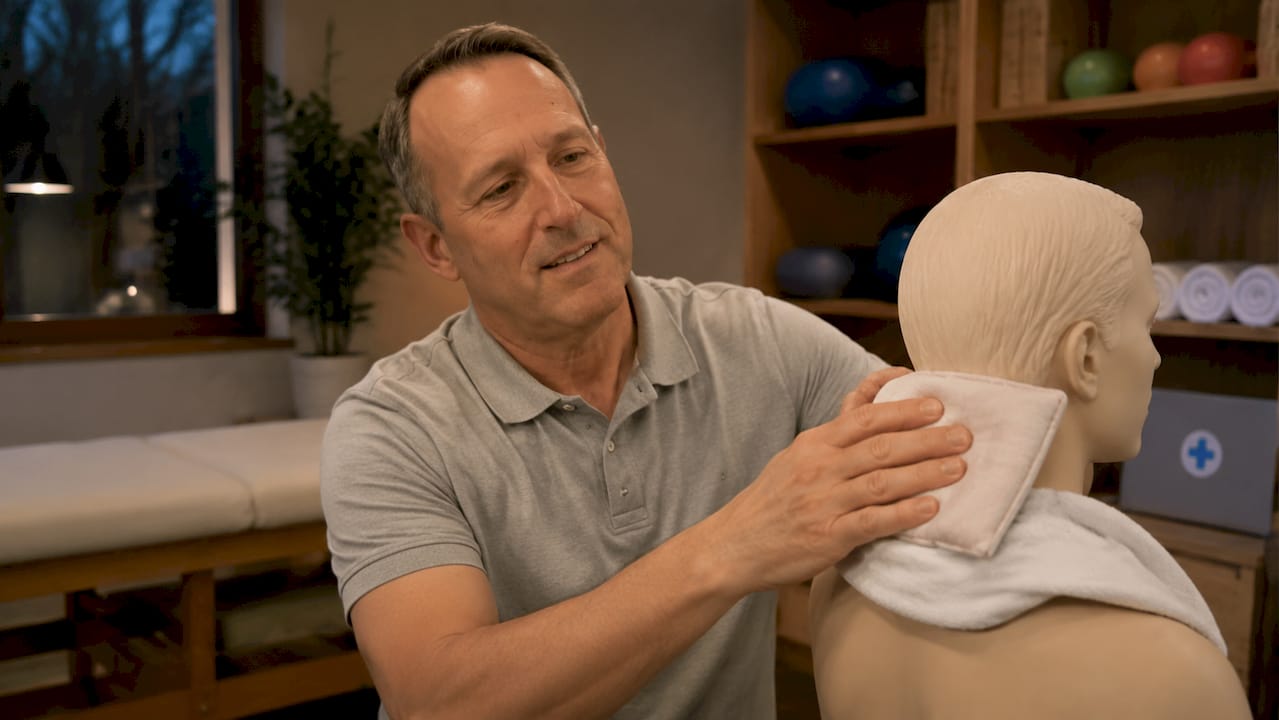
Once the first 48 hours pass and acute swelling subsides, heat becomes the better tool. Heat therapy improves neck disability and range of motion by increasing tissue metabolism and blood flow by 10–15% per 1°C rise in tissue temperature. That metabolic boost clears waste products from damaged tissue and relaxes tight muscles. A warm towel, heating pad set to low, or a warm shower all deliver effective results at home.
| Therapy | Best timing | Duration | Primary effect |
|---|---|---|---|
| Cold (ice pack) | First 48 hours | 15 minutes every 3–4 hours | Reduces inflammation and numbs pain |
| Heat (pad or towel) | After 48 hours | 15–20 minutes per session | Increases blood flow and relaxes muscles |
| Contrast (alternating) | Subacute phase | 5 minutes cold, 10 minutes heat | Stimulates circulation and reduces stiffness |
Pro Tip: Switch from cold to heat only after swelling has visibly decreased. Applying heat too early traps inflammation in the tissue and prolongs recovery.
What are the best stretches for neck pain relief?
Gentle movement is one of the most effective and underused tools for neck pain. A phased approach starting with rest and ice, then progressing to gentle stretching and strengthening, produces the best long-term results. Stretching realigns the cervical vertebrae and activates the deep stabilizing muscles that support your head's weight throughout the day.
Starter neck pain relief exercises
These five exercises work for beginners and require no equipment:
- Chin tuck. Sit tall and gently pull your chin straight back, creating a "double chin." Hold for 5 seconds. Repeat 10 times. This realigns the head over the spine and reduces forward head posture.
- Side bend. Tilt your right ear toward your right shoulder until you feel a gentle stretch on the left side of your neck. Hold for 20–30 seconds. Switch sides. Do 3 repetitions each.
- Neck rotation. Slowly turn your head to the right as far as comfortable, hold for 5 seconds, then return to center. Repeat on the left. Do 5 repetitions per side.
- Shoulder roll. Roll both shoulders backward in slow, full circles, 10 times. This releases tension in the upper trapezius, which directly pulls on the neck.
- Upper trapezius stretch. Sit on your right hand to anchor the shoulder, then tilt your left ear toward your left shoulder. Place your left hand gently on top of your head for a light added stretch. Hold 30 seconds per side.
Gentle isometric and range-of-motion exercises taught by physical therapists help stretch and strengthen neck muscles to speed recovery. These movements support muscle alignment and reduce flare-ups over time.
Why micro-exercises outperform long routines
Short, frequent movement breaks beat one long gym session for neck pain. Micro-exercises significantly reduce neck and shoulder pain in sedentary workers, with a systematic review confirming an effect size of g = -1.36, which exceeds the threshold for clinically meaningful improvement. That result means the benefit is not marginal. It is large enough to change how you feel day to day.
Consistent low-intensity movement produces better outcomes for chronic neck discomfort than high-intensity workouts. Short bouts also improve adherence because they fit into a workday without disrupting it.
Pro Tip: Set a timer every 45 minutes while sitting at a desk. Do one chin tuck and one shoulder roll set. That two-minute habit compounds into meaningful pain reduction over weeks.
Additional home remedies for neck pain and lifestyle support
Stretching and temperature therapy address symptoms. These complementary strategies address the conditions that allow neck pain to persist.
Epsom salt baths and magnesium
A warm Epsom salt bath does more than relax you. Magnesium from Epsom salt baths acts as a muscle relaxant absorbed through the skin, supporting systemic muscle tension relief beyond just local heat effects. Magnesium also supports restorative sleep, which is when most soft tissue repair occurs. Add two cups of Epsom salt to a warm bath and soak for 20 minutes, two to three times per week.
Diaphragmatic breathing to ease neck tension
Most people breathe from their chest, and that habit quietly destroys neck health. Shallow chest breathing contributes to chronic neck muscle tension because the scalene and sternocleidomastoid muscles in the neck compensate as secondary breathing muscles. Practicing slow, deep diaphragmatic breathing for 5–10 minutes daily reduces this overuse pattern. Lie on your back, place one hand on your belly, and breathe so that your belly rises before your chest.
Lifestyle habits that prevent recurrence
These daily practices reduce the conditions that cause neck pain to return:
- Adjust your monitor to eye level so your head does not tilt forward or down.
- Sleep on a supportive pillow that keeps your cervical spine neutral, not bent.
- Carry bags on alternating shoulders to prevent chronic asymmetric tension.
- Take walking breaks every hour if your work is sedentary.
- Practice self-healing approaches that combine movement, rest, and relaxation for chronic pain management.
| Remedy | Key benefit | Limitation |
|---|---|---|
| Epsom salt bath | Systemic muscle relaxation and better sleep | Requires time; not suitable for skin conditions |
| Diaphragmatic breathing | Reduces neck muscle overuse from chest breathing | Requires daily practice to see results |
| Ergonomic posture | Prevents forward head posture strain | Needs consistent habit formation |
| Low-intensity walking | Improves circulation and reduces stiffness | Not a direct treatment for acute pain |
Common mistakes when using natural neck pain relief methods
The most frequent error people make is applying the right remedy at the wrong time. Ice applied after 48 hours can restrict the blood flow needed for tissue repair. Heat applied in the first 24 hours increases swelling and prolongs the acute phase. Both errors slow recovery by working against the body's natural healing sequence.
Sudden or intense exercise is the second major mistake. Jumping into aggressive stretching when pain is acute can strain already irritated muscles and ligaments. Gradual progression, starting with gentle range-of-motion movements and building toward strengthening, protects the tissue while still promoting healing.
Safety warning: Neck pain accompanied by numbness, tingling down the arm, weakness in the hands, or severe headache requires immediate medical evaluation. These symptoms may indicate nerve compression or a more serious spinal condition that natural methods alone cannot address. Stop all self-treatment and consult a healthcare provider.
Excessive use of neck collars weakens the supporting muscles. Clinical guidance recommends limiting collar use to a few hours at a time to avoid muscle atrophy. A collar worn all day trains your neck muscles to stop working, which makes pain worse over time.
Do's and don'ts for safe self-care:
- Do apply ice in the first 48 hours, then transition to heat.
- Do start with gentle range-of-motion exercises before progressing to strengthening.
- Do take movement breaks every 45–60 minutes during sedentary work.
- Don't apply heat during the acute inflammatory phase.
- Don't wear a neck collar for extended periods without clinical guidance.
- Don't push through sharp or radiating pain during any exercise.
Key takeaways
Natural neck pain relief works best when you match the right technique to the right stage of recovery, then build consistent daily habits around movement and posture.
| Point | Details |
|---|---|
| Cold before heat | Use ice for the first 48 hours, then switch to heat to support tissue repair. |
| Micro-exercises work | Short, frequent movement breaks produce clinically significant pain reduction in sedentary individuals. |
| Magnesium supports recovery | Epsom salt baths deliver magnesium through the skin, relaxing muscles and improving sleep quality. |
| Breathing affects neck tension | Chest breathing overworks neck muscles; diaphragmatic breathing for 5–10 minutes daily reduces that strain. |
| Know when to seek care | Numbness, tingling, or arm weakness alongside neck pain requires professional evaluation, not self-treatment. |
What I have learned from watching patients manage neck pain on their own
The patients who recover fastest are rarely the ones who do the most. They are the ones who do the right things consistently. A chin tuck done every 45 minutes beats an hour-long stretching session done once a week. That pattern shows up repeatedly, and it matches what the research on micro-exercises confirms.
What surprises most people is how much breathing matters. When I explain that their chest-breathing habit is keeping their neck muscles in a constant low-grade contraction, the reaction is usually disbelief followed by relief. It is one of those mechanisms that feels invisible until you understand it. Once you do, you cannot unfeel it.
The other thing I have noticed is that people who understand why a remedy works stick with it far longer than those who just follow instructions. Knowing that heat raises tissue temperature by 1°C and that single degree accelerates metabolism by 10–15% makes the heating pad feel like a tool, not a comfort habit. That shift in perspective changes behavior.
The understanding of neck injuries at a physiological level is not just reassuring. It is what separates people who manage their pain from those who are managed by it. Start with the basics, apply them consistently, and give your body the conditions it needs to heal.
— Spark
Sparkmed's resources for neck pain support
Neck pain that responds to natural methods is a sign your body is working the way it should. When you want to go deeper on spinal health, Sparkmed's blog covers evidence-based topics from chiropractic care for neck pain to daily spinal health habits, all written for people who want clear answers without clinical jargon.

Sparkmed is committed to making health education accessible to everyone, including patients navigating recovery after injury. The accessibility and inclusion commitment at Sparkmed reflects that mission directly. Whether you are managing recent neck discomfort or looking for long-term prevention strategies, Sparkmed's content is built to support you at every stage.
FAQ
How long does natural neck pain relief take to work?
Most people notice meaningful improvement within 3 to 7 days of consistent cold and heat therapy combined with gentle stretching. Chronic neck tension may take several weeks of daily micro-exercises and posture correction to resolve.
Is heat or ice better for neck pain?
Ice is better for the first 48 hours because it reduces acute inflammation. Heat works better after that phase, increasing blood flow and relaxing tight muscles to support tissue repair.
What stretches help neck stiffness the most?
Chin tucks and side bends are the most effective starting points. Chin tucks correct forward head posture, and side bends lengthen the lateral neck muscles that commonly hold chronic tension.
Can Epsom salt baths actually reduce neck pain?
Yes. Magnesium absorbed through the skin during an Epsom salt bath acts as a muscle relaxant and supports restorative sleep, both of which contribute to reduced neck muscle tension over time.
When should I stop using home remedies and see a professional?
Stop self-treatment and seek professional care if you experience numbness, tingling, or weakness in your arms or hands, or if pain does not improve after 7 to 10 days of consistent natural methods.