

Neck injuries are defined as physical damage to the structures of the cervical spine, including muscles, ligaments, vertebrae, and nerves, caused by trauma or overuse. Understanding neck injuries matters because delayed or missed treatment can lead to permanent nerve damage, chronic pain, or, in rare cases, stroke. Car accidents are the single most common cause of acute cervical trauma in adults. Recognizing the difference between a minor strain and a serious spinal injury is the first step toward getting the right care at the right time.
What are the most common types of neck injuries?
Neck injuries fall into two broad categories: overuse injuries and traumatic injuries. Overuse injuries develop gradually from poor posture, repetitive motion, or prolonged static positions. Traumatic injuries happen suddenly, most often in car accidents, falls, or contact sports.
The most frequent types include:
- Muscle strain: Overstretching or tearing of neck muscles, usually from poor posture, heavy lifting, or sleeping in an awkward position.
- Ligament sprain: Damage to the connective tissue linking cervical vertebrae, often caused by sudden force or whiplash.
- Whiplash: A rapid back-and-forth motion of the neck that strains both muscles and ligaments simultaneously. Car accidents are the leading cause.
- Cervical disc herniation: A disc between vertebrae bulges or ruptures, pressing on nearby nerves and causing radiating arm pain or numbness.
- Cervical fracture: A break in one or more cervical vertebrae, typically from high-impact trauma. This is a medical emergency.
- Nerve compression (cervical radiculopathy): A pinched nerve root causes pain, tingling, or weakness that travels down the arm.
The cause of your injury shapes the treatment path. A muscle strain responds well to rest and early movement. A fracture requires immediate immobilization and specialist care.
Pro Tip: If your neck pain started after a car accident, do not assume it is minor because it feels mild at first. Symptoms peak hours or the next day after trauma, and early evaluation prevents underestimating the injury.
What symptoms indicate a serious neck injury?
Most neck pain is not dangerous. But certain symptoms signal a medical emergency that requires immediate action, not a wait-and-see approach.
Red flag symptoms that warrant an emergency room visit include:
- Loss of bladder or bowel control
- Sudden severe headache described as "the worst of your life"
- Slurred speech, facial drooping, or vision changes
- Weakness or numbness in both arms or legs
- Difficulty walking or loss of coordination
These symptoms can indicate spinal cord compression or cervical artery dissection. Cervical artery dissection affects about 2 in 100,000 people annually and is a leading cause of stroke in adults under 50. That statistic matters because many patients dismiss early warning signs as ordinary neck stiffness.
The table below compares minor and serious symptoms with the appropriate response for each:
| Symptom | Category | Recommended action |
|---|---|---|
| Stiffness after sleeping | Minor | Rest, gentle stretching, heat |
| Mild aching after long screen time | Minor | Posture correction, breaks |
| Radiating arm pain after accident | Moderate | See a doctor within 24 hours |
| Numbness or tingling in both arms | Serious | Go to the ER immediately |
| Loss of bladder or bowel control | Emergency | Call 911 now |
| Sudden severe headache with neck pain | Emergency | Call 911 now |
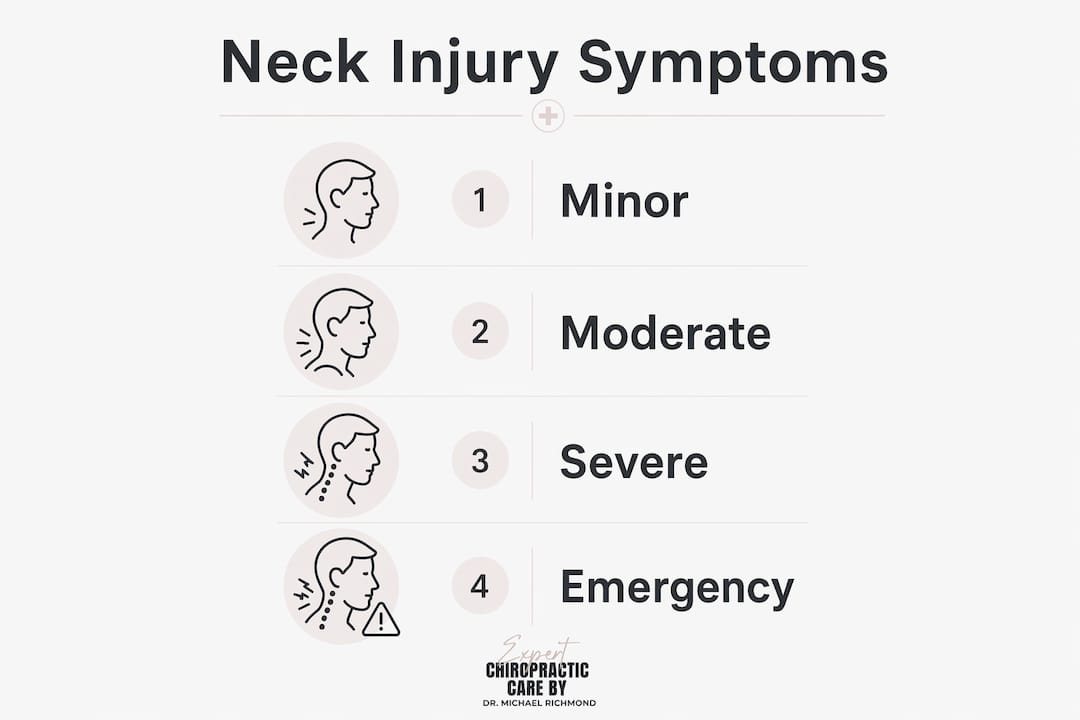
Pro Tip: Delayed onset of neck pain is common after accidents. Do not wait for symptoms to worsen before seeking evaluation. A same-day assessment after any significant trauma is the safest choice.
How are neck injuries diagnosed and treated?
Diagnosis starts with a physical exam. Your doctor will assess your range of motion, check reflexes, and test for muscle weakness or sensory changes in your arms and hands. Imaging follows when the exam suggests structural damage.

Standard diagnostic tools include X-ray for bone fractures, MRI for soft tissue and disc injuries, and EMG (electromyography) for nerve damage. One critical limitation: MRI and X-ray images often do not correlate directly with pain levels. Facet joint capsule injuries, for example, can cause significant chronic pain while appearing normal on standard scans. This means a clean MRI does not rule out a real injury.
Treatment for most neck injuries follows this sequence:
- Acute phase (days 1–3): Apply cold packs for the first 48 hours to reduce swelling. Avoid activities that worsen pain. Short-term use of over-the-counter anti-inflammatory medication is appropriate.
- Subacute phase (days 4–14): Switch from cold to heat therapy. Begin gentle range-of-motion exercises. Early mobilization is the standard of care for mild to moderate strain, with most patients seeing improvement within 2–3 weeks.
- Physical therapy: If pain persists beyond two weeks, a physical therapist will guide you through targeted exercises to restore strength and flexibility. Physical therapy reduces the risk of long-term disability when started early.
- Specialist escalation: If pain does not improve after 4–6 physical therapy visits, a spine specialist should evaluate you for disc or joint problems that standard imaging may have missed.
- Advanced interventions: Injections, nerve blocks, or surgery are reserved for cases where conservative treatment fails. Surgery is rarely the first answer for cervical strain or whiplash.
Multimodal treatment combining early mobilization, exercise, and stress management outperforms medication alone for cervical sprain recovery. That finding reflects the 2026 clinical consensus: restoring functional movement, not just suppressing pain, is the goal.
What are the best recovery and prevention tips for neck injuries?
Recovery from a neck injury is not passive. The choices you make in the first two weeks significantly affect whether you heal fully or develop chronic pain.
The most effective recovery habits include:
- Use cold first, then heat. Cold packs during the first 48 hours reduce inflammation. After that, heat relaxes tight muscles and improves blood flow.
- Limit collar use. Soft foam neck collars should not be used for more than 1–2 weeks or 3 hours daily. Prolonged immobilization weakens neck muscles and slows recovery.
- Fix your posture. Screen height, chair support, and pillow firmness all affect cervical alignment. A monitor at eye level and a supportive pillow reduce daily strain on the cervical spine.
- Move early and often. Gentle neck rolls and chin tucks, done within your pain-free range, maintain mobility and prevent stiffness from setting in.
- Manage stress. Psychological stress increases muscle tension and slows tissue healing. Breathing exercises, short walks, and adequate sleep are not optional extras. They are part of recovery.
- Stay consistent with physical therapy. Skipping sessions is the most common reason patients plateau. Adherence to a prescribed exercise program is the single biggest predictor of full recovery.
Preventing recurrence means addressing the root cause. For desk workers, that means ergonomic adjustments. For athletes, that means strengthening the deep cervical flexors before returning to sport. For car accident survivors, that means not ignoring residual stiffness after the acute pain fades.
Pro Tip: The most commonly missed recovery mistake is stopping treatment as soon as pain decreases. Pain relief and full tissue healing are not the same thing. Ignoring mild residual pain commonly leads to chronic structural problems months later.
For patients dealing with whiplash specifically, the whiplash recovery protocols at Sparkmed's blog offer detailed guidance on symptom timelines and early mobilization strategies.
Key Takeaways
Neck injuries range from minor muscle strains to life-threatening emergencies, and the difference between them depends entirely on recognizing the right symptoms at the right time.
| Point | Details |
|---|---|
| Early evaluation is non-negotiable | Symptoms after trauma often peak the next day, making same-day assessment the safest choice. |
| Red flags require emergency care | Loss of bladder control, slurred speech, or sudden severe headache means call 911, not wait. |
| Imaging has real limits | A normal MRI does not rule out injury; facet joint damage often requires specialized diagnostics. |
| Early movement beats prolonged rest | Gentle mobilization within days of injury reduces disability risk better than immobilization. |
| Full recovery requires consistency | Stopping treatment when pain fades is the leading cause of chronic neck problems after acute injury. |
What I have learned from watching patients delay care
Patients who come in early after an accident almost always recover faster than those who wait. That pattern is not coincidental. The neck is a dense structure of small muscles, ligaments, and nerve roots that respond poorly to neglect. When someone waits two weeks to seek care because the pain "wasn't that bad," the injury has already started to reorganize around dysfunction.
The other thing I have seen repeatedly is over-reliance on a single treatment. Medication alone does not rebuild cervical strength. Rest alone does not restore range of motion. The multimodal approach combining movement, exercise, and stress management works because it addresses all three dimensions of recovery at once.
I also want to be direct about mild pain: do not ignore it. Pain is a signal, not a nuisance. Early professional assessment is the most reliable way to prevent a minor strain from becoming a chronic condition. If you are unsure whether your neck pain warrants a visit, the answer is almost always yes. A brief evaluation costs far less than months of chronic pain management.
The patients who do best are the ones who show up, ask questions, and follow through. No treatment plan works if you only do it halfway.
— Spark
Neck injury recovery support at Sparkmed
Sparkmed provides educational resources and clinical support for patients navigating neck injury recovery after car accidents and physical trauma.

The Sparkmed blog covers neck injury awareness, whiplash recovery, and practical guidance on chiropractic care for neck pain in plain language. For patients who need help understanding their options or accessing care, Sparkmed's accessibility and support resources are available in English, Spanish, and Creole. Sparkmed also offers a $25 chiropractic adjustment with no insurance required, making early evaluation accessible for anyone who needs it. If you were injured in an accident and are not sure where to start, Sparkmed is a practical first step.
FAQ
What is the most common cause of neck injuries?
Car accidents are the leading cause of acute cervical trauma in adults, primarily through the whiplash mechanism. Overuse from poor posture and prolonged screen time is the most common cause of gradual onset neck pain.
How long does a neck injury take to heal?
Mild to moderate neck strain typically improves within 2–3 weeks with early mobilization and appropriate care. More serious injuries involving disc herniation or nerve damage can take several months and may require specialist intervention.
When should I go to the ER for neck pain?
Seek emergency care immediately if you experience loss of bladder or bowel control, sudden severe headache, slurred speech, facial drooping, or numbness in both arms. These symptoms may indicate spinal cord injury or cervical artery dissection.
Can imaging always detect a neck injury?
No. Standard imaging often misses soft tissue injuries like facet joint damage. A normal X-ray or MRI result does not mean your pain has no structural cause.
Is chiropractic care safe for neck injuries?
Chiropractic care is widely used for cervical strain and whiplash recovery. The evidence on rare risks such as cervical artery dissection remains nuanced, which is why early professional evaluation before any treatment is the recommended first step.