
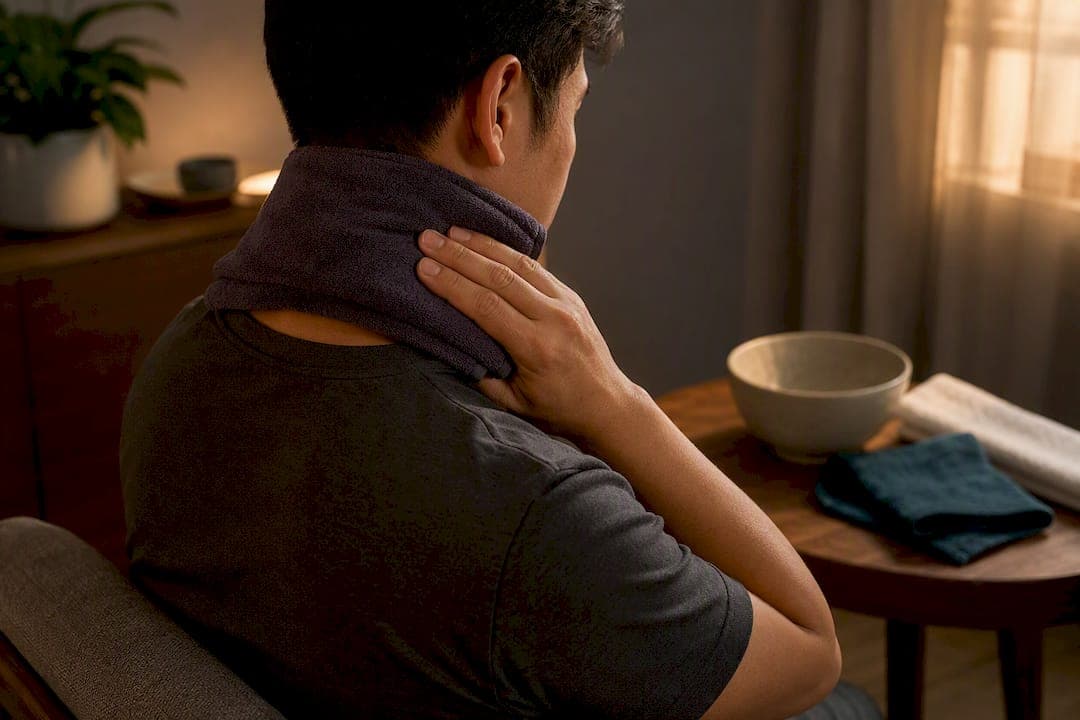
Ice a new or swollen neck injury; heat a stiff or tight one. If your neck flared up in the last day or two and feels hot, swollen, or sharp to the touch, reach for cold. If it's been aching for weeks and just feels tight, heat wins. When you can't tell which camp you're in, start with ice, since it rarely makes things worse, and switch to heat once swelling has settled.
TL;DR:
- Ice is the best initial treatment for recent neck injuries with swelling, sharp pain, or redness, and should be applied for up to 15 minutes every few hours during the first 48 to 72 hours.
- Heat can help relax stiff, tight muscles after swelling subsides, especially when pain persists but without visible swelling or redness.
- Always wrap ice or heat packs in a towel, limit sessions to 10 to 15 minutes, and avoid sleeping with packs to prevent skin injury.
- Seek professional evaluation immediately if neck pain causes numbness, weakness, difficulty walking, or worsens after two to three weeks of self-care.
- Combining gentle movement with heat or cold therapy is more effective than using either alone to promote healing and restore mobility.
Table of Contents
- When to Use Ice for Neck Pain
- When to Use Heat for a Stiff or Tight Neck
- How to Apply Ice or Heat Without Hurting Your Skin
- A Quick Protocol for Common Neck Pain Scenarios
- When Neck Pain Needs More Than Ice or Heat
- Where Clinical Care Fits Alongside Home Ice and Heat
- Ice, Heat, and the Goal Nobody Talks About: Movement
- Sources
- FAQ
When to Use Ice for Neck Pain
Cold works by shrinking blood vessels near the skin, a process called vasoconstriction. Less blood flow to the area means less swelling, and cold also numbs nerve endings enough to dull sharp pain. That combination makes ice the better first move any time an injury is fresh.
Reach for ice when:
- You've just strained your neck lifting something or sleeping wrong
- You were in a car accident or fall within the last day or two
- The area feels warm, looks red, or is visibly swollen
- The pain is sharp or stabbing rather than a dull ache
Pro Tip: Keep the timing tight. Mayo Clinic advises applying ice for up to 15 minutes several times a day for the first 48 hours, then switching to heat. MedlinePlus frames that window as 48 to 72 hours, so treat it as a range tied to your symptoms rather than a countdown clock. Most mild to moderate neck pain improves within 2 to 3 weeks using this kind of self-care.
When to Use Heat for a Stiff or Tight Neck
Heat does the opposite job. It widens blood vessels, pulling more blood into tight muscle tissue, and that extra circulation helps muscles loosen up so movement feels less guarded. Once swelling has faded and what's left is stiffness, heat generally beats ice for comfort.
Good times to use heat:
- A neck that's been tight or achy for more than a few days, with no swelling
- Muscle tension from stress, poor posture, or sleeping position
- Before stretching or gentle range-of-motion exercises, to make movement easier
A warm shower, a moist heat pack, or a heating pad on low all work. The honest caveat: a 2026 systematic review found only two eligible randomized trials covering 67 people, and concluded the evidence for heat in nonspecific neck pain is limited. That doesn't mean heat doesn't help. It means heat is a reasonable, low-risk comfort measure, not a treatment proven to fix the underlying problem.
How to Apply Ice or Heat Without Hurting Your Skin
Both therapies are simple, but skin injury from misuse is common and avoidable. Follow these steps for either modality:
- Wrap the pack. Never place ice or a heating pad directly against skin; a thin towel is enough.
- Limit each session to 10 to 15 minutes. Longer isn't more effective and raises injury risk.
- Check your skin between applications. Stop immediately if you see blistering, numbness that doesn't fade, or unusual redness.
- Never sleep with a pack in place. This is the most common way people burn or frost-injure their skin, and both Mayo Clinic and MedlinePlus call it out specifically.
- Skip heat over active swelling or an open wound. Cold is the right call until swelling visibly goes down.
For devices, a frozen gel pack wrapped in a towel works better than a bag of ice cubes because it molds to the curve of your neck. For heat, a warm shower gives broad, even coverage, while a heating pad delivers more targeted, sustained warmth for deeper stiffness.
Pro Tip: If a frozen gel pack feels too intense, try a bag of frozen peas. It conforms to your neck's shape and is gentler than a rigid ice pack straight out of the freezer.

A Quick Protocol for Common Neck Pain Scenarios
Match the routine to what actually happened:
- Acute strain (new injury, swelling present): Ice for 15 minutes every 2 to 3 hours for the first 48 to 72 hours. Rest the neck, avoid heavy lifting, and reassess daily. If swelling hasn't dropped by day three, that's your cue to check in with a professional.
- Stiff neck with no swelling: A warm shower or heating pad on low for 15 to 20 minutes, followed by gentle range-of-motion exercises, such as slow chin tucks and shoulder rolls. Heat right before stretching makes the motion easier to tolerate.
- Uncertain or mixed symptoms: Ice while swelling is present, then transition to heat once it resolves. Stop whichever modality you're using if symptoms get worse, not better.
Pairing warmth with light neck stretches and desk exercises tends to outperform either heat or movement alone for everyday stiffness.
When Neck Pain Needs More Than Ice or Heat
Self-care handles most mild to moderate neck pain, but certain signs mean you need a professional look, not another ice pack. Get emergency care right away if you have:
- Numbness, tingling, or weakness in an arm or hand
- Trouble walking or a loss of coordination
- A severe headache, especially after a fall, collision, or diving accident
- Neck pain following any significant trauma with visible swelling or deformity
Less urgent but still worth a visit: pain radiating down one arm, numbness that's getting worse instead of better, or pain that hasn't budged after 2 to 3 weeks of consistent self-care. A clinic visit for these usually starts with a hands-on assessment, sometimes imaging, and a plan that might include manual therapy, traction or decompression, or targeted modalities beyond what a heating pad can offer.
Where Clinical Care Fits Alongside Home Ice and Heat
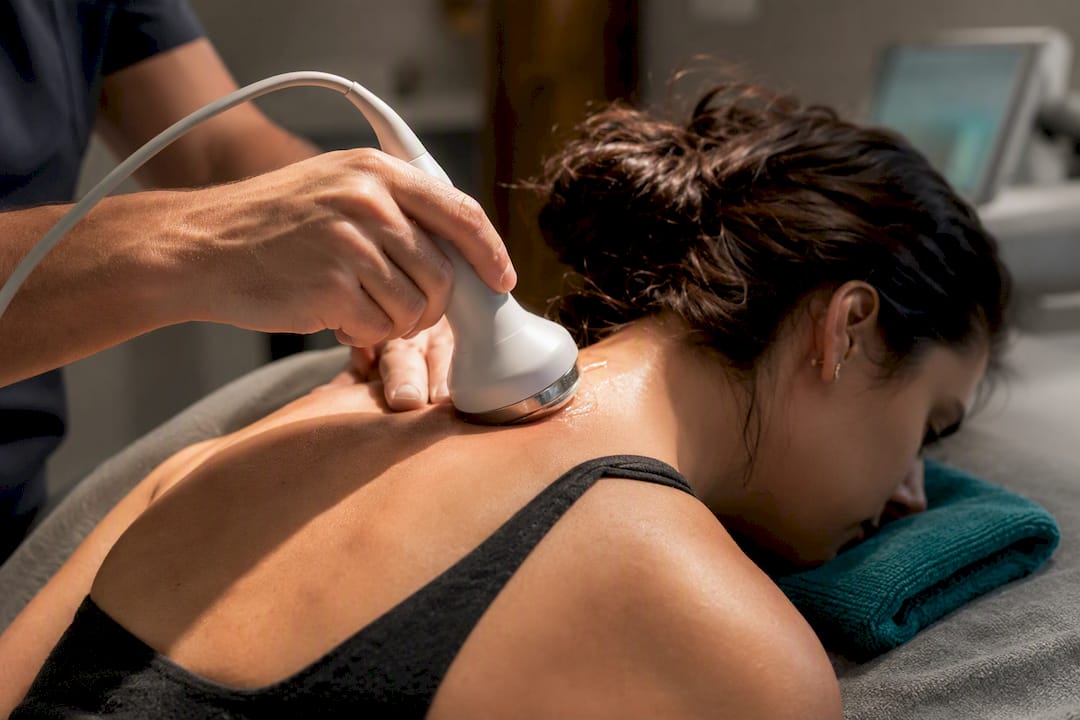
Home therapy is a bridge to movement, not a substitute for assessment when pain lingers or trauma is involved. Sparkmed treats neck injuries from car accidents, work incidents, and everyday strain, using tools like ultrasound and shockwave therapy when a heating pad and rest aren't cutting it. A first visit typically includes a physical evaluation and, for accident cases, thorough documentation for any insurance claim. Most patients start feeling functional relief within the first few visits, though timelines vary by injury.
Ice, Heat, and the Goal Nobody Talks About: Movement
Most guidance on ice or heat treats them like a debate to win, but the real goal isn't picking a side. It's using whichever one gets you moving again without making things worse. A neck that stays perfectly still for a week doesn't heal faster. It stiffens up more, and by the time you try to move it, you've added a second problem on top of the first.
The mistake I see most often isn't choosing wrong between ice and heat. It's overusing either one: falling asleep with a heating pad, or icing a stiff neck for a week straight when heat would help far more. If a red flag shows up, weakness, numbness, or pain that just won't quit, stop guessing and get evaluated.
— Spark
Sources
This article draws on Mayo Clinic's neck pain treatment guidance, MedlinePlus self-care instructions for safe application, a randomized trial comparing heat and cold in acute strain, and a 2026 systematic review on heat for nonspecific neck pain. Each backs a specific recommendation made above, from timing windows to the evidence caveat on heat.
- Neck pain - Diagnosis and treatment - Mayo Clinic
- Neck pain or spasms - self care: MedlinePlus Medical Encyclopedia
- Systematic review on heat for nonspecific neck pain (PubMed)
FAQ
What Is a Red Flag for Neck Pain?
Red flags include numbness or weakness in an arm or hand, trouble walking, a severe headache, or any of these symptoms appearing after a fall or collision. Mayo Clinic advises urgent evaluation when trauma is involved and symptoms are severe. Pain that doesn't improve after 2 to 3 weeks of self-care is also worth a professional look.
What Is the Strongest Pain Relief for Neck Pain?
For acute pain, ice paired with an over-the-counter anti-inflammatory like ibuprofen tends to work well together; a randomized trial found heat and cold packs produced similar mild improvement when combined with ibuprofen. Severe or persistent pain needs a clinical evaluation rather than stronger home remedies.
What Sleeping Position Is Best for Neck Pain?
Sleeping on your back with a supportive pillow that keeps your neck in a neutral position, or on your side with a pillow that fills the gap between your shoulder and head, tends to reduce strain. Stomach sleeping is the position most likely to aggravate neck pain, since it twists the neck for hours at a time.
How Do You Release a Stiff Neck Quickly?
Warm the area first, with a warm shower or a heating pad on low for 15 to 20 minutes, then move into slow, gentle stretches like chin tucks and shoulder rolls. Heat loosens tight muscle before you ask it to move, which makes stretching far more tolerable than trying to stretch a cold, tense neck.