
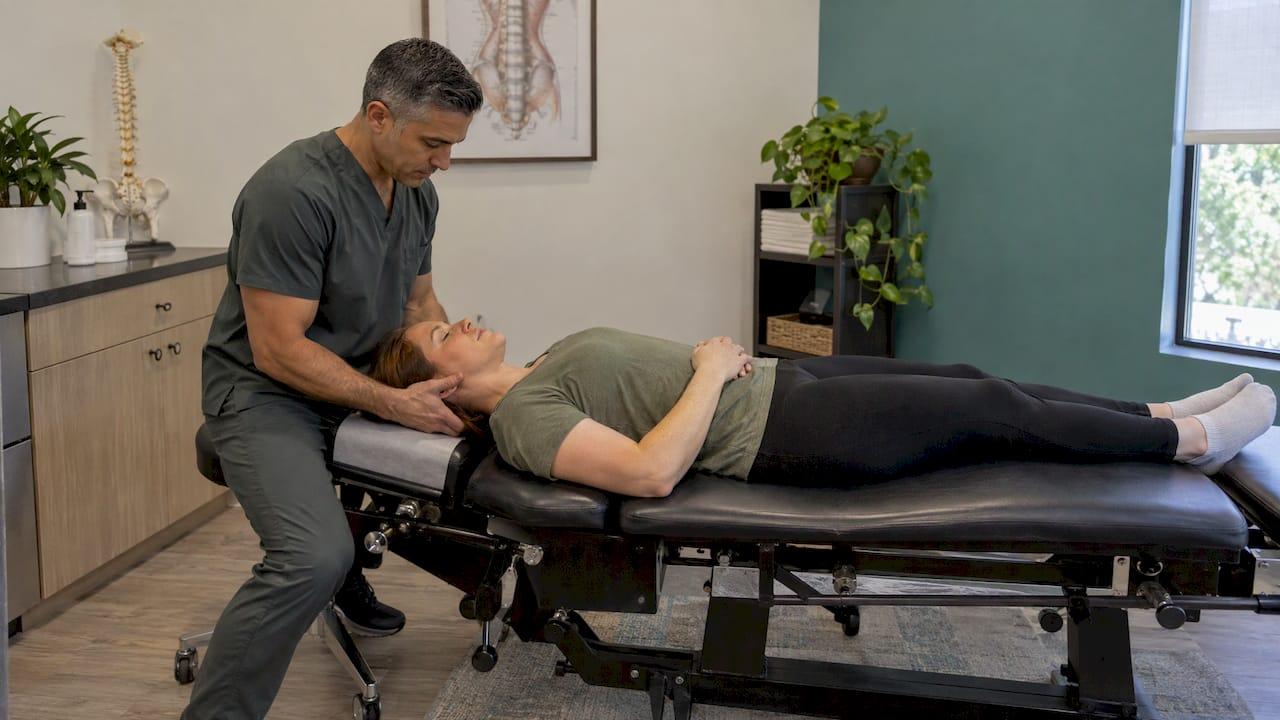
For most adults, a chiropractic neck adjustment from a licensed provider who first takes a full history and examines you is associated with mild, short-lived effects, and serious complications are very rare. The details matter, though: your health history, the type of technique, and whether you have had a recent injury such as a car crash all shape what is right for your neck. At Sparkmed in North Miami, our chiropractors treat neck pain from auto accidents, work injuries and slip-and-fall events, and we want you to walk in knowing exactly what an adjustment involves.
TL;DR
- Mild soreness, stiffness or a headache after a neck adjustment is common and usually fades within about 24 hours, according to the National Center for Complementary and Integrative Health (NCCIH).
- Serious complications, including a stroke involving a neck artery, have been reported but are very rare, and no one has an exact frequency.
- A proper history and exam before any neck manipulation is the main safeguard. Tell your chiropractor about osteoporosis, numbness or tingling in your limbs, cancer, stroke risk and prior neck problems.
- Sudden severe headache, trouble speaking, facial droop, arm weakness or sudden loss of balance after any neck treatment means calling 911, not waiting.
- After a crash, get your neck evaluated before anything else. Adjustments are one option, and gentler techniques exist.
Table of Contents
- What a neck adjustment actually is
- What happens to most people afterward
- The rare serious risks, stated plainly
- Who should get checked before any neck manipulation
- Neck pain after a car accident: a different starting point
- What the research says about benefit
- Questions to ask before your first neck adjustment
- After the adjustment: what to do and what to watch
- What an adjustment costs at Sparkmed
- Ready to have your neck looked at?
- FAQ
- Sources
What a neck adjustment actually is
A chiropractic adjustment, also called spinal manipulation, is a controlled thrust applied by hand or by a device to move a spinal joint further than it would move on its own. That is how NCCIH describes it. Mayo Clinic describes the same thing as controlled force from a trained specialist's hands or a small instrument, aimed at improving motion and easing pain.
The pop you may hear is not the point. What matters is the technique and the screening done before it.
There are two broad styles:
- High-velocity, low-amplitude (HVLA) manipulation. A quick, shallow thrust. This is the "crack" most people picture.
- Mobilization. NCCIH describes it as movement within the joint's natural range without a thrust, and notes the patient can control it. Many patients prefer it when their neck feels tender or guarded.
A good chiropractor chooses between them based on your exam, not habit. If a thrust makes you nervous, say so. Gentler options are a normal part of the conversation.
What happens to most people afterward
The most common experience is nothing dramatic. NCCIH summarizes a 2017 review of 250 scientific publications: mild to moderate, temporary effects such as increased pain or discomfort, stiffness and headache often follow spinal manipulation or mobilization, and most resolve within 24 hours.
The 2017 scoping review behind that summary lists the temporary effects people report:
- More musculoskeletal pain or discomfort in the treated area
- Stiffness
- Headache
- Fatigue
- Faintness, dizziness or lightheadedness
- Tingling or numbness in the arm or hand
A 2024 systematic review and meta-analysis of 14 randomized trials, indexed on PubMed, compared cervical HVLA manipulation with control treatments. It found no statistically significant difference in the rate of reported adverse events, and the events that were reported were mild. The authors add a point worth knowing: trials are not designed to catch very rare serious events, so they cannot rule such events out.
We cover the full range of post-visit reactions, and which ones are worth a call to the clinic, in our guide to chiropractic adjustment side effects and red flags.
Is dizziness after a neck adjustment normal?
Mild lightheadedness is on the list of temporary effects in the scoping review above, and it usually passes. Treat it differently if it is sudden, severe, or comes with other symptoms. The CDC lists sudden trouble walking, dizziness, loss of balance or lack of coordination among the signs of a stroke. If dizziness arrives with vision changes, slurred speech, facial drooping, arm weakness or a sudden severe headache, call 911 right away.
The rare serious risks, stated plainly
Mayo Clinic's guidance lists the rare serious complications of chiropractic adjustment as a herniated disk or worsening of an existing one, nerve compression in the lower spine, and a certain type of stroke after neck manipulation.
NCCIH says serious spinal, neurological or neck-artery stroke complications have been reported but are very rare, and that accurate frequency estimates are not available. The 2017 scoping review shows why: published estimates of serious events ranged from 1 per 2 million manipulations to 13 per 10,000 patients, and the authors stressed that methods differ and that causality and incidence are hard to pin down.
Why a stroke is mentioned at all
A tear in the wall of a neck artery, called a cervical artery dissection, can cause a stroke. Neck pain and headache can be early symptoms of that tear, which means a person may seek care for a neck that is already in trouble. That is one reason a thorough history and exam come first. It is also why anyone with sudden, unusual neck pain or the worst headache of their life should be seen by a medical doctor before manual treatment.
Who should get checked before any neck manipulation
Safety here is mostly about screening. The American Osteopathic Association's 2024 policy calls for a thorough history and examination before cervical manipulation, consideration of existing risks and contraindications, and a discussion of potential risks with the patient. The same policy supports continuing to teach and offer cervical manipulation, including HVLA techniques, with individualized medical judgment.
Mayo Clinic says people should not seek chiropractic adjustment if they have:
- Severe osteoporosis
- Numbness, tingling or weakness in a limb
- Spinal cancer
- An increased risk of stroke
- An abnormality in one of the upper-neck bones
If osteoporosis is part of your history, tell us before your first visit. A daily posture routine built around osteoporosis safety is a useful companion to a conversation with your doctor.
The 2019 best-practice recommendations for chiropractic neck-pain management add that more severe neck pain, or signs that a nerve may be involved, call for early co-management with a medical specialist such as a neurologist, orthopedist, pain specialist or physical medicine and rehabilitation doctor.
A quick list to bring to your appointment
- Any recent crash, fall or work injury, even if it felt minor at the time
- Numbness, tingling or weakness in an arm or leg
- A history of osteoporosis, cancer, or stroke or clotting problems
- Migraines, new or unusual headaches, or neck pain unlike anything you have had before
- Blood thinners or other medicines you take
Neck pain after a car accident: a different starting point
Most of our patients with neck pain arrive after a collision, a work injury or a fall. Whiplash-type strain can feel like a simple stiff neck, and the first job is to find out what is actually injured. That is why an evaluation comes before any thrust. Our reading on stiff neck after a car accident explains which symptoms matter, and our overview of neck injuries, symptoms and recovery covers what recovery usually looks like.
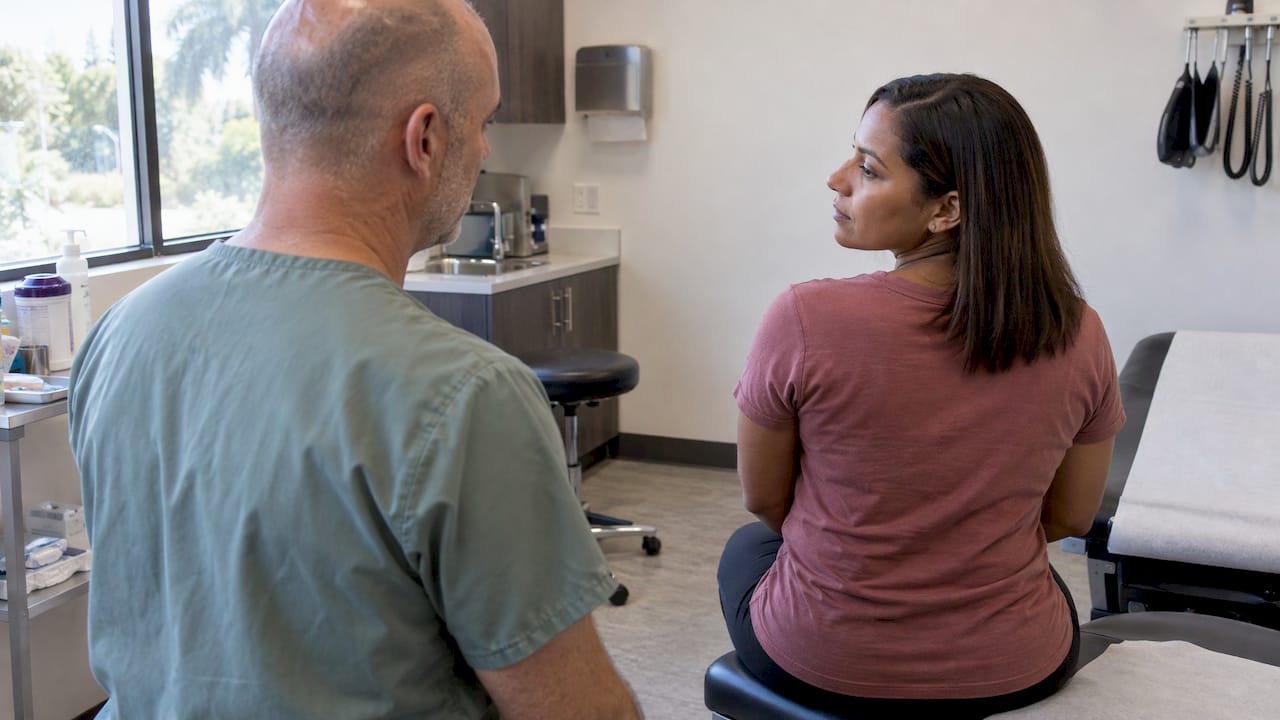
If your neck hurts after a crash in North Miami, our page on neck pain after a car accident walks through the process. Our auto accident evaluation is the starting point, and our team has over 20 years of experience treating accident victims.
Severe pain, numbness, weakness, confusion or loss of consciousness after a crash is an emergency-room situation first. Get that care, then come see us for follow-up.
What the research says about benefit
NCCIH reports that a 2021 analysis of six studies with 446 people found spinal manipulation helpful for acute neck pain lasting less than six weeks, with the caution that studies varied in size and design. That fits how care is usually structured.
The 2019 best-practice recommendations favor multimodal care for acute and subacute neck pain: manual therapy such as manipulation or mobilization, combined with education and exercise. They also advise reassurance, staying active and encouragement, and they name watchful waiting with clinical monitoring as an evidence-based option in the acute phase.
For longer-lasting pain, the American Academy of Family Physicians' 2020 review says specific strengthening of the neck, upper back and shoulders can reduce chronic neck pain, and that combinations of muscle-performance, mobility and aerobic exercise can improve pain and function. It adds that no one type of exercise is clearly best, so you can pick a low-impact form you will stick with.
In practice, that is how a plan at our clinic can look: adjustment or mobilization alongside other therapies and home exercises. Our services include:
- Chiropractic adjustments
- Ultrasound therapy
- Electrical stimulation
- Traction and decompression
- Massage therapy
- Shockwave therapy
You can see the full list on our services page. For more on how adjustments fit into recovery, read about spinal adjustments after a car accident.
Questions to ask before your first neck adjustment
Whatever clinic you choose, these questions are fair, and a good provider welcomes them:
- Will you take a history and examine my neck first? The AOA policy above says this should happen before cervical manipulation.
- Which technique will you use, and is there a gentler one? Mobilization and device-assisted methods are options.
- What should I expect in the next 24 hours? Soreness, stiffness or a mild headache are the usual answers.
- Which symptoms mean I should call you, and which mean 911?
- How many visits do you expect, and what happens if I am not improving? Our article on how many chiropractic visits you may need after a car accident gives a realistic picture.
If you also want to understand what chiropractic care does well, our evidence guide to spinal adjustments and our piece on why people see a chiropractor for neck pain go deeper.
After the adjustment: what to do and what to watch
Normal and expected: mild soreness, a feeling of stiffness, a light headache, or tiredness that fades within a day or so.
Call the clinic: soreness that is getting worse after the first day or two, new tingling in an arm or hand, or dizziness that keeps coming back.
Call 911: sudden severe headache, sudden trouble speaking or understanding, drooping on one side of the face, weakness or numbness on one side, sudden vision changes, or sudden loss of balance. The CDC's B.E. F.A.S.T. checklist (balance, eyes, face, arms, speech, time) exists because stroke treatment works best when it starts quickly, and the CDC says the best treatments are available only if the stroke is recognized and diagnosed within 3 hours of the first symptoms. Do not drive yourself and do not wait to see if it passes.
What an adjustment costs at Sparkmed
Price is a real part of whether people get care at all, so here are our published numbers. A chiropractic adjustment is $45. Shockwave therapy is $75 per session. Our monthly wellness plans are Essential at $149, Performance at $249 and Elite at $399 per month. You can see them all on our pricing page. We offer direct insurance billing with thorough injury documentation for claims, and our team speaks English, Spanish and Creole.
Our point of view
Safety in neck care comes from the process, not from the pop. In our work with accident victims, we start from the injury: what happened, what hurts, what has changed since. Then we choose the technique that fits your neck, whether that is a thrust, a gentler mobilization or another therapy such as ultrasound, electrical stimulation or decompression.
We believe patients deserve straight answers. Serious complications from neck manipulation are rare, and the worthwhile response is careful screening and clear instructions on what to watch for afterward, not fear. That is also why we want you to tell us everything: the old injury, the medicines, the numbness you assumed was nothing.
After 20 years of treating people hurt in crashes, work incidents and falls, we think the best care is accessible care. That means clear pricing, direct insurance billing and documentation that supports your claim, support in your own language, and free transportation so that getting to the clinic is never the obstacle.
Spark
Ready to have your neck looked at?
If you are in North Miami and your neck has hurt since a collision, a fall or an injury at work, the next step is an evaluation. We will go through your history, examine your neck, and explain what we recommend and why. We offer free transportation, and our pricing is posted so you know what to expect before you come in.
Book your visit through our main page, or look at the services and therapies we offer for neck and back pain.
FAQ
Can a neck adjustment cause a stroke?
NCCIH reports that neck-artery stroke complications have been reported after spinal manipulation but are very rare, and that reliable frequency numbers are not available. Because early artery injury can itself cause neck pain and headache, a history and exam before treatment matters. Sudden severe headache, speech trouble, facial droop or weakness on one side after any neck treatment is a 911 situation.
Is it normal to feel dizzy after a neck adjustment?
Mild lightheadedness is among the temporary effects reported in the research literature, and it commonly passes quickly. Sit down, hydrate and tell your chiropractor at your next visit. If the dizziness is sudden, severe, repeated, or comes with vision changes, confusion or one-sided weakness, call 911.
Who should not have a neck adjustment?
Mayo Clinic lists severe osteoporosis, limb numbness, tingling or weakness, spinal cancer, increased stroke risk and an abnormality in an upper-neck bone. If any of these apply to you, tell your chiropractor and talk to your medical doctor, who can decide whether a different approach is better for you.
Are there alternatives to a neck adjustment for neck pain?
Yes. Mobilization uses movement without a thrust, and the 2019 best-practice recommendations favor multimodal care that combines manual therapy with education and exercise. Our clinic also offers ultrasound, electrical stimulation, traction and decompression, massage and shockwave therapy, so your plan does not have to rest on a single technique.
Sources
- Spinal Manipulation: What You Need To Know, NCCIH
- Chiropractic adjustment, Mayo Clinic
- What are the risks of manual treatment of the spine? A scoping review, 2017
- Adverse Events After Cervical Spinal Manipulation, 2024 meta-analysis
- Osteopathic Manipulative Treatment of the Cervical Spine, AOA policy H322-A-24
- Best-Practice Recommendations for Chiropractic Management of Neck Pain, 2019
- Chronic Musculoskeletal Pain, American Family Physician, 2020
- Signs and Symptoms of Stroke, CDC
- Daily 5–10 Minute Posture Plan for Osteoporosis