
Yes, a car crash can jolt the pelvis out of alignment, strain the sacroiliac joints, and leave surrounding muscles in spasm. Before anything else, rule out a fracture if you notice severe pain, deformity, or trouble bearing weight. Once emergency causes are excluded, conservative care such as chiropractic adjustments and targeted rehabilitation is a common and often effective next step, and documenting symptoms early supports both recovery and any insurance claim.
TL;DR:
- Severity of symptoms can vary widely; a visible deformity, inability to bear weight, or leg numbness require immediate emergency care.
- Pelvic injuries from crashes often involve ligament sprains or joint irritation rather than fractures, with actual fractures being associated with high-energy trauma.
- Early assessment and documented symptoms are crucial, especially if bladder, bowel, or pelvic floor issues are present, as they significantly influence treatment plans.
- Conservative treatments like chiropractic adjustments and rehab typically lead to improvement within a few weeks if instability and fractures are ruled out.
- Delayed care and untreated ligamentous instability can prolong recovery and increase the risk of long-term pain or chronic low back issues.
Table of Contents
- Symptoms and Signs of Pelvic Misalignment After a Crash
- How a Crash Causes Pelvic Misalignment Versus a Pelvic Fracture
- When to Seek Urgent or Emergency Care
- How Clinicians Diagnose Pelvic Injuries After a Crash
- Chiropractic and Conservative Treatment for Pelvic Misalignment
- What Recovery Looks Like: Timeline and Common Hurdles
- Safe At-Home Exercises and Self-Care
- How SparkMed Approaches Pelvic Misalignment After Car Accidents
- Why Early, Documented Assessment Matters Most
- Get Evaluated and Start Recovery With SparkMed
- FAQ
- Sources
Symptoms and Signs of Pelvic Misalignment After a Crash
Pelvic misalignment after a motor vehicle collision rarely announces itself with one clear symptom. Instead, it tends to show up as a cluster of complaints centered on the pelvis, hips, and lower back that can shift or radiate over the following days.
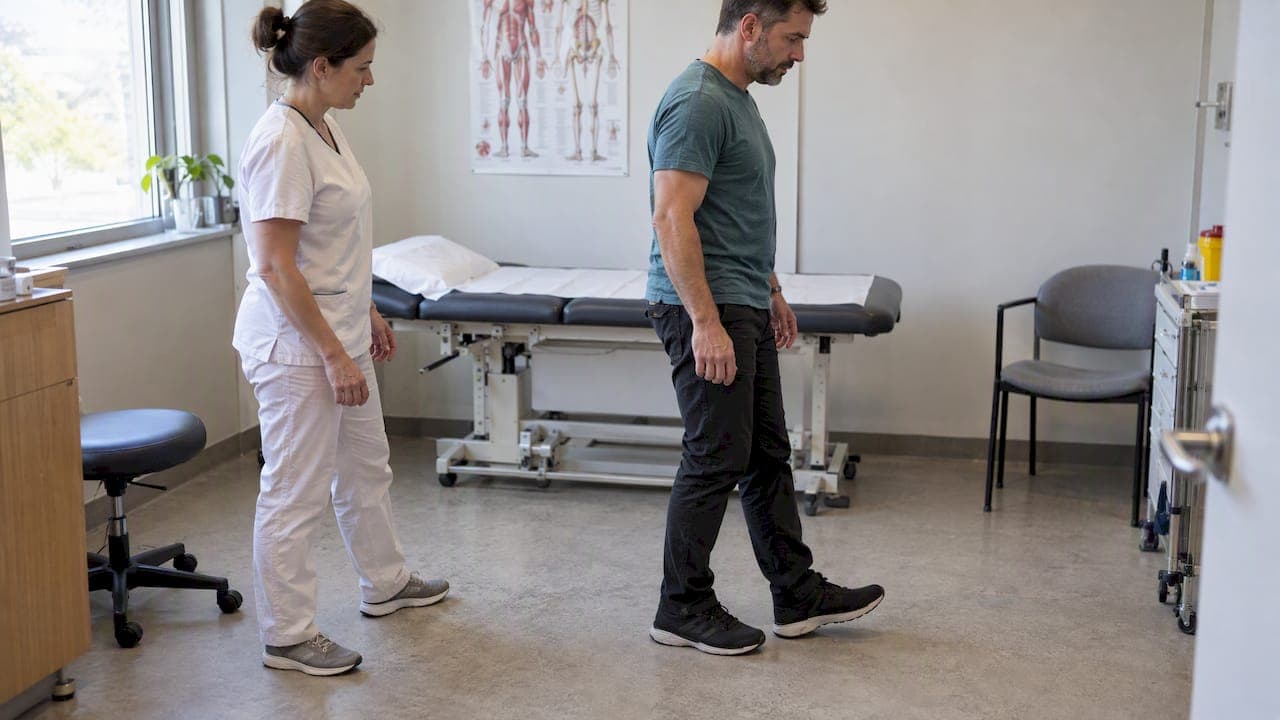
Many people notice pain that sits deep in the buttock or groin, sometimes spreading down one leg in a pattern that mimics sciatica. Others feel like one leg has become shorter, which often reflects a rotated or tilted pelvis rather than an actual bone length difference. Walking can change too: a subtle limp, a hitch in the stride, or a reluctance to put full weight on one side.
- Localized or radiating pain in the pelvis, hip, groin, or buttock, sometimes extending into the thigh or calf
- A sense that one leg is shorter, or uneven standing and sitting posture
- A limp or altered gait that develops in the hours or days after the crash
- Tenderness directly over the sacroiliac joint, at the back of the pelvis near the spine's base
- Pelvic floor symptoms such as pressure, bladder urgency, or discomfort during intimacy
Some of these symptoms overlap with piriformis irritation, where a tight muscle deep in the buttock presses on the sciatic nerve and produces leg pain that feels similar to a disc problem. That distinction matters for treatment, but either way, these are signals worth evaluating rather than waiting out.
A smaller set of symptoms signal something more urgent: inability to bear any weight, visible deformity around the hip or pelvis, heavy bleeding, numbness that does not resolve, or trouble urinating. Those warrant immediate medical attention rather than a wait-and-see approach, a distinction covered in more detail below.
How a Crash Causes Pelvic Misalignment Versus a Pelvic Fracture
The pelvis is a ring of bone held together by strong ligaments, and a collision can load that ring in several directions at once. Front-end impacts drive force backward through the hips, side impacts compress the ring laterally, and vertical forces, common in falls or certain rollover crashes, can shear the joint apart. Each pattern stresses different ligaments and joints, which is why two people in similar crashes can end up with very different symptoms.
- Anterior-posterior (front-to-back) forces often strain the pubic symphysis and anterior sacroiliac ligaments
- Lateral compression can injure the sacroiliac joint and surrounding muscles on the side of impact
- Vertical shear forces are more likely to disrupt the entire pelvic ring and its posterior ligaments
- Muscle spasm around the hips and lower back frequently follows any of these patterns, amplifying pain and limiting motion
A true pelvic ring fracture is a different injury altogether from a soft-tissue misalignment. A fracture usually follows high-energy trauma like a motor vehicle collision and tends to come with intense pain, visible swelling or bruising, and sometimes signs of internal bleeding because of the pelvis's proximity to major blood vessels. Soft-tissue misalignment, by contrast, involves ligament sprain, joint irritation, or muscular guarding without a break in the bone, and while it can be painful and limiting, it does not carry the same immediate danger. Pelvic ring injuries also frequently occur alongside other trauma, which is part of why emergency teams manage them with binders, CT imaging, and sometimes surgical fixation rather than manual therapy alone.
When to Seek Urgent or Emergency Care
Most pelvic discomfort after a crash can wait for a same-day or next-day evaluation, but a handful of signs mean you should go straight to an emergency department.
- Heavy or uncontrolled bleeding, or signs of shock such as dizziness, pale skin, or a racing heart
- Visible deformity, severe swelling, or inability to bear any weight on either leg
- Numbness, tingling, or weakness in the legs that does not improve
- Inability to urinate, or blood in the urine
In the emergency department, clinicians may apply a pelvic binder, order imaging, and in unstable cases proceed to angiography or surgical fixation to control bleeding and stabilize the ring.
How Clinicians Diagnose Pelvic Injuries After a Crash
A thorough history comes first. Clinicians typically ask about the direction of impact, how soon symptoms started, whether pain radiates into the legs, and whether bladder, bowel, or sexual function has changed. These questions matter because pelvic floor symptoms are often not volunteered by patients, yet they can change the treatment plan significantly.
Physical examination focuses on specific provocation tests for the sacroiliac joint, range of motion at the hip, and a comparison of leg length and gait pattern. A clinician will often press on specific bony landmarks and ask you to perform certain movements that stress the joint, since pain reproduced by those maneuvers helps distinguish sacroiliac dysfunction from a hip joint problem.
Imaging follows a tiered approach:
- Plain x-rays are often the first step and can catch obvious fractures or major displacement
- CT scanning is recommended when a posterior pelvic ring injury is suspected, since it detects fractures that plain films can miss
- MRI is useful for soft-tissue detail, nerve involvement, or when symptoms persist despite normal x-rays
In some cases, static imaging looks reassuring even though the joint is unstable under stress, which is why a dynamic exam or specialist review sometimes follows a normal scan.
Chiropractic and Conservative Treatment for Pelvic Misalignment
Once a fracture or unstable pelvic ring injury has been ruled out, conservative care becomes the standard first-line approach, and chiropractic treatment sits at the center of that plan for many patients.
Spinal and pelvic adjustments aim to restore more even motion across the sacroiliac joints and reduce the muscle guarding that builds up around an injured pelvis. A typical session involves assessment of joint motion, a targeted manual adjustment or mobilization, and often soft-tissue work to calm surrounding muscles. Patients commonly describe reduced stiffness and improved range of motion within the first few visits, though full resolution takes longer.
Soft-tissue and adjunct therapies round out the plan:
- Therapeutic massage to reduce muscle spasm and improve circulation around the pelvis and lower back
- Instrument-assisted soft-tissue mobilization to address scar tissue and restricted fascia
- Shockwave therapy for stubborn soft-tissue pain that has not responded to initial care
- Electrical stimulation and ultrasound therapy to manage pain and support tissue healing
- Traction or decompression to relieve pressure on the lower spine and pelvis
Rehabilitation and exercise prescription matter just as much as hands-on treatment. Core stabilization work, progressive hip strengthening, and a graded return to normal activity help prevent the kind of chronic instability that keeps symptoms lingering. Early adjustment and rehab can also shape how well documentation supports any related claim, since consistent visits create a clear record of injury and recovery.
Pro Tip: Ask your clinician to explain which specific sacroiliac test reproduced your pain. Knowing that reference point makes it easier to track real progress at follow-up visits.

Conservative care is appropriate for the majority of soft-tissue pelvic misalignments, but persistent instability, a positive stress test under dynamic examination, or neurologic symptoms that do not improve are reasons to refer for orthopedic or surgical evaluation.
What Recovery Looks Like: Timeline and Common Hurdles
Recovery from pelvic misalignment typically unfolds in three rough phases. The acute phase, roughly the first two weeks, focuses on calming pain and inflammation. The subacute phase, from about two to twelve weeks, is when most people regain functional movement through manual care and rehab. Beyond three months, lingering symptoms are considered chronic and often need a more thorough reassessment.
- Pain gradually easing and becoming more predictable rather than constant
- Walking without a noticeable limp or compensation pattern
- Returning to work duties and normal daily activities without flare-ups
Two things commonly slow this timeline: delayed care, since waiting weeks to seek treatment allows muscle guarding and compensatory patterns to set in, and underlying ligamentous instability that was not fully identified at the start. A systematic review found that exposure to a motor vehicle collision that caused injury more than doubles the risk of future low back pain, with a pooled relative risk of 2.7, which is part of why early, consistent care and clear documentation matter well beyond the first few weeks.
Safe At-Home Exercises and Self-Care
Until you've had a proper evaluation, a few simple steps can ease discomfort without risking further strain. Rest does not mean complete immobility: gentle movement, ice for the first 48 to 72 hours, and avoiding long periods sitting in one position all help.
- Pelvic tilts: lie on your back, knees bent, and gently flatten your lower back against the floor, holding briefly
- Bridge progression: from the same position, lift your hips slightly off the floor, hold, then lower with control
- Supine piriformis stretch: pull one knee gently toward the opposite shoulder and hold
Pro Tip: Stop any exercise immediately if it sharpens your pain, causes numbness, or triggers new symptoms, and avoid heavy lifting, twisting, or high-impact activity until you've been evaluated.
How SparkMed Approaches Pelvic Misalignment After Car Accidents
For patients coming in after a crash, our intake centers on a focused history, a physical exam targeting the sacroiliac joints and hips, and thorough documentation that supports both treatment and any related claim. We offer chiropractic adjustments, shockwave therapy, massage therapy, electrical stimulation, ultrasound therapy, and traction or decompression, each selected based on what the exam reveals rather than a one-size-fits-all protocol. Our auto accident evaluation is built specifically around crash mechanics, and multilingual support in English, Spanish, and Creole helps patients describe symptoms accurately from the first visit.
Why Early, Documented Assessment Matters Most
Pelvic injuries after a crash rarely look dramatic at first, which is exactly why they get underestimated. My practical view: get assessed early, document what you feel in detail, and treat conservative chiropractic care as the sensible first step once fracture and instability are ruled out. If you notice bladder, bowel, or pelvic floor changes, say so right away. Those symptoms get overlooked far too often, and they can change the entire treatment plan.
— Spark
Get Evaluated and Start Recovery With SparkMed

A focused evaluation now can prevent weeks of guesswork later. Our auto accident evaluation pairs a hands-on exam with imaging referrals when needed, followed by a treatment plan built around what we actually find, not a generic script. A single chiropractic adjustment is priced at $45, and we also offer shockwave therapy, massage, ultrasound, and traction or decompression as part of a broader recovery plan.
- Multilingual support in English, Spanish, and Creole from your first visit
- A direct path from evaluation to treatment without unnecessary delay
- Documentation built for both your recovery and your claim
Check our pricing and service options to book your evaluation and start treatment this week.
This article is general information, not a substitute for advice from a qualified doctor. Consult a qualified healthcare professional about your own circumstances before acting on anything here.
FAQ
What should I do if I have pelvic pain after a car accident?
Get evaluated promptly, especially if you notice swelling, difficulty bearing weight, or symptoms that worsen over a day or two. A clinician can rule out fracture and determine whether conservative care such as chiropractic treatment is appropriate, and early evaluation also creates a documented record of your injury.
What are delayed symptoms after a car accident?
Pain and stiffness from soft-tissue and pelvic injuries often do not peak until a day or more after a crash, once initial adrenaline wears off and inflammation builds. Delayed symptoms can include pelvic or hip pain, radiating leg discomfort, and changes in gait that were not obvious at the scene.
How much is a settlement for cervical radiculopathy?
Settlement amounts depend heavily on the specifics of each case, including severity, treatment history, and jurisdiction, so there is no single figure that applies broadly. A personal injury attorney familiar with your case and location is better positioned to give a realistic estimate than any general guide.
What are the symptoms of a straddle injury in a female?
Straddle injuries typically involve direct trauma to the pelvic or perineal area and can cause pain, swelling, bruising, and sometimes difficulty urinating. Because these injuries can involve both soft tissue and, in some cases, pelvic structures, prompt medical evaluation is the safest course rather than self-diagnosis.
Sources
- Exposure to a motor vehicle collision and the risk of future back pain: A systematic review and meta-analysis
- Pelvic ring injuries: recent advances in diagnosis and treatment
- Pelvic ring injuries - StatPearls / NCBI Bookshelf