
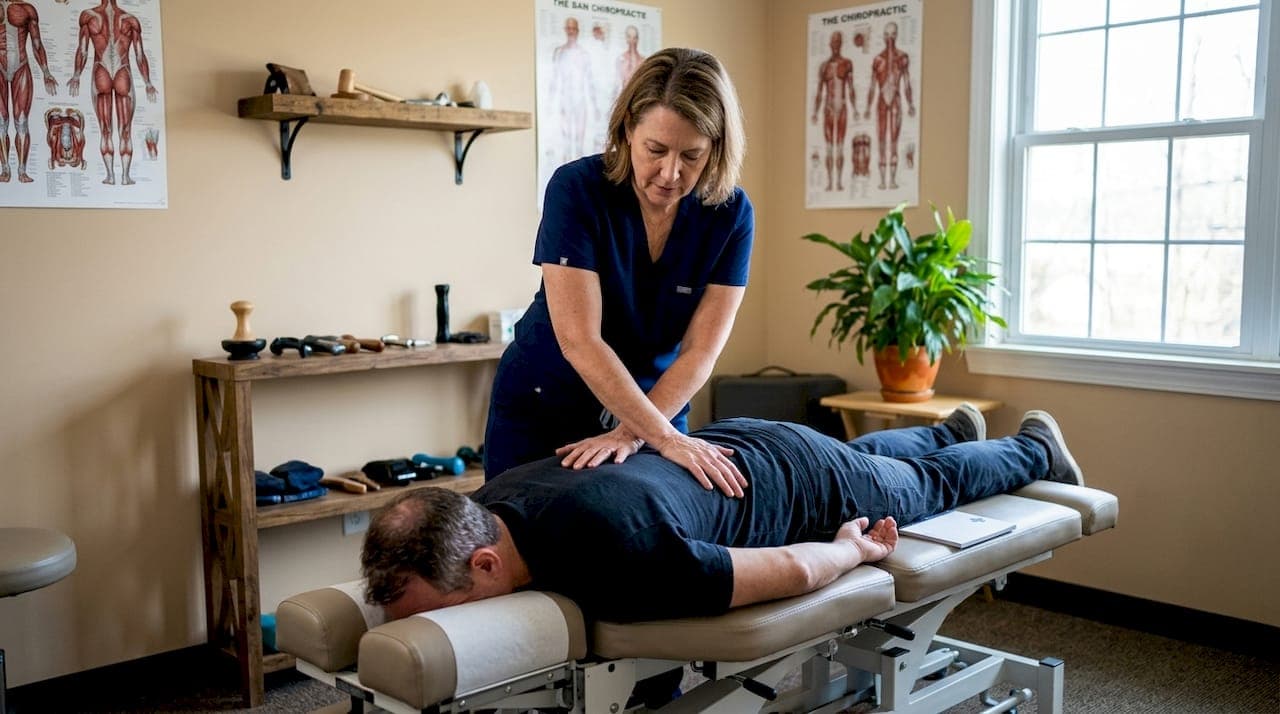
Chiropractic adjustment after a car accident is defined as a hands-on spinal manipulation technique that realigns displaced vertebrae, reduces nerve pressure, and restores joint mobility disrupted by crash forces. The clinical term is spinal manipulative therapy, or SMT, and it is the core treatment chiropractors use to address the muscle guarding and spinal misalignment a collision causes. Understanding why you adjust after a car accident starts with one fact: the body absorbs enormous force during even a low-speed crash, and that force shifts spinal structures in ways that do not resolve on their own. Trials like PACBACK and Cochrane reviews confirm that SMT produces measurable improvements in disability and function when applied correctly. The question is not whether to seek care. The question is how to use it well.
Why adjust after a car accident: what happens to your spine
A car crash sends a sudden, violent force through your body in fractions of a second. That force compresses discs, strains ligaments, and shifts vertebrae out of their normal position. The result is a condition chiropractors call subluxation, a partial misalignment of spinal joints that restricts movement and irritates surrounding nerves.
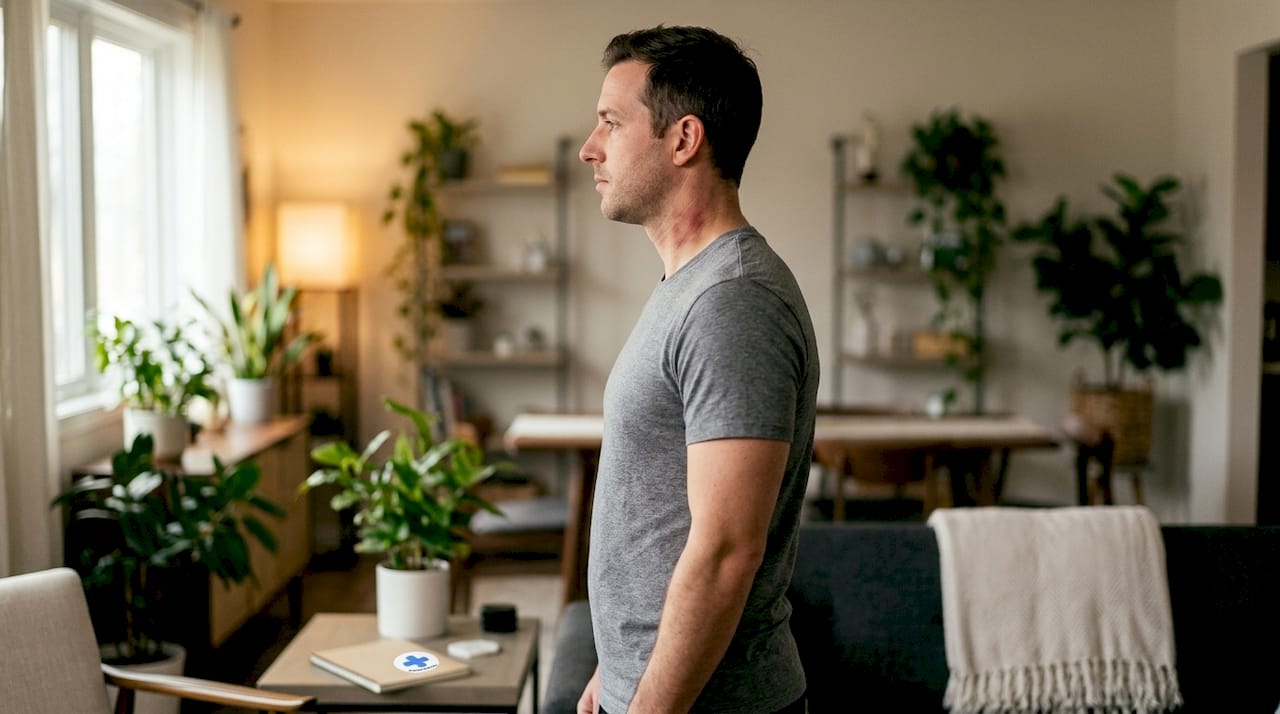
Your muscles respond to that irritation by tightening protectively. This is called muscle guarding, and while it is your body's short-term defense, it creates a cycle of stiffness and pain that worsens over time if left untreated. Spinal adjustments break that cycle by restoring normal joint position and range of motion.
The effects of a car crash on the body extend beyond the spine. Whiplash, the rapid back-and-forth snapping of the neck, is the most common auto injury. It strains the cervical vertebrae, tears small muscle fibers, and can cause headaches, dizziness, and arm numbness. Chiropractic adjustments for whiplash target the cervical spine directly, reducing compression and restoring the neck's natural curve.
- Subluxation correction: Adjustments reposition shifted vertebrae, reducing nerve irritation and pain signals.
- Muscle tension relief: Restoring joint alignment reduces the reflex muscle tightening that follows trauma.
- Improved circulation: Mobilizing stiff joints increases blood flow to injured soft tissue, speeding repair.
- Reduced inflammation: Proper spinal alignment decreases mechanical stress on inflamed discs and ligaments.
- Restored range of motion: Patients regain the ability to turn, bend, and move without sharp pain.
Pro Tip: Do not wait for pain to peak before seeing a chiropractor. Spinal misalignments are easier to correct in the acute phase, before scar tissue forms around the injury site.
What does research say about spinal manipulation after an accident?
The evidence on SMT is real but nuanced. The PACBACK randomized clinical trial found that adding spinal manipulation to supported self-management reduced disability significantly. Specifically, 65% of patients who received manipulation plus self-management achieved at least 50% disability reduction after 12 months, compared to 54% in medical care only. That is a meaningful gap in functional recovery.
The same trial found no statistically significant difference in pain intensity scores between groups. This is a critical distinction. Adjustments improve what you can do more reliably than they reduce how much something hurts on a numeric scale. Patients who understand this set more realistic expectations and stay committed to their full care plan.
A Cochrane review on chronic low back pain found that SMT produces small but significant short-term improvements in pain and function compared to no treatment, though evidence certainty is rated low to very low due to study design limitations. A separate meta-analysis of 26 randomized controlled trials with 6,070 participants showed medium improvements in functional status at one month. The pattern across studies is consistent: adjustments work, but they work best as part of a broader plan.
"The effectiveness of spinal manipulation varies greatly based on patient diagnosis, timing, concurrent therapies, and individual factors; ongoing adjustments should be part of a comprehensive care plan including education and home exercise." — PACBACK trial practitioner insights
| Factor | What research shows |
|---|---|
| Disability reduction | PACBACK: 65% of SMT + self-management patients hit ≥50% reduction vs. 54% with medical care only |
| Pain intensity | No statistically significant difference between SMT and medical care groups in acute/subacute cases |
| Chronic low back pain | Cochrane: small short-term pain relief and functional gains; evidence certainty is low |
| Functional status at 1 month | Meta-analysis of 26 RCTs: medium improvement vs. no treatment |
| Adverse events | Only 28% of SMT trials clearly report adverse event occurrence |
The safety profile of SMT is generally favorable. The most common side effect is transient muscle soreness, similar to what you feel after a hard workout. Serious adverse events are rare, but because harm reporting in SMT trials is inconsistent, patients should ask their chiropractor directly about what to expect.
How chiropractic care fits with other auto injury treatments
Chiropractic care is most effective when it sits inside a broader recovery plan, not when it stands alone. Early active care after whiplash leads to significantly faster return to full function compared to rest. Starting physiotherapy within 96 hours improves outcomes for Grade II whiplash injuries. That window matters.
Patients who rest excessively after a crash risk developing central sensitization, a process where the nervous system becomes hypersensitive and amplifies pain signals long after the original injury heals. Graded, early movement-based rehabilitation prevents this. Chiropractic adjustments support that movement by keeping the spine mobile and reducing the pain that would otherwise discourage activity.
Here is how to build a recovery plan that works:
- See a chiropractor within the first week. Early assessment identifies subluxations before muscle guarding becomes chronic. The sooner alignment is restored, the less scar tissue forms around the injury.
- Add physical therapy alongside adjustments. Physiotherapy builds the muscle strength that holds corrected spinal alignment in place. Adjustments without strengthening exercises often require more frequent visits.
- Follow a home exercise program. Your chiropractor or physical therapist should give you specific movements to do between appointments. Consistency with these exercises is the single biggest predictor of long-term recovery.
- Attend patient education sessions. Understanding your injury reduces fear-avoidance behavior, the tendency to stop moving because you fear making things worse. Education is a clinical tool, not a bonus.
- Schedule reassessment appointments. Recovery is not linear. Your care plan should change as your condition changes, with techniques shifting from gentle mobilization to more specific adjustments as your tolerance improves.
Pro Tip: Tell your chiropractor about every symptom, including headaches, jaw pain, and arm tingling. These can all trace back to cervical spine involvement and change the treatment approach significantly.
Comparing chiropractic care to physical therapy alone misses the point. The advantages of combining spinal adjustments with active rehabilitation are well-documented. Each approach targets a different part of the recovery process. Adjustments restore joint mechanics. Exercise rebuilds neuromuscular control. Education prevents relapse.
What to expect during chiropractic treatment after a car accident
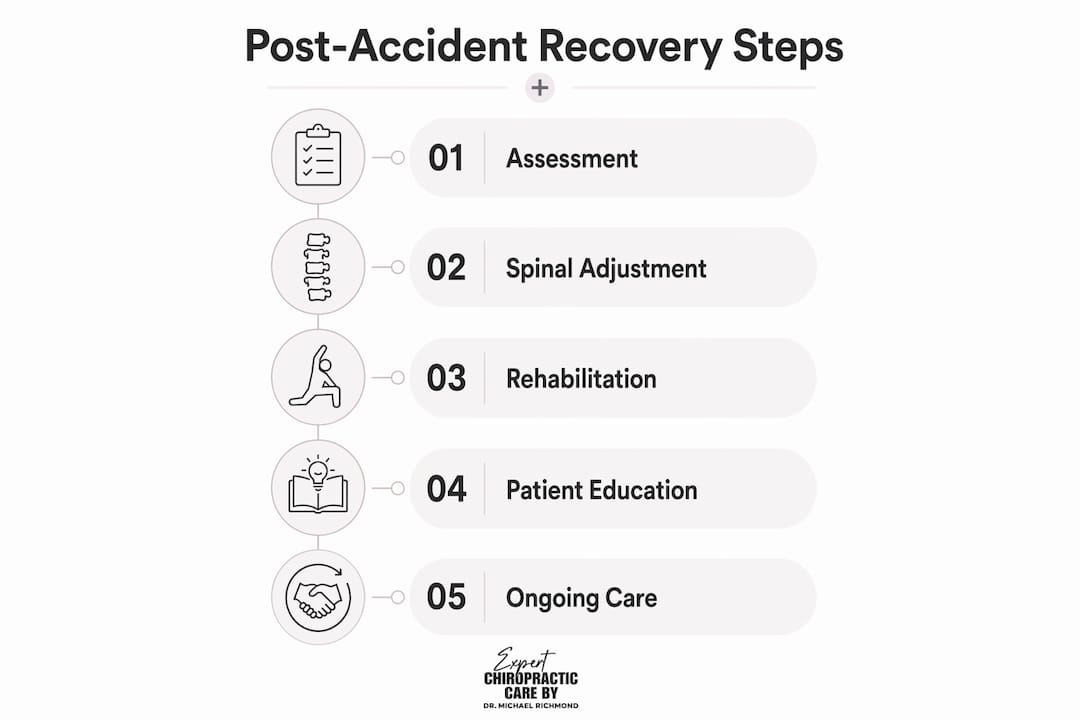
Your first visit is an assessment, not a treatment. A chiropractor screens for red flags including fractures, disc herniation, and vascular injury before touching the spine. X-rays or MRI may be ordered if the exam raises concerns. This step is non-negotiable and protects you.
Once cleared, treatment begins with gentle techniques. Initial chiropractic care after an accident focuses on soft tissue work and low-velocity mobilization. High-velocity thrust adjustments, the kind that produce the audible pop, are reserved for later visits when your body has adapted and your chiropractor has confirmed you can tolerate them safely.
- Visit 1–3: Soft tissue therapy, gentle joint mobilization, and patient education on posture and movement.
- Visit 4–8: Gradual introduction of specific spinal adjustments as inflammation decreases and tolerance increases.
- Visit 9 onward: Reassessment of progress, transition to maintenance care or discharge with a home program.
Treatment frequency depends on injury severity. Most acute post-accident cases require two to three visits per week for the first month, then taper as function improves. Ask your chiropractor for a written care plan with clear milestones. If progress stalls, that plan should change.
Patients should ask two questions at every visit: what changed since last time, and what is the goal for today. This keeps care purposeful and gives you a way to track whether the treatment is working.
Key Takeaways
Chiropractic adjustments after a car accident are most effective when combined with active rehabilitation, patient education, and consistent follow-up care.
| Point | Details |
|---|---|
| Adjustments restore joint mechanics | SMT corrects subluxations caused by crash forces, reducing nerve irritation and muscle guarding. |
| Disability improves more than pain scores | PACBACK trial shows 65% disability reduction with SMT plus self-management vs. 54% with medical care only. |
| Early care prevents chronic pain | Starting treatment within days of injury prevents central sensitization and long-term deconditioning. |
| Combined treatment outperforms adjustments alone | Pairing chiropractic care with physiotherapy and home exercise produces better long-term outcomes. |
| Ask about side effects upfront | Only 28% of SMT trials clearly report adverse events, so direct patient-provider discussion is necessary. |
What I've learned from watching patients recover after crashes
Patients who recover fastest share one habit: they treat chiropractic care as a starting point, not a finish line. They show up for their adjustments, but they also do their home exercises, attend their physical therapy sessions, and ask questions at every visit. The adjustment restores the mechanical foundation. Everything else builds on top of it.
The biggest misconception I see is that more adjustments automatically mean faster recovery. That is not how it works. The PACBACK trial showed clearly that supported self-management drives long-term disability reduction. The adjustment is the catalyst. The patient's active participation is the engine.
There is also a fear problem. Many patients avoid movement after a crash because they think rest equals healing. It does not. Excessive rest after whiplash accelerates deconditioning and increases the risk of chronic pain. The early movement approach is not aggressive. It is graded, supervised, and matched to what your body can handle that day.
My honest advice: find a chiropractor who gives you a written care plan, explains the research behind your treatment, and adjusts that plan based on your progress. If your provider cannot tell you why they are doing what they are doing, find one who can. You deserve care that is built on evidence, not habit.
— Spark
Sparkmed chiropractic care for post-accident recovery
Sparkmed specializes in chiropractic care for patients recovering from car accidents in North Miami. The clinic combines spinal adjustments with active rehabilitation support, giving patients a structured path from acute pain to full function.
Sparkmed offers a $25 chiropractic adjustment with no insurance required, removing the financial barrier that keeps many patients from getting care in the critical early window after a crash. The team works with patients in English, Spanish, and Creole, and appointments are available for same-week booking. Whether you are dealing with whiplash, back pain, or neck stiffness, Sparkmed builds a personalized care plan around your specific injury and recovery goals. Book your first appointment and start your recovery on solid ground.
FAQ
Why should you get adjusted after a car accident?
Chiropractic adjustments correct spinal misalignments caused by crash forces, reducing nerve pressure, muscle guarding, and pain. Early treatment prevents these acute injuries from developing into chronic conditions.
How soon after a car accident should you see a chiropractor?
Seeing a chiropractor within the first week is the standard recommendation. Starting physiotherapy or chiropractic care within 96 hours improves outcomes for Grade II whiplash injuries.
Are chiropractic adjustments safe after a car accident?
SMT is generally safe for post-accident patients who have been screened for fractures and vascular injury. The most common side effect is transient muscle soreness, and serious adverse events are rare.
Do adjustments alone fix car accident injuries?
Adjustments alone are not sufficient for full recovery. The PACBACK trial shows that combining spinal manipulation with supported self-management produces significantly better disability outcomes than either approach alone.
How many chiropractic visits do you need after a car accident?
Most acute post-accident cases require two to three visits per week for the first month, tapering as function improves. Your chiropractor should provide a written care plan with clear milestones and reassess your progress regularly.