

A chiropractic health hub is either a multidisciplinary clinic that centralizes chiropractic and related services under one roof, or an organizational body that connects practitioners, policy, and education at a national level. The term covers two distinct models, and knowing which one you're looking at changes everything about what you can expect.
- Clinic-level hub: A patient-facing facility where you receive spinal adjustments, physical rehabilitation, advanced modalities, and wellness care in a single location, often with a unified intake and billing process.
- Organization-level hub: A national coalition or resource network, such as the MAHA Chiropractic Hub, that focuses on federal policy advocacy, practitioner education, and expanding public access to chiropractic care. It does not treat patients directly.
- TL;DR: If you need hands-on care after an injury or for chronic pain, you want a clinic-level hub. If you're a practitioner looking for policy updates or research resources, an organizational hub is the right destination.
Table of Contents
- What does "chiropractic health hub" actually mean?
- What services do chiropractic hubs offer?
- What should you expect at your first visit?
- Who works in a chiropractic hub and what credentials matter?
- How does a chiropractic hub differ from a single-practitioner clinic?
- What does the evidence actually support?
- How do chiropractic hubs serve the broader community?
- What does care at a local hub actually look like?
- How do you choose a quality chiropractic health hub?
- Key Takeaways
- What the hub model gets right, and where patients should stay alert
- Sparkmed: hub-style care in North Miami, without the complexity
- Useful sources and suggested reading
What does "chiropractic health hub" actually mean?
The phrase gets used in two genuinely different ways, and confusing the two can lead a patient to contact an advocacy organization expecting to book an appointment.
A clinic-level hub is a chiropractic wellness facility built around integrated services. Think of it as a single administrative umbrella covering multiple disciplines: a Doctor of Chiropractic (DC) leads care, but the same location may also offer physical therapy, massage, decompression, and nutritional counseling. Some operate under one employer with shared billing; others are co-working arrangements where independent practitioners share space but bill separately. That distinction matters more than it sounds, because co-working hubs can produce fragmented billing and unclear clinical accountability.
An organization-level hub looks nothing like a clinic from the outside. The MAHA Chiropractic Hub, for example, is a national partnership working on Medicare modernization, research initiatives, and public education. It publishes resources and advocates for policy change. No adjustments happen there.
How to verify which type you're dealing with:
- Search the hub's name plus "book appointment" or "new patient intake."
- Check whether the site lists licensed practitioners with state license numbers.
- Look for a physical address with clinic hours, not just a contact form or member login.
- Call and ask directly: "Do you provide direct patient care?"
What services do chiropractic hubs offer?
A patient-facing chiropractic health center typically goes well beyond the single-adjustment model most people picture. Common services include:
- Spinal adjustments: Manual or instrument-assisted manipulation to restore joint mobility and reduce pain, most commonly used for lower back and neck complaints.
- Physical and functional rehabilitation: Guided exercise programs targeting strength, range of motion, and movement patterns disrupted by injury.
- Spinal decompression therapy: Motorized traction that gently separates vertebrae, often used for disc herniations and nerve compression.
- Shockwave and ultrasound therapy: Acoustic or sound-wave modalities that promote tissue healing in tendons, muscles, and chronic pain sites.
- Prenatal and pediatric care: Gentle, modified adjustments for pregnant patients (often using Webster technique) and age-appropriate care for children.
- Massage and myofascial release: Soft-tissue work that reduces muscle tension and supports adjustment outcomes.
- Nutritional counseling: Guidance on anti-inflammatory diets and supplementation to support recovery.
- Auto-accident care: Coordinated treatment for whiplash, soft-tissue injuries, and spinal trauma following collisions.
Many modern hubs also shift from crisis-only care toward wellness and maintenance programs designed to prevent recurrence rather than just manage acute symptoms.
Pro Tip: Before committing to advanced modalities like shockwave therapy, ask the clinic whether they follow published clinical guidelines for that treatment and whether they track patient outcomes. A hub that can point you to its clinical rationale is one worth trusting.
What should you expect at your first visit?
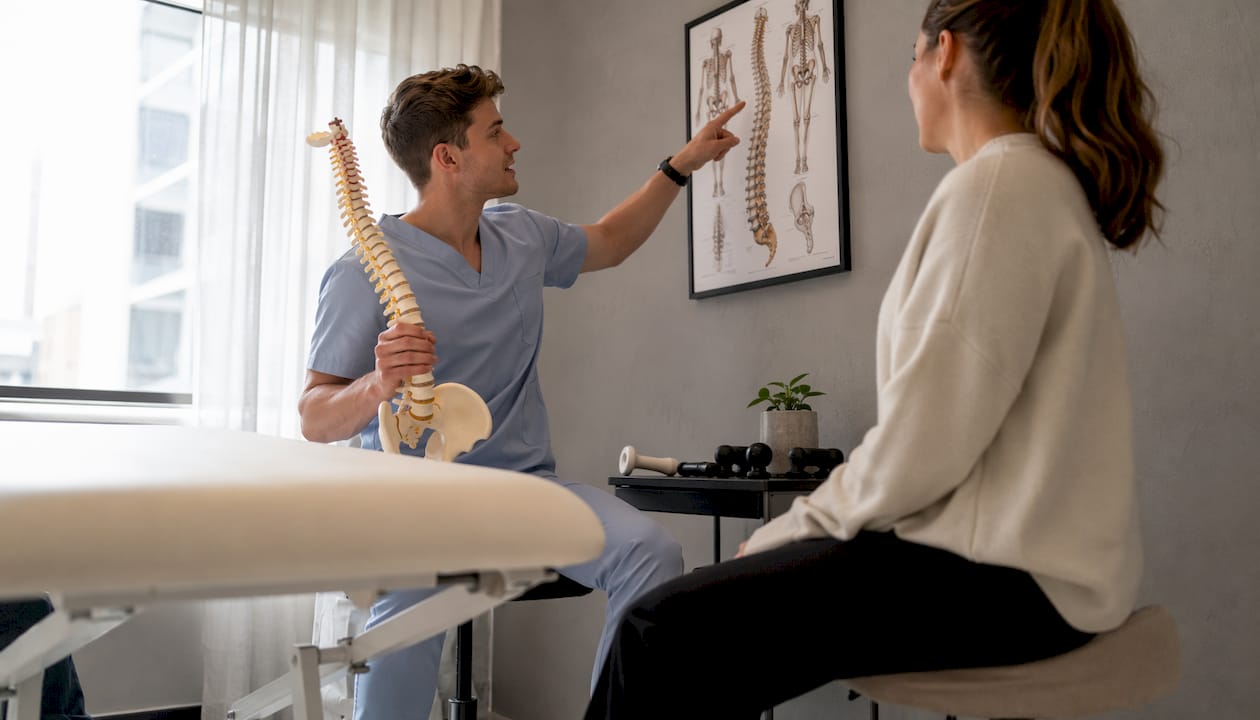
You should expect a systematic intake, clear assessment findings, and a written care roadmap before any series of gentle neck pain relief techniques for safe home care begins. Clinics that skip straight to treatment without explaining findings are worth questioning.
Typical visit flow:
- Initial consultation and health history: You describe your symptoms, injury history, and goals. A thorough intake covers prior imaging, medications, and any red-flag symptoms.
- Physical and functional assessment: The DC performs orthopedic and neurological tests, posture analysis, and range-of-motion measurements. Diagnostic imaging (X-ray or MRI) may be ordered when clinically indicated.
- Treatment recommendation and timeline: The provider explains findings in plain language, outlines a proposed care plan with a realistic timeline, and gives you a cost estimate before you agree to anything.
- Progress reviews: Quality hubs schedule formal reassessments, typically every four to six weeks, to measure objective improvement and adjust the plan.
Operational details worth confirming: online booking availability, evening or weekend hours, telehealth triage options for follow-up questions, and whether the clinic accepts your insurance or offers transparent cash-pay pricing.
Questions to ask at your first visit:
- What specific findings support this treatment recommendation?
- How will we measure whether I'm improving?
- What is the total estimated cost, and how is billing handled?
- Under what circumstances would you refer me to another specialist?
- What can I do at home to support my recovery between visits?
Who works in a chiropractic hub and what credentials matter?
The team composition is one of the clearest signals of a hub's quality. A well-staffed chiropractic care clinic typically includes:
- Doctor of Chiropractic (DC): The primary clinician, holding a four-year postgraduate degree and a state license. Verify the license number through your state's licensing board.
- Licensed Physical Therapist (PT): A state-licensed clinician who designs and supervises rehabilitation programs. PT collaboration is a strong indicator of evidence-informed practice.
- Licensed Massage Therapist (LMT): Provides soft-tissue work under the clinical umbrella; licensure requirements vary by state.
- Rehabilitation technicians: Support supervised exercise programs; look for certified personal trainers or exercise physiologists in this role.
- Administrative and billing staff: In a unified hub, these staff coordinate insurance claims and scheduling across all disciplines.
Certifications worth looking for: the Webster Certification from the International Chiropractic Pediatric Association for prenatal care, board specialty certifications from the American Chiropractic Board of Radiology or similar bodies, and completion of continuing education in specific modalities.
When a hub refers you to an MD, neurologist, or orthopedic surgeon, that's a sign of appropriate clinical judgment, not a limitation. Personalized care means knowing when chiropractic is the right tool and when it isn't.
How does a chiropractic hub differ from a single-practitioner clinic?
The structural differences are practical, not just organizational.
| Feature | Multidisciplinary hub | Co-working hub | Single-practitioner clinic |
|---|---|---|---|
| Administration | Unified intake and records | Separate per practitioner | Single provider |
| Billing | Centralized or coordinated | Independent per provider | Single billing entity |
| Service range | Broad (PT, massage, modalities) | Varies by tenants | Limited to DC scope |
| Care coordination | Built-in referral pathways | Informal or absent | Relies on external referrals |
| Patient experience | Streamlined, one-stop | Can feel fragmented | Consistent but narrow |
Advantages of a hub model:
- Access to multiple disciplines without leaving the building.
- Faster internal referrals when your case needs more than one type of care.
- Broader clinical perspective on complex cases.
Trade-offs to watch for:
- Co-working hubs can produce separate bills from each provider, which surprises patients expecting a single invoice.
- Variable standards between independent practitioners sharing space.
- Larger facilities can feel less personal than a solo practice.
What does the evidence actually support?
Spinal manipulation has solid evidence for specific musculoskeletal conditions: lower back pain, neck pain, and cervicogenic headaches. For those conditions, chiropractic care is recognized in clinical literature as an evidence-informed conservative treatment. For non-musculoskeletal conditions, including systemic diseases, the evidence base is thin to nonexistent.
Know the limits before you start care. Chiropractic care is well-supported for lower back pain, neck pain, and cervicogenic headaches. It is not supported as a treatment for high blood pressure, immune dysfunction, or organ-based disease. Any provider who claims otherwise is overpromising. A trustworthy hub will tell you exactly what chiropractic can and cannot do for your specific condition, and will refer you out when your needs exceed its scope.
Red flags that require medical referral, not chiropractic care:
- Progressive neurological deficits (worsening weakness, numbness, or loss of bladder/bowel control).
- Unexplained weight loss combined with spine pain.
- Fever alongside musculoskeletal symptoms.
- Severe trauma with possible fracture.
- Pain that is constant, unrelenting, and unaffected by position.
Watch for overpromises in marketing language: claims that chiropractic "cures" conditions beyond the musculoskeletal system, pressure to sign long-term prepaid contracts before assessment, or refusal to share clinical rationale for a recommended treatment plan. Signs of evidence-informed practice include transparent outcome tracking, written clinical rationale, and willingness to coordinate with your primary care physician.
How do chiropractic hubs serve the broader community?
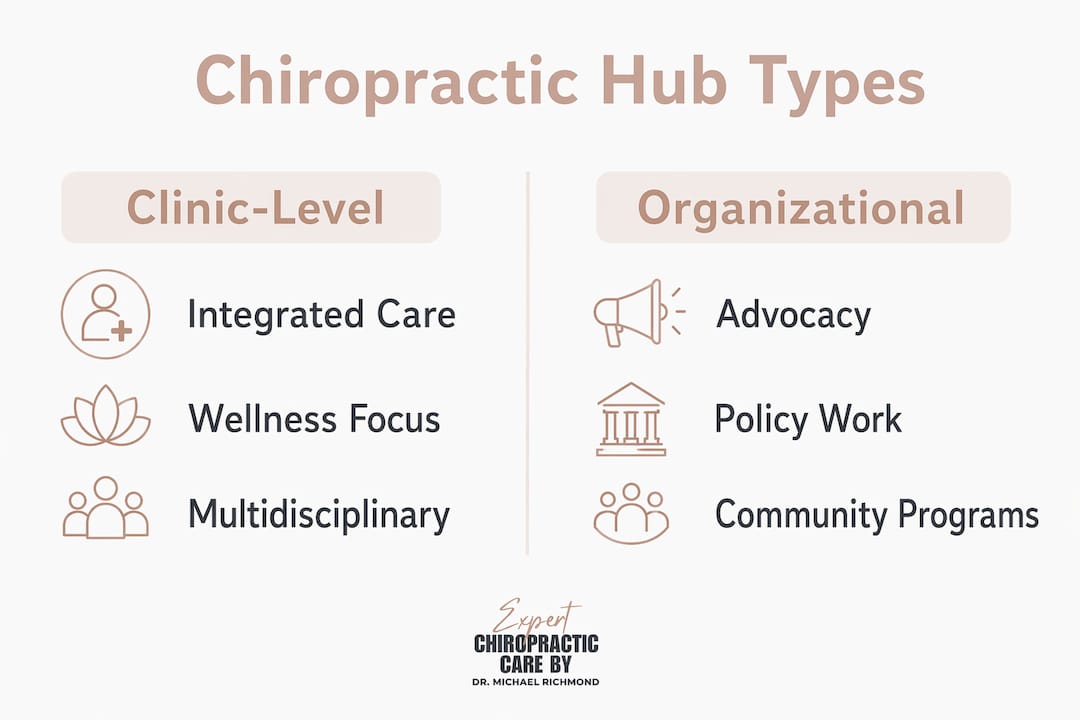
Beyond individual patient care, many chiropractic hubs run programs that extend their reach into the community. These can include injury-prevention workshops, ergonomics seminars for local employers, outreach to veterans and senior populations, and school partnerships focused on posture and backpack safety.
At the national level, organizational hubs like the MAHA Chiropractic Hub work on policy goals that affect every patient who uses chiropractic care. MAHA's work includes advocating for Medicare modernization to expand coverage of conservative care, building research partnerships, and developing public education materials that clinics can use directly with patients.
Mobile health clinics and hub-style community services have demonstrated the ability to improve individual health outcomes and reduce healthcare costs in underserved populations. That same logic applies to fixed-location community hubs that prioritize access, multilingual support, and flexible scheduling.
One honest limitation: community care hubs can face gaps in access to full patient health records and inconsistent data collection across programs, which can affect continuity of care. A hub that actively coordinates with your primary care provider and maintains thorough records addresses this directly.
What does care at a local hub actually look like?
Consider a patient who walks in after a rear-end collision. At a quality hub, the visit starts with a detailed intake covering the accident mechanics, symptom onset, and any prior imaging. The DC performs an orthopedic and neurological assessment, orders X-rays if clinically indicated, and explains the findings before recommending anything.

The care roadmap might include spinal adjustments for cervical and lumbar involvement, ultrasound therapy for soft-tissue inflammation, and a functional rehab program to restore strength and stability. If the patient's symptoms suggest nerve involvement beyond the DC's scope, a referral to a neurologist is initiated from within the hub. Follow-up is scheduled at defined intervals with objective outcome measures tracked at each visit.
Features that signal a high-quality hub:
- Transparent, written pricing before treatment begins.
- Multilingual staff or materials for non-English-speaking patients.
- Accessible scheduling, including early morning or evening slots.
- Clear referral pathways to medical specialists when needed.
- Evidence-informed treatment protocols with documented outcomes.
At Sparkmed in North Miami, patients recovering from car accidents receive exactly this kind of structured, transparent care, including advanced modalities like shockwave and ultrasound therapy, multilingual support in English, Spanish, and Creole, and Uber Health transport assistance for patients who need it.
How do you choose a quality chiropractic health hub?
Prioritize evidence-informed care, transparent costs, and verifiable credentials. Everything else is secondary.
Evaluation checklist:
- Services offered match your specific needs (accident recovery, chronic pain, prenatal care, etc.).
- All practitioners hold current state licenses, verifiable through your state licensing board.
- The clinic provides written cost estimates and explains insurance versus cash-pay options before treatment starts.
- Staff can explain the clinical rationale for recommended treatments in plain language.
- The hub tracks and shares objective outcome measures (range of motion, pain scores, functional tests).
- Scheduling is accessible: hours, languages spoken, and telehealth or phone triage options.
- References or verified patient reviews are available.
Top questions to ask before committing:
- Are all practitioners independently licensed and in good standing with the state board?
- Will I receive a written treatment plan and cost estimate before my first treatment?
- How do you handle cases that fall outside chiropractic scope?
- Do you coordinate with my primary care physician or other specialists?
- What outcome measures do you use to track my progress?
Quick red-flag summary: Walk away from any hub that pressures you to prepay for a long package before assessment, refuses to explain clinical findings, uses marketing language promising cures for systemic conditions, or cannot tell you who is clinically responsible for your care.
Key Takeaways
A chiropractic health hub is either a multidisciplinary patient-facing clinic or a national advocacy organization, and knowing which type you're contacting determines whether you can book care or access policy resources.
| Point | Details |
|---|---|
| Two distinct hub types | Clinic-level hubs treat patients directly; organizational hubs like MAHA focus on policy and education. |
| Core services | Quality hubs offer adjustments, rehab, decompression, advanced modalities, and wellness plans beyond basic care. |
| Evidence scope | Chiropractic has strong evidence for lower back pain, neck pain, and cervicogenic headaches, not systemic conditions. |
| Red flags to avoid | Prepaid long-term contracts before assessment, systemic cure claims, and unclear billing are warning signs. |
| Sparkmed in North Miami | Sparkmed offers hub-style accident recovery and musculoskeletal care with transparent pricing and multilingual support. |
What the hub model gets right, and where patients should stay alert
The shift toward multidisciplinary chiropractic care is genuinely good for patients. Consolidating adjustments, rehab, and advanced modalities under one roof reduces the coordination burden on the patient and speeds up recovery timelines. That's not marketing language; it reflects how integrated care models actually work.
What concerns me is the co-working hub model that markets itself as multidisciplinary without the clinical infrastructure to back it up. Shared space is not the same as shared clinical governance. A patient who assumes their care is coordinated, when in reality three independent practitioners are each billing separately with no shared records, is set up for confusion and gaps. Ask the question directly: "Is there a single clinical lead responsible for my overall care plan?"
The organizational hub model, meanwhile, does real work that patients benefit from indirectly. MAHA's policy advocacy for Medicare coverage of conservative care, for instance, has direct implications for what treatments patients can access affordably. Knowing that distinction helps you use both types of hub appropriately.
Sparkmed: hub-style care in North Miami, without the complexity
Sparkmed brings the core advantages of a chiropractic health center to North Miami patients who need structured, transparent care after accidents, work injuries, or slip-and-fall events. You get spinal adjustments, shockwave therapy, ultrasound, functional rehab, and wellness planning in one location, with pricing that is stated upfront and does not require insurance to access.
Appointments are available in English, Spanish, and Creole. Sparkmed also offers Uber Health transport for patients who need help getting to the clinic. The $25 adjustment offer makes it practical to start care without the financial barrier that delays recovery for many accident victims.
To book a visit or learn more about what to bring to your first appointment, visit Sparkmed's patient resources or call the clinic directly. Bring any prior imaging, your insurance card if applicable, and a list of current medications. The first step is a conversation, not a commitment.
Useful sources and suggested reading
Primary sources used in this article:
- MAHA Chiropractic Hub: National advocacy and policy hub for chiropractic access and Medicare modernization.
- PubMed: Spinal manipulation for low back pain: Peer-reviewed clinical literature on the evidence base for chiropractic treatment.
- PMC: Mobile health clinics and community hub models: Research on how hub-style services improve population health outcomes.
- NCBI: Community Care Hubs: Overview of hub model trade-offs, including information gaps and referral limitations.
- Medical News Today: Benefits of chiropractic adjustment: Plain-language summary of the clinical evidence for and against chiropractic care.
Suggested search terms to go deeper:
- "chiropractic hub near me" to find patient-facing clinics in your area.
- "chiropractic multidisciplinary clinic [your city]" to identify integrated care facilities locally.
- "MAHA Chiropractic Hub policy" to follow federal advocacy efforts affecting chiropractic coverage.
This article is general information, not medical advice. Confirm current clinical guidelines and treatment options with a licensed healthcare provider for your specific situation.