

Personalized care is defined as a healthcare model that tailors treatment to each individual's unique medical history, lifestyle, goals, and personal circumstances rather than applying a single standard protocol to every patient. The industry term for this approach is patient-centered care, and both phrases describe the same core shift: asking "What matters to you?" before deciding what to do. This guide explains what personalized care means in practice, how a personalized care plan is built, and why it produces better outcomes than generic treatment, with a close look at chiropractic care as a real-world example.
What is personalized care and why does it matter?
Personalized care replaces the one-size-fits-all model by building treatment around a person's full profile, including their medical history, lifestyle habits, genetics, and personal goals. The Salesforce healthcare framework describes this as prioritizing "What matters to you?" over symptom-only diagnosis. That shift changes everything about how care is delivered.
Generic care treats a diagnosis. Personalized care treats a person. A 45-year-old office worker with lower back pain and a 22-year-old athlete with the same diagnosis need different interventions, different timelines, and different goals. Applying the same protocol to both produces mediocre results for each.
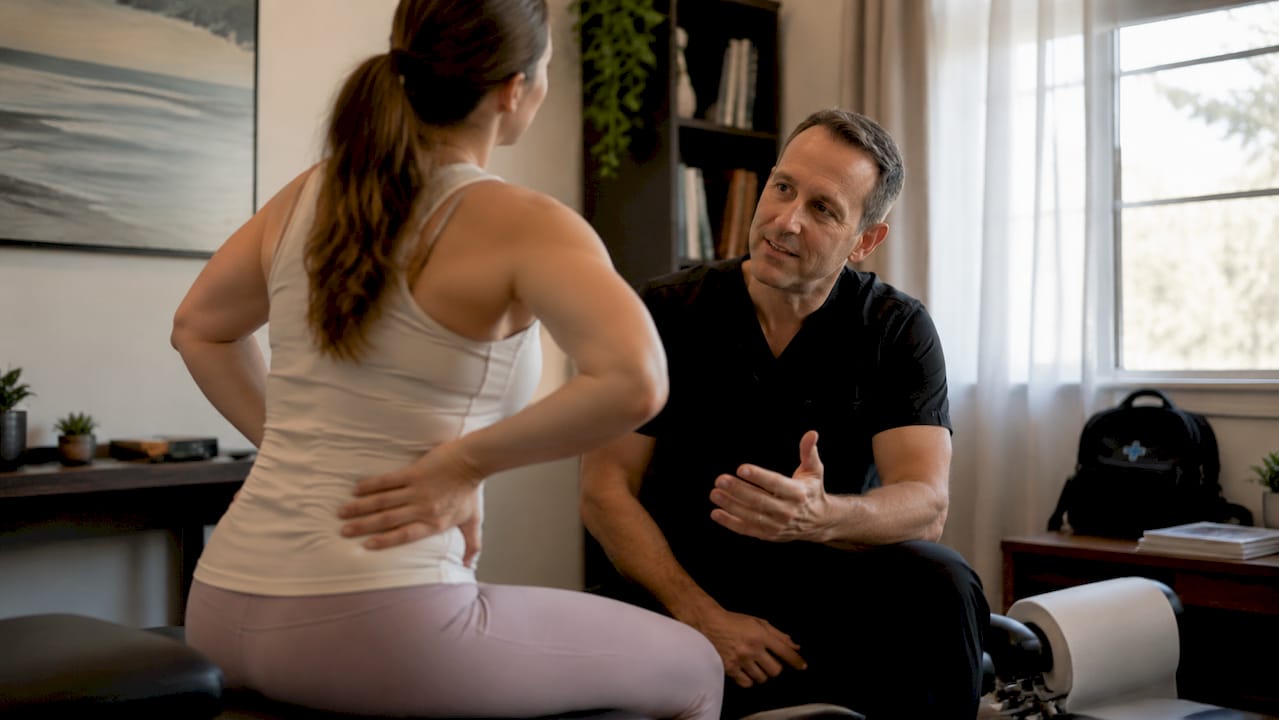
The scope of patient-centered care is broader than most people expect. NHS standards confirm that patients have the right to request care plans that address total well-being, not just the presenting condition. That includes preventive health, mental well-being, and social context, not only acute illness or injury.
How is a personalized care plan structured?
A personalized care plan is a collaborative roadmap built jointly by the patient and the clinical team. It integrates objective medical assessments with the patient's own preferences, goals, and lifestyle realities. The plan is not a static document. NHS standards describe it as a living document updated regularly to reflect patient progress, typically reviewed every 4–8 weeks.
A well-built care plan covers several core components:
- Current health status: Baseline assessments including physical function, pain levels, and relevant medical history
- Patient goals: What the patient wants to achieve, whether that is returning to sport, reducing medication, or improving daily mobility
- Agreed interventions: Specific treatments, exercises, or lifestyle changes with clear timelines
- Responsibilities: Who does what, including both the clinician's role and the patient's commitments
- Review schedule: Defined checkpoints to assess progress and adjust the plan
The plan is shared across the care team, including any specialists, primary care providers, and caregivers involved. That coordination reduces errors and prevents patients from receiving conflicting advice from different providers. A coordinated plan reduces errors and improves efficiency across care settings.
| Plan Component | Purpose |
|---|---|
| Health baseline | Establishes starting point for measuring progress |
| Patient goals | Aligns treatment with what the patient actually values |
| Agreed interventions | Defines specific, time-bound actions for both parties |
| Review schedule | Keeps the plan current as the patient's condition changes |
| Shared access | Ensures all providers work from the same information |
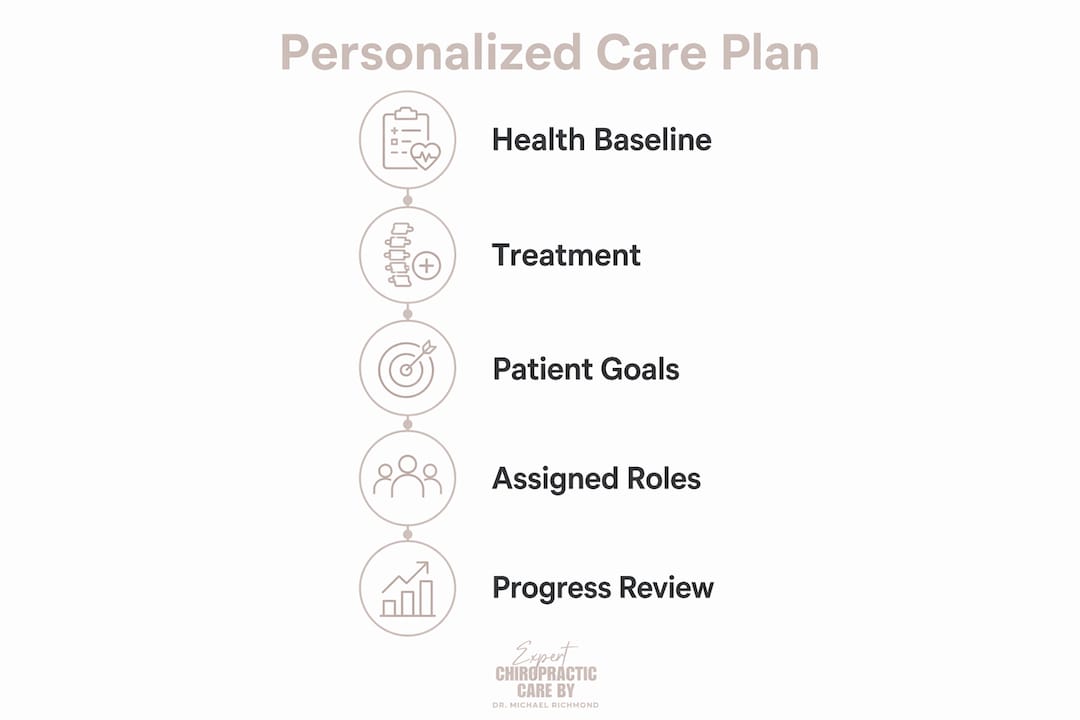
Pro Tip: Bring a written list of your personal goals and daily functional challenges to your first consultation. Clinicians who practice patient-centered care will use that list directly when building your plan.
How does personalized care work in chiropractic treatment?
Chiropractic care is one of the clearest examples of patient-centered care in action. Every patient presents with a different combination of pain location, movement restrictions, lifestyle factors, and recovery goals. A comprehensive functional assessment at the start of care captures that full picture before any treatment begins.
From that assessment, the chiropractor builds a tailored intervention plan. That plan may include:
- Spinal adjustments calibrated to the patient's specific joint restrictions
- Posture correction protocols based on the patient's daily work posture and movement patterns
- Rehabilitation exercises targeting the muscle groups most relevant to the patient's condition
- Activity modifications that fit the patient's actual schedule and physical capacity
Tailored spinal adjustments, posture correction, and rehabilitation exercises correlate with higher patient satisfaction and better musculoskeletal health outcomes compared to standardized protocols. The reason is straightforward: treatment that fits the person works better than treatment that fits the diagnosis category.
The plan also evolves. A chiropractor practicing patient-centered care collects feedback at every visit and adjusts the approach based on what is and is not working. Patients recovering from car accident injuries, for example, often need their plans revised as acute inflammation resolves and functional rehabilitation becomes the priority. Sparkmed builds this kind of adaptive chiropractic plan for each patient from the first visit.
Pro Tip: Tell your chiropractor exactly what daily activities are still painful or limited. That specific feedback is what drives meaningful plan adjustments, not just a general pain score.
How does personalized care differ from precision medicine?
Personalized care and precision medicine are related but distinct concepts. Precision medicine groups patients by molecular markers, genetic data, or biomarkers to select treatments most likely to work for that biological subgroup. Personalized care is broader and more human-centered, encompassing a person's beliefs, social context, lifestyle, and mental health alongside any clinical data.
The practical difference matters. Precision medicine asks: "Which drug works best for patients with this genetic profile?" Personalized care asks: "What does this specific person need to reach their health goals, given everything about their life?" The two approaches can complement each other, but they are not the same thing.
A common misconception is that personalized care applies only to serious or complex diseases. Health experts actively correct this misconception, noting that patient-centered care is equally vital for preventive wellness, mental health support, and routine musculoskeletal conditions. A person managing chronic back pain or recovering from a minor car accident deserves the same individualized attention as a patient with a complex diagnosis.
Standard care, by contrast, follows clinical guidelines designed for the average patient. Guidelines are useful starting points, but they do not account for the individual variation that determines whether a treatment actually works for a specific person.
How can you actively shape your own care plan?
Active patient participation is not optional in personalized care. It is the mechanism that makes the plan work. Research confirms that active patient involvement produces better-tailored plans that go beyond symptom management to address the patient's full life context.
Here is how to engage effectively at each stage:
- Before your first appointment: Write down your top three health goals, your daily routine, and any activities that are currently limited by your condition. Bring this to the consultation.
- During the assessment: Share your lifestyle context, including your work setup, sleep quality, stress levels, and any previous treatments. These details shape the plan directly.
- Between sessions: Follow the prescribed exercises, stretches, and activity modifications. Neglecting personalized lifestyle recommendations often leads to stagnation even when in-clinic treatment is high quality.
- At each follow-up: Report what has improved, what has not, and what new symptoms or functional changes have appeared. This feedback drives plan adjustments.
- At review appointments: Ask whether the plan still matches your current goals. Goals change as recovery progresses, and the plan should change with them.
The patient's role in co-creating the care plan is not a formality. Clinicians who practice patient-centered care rely on patient-reported goals and challenges to build plans that are actually relevant to the person's life. A plan built without that input is generic by definition.
Pro Tip: Keep a simple daily log of your pain levels and functional limitations between appointments. A one-week log gives your clinician far more useful data than a verbal summary from memory.
Key Takeaways
Personalized care produces better outcomes than standard protocols because it treats the whole person, not just the diagnosis.
| Point | Details |
|---|---|
| Definition of personalized care | Treatment is built around the individual's history, goals, lifestyle, and preferences, not a generic protocol. |
| Care plan as a living document | Plans are reviewed every 4–8 weeks and updated based on patient progress and feedback. |
| Chiropractic application | Tailored spinal adjustments and rehabilitation exercises improve satisfaction and musculoskeletal outcomes. |
| Difference from precision medicine | Personalized care addresses human context and lifestyle; precision medicine focuses on genetic or molecular data. |
| Patient participation is critical | Active involvement in goal-setting and adherence to prescribed lifestyle changes directly determines results. |
Why I think most patients underestimate their role in personalized care
Most patients arrive at a clinic expecting the clinician to do everything. That expectation is understandable, but it misses half of what makes patient-centered care work. The clinical side, the assessments, the adjustments, the treatment protocols, is only as good as the information the patient brings to it.
What I have seen consistently is that patients who treat their care plan as a passive prescription get slower results. Patients who treat it as a shared project, who bring specific goals, report honest feedback, and actually do the prescribed exercises at home, recover faster and more completely. The research on person-centered care in chiropractic frames this as a justice-oriented, evidence-informed relational process. That language is academic, but the practical meaning is simple: both parties have to show up.
The other thing worth saying directly is that personalized care is not a premium service reserved for complex cases. It is the standard of care that every patient deserves, whether they are managing a minor strain or recovering from a serious accident. The role of individualized chiropractic care in pain management is well-documented, and the barrier to accessing it is lower than most people think.
The hardest part of personalized care is consistency. A plan that is perfectly designed but inconsistently followed does not work. That is not a criticism of patients. It is a design challenge for clinicians, who need to build plans that are realistic enough to actually follow. When the plan fits the person's real life, adherence goes up. That is the whole point.
— Spark
Sparkmed's approach to tailored chiropractic care
Sparkmed, based in North Miami, builds individualized chiropractic care plans for every patient from the first visit. Each plan starts with a thorough assessment of the patient's physical condition, daily routine, and recovery goals, whether they are managing post-accident injuries or addressing chronic musculoskeletal pain.
Sparkmed's $25 chiropractic adjustment offer gives new patients an accessible entry point to experience patient-centered care without requiring insurance. The clinic's commitment to accessible care means that personalized treatment is available to patients across North Miami regardless of their background or coverage status. Services are available in English, Spanish, and Creole. Book an appointment directly through the Sparkmed website to start building a care plan built around your specific needs.
FAQ
What is personalized care in simple terms?
Personalized care is a healthcare approach that tailors treatment to each individual's unique health history, goals, lifestyle, and preferences rather than applying a standard protocol to every patient.
What does a personalized care plan include?
A personalized care plan includes a health baseline, agreed treatment interventions, patient goals, assigned responsibilities, and a regular review schedule. NHS standards describe it as a living document updated every 4–8 weeks.
What is personalized care in chiropractic?
Personalized care in chiropractic means building a treatment plan around each patient's specific physical assessment, functional limitations, and recovery goals, including tailored spinal adjustments, rehabilitation exercises, and posture correction.
How is personalized care different from standard care?
Standard care follows clinical guidelines designed for the average patient. Personalized care adapts those guidelines to the individual's specific circumstances, goals, and lifestyle, producing better-fitted and more effective treatment.
Can personalized care help with car accident recovery?
Personalized care is particularly effective for car accident recovery because injuries vary widely between patients. A tailored plan addresses the specific tissues affected, the patient's functional goals, and the recovery timeline relevant to their condition.