
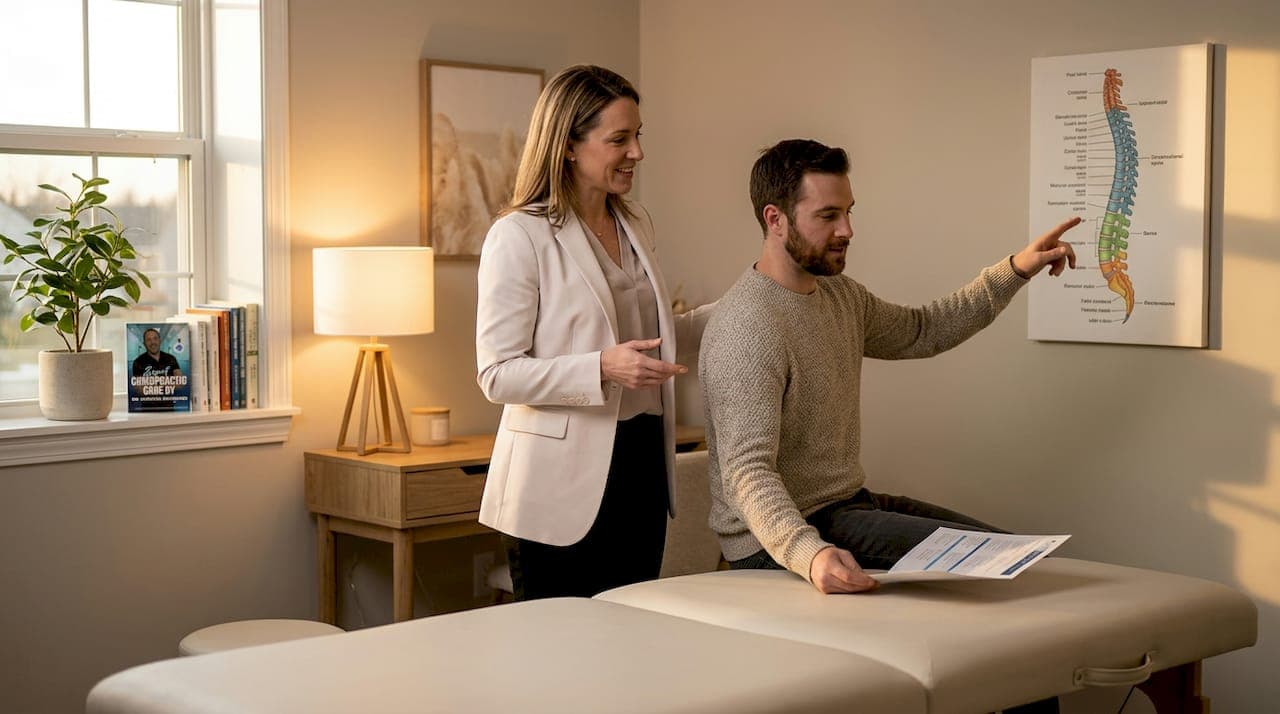
If you've heard the term "wellness adjustment" and wondered what it actually means, you're not alone. What is a wellness adjustment, exactly? In chiropractic care, this phrase refers to spinal or joint manipulation, which is the formal clinical term, delivered with a specific goal: restoring normal movement, reducing pain, and supporting your body's ability to function better. Over 35 million Americans receive these adjustments every year for issues ranging from neck stiffness to chronic low back pain. The catch is that adjustments work best as one part of a bigger plan, not as a standalone fix.
Table of Contents
- Key takeaways
- What a wellness adjustment actually involves
- What the research actually says about benefits
- Wellness adjustments and health: the bigger picture
- What to expect during a wellness adjustment session
- My take on what wellness adjustments can and can't do
- Explore chiropractic wellness at Sparkmed
- FAQ
Key takeaways
| Point | Details |
|---|---|
| Wellness adjustment defined | It's a chiropractic spinal or joint manipulation designed to restore movement and reduce pain. |
| Research-backed but limited | Evidence shows modest short-term pain relief; combining adjustments with self-management produces the best results. |
| Safety profile is strong | Mild muscle soreness is the most common side effect; serious complications are rare in large clinical reviews. |
| Technique matters | Chiropractors use multiple methods including manipulation, mobilization, massage, and rehab tailored to each patient. |
| Integration is the key | Adjustments paired with exercise, ergonomic advice, and lifestyle changes outperform adjustments used alone. |
What a wellness adjustment actually involves
Spinal manipulative therapy (SMT) is the clinical term you'll hear most often in research settings. At its core, chiropractors apply controlled force to specific joints in your spine or extremities to restore motion that's been restricted, irritated, or misaligned. The goal isn't cracking bones for the sake of it. That popping sound you sometimes hear is just gas releasing from the joint space, called cavitation, a completely normal mechanical event.
What are wellness adjustments beyond that single maneuver? They're typically part of a broader visit that might include several components:
- Spinal manipulation: High-velocity, low-amplitude thrust applied to a specific joint to restore range of motion
- Mobilization: Slower, gentler movements that guide a joint through its natural range without a thrust
- Soft tissue therapy: Massage or myofascial release to address muscle tension around the treated area
- Rehabilitative exercises: Targeted movements prescribed to reinforce the gains from the adjustment
- Adjunct therapies: Heat, cold, electrical stimulation, or acupuncture depending on the patient's condition
Individualized care plans are standard practice at quality clinics. A person recovering from a car accident needs a different approach than someone managing a desk-job posture problem. Your chiropractor should assess your history, current symptoms, and functional goals before deciding which techniques to use and in what combination.
Pro Tip: Ask your chiropractor to explain which specific technique they're using during each visit and why. Understanding the reasoning behind your treatment makes you a more engaged patient and improves how well you follow through with recommendations.
What the research actually says about benefits
This is where the conversation gets more nuanced, and more honest. The benefits of wellness adjustments are real, but they're not unlimited.
A major Cochrane 2026 review of 76 studies covering nearly 12,000 people found that spinal manipulative therapy produces short-term improvements in both pain and physical function for people with chronic low back pain compared to sham treatments. The effect sizes are modest, but they're clinically meaningful for people dealing with daily discomfort.
| Outcome | Effect vs. sham treatment | Clinical meaning |
|---|---|---|
| Pain reduction | Mean difference of −4.16 | Noticeable short-term relief |
| Functional improvement | SMD of −0.22 | Modest gain in daily activities |
| Serious adverse events | None observed | Strong safety profile in large reviews |
| Mild side effects | Muscle soreness, temporary pain | Usually resolves within 24 to 48 hours |
The PACBACK randomized trial, one of the largest studies of its kind with 1,000 participants published in JAMA in 2026, added an important layer to this picture. It found that clinician-supported self-management produced modest disability reductions, while spinal manipulation alone did not significantly outperform standard medical care over 12 months.
"The biggest benefits come from combining spinal manipulation with active self-management strategies rather than relying on adjustments alone." — PACBACK Trial, JAMA 2026
That finding shouldn't discourage you from getting adjusted. It should change how you think about your role in recovery. Adjustments open a window of opportunity where your joints move better and pain is reduced. What you do in that window, meaning the exercise, the posture work, the lifestyle changes, determines how much that relief sticks.
Wellness adjustments and health: the bigger picture
Thinking of a wellness adjustment as a one-time event misses the point entirely. These treatments earn their value when placed inside a broader health strategy.
Chiropractic care improves nervous system communication by restoring proper spinal motion, which influences how pain signals are processed. That's why patients often notice improvements not just in back pain but in sleep quality, headache frequency, and energy levels after a consistent course of care. The spine and nervous system are deeply connected, and restricting one affects the other.
The conditions that respond best to this integrated approach include:
- Chronic low back pain: The most studied application, with consistent evidence for short-term relief
- Neck pain and stiffness: Particularly after whiplash injuries or prolonged poor posture
- Tension headaches: Often linked to cervical spine restriction and muscle tension
- Post-accident recovery: Soft tissue injuries from collisions benefit from early mobilization and adjusted joint mechanics
- Repetitive strain conditions: Shoulder, hip, and knee issues related to biomechanical imbalances
Beyond pain relief, spinal adjustments support tissue health by reducing joint irritation and encouraging natural posture correction. Over time, this can reduce the risk of recurrence, not just treat the current episode.
Pro Tip: If your chiropractor hasn't asked about your workstation setup, daily movement habits, or sleep position, bring it up yourself. Ergonomic changes between sessions often produce more lasting improvement than the adjustments alone.
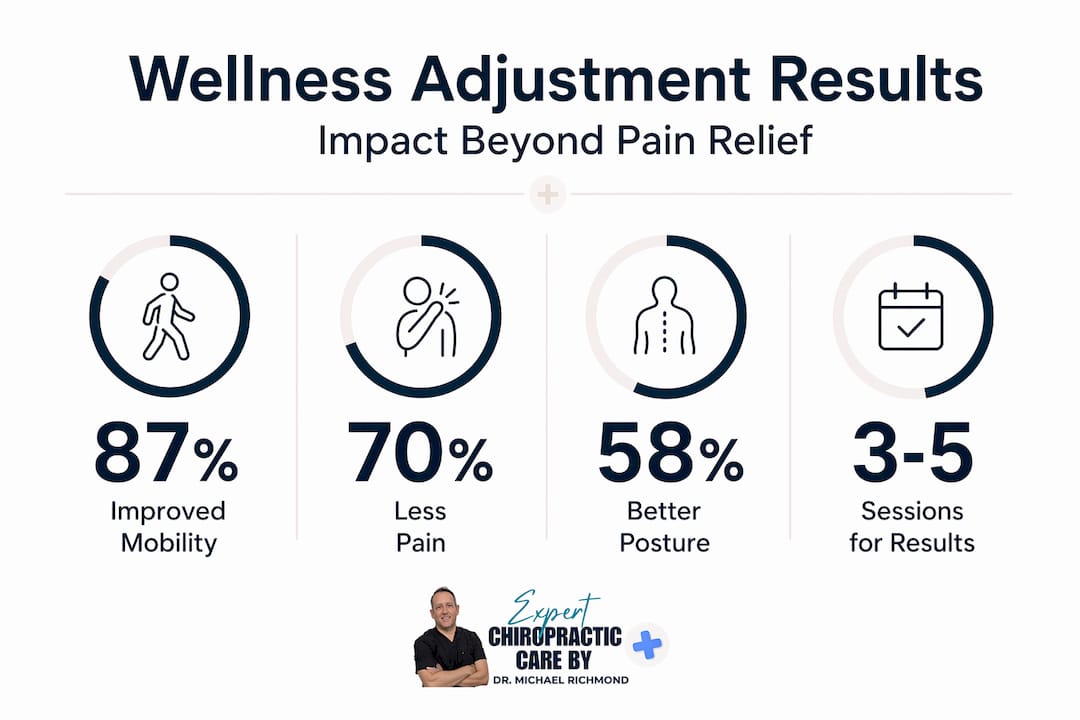
The long-term wellness benefits of regular chiropractic checkups go beyond treating flare-ups. Many patients use periodic visits as a form of maintenance care, catching biomechanical issues before they become painful problems.
What to expect during a wellness adjustment session
Knowing what happens in the room reduces anxiety considerably and helps you get more from each visit. Here's what a typical session looks like from start to finish:
- Health history review: Your chiropractor or their staff will review updates to your condition, recent activity, and any changes in symptoms since your last visit.
- Physical assessment: The practitioner evaluates your posture, range of motion, and locates areas of restriction or tenderness through palpation.
- Positioning: You'll lie on a specially designed chiropractic table, usually face down, face up, or on your side depending on the targeted area.
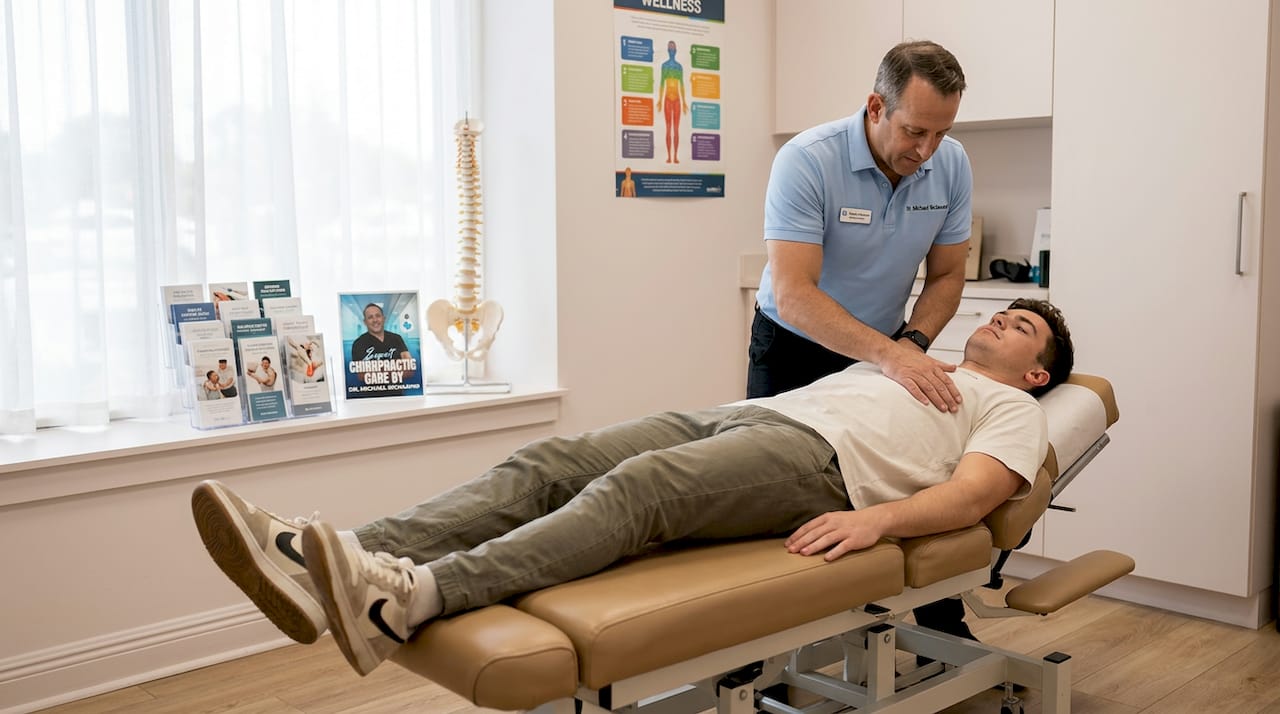
- The adjustment: The chiropractor applies a quick, controlled thrust or gentle mobilization to the targeted joint. You may hear or feel a pop, which is normal and painless for most people.
- Post-adjustment therapy: Depending on your plan, the visit may continue with massage, stretching, electrical stimulation, or instructions for at-home exercises.
- Frequency discussion: Your provider will recommend a treatment schedule based on your diagnosis, typically more frequent early on and tapering as you improve.
Understanding what to expect before your first adjustment significantly reduces treatment anxiety and improves how consistently patients follow through with their full care plan. Rare serious complications are not a realistic concern for most patients. Mild soreness the day after an adjustment is the most common complaint, similar to how muscles feel after a good workout.
Frequency recommendations typically start at two to three visits per week for acute conditions, tapering to once a week or biweekly as symptoms resolve. Maintenance care for chronic conditions or injury prevention might mean monthly visits. The key is that your plan should change as you progress, not stay static.
My take on what wellness adjustments can and can't do
I've spent years reading through the research on chiropractic care and talking to patients who've been through recovery after accidents and chronic pain cycles. Here's what I've genuinely learned: most people come into their first adjustment with one of two broken expectations.
The first group expects a miracle. One adjustment and the problem is gone. I understand the hope, but the evidence doesn't support it. The Cochrane review is clear that effects are modest, and the PACBACK trial is honest that manipulation alone often doesn't outperform basic medical care over a full year.
The second group is too dismissive. They've been told adjustments are pseudoscience and refuse to consider them. That's also wrong. Short-term pain relief is real. Improved function is measurable. For someone dealing with chronic back pain who wants to avoid medication or surgery, a well-structured chiropractic plan is a legitimate, evidence-backed option.
What I've found actually works is treating adjustments as a catalyst, not a cure. The relief you feel in the 24 to 48 hours after a good session is your window to do the work: the stretching, the strengthening, the posture correction. Patients who use that window well tend to recover faster and stay better longer. Patients who just lie on the table and leave unchanged make slow progress.
The clinics I've seen produce the best results, including what Sparkmed focuses on in North Miami, are the ones that treat every patient as a case requiring both hands-on care and education. If your provider isn't telling you what to do between visits, ask.
— Spark
Explore chiropractic wellness at Sparkmed
If this article gave you a clearer picture of what chiropractic spinal manipulation involves and how it fits into a recovery or pain management plan, the next step is finding guidance specific to your situation.

Sparkmed's blog covers everything from post-accident recovery protocols to long-term wellness planning through chiropractic care resources. Whether you're dealing with the aftermath of a collision, managing chronic low back pain, or simply want to understand how to build a care routine that actually holds, the articles there go deep on the practical side of chiropractic health. Browse the chiropractic wellness blog to find content matched to where you are in your recovery right now.
FAQ
What is a wellness adjustment in chiropractic care?
A wellness adjustment is a chiropractic spinal or joint manipulation, also called spinal manipulative therapy, where a chiropractor applies controlled force to restore joint motion, reduce pain, and support better nervous system function.
How safe are chiropractic wellness adjustments?
Wellness adjustments have a strong safety record. Large clinical reviews, including a Cochrane 2026 analysis of nearly 12,000 patients, found no serious adverse events, with mild muscle soreness being the most commonly reported side effect.
How many sessions does it take to feel results?
Most patients notice some improvement in pain and mobility within the first few sessions, though meaningful functional gains typically develop over a course of four to eight weeks, especially when adjustments are combined with therapeutic exercise and lifestyle changes.
Can wellness adjustments help after a car accident?
Yes. Spinal manipulation is commonly used to treat whiplash, soft tissue injuries, and restricted joint motion following car accidents. Early chiropractic intervention supports recovery by restoring normal movement and reducing pain without the need for medication or surgery.
Do I need insurance to get a chiropractic adjustment?
Not necessarily. Clinics like Sparkmed in North Miami offer affordable options, including a $25 adjustment that does not require insurance, making chiropractic care accessible for patients who need it regardless of coverage status.