

A wellness plan is defined as a personalized, structured set of goals and actions designed to improve your overall health by addressing multiple dimensions of well-being simultaneously. Unlike a single prescription or a one-time doctor's visit, a wellness plan functions as a living roadmap. It connects your current health status to specific, measurable targets across nutrition, physical activity, mental health, and preventive care. Whether you are recovering from an injury, managing a chronic condition, or simply aiming to feel better day to day, a structured wellness strategy gives you a system instead of guesswork.
What is a wellness plan and what does it include?
A wellness plan is a personalized health roadmap that translates your current health situation into specific, trackable goals across multiple life areas. The word "personalized" is doing real work here. A plan built around your age, medical history, lifestyle, and goals will produce better outcomes than any generic checklist. Think of it as the difference between a tailored suit and one pulled off a rack.
Effective wellness plans consistently cover these core dimensions:
- Nutrition: Specific dietary targets, meal timing, hydration goals, and strategies for managing conditions like high blood pressure or diabetes through food choices.
- Physical activity: Scheduled exercise with defined frequency, intensity, and type. Walking 30 minutes five days a week is a wellness goal. "Exercise more" is not.
- Mental and emotional health: Stress management techniques, sleep hygiene practices, and, where relevant, therapy or mindfulness programs such as those offered through emotional wellness therapy.
- Preventive care: Scheduled screenings, vaccinations, and check-ups based on your age, sex, and family history.
- Social and spiritual well-being: Relationships, community involvement, and practices that give you a sense of purpose. These dimensions are often skipped in generic programs, yet research consistently links social connection to longer, healthier lives.
The plan also requires measurable goals. "Improve my diet" fails as a wellness goal because you cannot track it. "Eat five servings of vegetables daily for eight weeks" succeeds because you can measure it, adjust it, and feel the win when you hit it.
Pro Tip: Write your wellness goals using the SMART framework: Specific, Measurable, Achievable, Relevant, and Time-bound. A goal like "reduce resting heart rate to under 70 bpm within 90 days through three weekly cardio sessions" gives you a clear finish line.

How do personalized plans differ from workplace wellness programs?
The distinction matters because the two types of plans serve different masters. A personalized wellness plan serves you. A workplace wellness program serves the employer's interest in reducing healthcare costs and improving productivity, with your health as a secondary benefit.
Workplace wellness programs fall into two categories under Affordable Care Act regulations: participatory programs, which reward participation regardless of health outcomes, and health-contingent programs, which tie rewards to meeting specific health targets. This distinction affects you directly if you have a health condition that makes a standard target unreachable. ACA rules require that health-contingent programs offer reasonable alternatives so the program remains fair to all participants. That protection matters, but it also reveals the structural limitation of employer programs. They are designed around population averages, not your individual risk profile.
| Feature | Personalized wellness plan | Workplace wellness program |
|---|---|---|
| Primary focus | Individual health goals | Employer cost reduction |
| Customization | Built around your risk profile | Standardized for a workforce |
| Flexibility | Adjusts as your health changes | Fixed program cycles |
| Incentive structure | Intrinsic motivation | Financial rewards or penalties |
| Regulatory oversight | Self-directed | ACA-regulated incentive limits |
The Medicare Annual Wellness Visit offers a useful middle ground. It is a tailored prevention plan created at no extra cost for eligible beneficiaries, including a multi-year screening checklist and cognitive impairment screening. It is not a full physical exam. It is a structured, documented plan built around your specific risk factors. That model, a written plan tied to your personal data, is exactly what a strong individualized wellness strategy looks like.
Preventive care is most effective when tailored to a person's risk profile including age, sex, family history, lifestyle, and environment. Generic programs cannot do that by design.
How to create a wellness plan that actually works
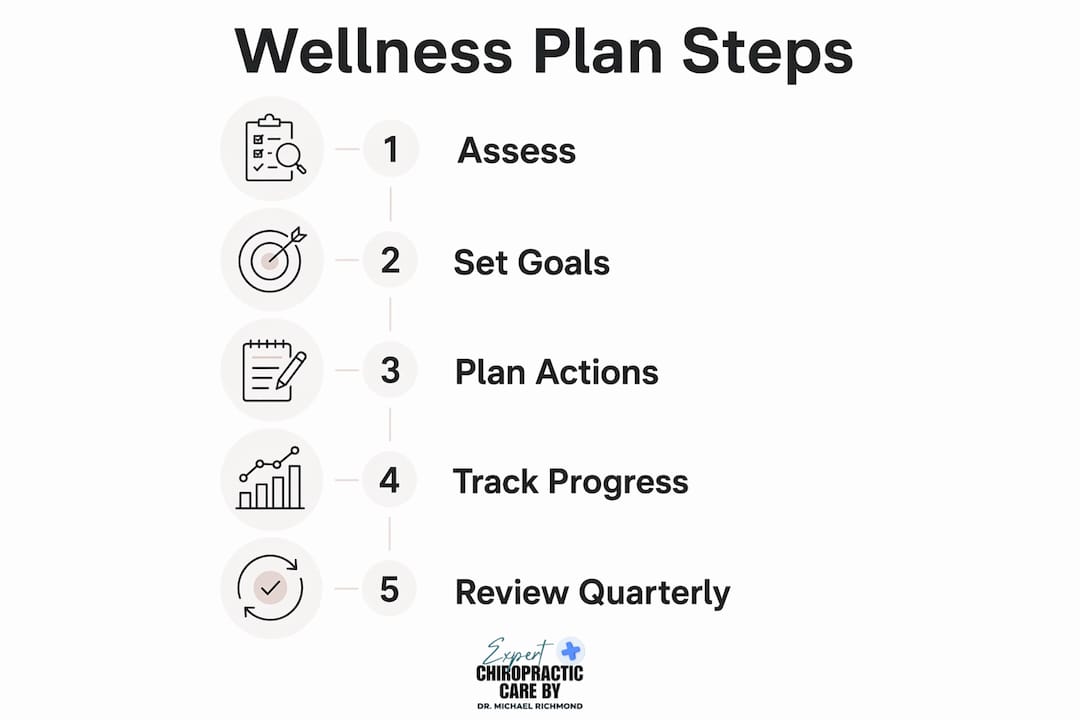
The most common reason wellness plans fail is that people skip the assessment phase and jump straight to goals. You cannot set a useful target without knowing your starting point. Here is a practical process that works.
-
Conduct a self-assessment. Rate your current status across each wellness dimension: sleep quality, energy levels, diet consistency, exercise frequency, stress levels, and social connection. Use a simple 1 to 10 scale. This gives you a baseline and immediately reveals where the gaps are largest.
-
Identify your top three priorities. You cannot fix everything at once. Pick the two or three dimensions where improvement would have the biggest impact on your daily life. If poor sleep is wrecking your energy and mood, that belongs at the top of the list before you tackle nutrition.
-
Set specific, measurable goals for each priority. Translating health priorities into scheduled, trackable actions is what separates a real plan from a wish list. For each goal, define the action, the frequency, and the timeline.
-
Schedule your actions. A goal without a time slot is just an intention. Block time in your calendar for workouts, meal prep, therapy appointments, and check-ins with your doctor. Treat these blocks the same way you treat work meetings.
-
Build in tracking and review. Check your progress weekly. Adjust monthly. Written prevention plans improve patient adherence and care continuity, which is why documented wellness plans consistently outperform verbal commitments. Keep a simple log, whether in a notebook, a spreadsheet, or an app like MyFitnessPal or Bearable.
-
Integrate both conventional and alternative practices. Chiropractic care, sound therapy, and mindfulness practices can complement medical treatment. Exploring sound therapy for emotional balance is one example of how alternative approaches address the mental and emotional dimensions that standard medical care often overlooks.
-
Anticipate obstacles and plan around them. If you know you skip workouts when work gets busy, schedule shorter sessions during high-demand weeks rather than skipping entirely. Flexibility built into the plan prevents the all-or-nothing thinking that kills most wellness efforts.
Pro Tip: Review your wellness plan every 90 days, not just when something goes wrong. Health priorities shift with seasons, stress levels, and life events. A quarterly review keeps the plan relevant and prevents you from following a roadmap that no longer matches your destination.
What benefits can you expect from a structured wellness plan?
Following a well-built wellness plan produces benefits that compound over time rather than arriving all at once. The physical changes are the most visible, but the mental and emotional gains are often what keep people committed.
- Improved physical health: Regular exercise, structured nutrition, and scheduled preventive screenings reduce the risk of chronic conditions including type 2 diabetes, cardiovascular disease, and hypertension. Customized wellness plans improve physical health, mental resilience, and quality of life by addressing nutrition, exercise, stress management, and mental health practices simultaneously.
- Enhanced mental and emotional well-being: Structured stress management and sleep goals reduce cortisol levels and improve mood stability. People who follow wellness plans report higher energy and lower rates of anxiety over time.
- Better management of chronic conditions: A plan that integrates diet, movement, and medical follow-up gives people with conditions like arthritis or back pain a system for managing symptoms rather than reacting to flare-ups.
- Increased resilience: Wellness planning builds the habit of self-monitoring. People who track their health consistently are faster to notice warning signs and more likely to seek care early.
"Wellness planning is more about practical, incremental improvements tailored to the person's current health state than following a rigid regimen." — Psychology Today
The long-term quality-of-life gains are harder to quantify but equally real. People with structured wellness strategies report stronger relationships, better work performance, and a greater sense of control over their health. That sense of agency is itself a health outcome.
Key takeaways
A wellness plan works because it converts vague health intentions into a documented, personalized system of scheduled actions tied to measurable goals.
| Point | Details |
|---|---|
| Definition matters | A wellness plan is a structured, personalized roadmap covering nutrition, movement, mental health, and preventive care. |
| Personalization beats generic | Plans tailored to your risk profile, age, and lifestyle produce better outcomes than one-size-fits-all programs. |
| Assessment comes first | Self-rating your current health status across all dimensions is the non-negotiable first step before setting any goal. |
| Documentation drives adherence | Written plans with scheduled actions outperform verbal commitments and informal intentions every time. |
| Review and adjust regularly | A 90-day review cycle keeps your plan aligned with your current health priorities and prevents stagnation. |
Why most wellness plans fail before they start
I have seen this pattern repeatedly at Sparkmed: someone arrives motivated, sets five ambitious goals in week one, and abandons the plan by week three. The problem is almost never willpower. It is architecture.
Most people treat a wellness plan as a list of things they should be doing. The plans that actually work are built differently. They start with an honest assessment of where you are right now, not where you think you should be. They pick two or three priorities instead of ten. And they schedule actions into real time slots rather than leaving them as floating intentions.
The other mistake I see constantly is treating setbacks as failures. Missing a workout or eating poorly for a week is data, not defeat. The plan should have a built-in response for disruption. What is your minimum viable health week when life gets chaotic? Define it in advance. A 15-minute walk and one good meal beats nothing, and it keeps the habit alive.
I also think the mental and emotional dimensions get underweighted in most plans. Physical goals are easy to measure, so they dominate. But stress, sleep, and social connection drive physical health outcomes more than most people realize. A post-accident wellness recovery plan that ignores anxiety and sleep disruption will plateau no matter how good the physical therapy is.
The best wellness plans I have seen share one quality: they are honest about the person's actual life, not an idealized version of it. Build your plan around who you are today, and adjust it as you grow.
— Spark
Start building your wellness plan with Sparkmed

Sparkmed's blog covers the full spectrum of wellness planning, from customizing chiropractic plans for faster recovery to integrating nutrition and movement into a daily health routine. Whether you are starting from scratch or refining an existing plan, the resources at Sparkmed are built for people who want practical, expert-backed guidance without the jargon. Explore the Sparkmed blog for articles on chiropractic wellness, holistic health strategies, and recovery-focused care designed for real life in North Miami and beyond.
FAQ
What is the wellness plan definition in simple terms?
A wellness plan is a written, personalized set of health goals and scheduled actions covering nutrition, exercise, mental health, and preventive care. It converts your current health status into a trackable system for improvement.
What are the main elements of a wellness plan?
The core elements include nutrition goals, physical activity schedules, mental and emotional health practices, preventive care screenings, and social well-being strategies. Effective plans also include measurable targets and a regular review cycle.
How do I start creating my own wellness plan?
Begin with a self-assessment rating your current health across sleep, diet, exercise, stress, and social connection. Then identify your top two or three priorities and set specific, time-bound goals for each before scheduling them into your calendar.
How does a personalized wellness plan differ from a workplace program?
A personalized plan is built around your individual risk profile and adjusts as your health changes. Workplace wellness programs are standardized for a workforce and often tied to financial incentives regulated under ACA rules, which limits how well they can address individual needs.
How often should I update my wellness plan?
Review and adjust your wellness plan every 90 days. Health priorities shift with life circumstances, and a quarterly review keeps your goals relevant and your actions aligned with where you actually are.