

An accident injury clinic is a specialized medical facility dedicated to diagnosing and treating injuries caused by traumatic events like car collisions, slips, and falls. Unlike a general urgent care center, these clinics focus specifically on musculoskeletal and soft tissue trauma, offering targeted care for conditions like whiplash, spinal injuries, and ligament damage. If you are dealing with pain after an accident, knowing what is an accident injury clinic and how it differs from a standard doctor's visit can be the difference between a full recovery and months of chronic pain.
What is an accident injury clinic, and how does it work?
An accident injury clinic, also called a trauma recovery clinic or accident care center, is a facility built around one goal: restoring your body after accidental trauma. General urgent care treats infections, fevers, and minor cuts. These clinics treat the biomechanical consequences of impact forces on your spine, joints, muscles, and connective tissue.
The care model is multidisciplinary by design. A single clinic typically combines chiropractic care, physical therapy, diagnostic imaging, and pain management under one roof. That coordination matters because accident injuries rarely affect just one system. Whiplash, for example, can simultaneously strain cervical muscles, compress spinal discs, and trigger nerve irritation, all of which require different treatment approaches.
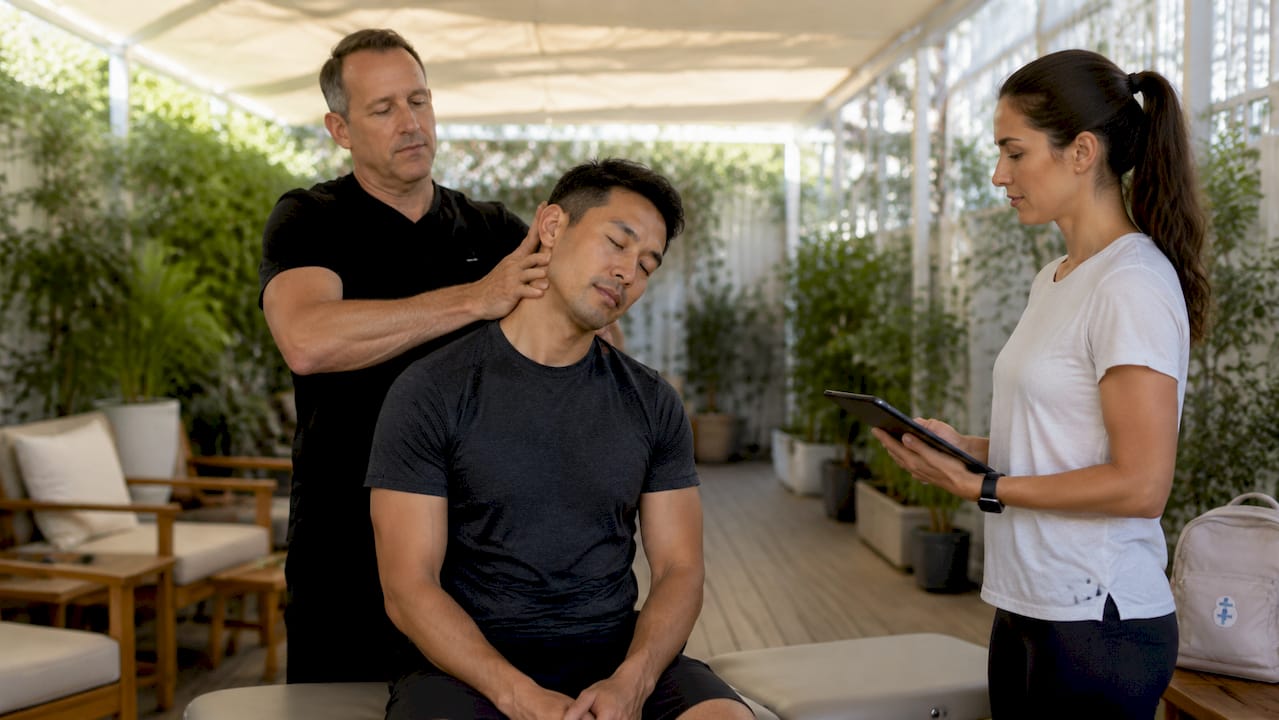
Accident injury clinics also serve a legal and administrative function that general practitioners rarely provide. Medical documentation from these clinics serves as crucial evidence for insurance and personal injury claims, requiring accurate recording of injury mechanism and type. That documentation is often the foundation of any compensation case you file.
How do accident injury clinics differ from urgent care or primary care?
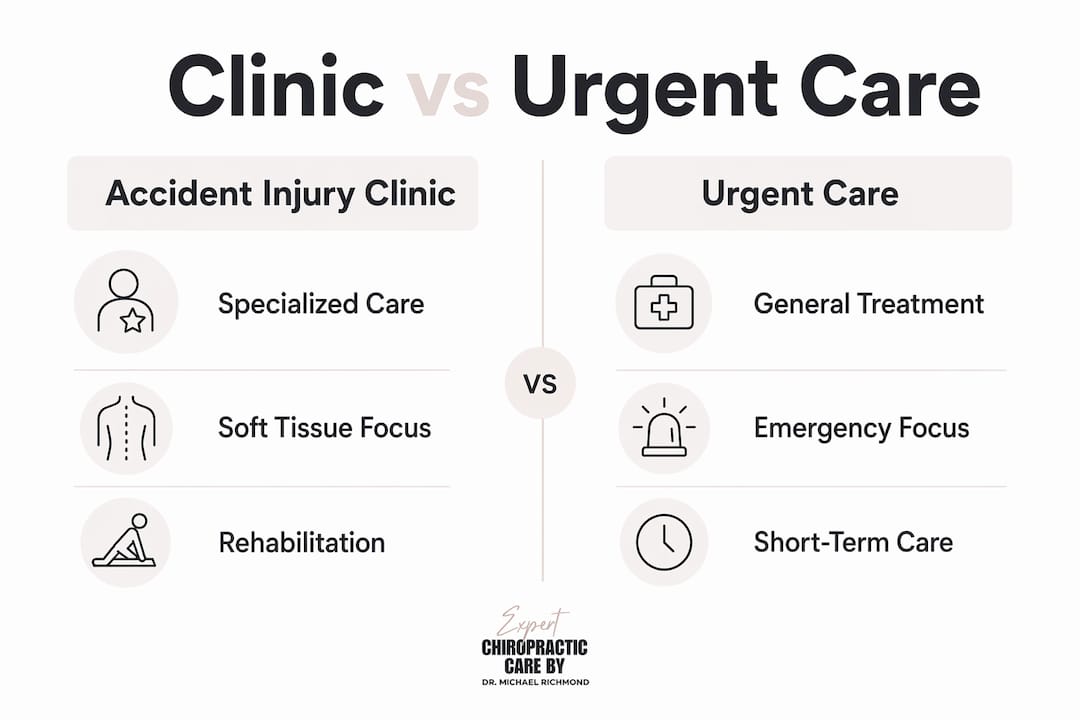
The core difference is specialization. A primary care physician treats the full spectrum of human illness. An accident injury clinic treats one specific category of harm: trauma to the musculoskeletal system caused by sudden mechanical force.
| Feature | Accident Injury Clinic | General Urgent Care |
|---|---|---|
| Focus area | Biomechanical and soft tissue trauma | General illness and minor injuries |
| Treatment approach | Chiropractic, physical therapy, pain management | Medication, referrals, basic imaging |
| Diagnostic tools | Functional movement testing, biomechanical assessment | Standard X-rays, basic labs |
| Documentation | Legal and insurance injury records | Standard medical notes |
| Appointment access | Same-day and walk-in availability | Walk-in, variable wait times |
Standard X-rays often miss soft tissue injuries common to car accidents, making comprehensive biomechanical assessments and functional movement testing essential for accurate diagnosis. That gap is exactly why accident injury clinics exist. They use tools and protocols that general facilities simply are not built to provide.
Accident injury clinics also bridge initial emergency care and long-term rehabilitation using non-surgical, evidence-based treatments rather than only masking symptoms with medication. That philosophy shifts the goal from pain relief to functional restoration.
Pro Tip: If you visited an emergency room after your accident, do not assume your care is complete. ER physicians rule out life-threatening conditions. An accident injury clinic picks up where the ER leaves off, addressing the injuries that do not show up on a trauma scan.
What services are offered at an accident injury clinic?
The services offered by injury clinics are broader than most patients expect. Here is what a full-service accident care facility typically provides:
-
Physical therapy and rehabilitation. Therapists guide you through graded movement exercises designed to restore strength and range of motion without aggravating your injuries. Active recovery protocols using manual therapy and progressive strengthening consistently outperform immobilization and rest for faster healing.
-
Chiropractic adjustments and spinal care. Chiropractors address spinal misalignment caused by impact forces. For car accident patients, top chiropractic methods like spinal manipulation, soft tissue mobilization, and flexion-distraction technique are commonly used to reduce nerve compression and restore joint mobility.
-
Diagnostic imaging and functional assessment. Beyond standard X-rays, clinics use MRI referrals, functional movement screens, and biomechanical evaluations to detect injuries that basic imaging misses. Soft tissue tears, disc bulges, and ligament sprains fall into this category regularly.
-
Non-surgical pain management. Clinics offer options like trigger point therapy, ultrasound therapy, electrical stimulation, and targeted anti-inflammatory protocols. For tendon and ligament injuries specifically, nonsurgical treatment options have advanced significantly and can resolve injuries that once required surgery.
-
Injury documentation for legal and insurance claims. Clinicians record the mechanism of injury, affected structures, and treatment progress in formats recognized by insurers and attorneys. This documentation is not a side service. It is a core clinical function.
-
Recovery coordination. Many clinics communicate directly with your attorney or insurance adjuster, reducing the administrative burden on you during an already stressful period.
Pro Tip: Ask your clinic whether they use a letter of protection arrangement. This allows you to receive treatment now and pay from your settlement later, removing the financial barrier to getting care immediately.
When and why should you visit an accident injury clinic?
Timing is the single most important factor in accident injury recovery. Visiting within 24–72 hours of an incident is the standard recommendation, even when symptoms feel minor or absent. That window exists for a biological reason.
Adrenaline and cortisol released during trauma mask pain for up to 72 hours post-accident. Feeling fine after a collision does not mean you are uninjured. It means your stress hormones are doing their job. By the time those hormones clear your system, inflammation has already set in, and untreated injuries begin to stiffen and scar.
There are four specific reasons to act quickly:
- Hidden injuries surface later. Whiplash, disc injuries, and soft tissue tears often produce no immediate pain. A biomechanical evaluation catches them before they become chronic.
- Insurance coverage starts at the accident date. Coverage for post-accident therapy often applies from the accident date, not the date symptoms appear. Delayed visits can result in denied claims.
- Early documentation strengthens your legal case. A gap between your accident and your first medical visit gives insurers grounds to argue your injuries were not accident-related.
- Early intervention reduces chronic pain risk. Untreated soft tissue injuries frequently develop into long-term pain syndromes. Getting care in the first week dramatically improves your long-term prognosis.
Many accident injury clinics offer same-day consultations and some provide free initial evaluations to remove barriers to early care. There is no logistical reason to wait.
How to choose the best accident injury clinic for your needs
Finding the best injury clinic near you requires more than a quick Google search. Use these criteria to evaluate your options before committing to care.
- Verify specialization. The clinic should explicitly focus on accident-related injuries, not general wellness or elective care. Ask directly whether they treat car accident and trauma patients regularly.
- Check credentials. Look for board-certified physicians, licensed physical therapists, and licensed chiropractors on staff. Credentials matter because accident injuries require precise diagnosis, not guesswork.
- Confirm same-day or walk-in availability. Given the 72-hour evaluation window, a clinic that cannot see you quickly is not the right fit for post-accident care.
- Assess treatment range. A clinic offering only one modality, such as chiropractic alone, may not address the full scope of your injuries. Look for facilities that combine chiropractic, physical therapy, and pain management.
- Ask about insurance and documentation. Confirm they accept your auto insurance or personal injury protection (PIP) coverage and that they produce documentation formatted for legal and insurance use.
- Read patient reviews with a specific lens. Look for reviews that mention injury recovery, not just general wellness visits. Patients who recovered from car accidents are your most relevant reference group.
Reading resources like early chiropractic intervention guides can also help you understand what quality post-accident care looks like before you walk in the door.
What can you expect during your first visit?
Your first appointment at an accident injury clinic follows a structured process designed to build a complete picture of your injuries. Here is what typically happens:
- Intake and accident history. You describe the accident in detail, including the direction of impact, your body position, and any symptoms you have noticed. This narrative becomes part of your legal documentation.
- Physical and biomechanical examination. The clinician assesses your range of motion, muscle strength, joint stability, and neurological function. This goes well beyond a standard physical exam.
- Diagnostic imaging review or referral. If imaging is needed, the clinic either performs it on-site or refers you to a facility and integrates the results into your care plan.
- Personalized treatment plan development. Based on your exam findings, the clinician outlines a specific course of treatment with a projected timeline and measurable recovery goals.
- Documentation initiation. Your injury mechanism, affected structures, and initial findings are recorded in a format usable by your attorney or insurer.
- Communication setup. The clinic establishes how they will coordinate with your insurance company or legal team throughout your recovery.
Expect the first visit to take 60–90 minutes. Subsequent visits are shorter and focused on treatment delivery and progress tracking.
Key takeaways
An accident injury clinic is the most effective first step after trauma because it combines specialized diagnosis, active recovery treatment, and legal documentation in a single coordinated care model.
| Point | Details |
|---|---|
| Specialized focus | Accident injury clinics treat musculoskeletal trauma, not general illness, using targeted protocols. |
| Visit within 72 hours | Adrenaline masks pain post-accident; early evaluation catches hidden injuries before they worsen. |
| Documentation matters | Injury records from these clinics are critical for insurance claims and personal injury cases. |
| Active recovery works | Manual therapy and graded movement outperform rest and immobilization for accident injuries. |
| Choose carefully | Verify credentials, treatment range, insurance acceptance, and same-day availability before committing. |
Why I think most accident patients wait too long, and pay for it
Most patients I have seen walk into an accident injury clinic come in too late. They waited a week, sometimes two, because they felt okay at first or assumed the ER had handled everything. By the time they arrived, their soft tissue injuries had already begun to scar, their range of motion had dropped, and their insurance documentation had a gap that complicated their claims.
The uncomfortable truth is that feeling fine after a collision is not a green light to skip care. It is a biological trick. Your stress hormones are doing exactly what evolution designed them to do: keeping you functional in a crisis. That protection fades within days, and what is left underneath is often a real injury that has now had time to worsen.
I also want to push back on the idea that imaging tells the whole story. Patients often arrive with a clean X-ray from the ER and assume they are uninjured. X-rays show bones. They do not show torn ligaments, strained muscles, or compressed discs. A functional biomechanical assessment reveals what the scan missed, and that assessment is what drives an effective treatment plan.
The patients who recover fastest are the ones who come in early, engage actively with their rehabilitation, and treat documentation as seriously as treatment. Recovery is not passive. It is a process you participate in, and the clinic is there to guide every step.
— Spark
Start your recovery at Sparkmed today
Sparkmed specializes in post-accident chiropractic care in North Miami, with same-day appointments available for accident injury patients. The team works directly with auto insurance and personal injury protection coverage, so cost is not a reason to delay your evaluation. Sparkmed also offers a $25 chiropractic adjustment that does not require insurance, removing the financial barrier to getting care fast. Explore Sparkmed's recovery resources to learn more about available services, or visit the Sparkmed blog for up-to-date guidance on recovering after a car accident. The sooner you start, the better your outcome.
FAQ
What is an accident injury clinic used for?
An accident injury clinic diagnoses and treats musculoskeletal injuries caused by traumatic events like car accidents, slips, and falls. It provides chiropractic care, physical therapy, pain management, and legal documentation under one coordinated care model.
How soon should I visit after an accident?
Visit within 24–72 hours of your accident, even if you feel no pain. Adrenaline and cortisol can mask injury symptoms for up to 72 hours, and delayed care weakens both your recovery and your insurance claim.
Will my insurance cover accident injury clinic visits?
Most auto insurance policies include personal injury protection (PIP) coverage that applies from the accident date. Confirming coverage early matters because insurance coverage timing is tied to the accident date, not when symptoms appear.
Do accident injury clinics treat injuries without surgery?
Yes. These clinics specialize in non-surgical, evidence-based care including spinal adjustments, physical therapy, and soft tissue treatments. Surgery is rarely the first option for the musculoskeletal injuries most commonly seen after accidents.
What makes an accident injury clinic better than a regular doctor for post-accident care?
Accident injury clinics use biomechanical assessments and functional movement testing that general practitioners do not perform. They also produce injury documentation formatted specifically for insurance and legal use, which a standard primary care visit typically does not provide.