
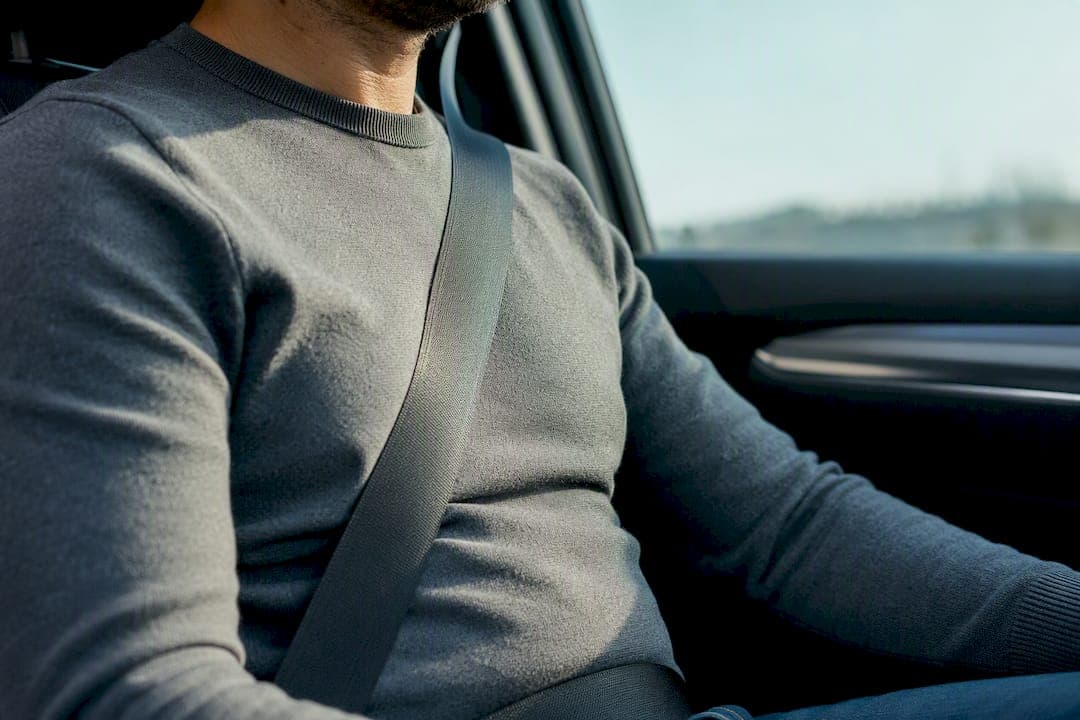
Most chest pain after a seat-belt impact is bruising or strain of the chest wall, and it usually settles down on its own. But some symptoms mean you need emergency care right now: trouble breathing, coughing up blood, fainting, or pain that's crushing or getting worse. If none of those apply, get checked to rule out a rib fracture or internal injury, then treat it conservatively at home.
TL;DR:
- Less than 5% of patients develop the classic "seat belt sign," but its absence does not rule out internal injuries or rib fractures.
- Serious symptoms such as difficulty breathing, coughing blood, or steady chest pain require immediate emergency attention; minor pain typically improves in two to six weeks.
- Imaging like chest x-ray, ultrasound, or CT scans is essential to detect hidden fractures or internal injuries, especially if pain persists or worsens.
- Proper recovery involves pain management, deep breathing exercises, and gradual return to activity, avoiding tight wraps that hinder lung expansion.
- Long-term or delayed chest pain can occur months after the crash, often due to degenerative changes, and may require targeted diagnostics and multidisciplinary care.
Table of Contents
- How Seat Belts Cause Chest Injuries During a Crash
- Common Seat-Belt Chest Injuries and How They Feel
- Red Flags: When Seat-Belt Chest Pain Is a 911 Call
- What Happens at the Clinic or ER
- Treating Seat-Belt Chest Pain Once Serious Injury Is Ruled Out
- How Long Chest Pain from a Seat Belt Usually Lasts
- When Chest Pain Shows Up Weeks or Months Later
- The Mental Weight of Chest Trauma After a Crash
- SparkMed's Approach to Post-Belt Chest Pain Recovery
- Get Checked Out After a Seat-Belt Injury
- Sources
How Seat Belts Cause Chest Injuries During a Crash
A three-point seat belt is designed to spread crash force across your shoulder, chest, and hip. That's exactly why it saves lives, and also why it leaves a mark. In a sudden stop, your body keeps moving forward at the vehicle's original speed until the belt webbing catches you, concentrating a huge amount of force into a narrowband across the chest and collarbone.
That force is transmitted two ways. Some of it stays superficial, bruising skin and muscle. Some of it travels deeper, into ribs, cartilage, and occasionally the lungs or heart. NHTSA's safety data makes the trade-off clear: belts dramatically cut the risk of death and severe injury, even though localized chest trauma along the belt path is a known side effect.
Adrenaline complicates things further. Right after a crash, your body floods with stress hormones that mask pain, so:
- You may feel almost fine at the scene and much worse the next morning.
- Cartilage connecting the ribs to the breastbone, called costochondral tissue, is especially sensitive and often doesn't hurt until swelling sets in hours later.
- Bruising can take a full day to surface, even over an area that was tender immediately after impact.
Common Seat-Belt Chest Injuries and How They Feel
Not all seat belt injury chest pain is the same, and the specific feel of it tells you a lot about severity.
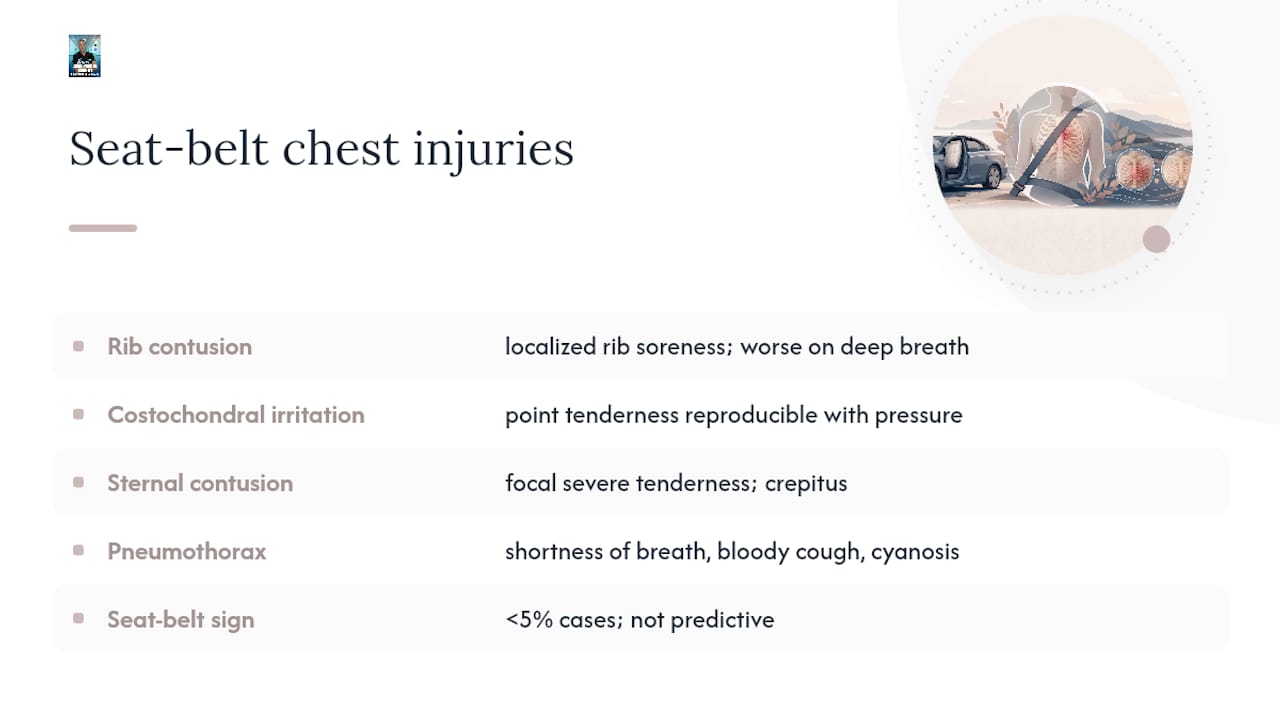
Rib contusion and intercostal strain show up as localized soreness between the ribs that gets sharper when you breathe deeply, cough, or twist your torso. It's the most common outcome and generally the least dangerous.
Costochondral irritation sits right at the front of the chest, where rib meets breastbone. Press on the spot and the pain reproduces almost exactly, which is a useful way clinicians tell it apart from something deeper.
Sternal contusion or rib fracture feels different: one focal point of severe tenderness, sometimes with a grinding or clicking sensation called crepitus when you move or breathe.
Pneumothorax or pulmonary contusion are the injuries that matter most to catch early. Watch for shortness of breath, a cough that brings up blood, or a bluish tint to lips or fingertips from low oxygen.
Here's something that surprises most people: the classic diagonal bruise across the chest, often called a "seat belt sign," shows up in fewer than 5% of patients after a crash. Its absence doesn't mean you're clear, and its presence doesn't automatically mean something is broken inside. The mark is far less predictive than most people assume.
Red Flags: When Seat-Belt Chest Pain Is a 911 Call
Skip the wait-and-see approach if any of these apply. Go to the emergency room or call 911:
- Difficulty breathing or noticeably shallow, rapid breathing that doesn't ease within a few minutes of rest.
- Coughing up blood, fainting, or chest pain that is crushing, spreading to your arm or jaw, or steadily worsening rather than staying the same.
- New or spreading abdominal pain, or heavy bruising along the belt line combined with dizziness, rapid heartbeat, or pale skin. These can point to injury to organs like the spleen or liver, not just the chest wall.
- Any doubt at all. A normal-looking bruise can sit over a bruised lung or a small rib fracture that hasn't announced itself yet. Getting checked costs you an hour. Missing internal bleeding costs a lot more.
If you're unsure whether what you're feeling counts as a warning sign, this rundown of symptoms after car accidents walks through the fuller list worth knowing.
What Happens at the Clinic or ER
Emergency staff start with a primary survey: airway, breathing, circulation, then a focused exam feeling along your ribs and chest wall for specific tender points or instability.
From there, testing depends on what the exam turns up. Standard tools include:
- A chest x-ray to look for fractures or air/fluid where it shouldn't be.
- FAST or eFAST ultrasound, a bedside scan used to quickly check for internal bleeding.
- CT scanning of the chest and abdomen when the mechanism of injury or exam findings suggest something the x-ray might miss.
- An ECG if there's any concern the heart absorbed direct impact.
This layered approach exists because a single chest x-ray can look clean while a rib fracture or small pneumothorax hides just out of view. Trauma evaluation protocols increasingly call for a second look or CT imaging in patients whose pain doesn't match an apparently normal first film. That's not overtesting. It's how injuries that seemed minor at first get caught before they become a problem overnight.
Treating Seat-Belt Chest Pain Once Serious Injury Is Ruled Out
Once a clinician has confirmed there's no fracture, internal bleeding, or lung injury, treatment is mostly about managing pain and protecting your breathing while tissue heals.
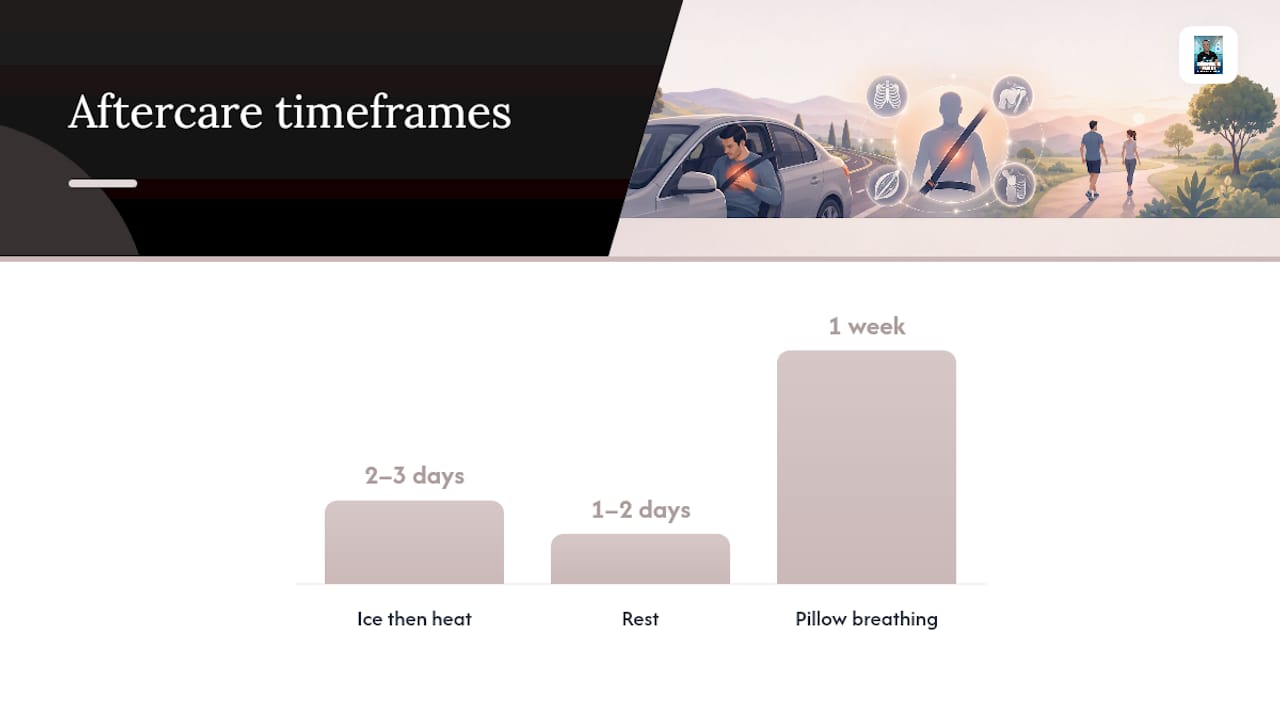
For the first 48 to 72 hours, ice the area in short sessions to control swelling, then switch to heat once the initial inflammation has settled. Over-the-counter pain relievers can help, but stick to the dosing instructions on the label and check with a pharmacist if you're also taking other medications.
Breathing matters more than people expect. Practical aftercare guidance recommends practicing deep, hourly breaths and holding a firm pillow against your chest when you cough. Shallow breathing to avoid pain feels natural, but it raises your risk of pneumonia and lung collapse from unused lung tissue. Avoid the instinct to tape or wrap your ribs tightly. It doesn't speed healing and can actually restrict the deep breaths you need.
- Rest for the first day or two, then reintroduce normal movement gradually rather than jumping back to full activity.
- Skip driving until you can turn your torso, check mirrors, and brace for a sudden stop without sharp pain.
- Manual therapy, chiropractic care, or physical therapy can support recovery, but only after a clinician has cleared you of fracture or internal injury.
Pro Tip: Set a phone reminder for hourly "pillow breathing" sessions during the first week. It feels tedious, but it's one of the simplest ways to lower your risk of a lung complication while the chest wall heals.
If you want a broader look at what conservative care involves in the weeks after a crash, this guide to acute injury care covers the full arc from first visit to activity clearance.
How Long Chest Pain from a Seat Belt Usually Lasts
Mild chest wall contusions and muscle strain typically start improving within two to six weeks. That's the timeline most people can expect if imaging came back clear and there's no fracture.
Costochondral irritation is the exception. That cartilage heals more slowly than muscle, and some patients still notice tenderness months after the crash, especially with certain movements or when pressing on the area.
A few factors tend to stretch recovery out: older age, existing lung conditions like COPD, smoking, and simply how hard the impact was. If pain isn't trending downward by the four-to-six-week mark, or if it's getting worse instead of better, that's the signal to go back in for re-evaluation rather than waiting it out further. For a closer look at rib-specific recovery patterns, see this piece on rib pain after a car accident.
When Chest Pain Shows Up Weeks or Months Later
Delayed-onset pain is real, and it's more common than most people assume. A documented case report on late complications of seat-belt injury describes patients developing focal chest pain months to years after the original crash, driven by ongoing degenerative or inflammatory changes at the costochondral junction. Imaging in these cases often comes back normal, which can make the pain feel dismissible. It isn't.
If pain resurfaces long after an accident you'd mostly forgotten about, don't assume it's unrelated just because time has passed. The right next step is a targeted exam focused on the specific tender point, sometimes followed by a diagnostic injection to confirm the source. Persistent cases benefit from a multidisciplinary approach to ongoing pain, especially when one treatment alone hasn't resolved it.
The Mental Weight of Chest Trauma After a Crash
Physical healing usually gets all the attention, and the psychological piece gets skipped. That's a mistake, because a bruised or fractured chest wall changes how you move through your day in a very visible way. Every deep breath, every cough, every reach for something on a high shelf reminds you of the crash. For some people, that repeated physical cue becomes tangled up with anxiety about driving again, flinching at sudden stops, or bracing every time they put a seat belt on.
That reaction is common after chest trauma, not a sign you're overreacting. The discomfort itself can also disrupt sleep, and poor sleep tends to amplify pain perception, which then makes the anxiety worse. It's a loop worth naming so you can interrupt it.
A few things help break that cycle. Talking through the crash with someone, whether a friend, a counselor, or a support group, tends to reduce the anxious replay that keeps some people from getting back in a car. Gradual re-exposure, like sitting in a parked car before driving short distances, works better than avoidance. And treating the physical pain effectively removes one of the main daily triggers that keeps the stress response active. If anxiety around driving or the accident itself isn't easing within a few weeks, that's worth mentioning to a doctor alongside the physical symptoms. The two are connected more often than people expect.
SparkMed's Approach to Post-Belt Chest Pain Recovery
Our position on this is simple: medical clearance comes first, always. Once a patient has been checked for fracture or internal injury, conservative outpatient care, breathing work, manual therapy, graded return to movement, tends to serve chest-wall pain better than rest alone.
We keep care accessible with multilingual materials and an affordable first-visit option for patients who came out of a crash without a clear path forward. If you've already been cleared and just need the recovery piece handled, that's exactly where outpatient care fits.
— Spark
Get Checked Out After a Seat-Belt Injury
If you've already ruled out the red flags above and you're just dealing with lingering soreness, that's where Sparkmed comes in. We work specifically with car accident recovery, and chest-wall pain from a seat belt is one of the most common reasons patients seek care in the days after a crash.
Care usually starts with an assessment to understand exactly what's tender and why, then builds a plan around it, whether that means chiropractic adjustments, breathing-focused rehab, or graded movement work to get you back to normal activity without pushing too hard too soon. If chest x-rays and imaging already came back clear, you don't need to just wait it out at home. Visit the provider's website for current pricing and appointment options, which can offer an affordable way to get a professional opinion before pain lingers longer than it should. One more time, because it matters: if you have any red flags like trouble breathing or worsening pain, go to the ER first. For everything else, check our chiropractic and rehab services and book a visit.
Sources
For deeper clinical detail, the NCBI chapter on seat-belt injury patterns, Mayo Clinic's rib fracture overview, and NHTSA's seat belt safety data cover the mechanics, diagnosis, and prevention side of this topic in more depth.
This article is general information, not a substitute for advice from a qualified doctor. Consult a qualified healthcare professional about your own circumstances before acting on anything here.
- Seat belt–related injury patterns (NCBI/NLM chapter)
- Chest pain: a late complication of seat-belt injury (case report)
- Study
- Chest contusion care instructions (regional health authority patient guidance)