
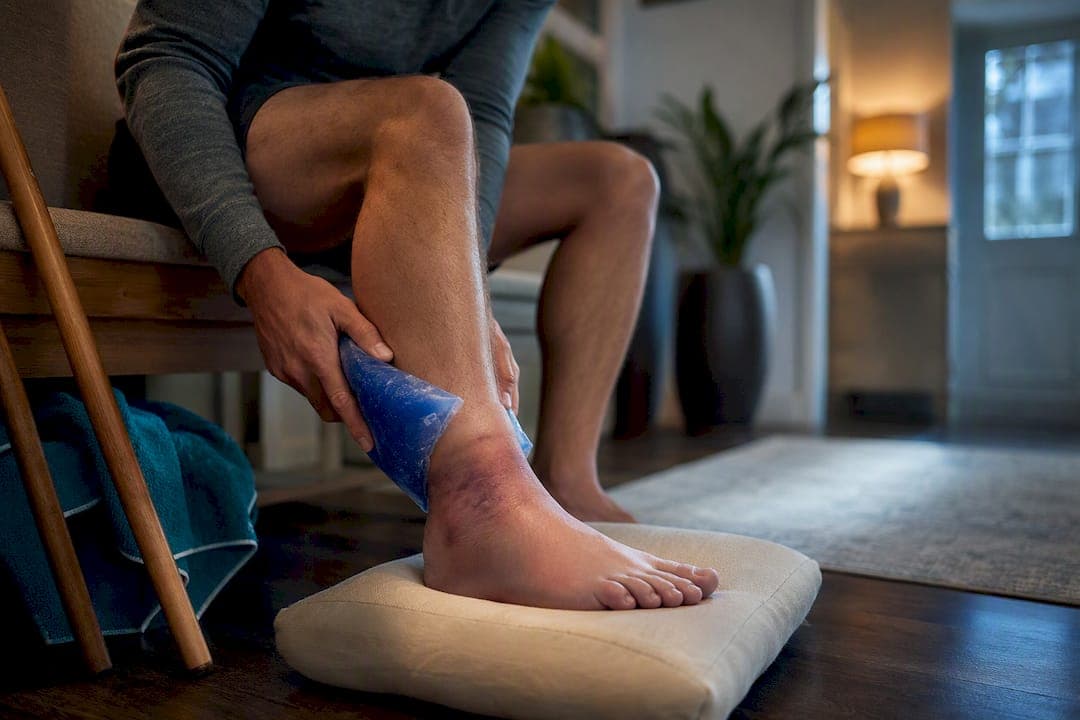
Cold therapy helps with sprains, but mainly in the first 48 to 72 hours after injury, when it reduces swelling and numbs pain as part of a broader R.I.C.E. approach. It is a tool for symptom control, not a proven way to speed up long-term tissue repair. Used correctly and paired with rest, compression, and elevation, it can make the early days of recovery far more manageable.
TL;DR:
- Cold therapy is most effective within the first 48 to 72 hours post-injury to reduce swelling and numb pain, but it does not accelerate tissue healing.
- Applying cold correctly involves wrapping ice packs in barriers, icing for 15 to 20 minutes multiple times daily, and avoiding direct skin contact to prevent frostbite.
- People with poor circulation, nerve damage, open wounds, or cold sensitivity should consult a clinician before using cold therapy to prevent risks.
- After the initial phase, heat can be used to loosen stiff joints and improve blood flow, but only when swelling has subsided.
- Persistent pain, inability to bear weight, or lack of improvement after a week necessitate professional evaluation for ruling out fractures and guiding rehab.
Table of Contents
- What cold therapy does: physiology and the evidence base
- When to use cold versus heat for sprains
- How to apply cold safely: timing, frequency, and materials
- Safety, contraindications, and special populations
- How cold therapy fits into recovery: rehab and when to see a clinician
- Spark Med's approach to integrating cold therapy into hands-on care
- Clinician quick take: common mistakes and quick tips
- How Spark Med can help with sprain evaluation and recovery
- Sources
- FAQ
What cold therapy does: physiology and the evidence base
When you apply cold to a fresh sprain, the blood vessels near the surface narrow. This vasoconstriction slows blood flow to the area, which limits how much fluid leaks into the surrounding tissue and helps control swelling. Cold also slows nerve conduction, which is why an ice pack numbs pain within minutes, and it lowers the metabolic rate of the injured tissue, reducing the demand for oxygen while the area is inflamed.
A systematic review on cold therapy in rehabilitation found it reduces inflammation, edema, hematoma formation, and muscle spasm after soft tissue injury, but the evidence for whether it speeds up long-term structural healing is mixed at best. In other words, cold buys you comfort and manageable swelling. It does not appear to make torn ligament fibers knit back together any faster.
Clinical practice guidelines back up the symptom-control role. A review of ankle sprain guidelines found that cryotherapy appeared in four high-quality guidelines, with three of them recommending it strongly for reducing acute pain.
Three of four high-quality clinical guidelines strongly recommend cryotherapy for acute ankle sprain pain, according to a 2022 guideline review. That kind of consensus is rare in sports medicine, and it is a big part of why cold remains a first-line home remedy.

When to use cold versus heat for sprains
The rule of thumb is simple: cold for fresh injuries, heat for old stiffness. Applying heat too early can actually work against you, since it widens blood vessels and can increase swelling right when you are trying to control it.
- First 48 to 72 hours after injury: use cold to limit swelling and dull pain while the tissue is acutely inflamed.
- After the acute phase: if swelling has settled but the joint feels stiff or tight, heat can relax muscles and improve blood flow before movement.
- Before exercise or rehab work: a warm-up with heat can loosen a healing joint, while cold afterward can calm any flare-up from the activity.
- Open wounds or broken skin: avoid direct cold or heat until the skin has healed, and get a clinician's input on wound care.
- Poor circulation or numbness in the limb: check with a clinician before icing, since reduced sensation can mask tissue damage.
Beyond the first few days, the choice often comes down to what feels better and what your body is telling you, since clinical opinion on the exact cutoff for switching to heat varies. Some clinicians lean on cold longer if swelling persists, and others introduce heat sooner to help with mobility. When in doubt, cold is the safer default for anything still swollen or hot to the touch.
How to apply cold safely: timing, frequency, and materials
Getting the technique right matters as much as deciding to ice in the first place. Direct skin contact with ice or a frozen pack can cause frostbite or nerve damage in a matter of minutes, so a barrier is not optional.
- Prepare a barrier first. Wrap the ice pack, gel pack, or bag of frozen vegetables in a thin towel or cloth before it touches skin.
- Apply for a limited window. Mayo Clinic recommends icing for 15 to 20 minutes, repeated 4 to 8 times a day, for the first 48 hours or until the swelling goes down.
- Space out sessions. Some patient guidance suggests icing every hour while awake for the first day, then tapering to three or four sessions a day after that, according to MedlinePlus.
- Add compression. Wrap the area with an elastic bandage snug enough to control swelling but not so tight it cuts off circulation.
- Elevate the joint. Raise the injured area above heart level when possible to help fluid drain away from the site.
- Check the skin regularly. Look for excessive paleness, a waxy appearance, or numbness that lasts beyond the icing session, and remove the pack immediately if you see any of these, per safety guidance from Johns Hopkins Medicine.
- Stop and reassess if blistering occurs. Blisters or skin that stays numb after warming up signal cold injury, and you should treat it like a minor burn and seek care if it does not resolve.
Crushed ice tends to outperform gel packs and ice cubes because it molds to the contours of a joint like an ankle or wrist, giving more surface contact and faster cooling, according to Cleveland Clinic. A bag of frozen peas works nearly as well in a pinch and reshapes just as easily.
Pro Tip: Keep two crushed ice packs in the freezer so one is always ready while the other refreezes between sessions.

Safety, contraindications, and special populations
Cold therapy is not risk-free, and some people need to skip it or use it only under supervision. Anyone with poor circulation, diabetes with nerve damage, Raynaud's phenomenon, open wounds, or cold urticaria (a skin reaction to cold) should talk to a clinician before icing, since reduced sensation can hide the early warning signs of tissue damage.
- Poor circulation or vascular disease: icing can worsen restricted blood flow and delay detection of complications.
- Diabetes with neuropathy: numbness from nerve damage can mask frostbite until it becomes serious.
- Raynaud's phenomenon: cold exposure can trigger painful vasospasm in the fingers or toes.
- Open wounds or broken skin: ice increases the risk of tissue damage and infection at a wound site.
If you notice excessive paleness, skin that stays numb well after removing the pack, or blistering, stop icing and treat it as a cold-related injury. Warm the area gradually and seek medical attention if symptoms persist.
Cryotherapy is recommended in high-quality clinical guidelines for short-term pain relief after an acute ankle sprain, according to a 2022 review of ankle sprain guidelines, which also notes some guidance favors starting anti-inflammatory adjuncts like NSAIDs within the first day of injury for added symptom control. Check with a pharmacist or clinician before combining medications with any existing health conditions.
How cold therapy fits into recovery: rehab and when to see a clinician
Ice buys you comfort, but it does not rebuild strength or balance in a sprained joint. Functional recovery depends on early, progressive movement once the acute swelling has calmed down, a point several clinicians emphasize when discussing sprain treatment. Resting too long can leave a joint stiff and a muscle weak, which slows the return to normal activity.
A few signs mean it is time to move past home care and get evaluated:
- Inability to bear weight on the injured limb, or pain that makes walking impossible.
- Bony tenderness directly over a joint, which can indicate a fracture rather than a simple sprain.
- Increasing discoloration, swelling, or numbness rather than gradual improvement.
- No noticeable improvement after five to seven days of consistent home care.
If any of these apply, a clinician can rule out a fracture, check for ligament instability, and start a structured rehab plan. Physical therapy or chiropractic rehab often focuses on restoring range of motion, strength, and proprioception (the joint's sense of position), which are the pieces that icing alone cannot address. For a broader look at getting moving safely again, see our starter plan for improving mobility after injury.
Spark Med's approach to integrating cold therapy into hands-on care
Cold therapy is often used as an initial step in a comprehensive care plan that may include chiropractic adjustments, ultrasound therapy, electrical stimulation, and massage therapy to address swelling, pain, and joint mechanics; for more on conservative treatments, see Muscle & Joint Pain Treatment | Unity by MD - Integrative Medspa.
Cold is typically used early to calm inflammation before hands-on treatment begins, then rehab exercises take over as swelling subsides. A personalized plan adjusts which modalities are used and when, based on how the joint responds over the first one to two weeks. This staged approach reflects a broader principle in sprain care: symptom control up front, then progressive loading and mobility work.
Clinician quick take: common mistakes and quick tips
The most common icing mistakes: leaving a pack on too long, applying ice directly to skin, and using cold as a substitute for getting an unstable joint checked out. Use crushed ice for joints since it conforms better, pair icing with compression and elevation, and start gentle movement as soon as swelling allows. If pain, instability, or numbness persists past a few days, that is a signal to get evaluated rather than keep icing.
— Spark
How Spark Med can help with sprain evaluation and recovery
Self-care handles most minor sprains, but instability, severe pain, or slow progress are signs a joint needs a closer look. Services include chiropractic adjustments, shockwave therapy, and personalized rehab plans, with multilingual support and accessible booking options.
| Service | Price | Best for |
|---|---|---|
| Chiropractic Adjustments | $45 one-off | Joint mechanics and alignment after a sprain |
| Shockwave Therapy | $75 per session | Persistent pain or slow-healing soft tissue |
| Essential Plan | $149 per month | Ongoing wellness and recovery support |
Book a visit through our services page if swelling or pain from a sprain has not improved on its own.
This article is general information, not a substitute for advice from a qualified doctor. Consult a qualified healthcare professional about your own circumstances before acting on anything here.
Sources
- Management and treatment of ankle sprain according to clinical practice guidelines (Medicine, 2022)
- Sprain: First aid - Mayo Clinic
- Is it time to put traditional cold therapy in rehabilitation of soft tissue injuries? (PMC, 2021)
- Cryotherapy Cold Therapy for Pain Management | Johns Hopkins Medicine
FAQ
Is cold good for a sprain?
Yes, cold therapy is a widely recommended first step for a fresh sprain because it reduces swelling and numbs pain. Mayo Clinic recommends icing for 15 to 20 minutes several times a day during the first 48 hours.
Why is ice no longer recommended for some injuries?
Ice is still commonly recommended for acute sprains, but some researchers question whether it should be used for every soft tissue injury, since a systematic review found its effect on long-term tissue healing is mixed. The debate centers on healing speed, not on its short-term ability to control pain and swelling.
What helps sprains heal faster?
No single home remedy speeds up ligament repair, but combining early cold therapy with compression, elevation, and rest, followed by progressive movement, gives the joint the best conditions to recover. Clinicians often point to early mobilization and rehab exercises as the pieces that restore strength and stability once swelling has settled, as discussed in Mayo Clinic's sprain treatment guidance.
Does ice heal sprains faster?
Ice does not appear to speed up the underlying healing of torn ligament fibers. It mainly controls swelling and pain in the acute phase, while a PMC review notes the evidence for its effect on longer-term tissue repair remains mixed.