
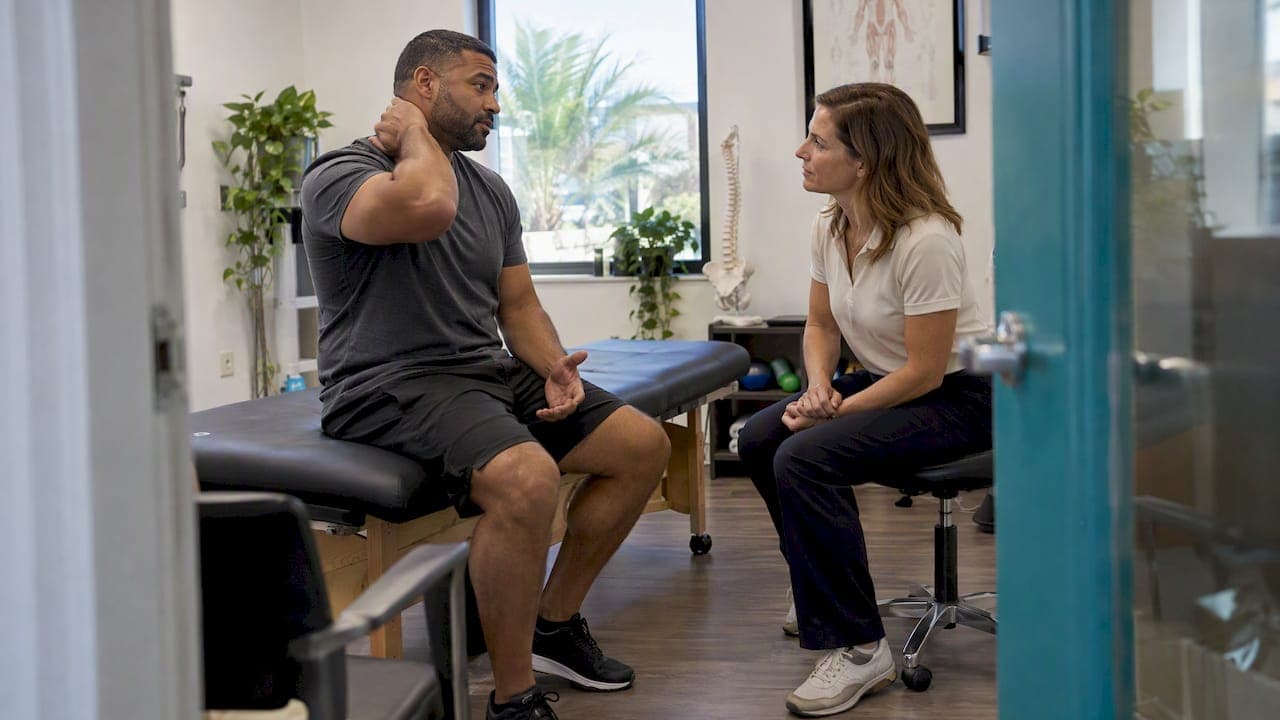
See a chiropractor as soon as you have been cleared of emergency injuries, ideally within the first few days and in Florida no later than 14 days after the crash. If you have any red-flag symptom, such as loss of feeling, trouble breathing or passing out, call 911 first. Chiropractic care comes after the emergency check, or alongside it, never in place of it.
That answer holds whether you were rear-ended on NE 125th Street, hurt on the job, or slipped in a store. Below you will find the timeline, the symptoms that mean "ER now," why pain often shows up late, what the first visit looks like and how to prepare for it.
TL;DR
- Call 911 or go to the ER first for head injury with blackout, neck or spine injury with numbness or weakness, trouble breathing, or heavy bleeding.
- If you are medically stable, book a chiropractic evaluation within the first few days. Soft-tissue inflammation commonly peaks 24 to 72 hours after a crash.
- In Florida, PIP medical benefits require that you receive initial services and care within 14 days of the accident.
- The first visit covers your history, an exam with orthopedic and neurological tests, a diagnosis and a treatment plan.
- Feeling fine is not a reason to wait. Adrenaline hides pain, and some symptoms surface days or weeks later.
Table of Contents
- The short timeline: when to go and where
- When the ER comes before the chiropractor
- Why waiting until it hurts is a mistake
- Florida's 14-day rule
- What happens at the first chiropractic visit after an accident
- What to wear and bring
- Does chiropractic care actually help after a crash?
- How long does care usually last?
- Not just car crashes
- Perspective: why we tell patients not to wait
- Start your evaluation with Spark
- Mistakes that cost patients time
- FAQ
- Sources
The short timeline: when to go and where
Think of the first two weeks as three windows.
| When | What to do |
|---|---|
| Minutes to hours | Emergency signs: call 911 or go to the ER. No signs: still get checked by a physician or urgent care the same day if you can. |
| Days 1 to 3 | Book a chiropractic evaluation. This is when stiffness and inflammation tend to build, and when a baseline record is most useful. |
| Days 3 to 14 | Last stretch for starting care in Florida without putting PIP benefits at risk. Do not let it slip to the final day. |
If you turned down an ambulance, the guidance from a patient-resource site on accident care is to go to the ER or urgent care the same day and see your primary care doctor within 24 to 48 hours. A chiropractic visit can fit into that same window, and many patients do both.
When the ER comes before the chiropractor
A chiropractor treats the musculoskeletal system. Some injuries need a hospital first, and a good clinic will tell you so.
MedlinePlus lists signs that call for 911, including passing out after a head injury, a neck or spine injury with loss of feeling or inability to move, trouble breathing, and heavy bleeding. If someone may have a spinal cord injury, emergency physicians advise calling 911 and keeping the head, neck and shoulders still, because moving the person may cause paralysis.
Go to the ER, not a clinic, if you notice any of these:
- Numbness, tingling or weakness in an arm or leg
- Severe or worsening headache, confusion, repeated vomiting or loss of consciousness
- Chest or abdominal pain, or trouble breathing
- Severe neck pain after a high-speed impact, especially with any loss of movement
Once the ER rules out fractures and other serious conditions, you are in the right place to start recovery. Imaging has a role here, but it is mostly for ruling things out: the Mayo Clinic explains that whiplash does not show up on imaging tests. A clean X-ray does not mean your neck is fine. It means the dangerous causes were excluded, and the soft-tissue problem still needs a hands-on exam.
Why waiting until it hurts is a mistake
Most people who delay do so for one reason: they feel okay. That feeling is unreliable after a collision.
Adrenaline masks pain
Your body floods with adrenaline during a crash. It can mute pain for hours, and soft-tissue inflammation peaks 24 to 72 hours after an accident. The stiff neck you notice on day two is often an injury that was there all along.
Some symptoms arrive late
MedlinePlus notes that some traumatic brain injury symptoms may not appear right away and can show up days or weeks later. The Journal of Urgent Care Medicine points out that patients may not connect later symptoms such as headaches or poor balance to an earlier crash. The same article warns against a false sense of security after low-speed collisions, which can still cause serious harm.

So a fender bender at 15 miles per hour is not a reason to skip the evaluation. If you develop headaches, dizziness, neck stiffness, low back pain, or pain between the shoulder blades in the following days, get examined and tell the provider about the accident.
Your claim needs a timeline
Early records tie your symptoms to the crash. Collision Help stresses that you should tell every provider your symptoms relate to the accident and give the date of the event. A gap of several weeks between the crash and the first visit gives an insurer room to argue that something else caused your pain.
Florida's 14-day rule
If your crash happened in Florida, one deadline is not flexible. Under Florida's PIP statute, medical benefits apply to reasonable expenses for medically necessary services, including rehabilitative services, if you receive initial services and care within 14 days after the accident. Miss that window and you can lose access to those benefits, however much pain you have later.
Practical points for North Miami residents:
- Count from the date of the crash, not from when the pain started.
- Do not wait for day 13. Appointments fill up, and you may need a referral or a second visit.
- Ask your auto insurer or an attorney how the statute applies to your policy. The rules around who may provide the initial care and what benefits follow have details we cannot settle for you in an article.
Our clinic bills insurance directly and documents injuries thoroughly for claims, so you are not left collecting paperwork on your own.
What happens at the first chiropractic visit after an accident
Expect a longer first appointment than a routine adjustment, because the first job is to find out what is injured.
The California Board of Chiropractic Examiners' consumer guide describes the standard first visit: a health history review and a diagnostic exam with general, orthopedic and neurological tests. The chiropractor should explain the diagnosis and recommend an individualized treatment plan. A state chiropractic association adds that at the first visit the chiropractor develops a treatment plan and refers you elsewhere if another health professional would be more appropriate.
In practice, that looks like this:
- Conversation about the accident. Where you were seated, the direction of impact, whether your head struck anything, what you felt right away and since.
- History. Prior injuries, surgeries, medications, and any earlier neck or back problems.
- Physical exam. Range of motion, posture, palpation of muscles and joints, reflexes, strength and sensation.
- Imaging or referral if needed. If something suggests a fracture, disc problem or neurological issue, you should be sent for imaging or to a physician.
- Diagnosis and plan. What is hurting, what care is recommended, how often, and how you will know it is working.
- Gentle first treatment, when appropriate. Some visits include therapies like heat or cold, or electrical stimulation, with adjustments introduced as the exam supports them.
For a deeper walkthrough, see our guide to the chiropractic assessment after an accident.
What to wear and bring
Wear loose, comfortable clothing you can move in, like a t-shirt and stretchy pants or shorts. You will bend, turn and lie on a table, and the doctor needs to see how your neck and back move.
Bring or be ready to describe:
- The accident in detail. The Mayo Clinic suggests preparing to describe the event, your current pain levels, daily medications and previous history at your first exam.
- Insurance and claim details. Your auto policy information, claim number if you have one, and the police report number.
- ER or urgent care paperwork. Discharge notes, imaging results and any prescriptions.
- A photo ID and a list of medications.
- A short symptom diary. Even a few notes on a phone: where it hurts, when it started, what makes it worse.
At Spark, our team speaks English, Spanish and Creole, so you can describe symptoms in the language you think in. We also offer Uber Health transport in North Miami for patients who cannot drive after an injury.
Does chiropractic care actually help after a crash?
For neck injuries, the evidence is encouraging when care is combined with movement. The Mayo Clinic notes that some studies show chiropractic care may ease whiplash pain when paired with exercise or physical therapy. Its guidance on follow-up care for neck injuries includes rest, heat and cold therapy, pain medication and therapeutic exercise, while avoiding too much bed rest. That mix of gentle movement and targeted therapy is what a well-built chiropractic plan aims for.
That is why timing matters. Starting early gives your care team a baseline, lets you begin gentle movement while tissues are still inflamed, and gives you a record from the first days.
How long does care usually last?
This is the part nobody can promise, because it depends on you. We have no controlled study to quote on a single number, so here is how a plan is generally built, and the exam on day one is what sets yours.
- Acute phase, the first one to two weeks. The focus is calming pain and inflammation. Visits tend to be more frequent, and treatment is gentle.
- Corrective phase. As pain settles, the plan shifts to restoring motion and strength, often with spinal adjustments and exercises.
- Maintenance or wellness phase. Some patients continue with periodic visits to protect progress.
Minor strains may settle within a matter of weeks. Multi-area or more severe injuries can take months. Your chiropractor should re-examine you at set points and tell you plainly whether you are improving, and refer you onward if you are not. If someone recommends a long block of visits without explaining why, ask for the measurable goals.
For more on treatment options, read about chiropractic treatment types for faster injury recovery and methods that aid healing after car accidents.
Not just car crashes
The same logic applies after a workplace injury or a slip and fall. A fall can cause the same delayed soft-tissue pain, and the same early documentation helps if a workers' compensation or liability claim follows. If you hurt your neck, back, hip or shoulder, get checked promptly, report the injury at work as required, and tell each provider how it happened.
Perspective: why we tell patients not to wait
We have spent more than 20 years treating accident victims in North Miami, and the pattern we see most is the patient who says, "I felt fine, so I waited." Two weeks later the neck is locked, headaches are daily, and the insurance clock is nearly out.
Our view is simple. A first visit within days is the most useful visit. We can examine you while the injury is fresh, document what we find in detail for your claim, and start gentle care that fits what your body can tolerate. We would rather examine you and tell you that you are fine than meet you three weeks later in a lot of pain.
We also believe recovery should be reachable. That is why we publish our prices, speak English, Spanish and Creole, bill insurance directly, and offer Uber Health rides in North Miami. And if your symptoms point to something that belongs in an ER, we send you there first.
Spark
Start your evaluation with Spark
If you have been in a crash, a fall or a work injury and have not been examined yet, we can see you promptly. Our auto accident evaluation and other therapies include ultrasound, electrical stimulation, traction and decompression, and massage therapy.
Our published prices are $45 for a chiropractic adjustment and $75 per session for shockwave therapy. Monthly wellness plans are $149 (Essential), $249 (Performance) and $399 (Elite). See the full pricing page for what each includes, or call the clinic to book your first visit.
Mistakes that cost patients time
- Waiting for pain to get bad. By then, you may be close to the 14-day Florida deadline.
- Skipping the ER because you feel okay. Serious injuries can be quiet. Get the physician check first or at the same time.
- Telling providers you have "general" back pain. Say it started with the accident, and give the date.
- Stopping care the moment pain eases. Less pain does not always mean the tissue has healed. Finish the re-examination the plan calls for.
- Not saving paperwork. Keep ER notes, receipts, imaging and your symptom diary together.
Want to read further? Our posts on why early chiropractic intervention matters and chiropractic tips after a car accident go deeper on the first days.
FAQ
Should I see a chiropractor or a medical doctor first after an accident?
If you have red-flag symptoms, such as numbness, a head injury with blackout, trouble breathing or severe pain, go to the ER first. If you feel stable, get a same-day check at urgent care or with your primary doctor, and book your chiropractic evaluation within the first few days. The two work well together.
Can I go to a chiropractor if I feel fine?
Yes, and it is a good idea. Adrenaline can hide pain for hours, and inflammation often peaks one to three days after a crash. An exam can catch restricted motion or soft-tissue injury before it becomes obvious, and it creates a dated record.
Is it too late to see a chiropractor weeks after an accident?
No, care can still help weeks or months later, and you should not stay in pain. But in Florida, waiting past 14 days can affect your PIP medical benefits, and a long gap makes it harder to tie symptoms to the crash. Book as soon as you can.
What should I wear to my first chiropractic visit?
Wear loose, comfortable clothes that let you bend and move, such as athletic wear. Bring your ID, insurance and claim information, ER records if you have them, and notes on your symptoms.
How much does a first visit cost at Spark?
Our published price for a chiropractic adjustment is $45. Evaluation and other therapy pricing depends on your plan of care, and insurance may apply, so call us or see our pricing page before you book.
Sources
- When to use the emergency room, adult (MedlinePlus)
- Neck or Back Injury: Know When to Go to the ER (American College of Emergency Physicians)
- Whiplash: Diagnosis and treatment (Mayo Clinic)
- Whiplash: follow-up care (Mayo Clinic)
- Traumatic brain injury (MedlinePlus)
- Assessing Patients in the Wake of Motor Vehicle Accidents (JUCM)
- Seeking Medical Treatment After Accident (Collision Help)
- Delayed Injury Symptoms (Collision Help)
- Florida Statutes 627.736, required PIP benefits
- A Consumer's Guide to Chiropractic Care (California Board of Chiropractic Examiners)
- Your First Chiropractic Visit (Massachusetts Chiropractic Society)