
Most auto accident victims walk into a chiropractic office hoping the pain will stop by Friday. That expectation is understandable, but it misses what research actually shows about spinal manipulation therapy (SMT) and recovery. The real story is quieter and more gradual: chiropractic care may deliver meaningful improvements in disability levels, sleep quality, and physical function over time, especially when it works as part of a bigger recovery plan. If you were hurt in a crash in North Miami and you're weighing your options, understanding this distinction could change how you approach your entire healing process.
Table of Contents
- Understanding the science: What chiropractic really delivers long-term
- Mechanics of chiropractic: How it addresses auto accident injuries
- Limitations and edge cases: Who benefits and who should be cautious
- Cost-effectiveness and practical value: Is chiropractic a smart investment for long-term wellness?
- What most articles miss: The uncomfortable truth about chiropractic for auto accident recovery
- Explore further: Local chiropractic solutions and resources in North Miami
- Frequently asked questions
Key Takeaways
| Point | Details |
|---|---|
| Modest long-term gains | Chiropractic care often delivers small improvements in disability and sleep but not dramatic pain relief. |
| Best in multimodal plans | Research shows chiropractic is most effective when paired with manual therapy, exercise, and education. |
| Cost-effective for select cases | Chiropractic treatment can be cost-efficient for acute neck pain and certain chronic back symptoms, especially with home exercise. |
| Risks are rare | Most complications are mild, making chiropractic generally safe except for a few edge cases. |
Understanding the science: What chiropractic really delivers long-term
The biggest misconception about chiropractic is that it is primarily a pain-relief tool. Pain is what brings people in, but pain scores are actually where chiropractic shows the weakest evidence.
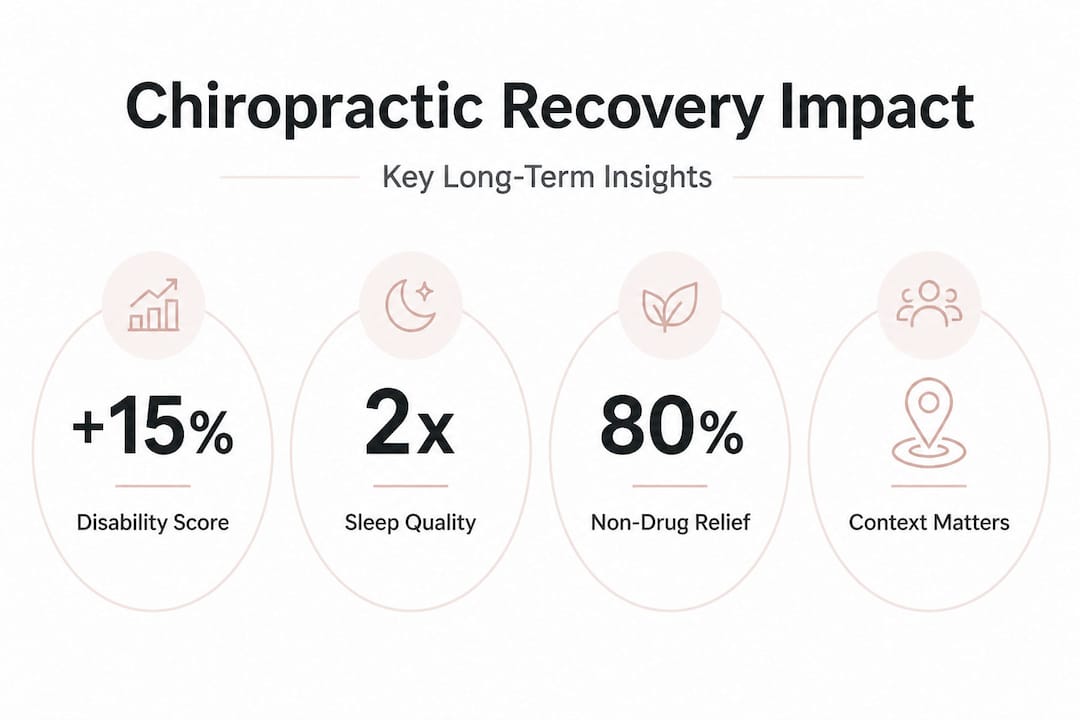
Research tracking patients over extended periods finds small improvements in disability and sleep disturbance, with negligible reductions in pain intensity from SMT alone. That finding surprises most patients, but it is genuinely useful information. It means chiropractic may help you get back to work sooner, sleep through the night more consistently, and perform daily tasks with less restriction, even when your pain score barely changes on a chart.
A major Cochrane review on SMT for chronic low back pain reached a similar conclusion: spinal manipulation provides small short-term improvements in pain and function, but these effects are not clinically relevant over the long term when compared to sham treatments or active controls. That does not mean chiropractic is without value. It means the value requires the right context.
Here is what the evidence actually supports:
- Disability reduction: Modest but measurable gains in ability to perform daily activities
- Sleep quality: Some patients report better rest, which accelerates tissue repair
- Functional movement: Improved range of motion in the spine and surrounding structures
- Patient engagement: Regular visits encourage active involvement in recovery
- No serious adverse events: Safety profile is strong for most populations
| Outcome area | Evidence strength | Typical timeline |
|---|---|---|
| Pain reduction | Weak to moderate | Short-term (weeks) |
| Disability improvement | Moderate | 4 to 12 weeks |
| Sleep disturbance | Moderate | 6 to 12 weeks |
| Functional mobility | Moderate | Varies by injury |
| Long-term pain relief | Weak | Not well supported |
The takeaway here is that the chiropractic wellness benefits you should focus on are not just pain scores. They are quality-of-life markers: can you drive without stiffness, sleep without waking up, pick up your groceries without flinching? Those are the metrics that matter most for accident survivors managing ongoing musculoskeletal (relating to the muscles and skeleton) injury.
"Chiropractic care works best when patients understand it as a functional recovery tool, not a quick fix. The goal is sustainable improvement, not dramatic overnight change."
Modern chiropractic equipment and injury recovery protocols have advanced significantly, giving practitioners more targeted options for soft tissue and joint work. The science is catching up to the tools.
Mechanics of chiropractic: How it addresses auto accident injuries
Now that we understand the outcomes, let's look at how chiropractic physically intervenes in the injuries a crash typically causes.
When a car hits you, even at low speed, your spine absorbs a violent and unnatural force. Whiplash is the most common result, and it involves both joint and soft tissue damage in the cervical (neck) region. Spinal manipulation and mobilization work by restoring normal joint movement, reducing pressure on irritated nerve roots, and improving blood flow to the affected area. This is not just "cracking your back." It is a targeted mechanical intervention on the specific joints that became restricted or misaligned during the crash.
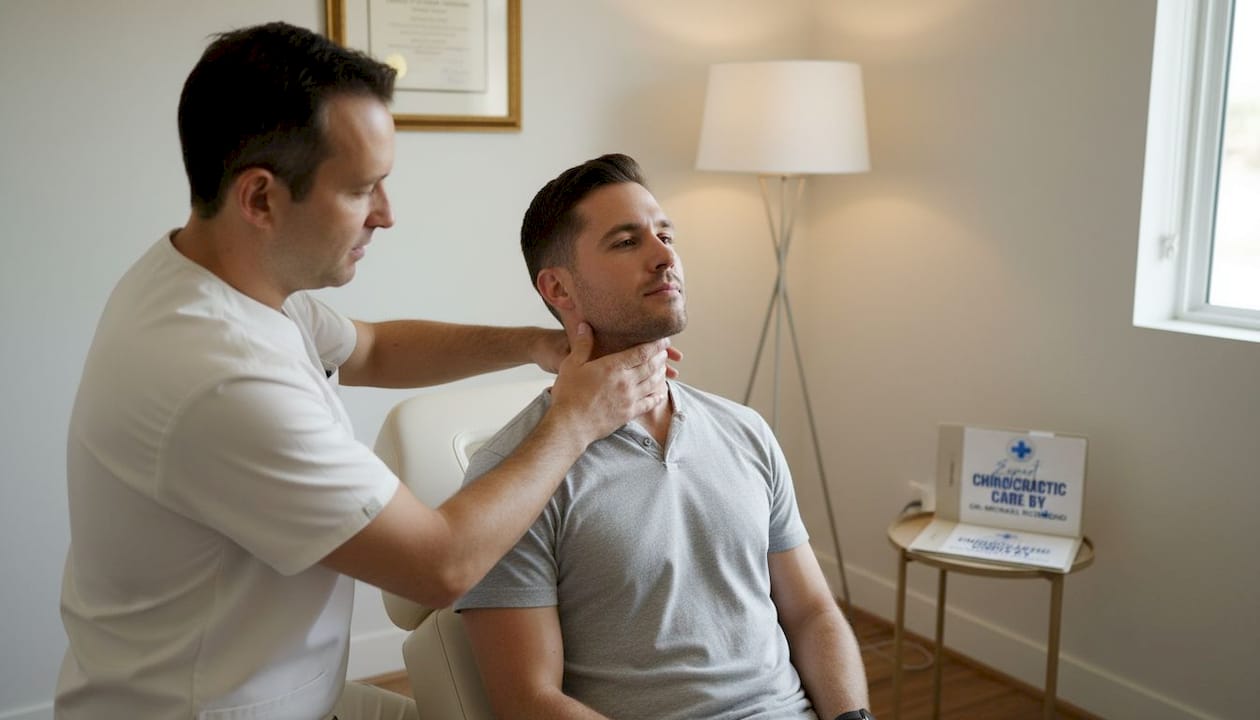
Soft tissue therapies, therapeutic exercises, and patient education typically accompany these adjustments. Clinical practice guidelines recommend that multimodal care for neck pain and whiplash-associated disorders (WAD) should combine manual therapy with exercise and education, rather than relying on any single technique. No single treatment type consistently outperforms this combined approach.
Here is how a well-structured chiropractic plan typically unfolds after an auto accident:
- Initial assessment: Full history, physical exam, and imaging if needed to rule out fractures or serious pathology
- Acute phase care: Gentle mobilization, soft tissue therapy, and activity modification in the first two to four weeks
- Active rehabilitation: Introduction of therapeutic exercises targeting the muscles supporting the injured joint
- Functional improvement phase: Progressive loading, posture correction, and movement retraining
- Maintenance or discharge: Evaluating whether ongoing visits add value or if a home program is sufficient
| Treatment type | Best for | Limitation |
|---|---|---|
| Spinal manipulation | Joint restriction, nerve pressure | Not safe for all patients |
| Soft tissue therapy | Muscle tension, scar tissue | Limited standalone evidence |
| Exercise therapy | Strength, mobility, prevention | Requires patient compliance |
| Patient education | Self-management, behavior change | Effectiveness depends on adherence |
The chiropractic methods used after accidents often differ from routine wellness care. Post-accident treatment requires more careful initial assessment, closer collaboration with other providers, and a phased approach that respects the healing stages of injured tissue.
Pro Tip: Keep a written record of every treatment you receive, including dates, techniques, and your symptom changes. This protects you with insurers and helps your care team see patterns that inform better decisions. Sharing your full medication list and any pre-existing spinal issues is equally critical at your first appointment. Learn how the chiropractic treatment steps work so you can advocate for yourself throughout the process.
Limitations and edge cases: Who benefits and who should be cautious
Knowing the mechanisms and approaches, let's look at where chiropractic works well and where it may not be appropriate.
Chiropractic care is not suitable for everyone who walks in after a crash. Certain conditions make spinal manipulation risky or outright contraindicated (meaning it should not be used). According to a detailed review of spinal manipulation risks, chiropractic is not recommended for patients with vertebral fractures, severe spinal stenosis (narrowing of the spinal canal), or active inflammatory conditions like ankylosing spondylitis. Patients who are older, have prior spinal problems, or present with very high initial pain levels tend to have poorer outcomes.
Factors that suggest a more cautious approach include:
- Osteoporosis: Reduces bone density, raising the risk of fracture under manipulation pressure
- Prior cervical surgery: Hardware or fusion changes the mechanics of the spine
- Arterial risk factors: History of stroke, vascular disease, or certain connective tissue disorders
- Active infection or tumor: Any structural pathology near the spine is a contraindication
- Bleeding disorders or anticoagulant medication use: Increases soft tissue injury risk
The most serious rare complication is cervical artery dissection (a tear in the wall of a neck artery). While alarming to read about, the risk is approximately 1 in 5.85 million cervical manipulation treatments. That is an extremely low number, but it reinforces why honest medical history disclosure matters so much before starting care.
For whiplash and neck injuries specifically, research on conservative treatments for WAD shows no single conservative approach has demonstrated clear superiority over others. Chiropractic performs comparably to physical therapy, massage, and exercise-based rehabilitation for most patients with these injuries. That parity matters because it means you have options, and combining approaches is likely better than committing to only one.
Understanding chiropractic follow-up care is just as important as the initial treatment. Frequent reassessment helps catch deterioration early and justifies continuing or stopping care based on actual progress. Patients who avoid follow-up often either over-treat or under-treat their injuries.
If you are unsure whether chiropractic or surgery is the right call for your injury, the comparison between chiropractic versus surgery after accidents in North Miami is worth reviewing before committing to any path.
Pro Tip: Always disclose your complete medical history to your chiropractor, including all prior injuries, medications, and surgeries. Ask directly whether any of your conditions are contraindications for spinal manipulation. A good practitioner will tell you honestly and refer you elsewhere if needed.
Cost-effectiveness and practical value: Is chiropractic a smart investment for long-term wellness?
After discussing risks and who benefits, let's consider whether chiropractic is worth the financial investment for ongoing recovery after a car accident.
The economic evidence on chiropractic is more nuanced than most marketing materials suggest. A 2025 systematic review on cost-effectiveness of SMT found that spinal manipulation is cost-effective for acute neck pain and chronic back-related leg pain. However, for chronic low back pain treated with chiropractic alone, the cost-effectiveness compared to supervised exercise programs was not consistently demonstrated.
This tells you something practical: the value of chiropractic depends heavily on your specific injury, how soon after the accident you start care, and whether it is paired with other therapies.
| Condition | Chiropractic value | Compared to exercise alone |
|---|---|---|
| Acute neck pain | Cost-effective | Favorable |
| Chronic back-related leg pain | Cost-effective | Favorable |
| Chronic low back pain | Mixed evidence | Not consistently superior |
| Whiplash-associated disorder | Comparable to alternatives | No clear winner |
To evaluate whether chiropractic makes financial sense for your situation, work through these steps:
- Identify your primary condition: Acute neck injury after a crash tends to respond better than long-standing chronic pain
- Check your prognosis: Ask your chiropractor directly what outcomes research suggests for your specific presentation
- Compare your therapy options: Understand whether adding exercise, massage, or physical therapy alongside chiropractic would improve your outcome-to-cost ratio
- Review your insurance coverage: Florida personal injury protection (PIP) insurance often covers chiropractic after accidents, reducing your out-of-pocket cost significantly
- Set reassessment milestones: Agree on specific checkpoints (for example, at four weeks and eight weeks) to measure whether care is delivering real functional improvement
For those without insurance, chiropractic therapy for relief and recovery does not have to be financially out of reach. Clinics in North Miami like Spark Med offer a $25 adjustment option without requiring insurance, making access to initial care practical for accident victims navigating the chaos of post-crash expenses.
What most articles miss: The uncomfortable truth about chiropractic for auto accident recovery
Here is a perspective you will not find in most articles, grounded in both evidence and real-world clinical experience.
Most content about chiropractic after car accidents presents one of two extremes. Either it reads like a sales pitch with dramatic recovery stories, or it is a dismissive skeptic piece citing weak evidence. Neither view serves accident survivors well.
The truth is more uncomfortable. A significant portion of the improvement patients feel after chiropractic care may be driven by placebo and contextual factors rather than the mechanical effect of the manipulation itself. The therapeutic relationship, the hands-on attention, the structured environment, the expectation of improvement: all of these powerfully shape recovery outcomes. Researchers and practitioners continue to debate the biological mechanisms behind SMT, and the evidence for clear mechanical explanations remains limited.
Does that mean chiropractic is "just placebo"? Not exactly. Contextual effects are real therapeutic effects. The body responds to expectation, ritual, and care. If receiving structured chiropractic treatment helps you sleep better, move more confidently, and stay engaged in your recovery, the source of that benefit matters less than the outcome itself. What matters is that you understand what you are getting and why.
The bigger point is this: chiropractic works best not as a standalone cure but as an anchor in a broader recovery ecosystem. Patients who use it that way, combining it with targeted exercise, good sleep hygiene, honest communication with their care team, and progressive return to activity, tend to do significantly better than those who rely on adjustments alone and expect pain to disappear.
Understanding the terminology used in chiropractic care for accident recovery also empowers you to have better conversations with your providers, ask sharper questions, and track your progress more accurately. Knowledge is itself a therapeutic tool.
Explore further: Local chiropractic solutions and resources in North Miami
If you are an auto accident victim in North Miami trying to build a recovery plan that actually holds up over time, the next step is finding providers and resources that align with a multimodal, evidence-informed approach.
Spark Med specializes in chiropractic care for accident recovery in North Miami, offering spinal adjustments, wellness plans, and advanced treatment protocols tailored specifically for collision injuries. With a $25 adjustment option that does not require insurance, starting care is accessible regardless of where you are in the claims process. The clinic serves patients in English, Spanish, and Creole, making it a genuinely local resource for a diverse community. Browse the full chiropractic recovery resources and blog library to explore detailed guides on accident injury treatment, multimodal care strategies, and what to expect at every stage of your recovery. Your wellness plan deserves more than a quick fix.
Frequently asked questions
Does chiropractic care really help with long-term recovery after car accidents?
Research shows it may provide modest improvements in disability and sleep, especially within a comprehensive, multimodal recovery plan rather than as a standalone treatment.
Is chiropractic care safe after whiplash or neck injuries?
Chiropractic care is generally safe for most patients, but not recommended for fractures or inflammatory spinal conditions, and serious risks are extremely rare when treatment is properly screened.
Is chiropractic more effective than home exercise or other therapies for accident recovery?
Chiropractic is cost-effective for acute neck pain and some back conditions, but does not consistently outperform supervised exercise alone for chronic low back pain over the long term.
What are the risks or complications of chiropractic care?
Mild soreness after treatment is common, and serious complications are very rare; the risk of cervical dissection is estimated at approximately 1 in 5.85 million cervical manipulation treatments.