

Holistic injury care is defined as a person-centered treatment model that addresses physical symptoms, psychological factors, and lifestyle conditions together to promote full recovery. This approach, formally called the biopsychosocial model in clinical settings, moves beyond treating a sprained ankle or herniated disc in isolation. WHO 2023 guidelines recommend biopsychosocial, person-centered assessment and tailored combinations of interventions for conditions like chronic low back pain, recognizing that pain and healing are shaped by far more than tissue damage alone. Whether you are recovering from a car accident, a sports injury, or months of chronic pain, understanding this model is the first step toward a recovery that actually holds.
What is holistic injury care and why does it matter?
Holistic injury care treats the whole person, not just the injured tissue, by incorporating a biopsychosocial plan that addresses physical and psychological factors together. The word "holistic" here does not mean herbal supplements or alternative-only therapies. It means that your clinician looks at your pain, your fears about movement, your sleep quality, your stress levels, and your social environment as a connected system rather than separate problems.

This matters because research consistently shows that psychological and lifestyle factors can slow or accelerate tissue healing just as much as the physical injury itself. A person who is anxious about re-injury, sleeping poorly, and under high work stress will recover more slowly from the same ankle sprain than someone without those burdens. Recognizing that reality is not soft science. It is the foundation of multimodal approaches that consistently outperform single-method treatments in clinical trials.
The benefits of holistic injury care extend to both acute injuries and long-term chronic pain. For someone dealing with persistent pain after a car accident, this model offers a path that medication alone cannot provide. It builds the skills, confidence, and physical capacity needed to return to normal life rather than simply masking symptoms.
What does a biopsychosocial assessment involve in holistic injury care?
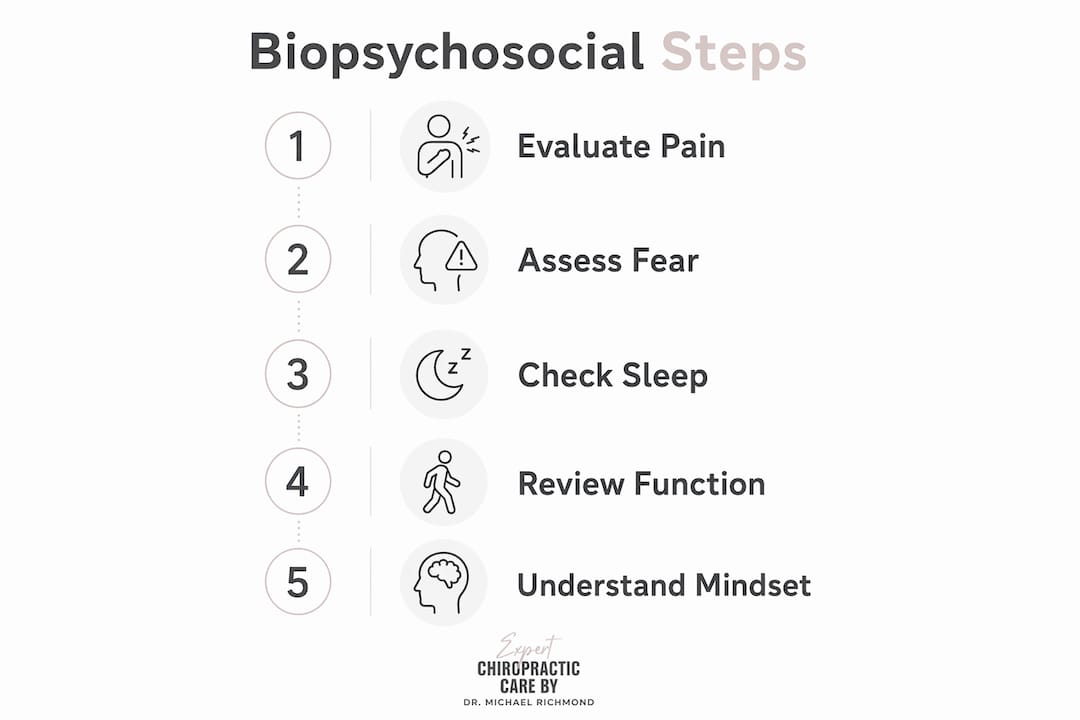
A biopsychosocial assessment is the diagnostic foundation of integrative injury treatment. It goes well beyond asking where it hurts and for how long. Clinicians trained in this model evaluate a wide range of factors that directly influence how you heal:
- Pain and physical function: Range of motion, strength, and daily activity limitations
- Psychological beliefs: Fear of movement, catastrophizing, anxiety about re-injury, and depression
- Sleep quality: Disrupted sleep raises pain sensitivity and slows tissue repair
- Stress levels: Chronic stress elevates cortisol, which impairs immune function and healing
- Social and work environment: Job demands, social support, and financial pressure all affect recovery pace
- Lifestyle factors: Nutrition, physical activity habits, and substance use
Biopsychosocial assessments include evaluating beliefs about pain, fears, sleep, and daily function because these factors directly influence rehabilitation progress. A clinician might use validated tools like the STarT Back Screening Tool, the Pain Catastrophizing Scale, or the Pittsburgh Sleep Quality Index alongside a standard physical exam. The goal is not to label you as anxious or difficult. The goal is to build a care plan that actually fits your life.
What surprises many patients is how much their mindset about pain predicts their recovery timeline. Fear-avoidance behavior, where a person stops moving because they believe movement will cause more damage, is one of the strongest predictors of chronic pain development after an acute injury. Identifying it early through a thorough assessment allows the care team to address it directly before it becomes entrenched.
Pro Tip: Before your first appointment, write down not just your physical symptoms but also what worries you most about your injury. Sharing those fears with your provider gives them the full picture they need to build a plan that works.
How do multimodal treatment approaches work in holistic injury care?
Multimodal treatment means combining physical therapies, education, psychological support, and lifestyle guidance into one coordinated plan rather than applying them in isolation. Holistic physiotherapy integrates manual therapy, exercise, psychological support, and lifestyle advice, producing 15 to 35% better functional outcomes than single techniques. That gap in outcomes is the clearest argument for why a combined approach is worth the extra coordination.
The table below shows how traditional single-method care compares to a multimodal model across key treatment dimensions:
| Treatment dimension | Single-method care | Multimodal holistic care |
|---|---|---|
| Pain management | Medication or rest only | Exercise, manual therapy, CBT, and pacing combined |
| Patient role | Passive recipient | Active participant in goal-setting and self-management |
| Psychological support | Rarely included | CBT, ACT, and mindfulness integrated from the start |
| Lifestyle factors | Not addressed | Sleep, nutrition, and stress management included |
| Long-term outcomes | Symptom relief only | Functional recovery and confidence with movement |
Multidisciplinary care combining physical, psychological, and educational components is especially effective for complex or chronic pain, with evidence supporting exercise therapy, cognitive behavioral therapy (CBT), acceptance and commitment therapy (ACT), acupuncture, and mindfulness as part of the package. CBT helps you identify and change unhelpful thought patterns about pain. ACT focuses on building psychological flexibility so that pain does not control your daily decisions.
Patient self-management is not an afterthought in this model. It is central. Clinicians teach you pacing strategies, graded activity plans, and relaxation techniques so that you are not dependent on appointments to manage your condition. This is what makes the benefits of holistic injury care durable rather than temporary.
Pro Tip: Ask your provider to explain the "why" behind each treatment in your plan. Understanding the purpose of each intervention increases your commitment to it and improves outcomes.
What are the differences between traditional and holistic injury rehabilitation models?
Traditional injury rehabilitation has long followed the PRICE protocol: Protection, Rest, Ice, Compression, and Elevation, often paired with NSAIDs like ibuprofen to reduce inflammation. This model prioritizes symptom control and tissue protection in the short term. It works for minor acute injuries but creates problems when applied broadly, particularly through prolonged rest and heavy reliance on anti-inflammatory medication.
The PEACE and LOVE framework represents the shift toward a more complete model. PEACE stands for Protection, Elevation, Avoid anti-inflammatories, Compression, and Education. LOVE stands for Load, Optimism, Vascularization, and Exercise. The contrast with PRICE is deliberate and evidence-based.
Key differences between the two models:
- Rest vs. early loading: PRICE prescribes rest; PEACE and LOVE prescribe early, graded loading to stimulate tissue repair
- Anti-inflammatories: PRICE uses NSAIDs routinely; PEACE and LOVE recommend avoiding them because early graded activity promotes tissue repair better than suppressing the inflammatory response
- Education: PRICE ignores it; LOVE treats optimism and education as active treatment components
- Patient mindset: PRICE treats the patient as passive; PEACE and LOVE treat the patient as a partner in recovery
A randomized controlled trial comparing PEACE and LOVE to PRICE plus NSAIDs in adolescent ankle sprains found no significant differences in strength and balance outcomes over 12 to 15 weeks. This means the holistic model delivered equivalent physical results without the risks of NSAID use, including gastrointestinal side effects and potential interference with long-term tissue remodeling.
Prolonged immobilization and excessive anti-inflammatory use are not neutral choices. They can delay the natural healing cascade and reduce the mechanical stimulus that growing tissue needs to organize properly. The holistic model respects that biology rather than working against it.
How can you apply holistic injury care principles in your own recovery?
You do not need a full multidisciplinary clinic to apply the core principles of natural injury recovery methods in your daily life. The following steps reflect what the research supports for active, empowered recovery:
- Pace your activity gradually. Start with movements that are uncomfortable but not painful, and increase load progressively over days and weeks. Avoid the cycle of overdoing it on good days and crashing on bad ones.
- Prioritize sleep. Aim for seven to nine hours per night. Poor sleep raises pain sensitivity and slows tissue repair. If pain is disrupting your sleep, raise this with your provider as a treatment priority, not a side issue.
- Manage stress actively. Chronic stress elevates cortisol and impairs immune function. Techniques like diaphragmatic breathing, progressive muscle relaxation, and short mindfulness sessions have measurable effects on pain perception.
- Eat to support healing. Protein supports tissue repair. Anti-inflammatory foods like fatty fish, leafy greens, and berries support recovery. This is not a replacement for treatment but a genuine accelerant.
- Seek multidisciplinary support. A physical therapist, a psychologist familiar with pain, and a chiropractor working from a personalized care plan will produce better results than any single provider working alone.
- Address fear of movement directly. Talk to your provider about any movements you are avoiding. Graded exposure, where you gradually reintroduce feared movements in a controlled way, is one of the most effective tools for breaking the fear-avoidance cycle.
- Use peer support and education. Self-management and patient participation are fundamental in holistic care. Online communities, pain education programs, and group rehabilitation classes all build the knowledge and confidence that sustain recovery long after formal treatment ends.
Pro Tip: Track your activity, sleep, and pain levels in a simple daily log for two weeks. Patterns you cannot see in the moment become obvious on paper, and they give your care team far better data to work with.
Key takeaways
Holistic injury care works because it treats the biological, psychological, and social drivers of pain together, producing outcomes that no single treatment method can match alone.
| Point | Details |
|---|---|
| Biopsychosocial model | Effective care addresses pain, fear, sleep, stress, and lifestyle as one connected system. |
| Multimodal treatment | Combining manual therapy, exercise, CBT, and education produces 15 to 35% better functional outcomes than single techniques. |
| PEACE and LOVE vs. PRICE | Early loading and education deliver equivalent outcomes to rest and NSAIDs without medication risks. |
| Patient empowerment | Active participation, pacing, and self-management skills are core treatment components, not optional extras. |
| Coordinated care | Interdisciplinary teamwork is required; fragmented services reduce the effectiveness of even good individual treatments. |
Why I believe most injury recovery advice still misses the point
I have worked with patients recovering from car accidents, sports injuries, and years of chronic pain. The single most common mistake I see is treating the biopsychosocial model as a philosophy rather than a clinical tool. Providers nod at the concept in training and then default to tissue-focused care the moment a patient walks in.
The research is not subtle here. Coordinated interdisciplinary care improves outcomes, and simply combining treatments without an integrated plan reduces effectiveness. That distinction matters enormously. A patient who sees a chiropractor on Monday, a physical therapist on Wednesday, and a psychologist on Friday is not receiving holistic care if those three providers never communicate. They are receiving fragmented care with a scheduling problem.
What actually moves the needle is when the team shares a single care plan, speaks the same language about goals, and actively builds the patient's confidence alongside their physical capacity. I have seen patients with years of chronic pain make genuine functional gains not because we found the right treatment but because we finally addressed the fear, the sleep, and the self-belief at the same time as the physical work.
Holistic care also does not mean abandoning evidence-based medicine. It means complementing medical treatments with tailored goals like living well with pain rather than waiting for perfect pain elimination. That reframe alone changes what recovery looks like for most people. If you are not getting that kind of care, advocate for it. Ask your provider directly how your psychological and lifestyle factors are being addressed. The question itself often changes the conversation.
— Spark
How Sparkmed supports your recovery with a whole-person approach
Sparkmed's care model in North Miami is built on exactly the principles described in this article. The team integrates chiropractic care with personalized wellness plans that account for your physical condition, recovery goals, and lifestyle factors together. Whether you are recovering from a car accident or managing persistent pain, Sparkmed develops treatment plans with patient input rather than applying a one-size approach.
Spinal adjustments, soft tissue work, and guided rehabilitation are coordinated so that each session builds on the last. Sparkmed also offers a $25 chiropractic adjustment with no insurance required, removing one of the most common barriers to starting care. If you want to experience what integrative injury treatment looks like in practice, Sparkmed is a straightforward place to start.
FAQ
What is holistic injury care in simple terms?
Holistic injury care is a treatment approach that addresses your physical injury alongside psychological factors, lifestyle habits, and social context to support full recovery. It is based on the biopsychosocial model endorsed by the WHO and major clinical guidelines.
Does holistic injury care replace medical treatment?
No. Holistic care complements evidence-based medical treatment rather than replacing it. The goal is to add psychological support, education, and lifestyle interventions alongside physical therapies for better outcomes.
How does the mind-body connection affect injury healing?
Fear of movement, anxiety, and chronic stress all slow recovery by increasing pain sensitivity and reducing physical activity. Addressing these factors through CBT, ACT, or graded exposure is a recognized part of effective injury rehabilitation.
What is the difference between PEACE and LOVE vs. PRICE?
PRICE uses rest and NSAIDs to control symptoms, while PEACE and LOVE use early loading, education, and optimism to promote active tissue repair. Research shows both deliver comparable physical outcomes, but PEACE and LOVE avoid the risks associated with anti-inflammatory medication.
How do I find holistic injury care near me?
Look for clinicians or clinics that use the biopsychosocial model, offer multidisciplinary services, and involve you in setting your own recovery goals. Chiropractic practices, physical therapy clinics, and pain management centers that coordinate care across disciplines are the best starting point.