

Myofascial release is a hands-on manual therapy that applies gentle, sustained pressure to the connective tissue surrounding your muscles to relieve pain and restore movement. Therapists locate areas where fascia has tightened or knotted, then hold steady pressure until the tissue lets go. The word breaks down simply: myo means muscle, and fascia is the web of connective tissue that wraps around every muscle, nerve, blood vessel, and bone in your body. When that tissue stiffens or develops trigger points, pain follows, sometimes far from the actual restriction site.
Key things myofascial release therapy does:
- Locates and treats trigger points (tight knots) in fascial tissue
- Applies slow, sustained pressure to lengthen restricted fascia
- Restores tissue mobility and reduces both local and referred pain
- Addresses the root fascial restriction, not just the symptom location
What is fascia, and why does it cause pain?
Fascia is connective tissue that wraps around every structure in your body, from individual muscle fibers to entire muscle groups, nerves, vessels, and bones. Think of it as a full-body stocking that holds everything in place while allowing smooth movement. When it works well, you barely notice it.
Problems start when fascia tightens. Injury, poor posture, repetitive stress, or even emotional tension can cause the tissue to stiffen and lose its elasticity. Those stiff spots develop into trigger points, localized areas of hypersensitivity that produce both local pain and referred pain in areas that seem unrelated to the original restriction.
- Trauma or acute injury can cause fascial adhesions
- Repetitive stress (desk work, athletic training) gradually tightens fascial layers
- Poor posture loads fascia unevenly over time
- Trigger points can send pain signals to distant body regions
Pro Tip: If you have chronic pain that moves around or doesn't respond to standard treatment, a fascial restriction somewhere else in the body may be the actual source.
How does myofascial release work?
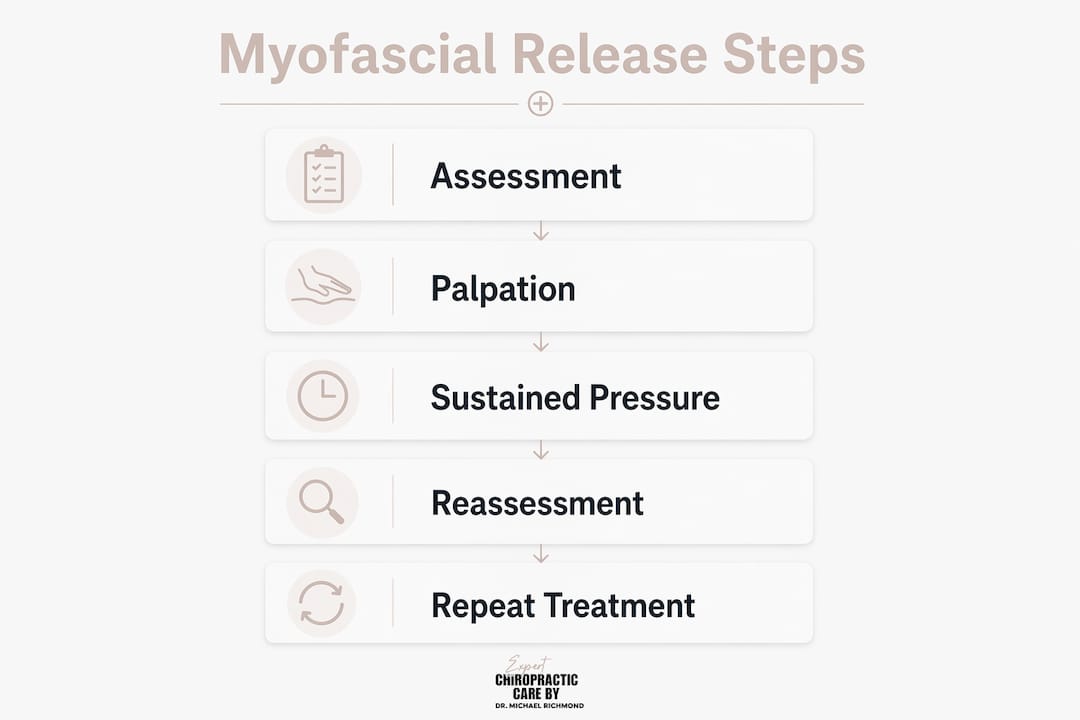
A therapist begins by palpating the tissue, pressing gently to find areas that feel stiff, dense, or resistant compared to surrounding tissue. Once a restriction is located, they apply slow, continuous pressure directly to that spot without lotion or oil, so they can feel the tissue clearly beneath their hands.

What happens next is called the "creep" phenomenon. Fascia is viscoelastic, meaning it responds to sustained load by gradually elongating. Holding gentle pressure for 15–120 seconds allows the tissue to soften and release rather than rebound. The therapist follows the tissue as it moves, maintaining pressure at the barrier until a clear release is felt.
Two distinct approaches exist:
- Direct MFR: The therapist loads the tissue against its restriction barrier, applying steady directional force until the fascia releases or unwinds.
- Indirect MFR: The tissue is guided toward its position of greatest ease, then held there until release occurs naturally.
Therapists reassess after each release and repeat the process on different tissue layers as needed. A single session rarely resolves a chronic restriction; most patients need multiple treatments spaced appropriately.
Who can benefit from myofascial release therapy?
The range of conditions that respond to this therapy is wider than most people expect. Studies show functional improvements following repeated MFR treatments for chronic low back pain, fibromyalgia, muscle tension, and post-surgical recovery. One systematic review covering multiple randomized controlled studies found that myofascial release effectively reduced pain, improved range of motion, and enhanced physical function in patients with chronic low back pain.
Beyond back pain, myofascial release has shown results for:
- Neck pain and tension headaches
- Fibromyalgia and widespread muscle pain
- Post-surgical rehabilitation, including breast cancer surgery recovery
- Neurological conditions involving muscle spasm or motor dysfunction
- Joint pain and limited mobility from musculoskeletal conditions
Athletes recovering from overuse injuries and older adults dealing with general stiffness both tend to respond well. The therapy is also relevant for musculoskeletal recovery after car accidents, where fascial restrictions often develop alongside more obvious injuries.

What to expect during and after a session
Your therapist will position you comfortably, then use their hands, fingers, or forearms to locate tight fascial areas. Unlike a traditional massage, they work without lotion, applying slow, continuous pressure and kneading to feel and follow the tissue. Sessions typically run 30–90 minutes depending on the areas being treated.
What you'll likely feel:
- Mild to moderate pressure, sometimes intense but not sharp
- A gradual softening or "melting" sensation as tissue releases
- Possible soreness in treated areas for 24–48 hours after the session
- Referred sensations in areas away from where the therapist is working
Referred pain during treatment is normal. Fascial restrictions can affect distant areas from the symptom location, so your therapist may work on your hip to address your lower back, or your shoulder to treat arm pain. Drink water after sessions and avoid intense activity for the rest of the day to support recovery.
Benefits and risks of myofascial release therapy
The benefits are well documented. Myofascial release therapy produces pain reduction, increased range of motion, improved circulation, and muscle relaxation. Because it involves no drugs, side effects are minimal compared to pharmaceutical pain management. For patients recovering from surgery or managing chronic conditions, that distinction matters practically.
Specific benefits include:
- Reduced chronic pain without medication
- Greater joint mobility and flexibility
- Improved circulation to restricted tissue areas
- Decreased muscle tension and faster recovery
Risks are real but manageable. Temporary soreness after treatment is the most common complaint. Therapy should be avoided over acute injuries, open wounds, inflamed skin, or areas with active infection. Patients with blood clotting disorders, osteoporosis, or fragile skin conditions should consult their physician before starting. Working with a licensed physical therapist or certified manual therapist reduces the risk of complications significantly. You can read more about non-invasive pain recovery approaches that complement MFR.
Self-myofascial release: How to do it safely at home
Foam rollers and massage balls are the standard tools for self-myofascial release, and they work on the same principle as hands-on therapy: sustained, gentle pressure on tight tissue. The key word is gentle. Aggressive rolling does not speed up the process and can irritate tissue.
Basic steps for safe self-release:
- Position the foam roller or ball under the target muscle group
- Sink slowly into the pressure and hold for 30–60 seconds on tender spots
- Breathe steadily and let the tissue soften rather than forcing through pain
- Move to adjacent areas once the initial spot releases
Precautions to follow every time:
- Never roll directly over joints, bones, or the spine
- Avoid any area with acute injury, bruising, or inflammation
- Stop if you feel sharp or shooting pain
- Start with lighter pressure and increase gradually over multiple sessions
Self-release works well for calves, hamstrings, the thoracic spine, and the IT band. For the neck, lower back, or any area with a diagnosed condition, professional guidance is worth getting before you start.
How myofascial release differs from massage and trigger point therapy
Myofascial release is often grouped with massage and trigger point therapy, but the three are meaningfully different. Traditional massage primarily targets muscle relaxation through rhythmic pressure and movement, often using oil or lotion. It feels good and reduces tension, but it does not specifically address fascial restrictions.
Trigger point therapy zeroes in on specific hypersensitive spots within muscle tissue, applying direct pressure to deactivate them. MFR, by contrast, targets the broader fascial network rather than isolated points. It treats the connective tissue system as a whole, which is why it can relieve pain in areas that seem unrelated to where the therapist is working.
The direct versus indirect distinction is also unique to MFR. No equivalent exists in standard massage, where the therapist always works toward relaxation rather than engaging or easing a specific tissue barrier. That specificity is what makes MFR particularly useful for chronic, non-localized pain that has not responded to other manual therapies.
What research says about myofascial release effectiveness
The clinical evidence for MFR is growing, particularly for chronic pain conditions. A review published in PMC covering multiple studies found that MFR reduces pain and improves function across conditions including chronic low back pain, fibromyalgia, post-surgical recovery, and neurological disorders. The therapy has also shown promise in neurorehabilitation, improving gait and physical function in patients recovering from stroke.
The physiological explanation centers on fascia's viscoelastic properties. Sustained pressure triggers the creep response, gradually elongating tissue that has shortened or adhered. Practitioners who distinguish between direct and indirect techniques can tailor treatment to the specific nature of each restriction, which likely explains why outcomes vary when technique choice is not matched to the patient's presentation.
One consistent finding across studies: patients sometimes experience referred pain during treatment, with symptoms appearing in areas distant from the restriction being treated. That pattern confirms that fascial restrictions do not stay local. Addressing the source, not just the symptom, is what separates effective MFR from surface-level manual therapy.
Key Takeaways
Myofascial release therapy relieves chronic pain by applying sustained pressure to fascial restrictions, targeting the connective tissue source rather than the symptom location.
| Point | Details |
|---|---|
| Fascia drives pain | Tight fascial tissue creates trigger points that cause both local and referred pain throughout the body. |
| Creep is the mechanism | Holding gentle pressure for 15–120 seconds allows fascia to elongate gradually and release tension. |
| Direct vs. indirect technique | Therapists choose between engaging the restriction barrier directly or guiding tissue toward ease, based on the restriction type. |
| Broad clinical benefits | Research supports MFR for chronic low back pain, fibromyalgia, post-surgical recovery, and neurological rehabilitation. |
| Self-release requires caution | Foam rollers and massage balls work, but avoid bones, acute injuries, and inflamed areas, and start with light pressure. |