

Trigger point therapy is defined as a targeted manual and needling treatment applied directly to hyperirritable muscle nodules, called trigger points, to relieve localized and referred pain. These nodules form within taut bands of skeletal muscle and are a recognized cause of chronic musculoskeletal pain. The American Academy of Family Physicians acknowledges trigger points as a common source of persistent muscle pain in adults. Understanding this therapy gives you a concrete, evidence-based option when chronic pain limits your daily life.
What is a trigger point and how does it cause pain?
A trigger point is a palpable nodule within a taut band of muscle that produces pain both at the site and in distant areas of the body. Research confirms that trigger point tissue is measurably stiffer than healthy muscle, with stiffness measured at 32.28 kPa versus 19.16 kPa in normal muscle. That difference in stiffness explains why pressing on a trigger point feels distinctly harder and more sensitive than the surrounding tissue.
The pain a trigger point produces follows predictable patterns. A trigger point in the upper trapezius, for example, commonly causes tension headaches and pain behind the eye. These referred pain patterns are a diagnostic hallmark that allows clinicians to identify the correct muscle even when the pain appears somewhere else entirely.
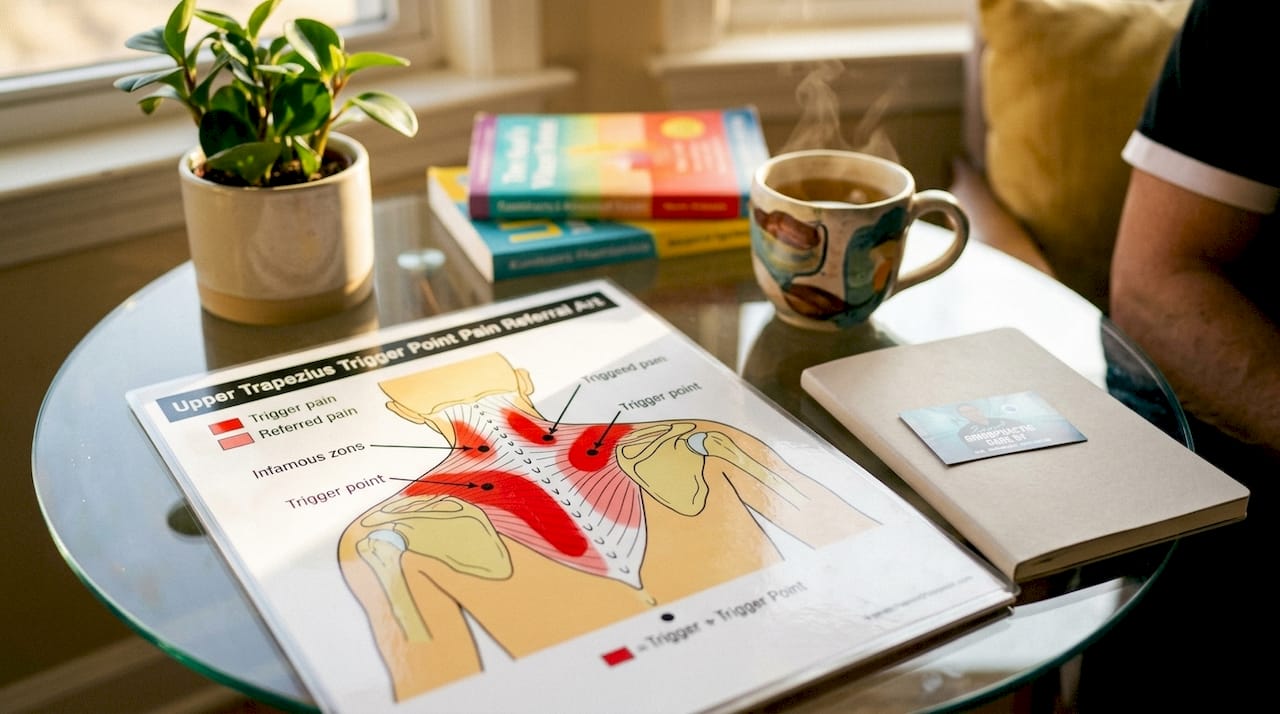
The chemistry inside a trigger point makes the problem worse over time. Research shows that trigger points contain elevated inflammatory molecules such as substance P, TNF-alpha, and bradykinin. These chemicals maintain a painful, self-reinforcing cycle within the muscle tissue.
Left untreated, trigger points do more than cause local discomfort. Chronic untreated trigger points lower the pain threshold through central sensitization of the spinal cord. This means your nervous system becomes amplified, making pain feel more intense and widespread than the original injury warrants.
Common conditions linked to trigger points:
- Neck pain and stiffness
- Tension headaches and migraines
- Shoulder impingement and rotator cuff pain
- Lower back pain
- Jaw pain (temporomandibular joint dysfunction)
- Sciatica-like leg pain from gluteal trigger points
How does trigger point therapy work?
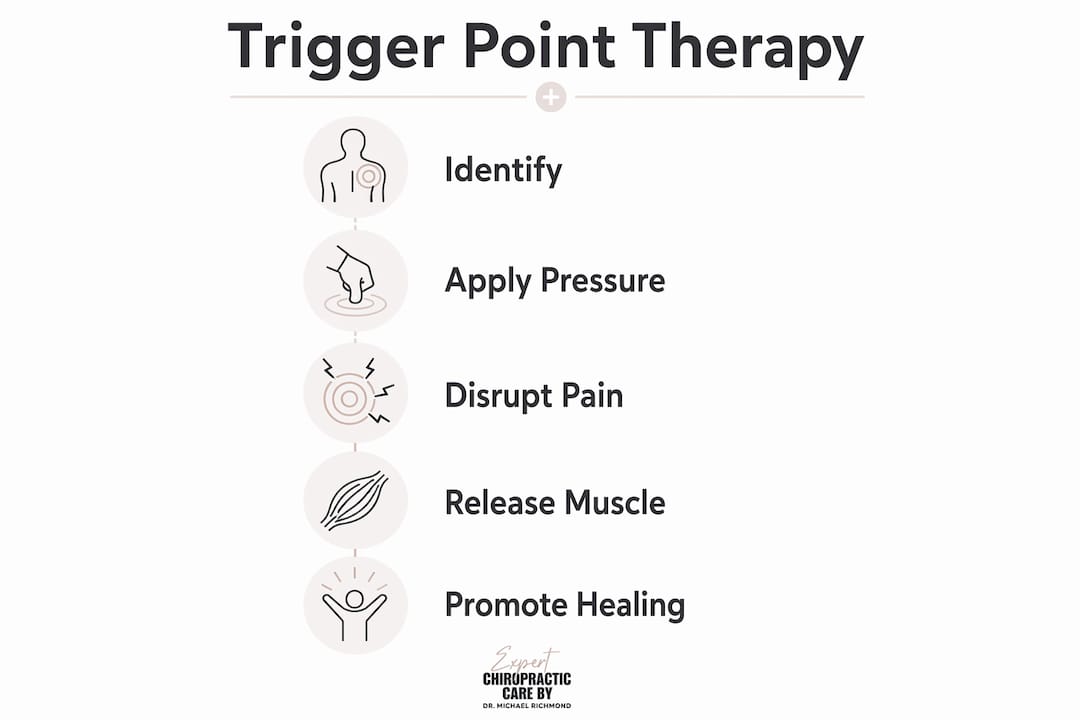
Trigger point therapy works by disrupting the chemical and mechanical environment inside the nodule, which breaks the pain cycle and allows the muscle to reset. The therapy targets complex chemical environments, not just mechanical knots, which is why skilled application produces results that simple stretching cannot replicate. Two primary techniques drive most clinical outcomes: manual compression and dry needling.
Manual compression (ischemic compression)
Ischemic compression involves applying firm, sustained pressure directly to the trigger point until the tissue releases. The therapist or patient holds pressure until a noticeable softening or "release" sensation occurs in the muscle. This mechanical pressure flushes out the inflammatory molecules trapped in the nodule and restores normal blood flow to the area.
Dry needling
Dry needling uses a thin filiform needle inserted directly into the trigger point. The goal is to provoke a local twitch response, which is a brief involuntary muscle contraction that signals effective engagement of the trigger point and helps reset muscle function. Dry needling targets motor endplates specifically, which separates it mechanically from acupuncture despite the similar tools used. Acupuncture follows meridian-based principles; dry needling follows neuromuscular anatomy.
Spray and stretch
The spray and stretch technique applies a vapocoolant spray to the skin over the affected muscle, then immediately stretches the muscle to its full length. The cold stimulus interrupts the pain signal long enough for the stretch to lengthen the taut band. Clinicians use this method most often when direct compression is too painful for the patient to tolerate.
How these techniques produce relief, step by step:
- Pressure or needle contact disrupts the taut muscle band mechanically.
- The local twitch response flushes accumulated inflammatory chemicals from the nodule.
- Blood flow returns to the previously ischemic tissue.
- Inflammatory molecules like substance P and bradykinin disperse.
- The nervous system receives reduced pain signals from the treated area.
- Central sensitization begins to quiet as the local pain source diminishes.
Pro Tip: During manual compression, you should feel intense pressure that reproduces your familiar pain pattern. That sensation, often called "good pain," confirms you have located the correct trigger point. If the pain feels sharp, burning, or electric, reposition the pressure slightly.
What are the benefits of trigger point therapy for chronic pain?
Trigger point therapy produces clinically meaningful pain reduction. A 2020 meta-analysis found that targeted trigger point treatment reduces neck pain by 1.5 to 2.3 points on a 10-point pain scale at immediate and short-term follow-ups. A reduction of that magnitude is enough to shift a patient from severe to moderate pain, which meaningfully changes daily function.
The benefits extend beyond pain scores. Patients consistently report improvements in range of motion, posture, sleep quality, and the ability to perform work or exercise without guarding. For patients with neck pain specifically, trigger point therapy often restores rotation and side-bending that had been restricted for months.
"The release felt during trigger point therapy is unlike anything else. Patients describe it as a wave of warmth spreading through the muscle, followed by a deep sense of relaxation they haven't felt in years." This kind of feedback reflects the neurological shift that occurs when the inflammatory cycle inside the nodule finally breaks.
Trigger point therapy also addresses the nervous system problem that chronic pain creates. By reducing the local pain signal at the trigger point, the treatment helps quiet central sensitization in the spinal cord. Patients who have been in pain for months often notice that their overall pain sensitivity decreases after several sessions, not just the pain at the treated site.
Compared to general massage, trigger point massage therapy is more specific. General massage improves circulation and relaxation broadly. Trigger point massage therapy targets the exact nodule responsible for a patient's specific pain pattern. For non-invasive pain recovery, this specificity makes trigger point work a preferred first-line manual treatment for many clinicians.
How to do trigger point therapy at home safely
Self-administered trigger point therapy is effective for mild to moderate trigger points when done correctly. The Cleveland Clinic recommends applying firm sustained pressure for 30–90 seconds per point, with total session duration of 3–5 minutes, repeated 5–6 times daily for best home care results. Consistency matters more than intensity.
Steps for safe self-treatment:
- Locate the trigger point by pressing slowly through the muscle until you find a spot that is noticeably harder and reproduces your pain pattern.
- Apply steady pressure using a thumb, knuckle, massage ball, or foam roller.
- Hold the pressure for 30–90 seconds without grinding or rubbing.
- Release slowly and allow the tissue to rest for 10–15 seconds.
- Repeat on the same point 2–3 times per session.
- Follow each session with gentle stretching of the treated muscle.
Foam rollers work well for large muscles like the quadriceps, hamstrings, and thoracic spine. Massage balls, such as lacrosse balls or dedicated therapy balls, reach smaller muscles like the piriformis, pectorals, and suboccipitals. Avoid applying direct pressure over bony prominences, joints, or areas with bruising or inflammation.
Pro Tip: Keep a simple pain journal for the first two weeks of self-treatment. Note which points you treated, the intensity of pressure, and your pain level before and after. This record helps you and your clinician identify which trigger points are responding and which need professional attention.
Seek professional care when trigger points are deep, persistent, or located in areas you cannot reach safely. A licensed physical therapist, chiropractor, or certified dry needling practitioner can access muscles that self-treatment cannot. Manual therapy in clinical settings also combines trigger point work with corrective exercise and postural correction, which addresses the root causes that created the trigger points in the first place.
Trigger point therapy is rarely a standalone fix. Optimal outcomes require integrating soft tissue work with corrective exercise and ergonomic improvements. Without addressing posture, muscle imbalances, and movement habits, trigger points tend to return within weeks.
Key Takeaways
Trigger point therapy relieves chronic muscle pain by targeting hyperirritable nodules with manual pressure or dry needling, disrupting the inflammatory cycle and quieting nervous system sensitization.
| Point | Details |
|---|---|
| Trigger points are chemical environments | Elevated substance P, TNF-alpha, and bradykinin maintain pain; pressure disperses these molecules. |
| Tissue stiffness confirms trigger points | Trigger point tissue measures 32.28 kPa versus 19.16 kPa in healthy muscle. |
| Clinical pain reduction is measurable | Targeted treatment reduces neck pain by 1.5–2.3 points on a 10-point scale. |
| Home care requires consistency | Apply pressure for 30–90 seconds per point, 5–6 times daily for best results. |
| Therapy works best as part of a broader plan | Combine trigger point work with corrective exercise and posture correction to prevent recurrence. |
What I've learned from watching trigger point therapy change patients' lives
Most patients arrive expecting trigger point therapy to be a simple massage. It isn't. The technique requires precise location of the nodule, correct pressure depth, and enough time to allow the tissue to actually release. When those elements align, the results are striking. I have seen patients with years of neck pain regain full rotation after two or three sessions. That kind of outcome is not magic. It is the result of finally addressing the specific tissue that was driving the problem.
The part that conventional pain management often misses is the nervous system component. Treating the trigger point is not just about the muscle. It is about reducing the signal load that has been keeping the spinal cord in a sensitized state. Patients who commit to consistent treatment often report that their overall pain sensitivity drops, not just the pain at the treated site. That systemic shift is what separates trigger point therapy from temporary relief.
My honest caution is this: therapy alone will not hold if the underlying cause remains. Poor posture at a desk, a muscle imbalance from an old injury, or repetitive strain from daily work will rebuild trigger points faster than treatment can clear them. The patients who get lasting relief are the ones who pair their sessions with postural correction, targeted stretching, and ergonomic changes. Therapy opens the door. Lifestyle changes keep it open.
— Spark
Sparkmed's approach to trigger point and manual therapy care
Sparkmed supports patients in North Miami who are navigating chronic muscle pain, post-accident recovery, and musculoskeletal discomfort. The clinic's team provides hands-on guidance on manual therapies, including trigger point techniques, as part of individualized recovery plans.

Sparkmed's care model pairs clinical treatment with patient education, so you understand what is happening in your body and what to do between sessions. The clinic is committed to inclusive, accessible care for every patient. Learn more about Sparkmed's approach and patient care commitment, or visit the Sparkmed blog for in-depth resources on pain management, chiropractic techniques, and recovery strategies tailored to real patient needs.
FAQ
What is trigger point therapy used to treat?
Trigger point therapy treats chronic muscle pain, tension headaches, neck stiffness, shoulder pain, and lower back pain caused by hyperirritable nodules within taut muscle bands. It is also used to address referred pain patterns that appear distant from the actual muscle problem.
How is dry needling different from acupuncture?
Dry needling targets motor endplates within specific trigger points to provoke a local twitch response, while acupuncture follows traditional meridian-based principles. The tools look similar, but the anatomical targets and clinical mechanisms are different.
How many sessions does trigger point therapy take to work?
Most patients notice measurable pain reduction within 2–4 sessions, though chronic or deeply embedded trigger points may require more. Consistent home care between sessions significantly speeds up results.
Can I do trigger point therapy on myself at home?
Yes, for accessible muscles. Apply firm pressure for 30–90 seconds per point using a massage ball or foam roller, repeated 5–6 times daily. Consult a licensed clinician for deep or persistent trigger points you cannot safely reach.
Does trigger point therapy hurt?
Patients typically feel intense pressure that reproduces their familiar pain pattern, often described as "good pain." This sensation confirms correct trigger point location. Sharp, burning, or electric pain signals incorrect placement and warrants repositioning.