

Recovering from a car accident is rarely as simple as resting for a week and moving on. Most people assume that time alone heals soft tissue injuries, or that any chiropractor can walk them through a standard set of adjustments and call it done. The reality is that post-accident chiropractic care involves careful injury screening, evidence-based decision-making, and a genuinely personalized plan built around your specific injury pattern. This article walks you through what chiropractic care actually involves after an accident, what the research supports, which techniques are most effective, and how to compare your options so you can make confident, informed decisions about your recovery.
Table of Contents
- Understanding chiropractic care after auto accidents
- What does the evidence say about chiropractic effectiveness?
- Core chiropractic techniques and adjunctive treatments used after accidents
- Chiropractic vs other recovery options: Costs, risks, and real-world outcomes
- The nuanced truth most accident survivors miss about chiropractic
- Affordable, evidence-aligned chiropractic options in North Miami
- Frequently asked questions
Key Takeaways
| Point | Details |
|---|---|
| Chiropractic treats accident injuries | Chiropractic care is focused on safe, conservative recovery for whiplash, tissue damage, and joint dysfunction after accidents. |
| Evidence is mixed | Research shows variable outcomes for chiropractic in whiplash and low back pain, so results can differ from patient to patient. |
| Safety screening matters | Careful screening for contraindications ensures chiropractic is appropriate and safe for your specific injury type. |
| Adjunctive therapies aid recovery | Chiropractors use mobilization, electrical stimulation, and exercise as part of comprehensive treatment. |
| Shared decision-making is key | The best approach combines patient input, clinician guidance, and evidence for tailored recovery—not promises of quick fixes. |
Understanding chiropractic care after auto accidents
Now that we're clear on the stakes, let's outline what chiropractic care actually looks like after an accident.
Chiropractic care after accidents is best understood as conservative, whole-person management of neuromusculoskeletal injuries caused or worsened by motor vehicle trauma, with whiplash-associated disorder (WAD) being the most frequently treated condition. That framing matters because it signals that treatment is not just about cracking your back. It involves a full assessment of how the collision affected your nerves, muscles, joints, and spinal structures.
Before any spinal manipulation begins, trained chiropractors screen for absolute contraindications. These are conditions where manual adjustments could be dangerous or make things worse. That list includes undetected fractures, joint dislocations, ligamentous instability (including alar ligament rupture), spinal cord compromise, and progressive neurological deficits. If any of these are present, chiropractors will refer you out or modify treatment significantly. This step alone is what separates a credible practice from one that treats every patient with the same cookie-cutter approach.
When you are eligible for care, your chiropractor should be finding local chiropractic care resources that match your injury grade. The Quebec Task Force classification for WAD provides a widely used framework for this assessment.
| WAD Grade | Description | Chiropractic Applicability |
|---|---|---|
| Grade I | Neck pain, stiffness, tenderness only | Highly applicable |
| Grade II | Musculoskeletal signs (decreased range of motion) | Highly applicable |
| Grade III | Neurological signs (weakness, sensory loss) | Applicable with caution |
| Grade IV | Fracture or dislocation present | Contraindicated; refer out |
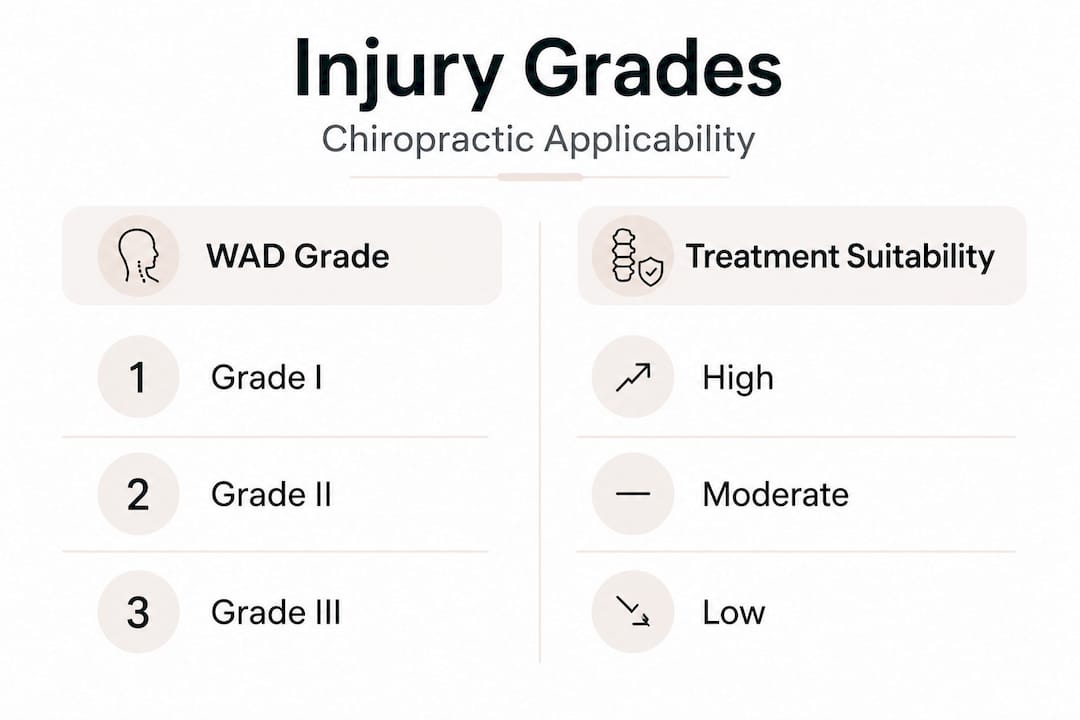
Knowing your WAD grade before you start treatment is one of the most important steps you can take. It shapes the entire plan. You should also be preparing for your chiropractic visit ahead of time by documenting your symptoms, the mechanism of injury, and any imaging results from the emergency room.
Common injuries treated by chiropractors after auto accidents:
- Whiplash-associated disorder (Grades I, II, and select Grade III)
- Cervical and lumbar muscle strains
- Spinal facet joint dysfunction
- Post-traumatic headaches (often cervicogenic in origin)
- Thoracic spine restrictions from seatbelt and airbag impact
- Referred pain patterns from soft tissue damage
Each of these conditions responds differently to treatment, which is exactly why a personalized assessment beats a one-size-fits-all protocol every time.
What does the evidence say about chiropractic effectiveness?
With context in place, we can now ask: what does the research actually say about chiropractic effectiveness for accident recovery?
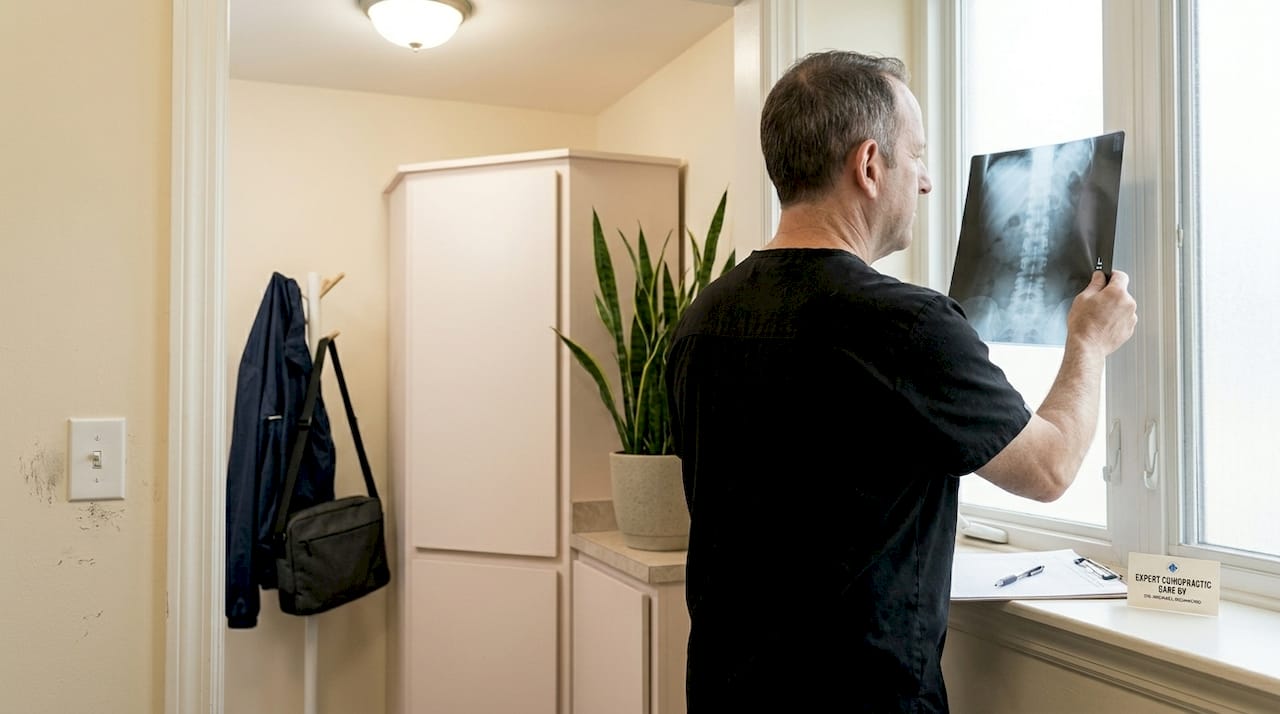
The honest answer is that the evidence is nuanced, and anyone promising guaranteed results should raise a red flag. A major Cochrane review on whiplash concluded that evidence for conservative treatment in acute and subacute WAD Grades I and II is mixed and uncertain, meaning researchers could not pool enough high-quality studies to confidently support or refute conservative approaches. That does not mean chiropractic is ineffective. It means the research is still catching up, and that overstating certainty does patients a disservice.
For low back pain, the picture is slightly different. A separate Cochrane review on spinal manipulation found small short-term improvements for chronic low back pain, though certainty was low and clinically meaningful long-term outcomes were limited. In plain language: some people feel meaningfully better in the short term, but we do not yet have strong evidence showing lasting superiority over other well-delivered rehab options.
"Cochrane reviews caution that conservative treatment effectiveness for whiplash is uncertain or small, so best practice is shared decision-making and monitoring objective improvement rather than relying on claims of guaranteed recovery." Cochrane Review, 2024
Despite these uncertainties, chiropractic often compares favorably to other options in real-world clinical settings, particularly when it comes to speed of initial relief and cost. Here is how the main options stack up:
| Treatment Option | Typical Sessions | Focus | Common Outcome Measures |
|---|---|---|---|
| Chiropractic care | 6 to 20 sessions | Joint mobility, nerve function, soft tissue | Neck Disability Index, pain scales |
| Physical therapy | 8 to 24 sessions | Strength, mobility, neuromuscular control | Functional assessments, pain scales |
| Conventional rehab | Ongoing, varies | Multi-disciplinary, medications, exercise | Quality of life scores, return to work |
The key takeaway from this comparison is not that one option wins outright. Rather, it is that chiropractic vs surgery after accidents is not even a close call in most soft tissue injury cases. Surgery is reserved for structural damage that conservative care cannot address. For the vast majority of whiplash and strain injuries, conservative care including chiropractic is the right starting point.
Shared decision-making is the gold standard for navigating this landscape:
- Assess injury severity using validated tools like the WAD grading scale and imaging when indicated
- Consider the evidence for and against each treatment option based on your specific injury type
- Monitor improvement using objective outcome measures after every 3 to 4 sessions
- Adapt the plan based on results, and do not hesitate to add or change modalities if progress stalls
This framework keeps you in control and ensures your chiropractor is accountable for delivering measurable progress, not just ongoing appointments.
Core chiropractic techniques and adjunctive treatments used after accidents
To make sense of chiropractic in practice, let's look at the main techniques and therapies applied after auto accidents.
Not every chiropractor uses the same toolkit, and the best practitioners select techniques based on your injury phase, tissue healing timelines, and individual presentation. The mechanics of chiropractic treatment after accidents generally include restoring spinal joint mobility through mobilization or high-velocity, low-amplitude (HVLA) manipulation, paired with adjunctive modalities and exercise rehabilitation.
During the acute phase, which typically covers the first one to two weeks post-accident, inflammation is highest and tissues are most sensitive. At this stage, chiropractors often favor gentle mobilization over full manipulation. Mobilization involves slow, rhythmic movements that restore joint range of motion without the audible "pop" of a full adjustment. As inflammation subsides and tissue healing progresses, HVLA manipulation may be introduced to restore more specific joint mechanics and neurological input.
Chiropractic wellness for recovery extends well beyond the adjustment table. Most accident-focused clinics now integrate a range of adjunctive therapies that work together to accelerate tissue repair, reduce pain, and rebuild functional movement patterns.
Common adjunctive therapies used alongside spinal manipulation:
- Soft tissue therapy and massage: Targets muscle tension, trigger points, and fascial adhesions that form after traumatic injury
- Electrical stimulation (e-stim): Reduces acute muscle spasm and modulates pain signaling through gentle electrical currents
- Therapeutic ultrasound: Uses sound waves to warm deep tissues and promote circulation in injured areas
- Cold laser therapy: Stimulates cellular repair and reduces inflammation in soft tissue injuries
- Corrective exercise programs: Rebuilds cervical and lumbar stability once the acute phase has passed
- Postural retraining: Addresses compensation patterns that develop after injury and can lead to chronic pain if left untreated
Progress is tracked using validated tools like the Neck Disability Index (NDI), which scores functional limitations from neck pain on a scale that lets your chiropractor and you both see measurable improvement over time. Tracking matters because it makes your recovery objective rather than purely based on feelings.
Pro Tip: At your first visit, ask your chiropractor to document your baseline NDI score and set clear benchmarks for improvement after every four sessions. If improvement stalls and no plan adjustment is offered, that is a sign to seek a second opinion.
Working with local chiropractors for recovery who use this kind of multimodal approach dramatically increases the likelihood that your care stays on track and adapts when needed.
Chiropractic vs other recovery options: Costs, risks, and real-world outcomes
Once the range of treatments is clear, it is useful to compare chiropractic care to alternative recovery options.
One of the most practical reasons accident survivors choose chiropractic is cost. Compared to surgical intervention or prolonged multi-specialty rehabilitation, chiropractic typically involves fewer sessions and significantly lower out-of-pocket expenses, especially when you factor in clinics offering affordable care packages for accident victims.
| Recovery Option | Average Cost per Session | Typical Duration | Invasiveness |
|---|---|---|---|
| Chiropractic care | $25 to $150 | 6 to 20 sessions | Non-invasive |
| Physical therapy | $75 to $200 | 8 to 24 sessions | Non-invasive |
| Pain management (injections) | $300 to $600+ per procedure | Multiple rounds | Minimally invasive |
| Surgery | $10,000 to $50,000+ | Recovery months to years | Highly invasive |
Research supports the cost-effectiveness argument in specific clinical contexts. Manual cervical manipulation may offer short-term benefits in acute whiplash compared to conventional rehabilitation, though researchers emphasize that results depend on study quality and protocol specifics. In practical terms, this means a well-structured chiropractic plan can deliver meaningful early relief at a fraction of the cost of more intensive interventions.
Risks deserve honest discussion too. Minor side effects like temporary soreness, fatigue, or mild headache after adjustments are fairly common, particularly in the early sessions. Serious adverse events are rare but not impossible, which is why the contraindication screening described earlier is non-negotiable. Legitimate risk areas include patients with undiagnosed fractures, arterial dissection risks, or severe osteoporosis.
Key factors to weigh when choosing a recovery path:
- Your out-of-pocket budget and insurance coverage
- The number of sessions required before measurable improvement
- Your personal comfort level with manual versus passive treatment
- The strength of evidence for your specific injury type
- Your expected recovery timeline and return-to-function goals
- Whether your provider actively screens for contraindications
Here is a link to learn more about how chiropractic compares to surgery for accident victims who have been told surgery might be their only option.
Pro Tip: Always confirm that your chiropractor conducts a documented contraindication screening before your first adjustment and schedules formal progress reviews every four to six sessions. A provider who skips these steps is cutting corners on your safety.
The nuanced truth most accident survivors miss about chiropractic
With facts and comparisons in hand, let's explore the nuanced realities that most accident survivors and even many providers miss.
The biggest misconception we see at Spark Chiropractic is that chiropractic care is either a magic fix or completely unsupported by evidence. Both positions are wrong, and both lead accident survivors to poor decisions.
The truth sits in the middle. Chiropractic care, when delivered by a well-trained provider who screens appropriately, uses a multimodal approach, and tracks outcomes objectively, offers genuine value for a specific group of post-accident patients. It is not right for everyone, and it does not work identically for every injury. The problem is that this nuance rarely makes it into the conversation between a patient in pain and a clinic eager to start care.
"Some chiropractic-oriented materials promote manipulation as a central post-crash intervention, while Cochrane evidence reviews caution that conservative treatment effectiveness for whiplash is uncertain or small." Chiropractic Authority, citing Cochrane evidence synthesis
Watch for clinics that promise a fixed number of sessions regardless of your progress, guarantee outcomes that evidence does not support, or fail to involve you in setting recovery benchmarks. These are signs that the business model matters more to them than your actual recovery.
The concept of shared decision-making is where evidence meets real human outcomes. When your chiropractor explains the uncertainty in the research, sets realistic expectations, and involves you in adjusting the plan when progress is slower than expected, that is the kind of care that actually produces better long-term results. Not because it's idealistic, but because it aligns your expectations with reality and keeps treatment accountable.
Realistic goals matter more than optimistic promises. For most WAD Grade I and II injuries, meaningful improvement in pain and function within six to ten sessions is a reasonable benchmark. If you are not seeing that, the plan needs to change, not just continue unchanged for months.
Affordable, evidence-aligned chiropractic options in North Miami
For those ready to take the next step, here are some resources to support your recovery journey.
If you have been in an accident in the North Miami area and you want access to chiropractic care that prioritizes your safety, uses an evidence-aligned approach, and will not break the bank, there is a clear local option worth knowing about.
Spark Chiropractic North Miami offers a $25 chiropractic adjustment that does not require insurance, making it genuinely accessible for accident survivors who are navigating medical bills and uncertainty at the same time. The clinic provides spinal adjustments, soft tissue therapy, and wellness plans designed specifically for accident victims, with multilingual support in English, Spanish, and Creole so nothing gets lost in translation. You do not need to wait for an insurance approval to start your recovery. For more resources, educational articles, and patient-centered guidance, browse our chiropractic recovery insights directly on the blog. Your next step is simpler than you think.
Frequently asked questions
Is chiropractic care safe after an auto accident?
Chiropractors screen for contraindications like fractures, dislocations, and neurological compromise before beginning care, making treatment generally safe for patients who pass this initial evaluation.
How long does recovery take with chiropractic care?
Short-term improvements in acute whiplash can appear within a few sessions of manual cervical manipulation, but long-term outcomes depend heavily on injury severity, patient adherence, and whether the treatment plan is adjusted based on documented progress.
What types of injuries can chiropractic treat after an auto accident?
Chiropractic is most effective for neuromusculoskeletal injuries like whiplash, soft tissue strains, joint dysfunction, and cervicogenic headaches, but is not appropriate for fractures, dislocations, or serious neurological compromise.
Are chiropractic treatments for auto accident injuries covered by insurance?
Coverage varies widely by policy and insurer, but many plans include chiropractic care for accident injuries. If your coverage is unclear or limited, clinics like Spark Chiropractic offer affordable flat-rate options starting at $25 with no insurance required.
What should I ask my chiropractor before starting treatment?
Ask specifically about their contraindication screening process, how they individualize your treatment plan, which outcome measures they use to track progress, and what benchmarks should be hit before continuing past the initial phase of care.