

Posture is defined as the position in which your body holds itself against gravity, and it directly determines how well your muscles, nerves, and organs function. Most people associate poor posture with back pain, but the effects of posture on health reach far deeper, touching breathing capacity, nervous system regulation, emotional state, and even lifespan. Chiropractic care, Pilates, and physical therapy all treat postural dysfunction as a root cause of systemic health problems, not a cosmetic concern. Understanding why posture affects health gives you the foundation to make changes that matter.
Why does poor posture disrupt musculoskeletal balance?
Poor posture creates uneven mechanical loads across the spine, joints, and soft tissue. When one muscle group is chronically shortened and the opposing group is overstretched, the body loses movement efficiency and compensates in ways that accelerate wear on cartilage and discs. This is the core mechanism behind most postural pain.
The most common distortion patterns include forward head posture, where the skull shifts anterior to the shoulders, and hyperkyphosis, an exaggerated rounding of the upper back. Each inch the head moves forward adds roughly 10 pounds of effective load to the cervical spine. That load transfers down the kinetic chain, stressing the thoracic and lumbar regions even when a person is simply sitting at a desk.
The scale of this problem is significant. 81% of young adults present with postural distortion patterns, meaning misalignment is not a condition of aging but a widespread issue affecting people in their twenties and thirties. That statistic reframes posture correction from a senior health concern to a public health priority for every age group.
- Forward head posture compresses cervical facet joints and strains the suboccipital muscles, contributing to chronic headaches.
- Hyperkyphosis limits shoulder mobility and increases rotator cuff injury risk.
- Anterior pelvic tilt overloads the lumbar erectors and weakens the deep abdominal stabilizers.
- Flat foot pronation shifts the entire kinetic chain into internal rotation, affecting the knees and hips.
Pro Tip: Take a side-view photo of yourself standing naturally. If your ear sits in front of your shoulder, forward head posture is already affecting your cervical spine load.
How posture impacts breathing, the nervous system, and mood
Slouched posture physically compresses the rib cage, reducing the space available for the lungs to expand during inhalation. The result is shallow, upper-chest breathing that limits oxygen exchange and keeps the body in a low-grade state of physiological stress. Despite how direct this connection is, 75% of people are unaware that poor posture restricts breathing capacity. That gap in awareness explains why so many people treat fatigue and anxiety with supplements rather than addressing the structural cause.
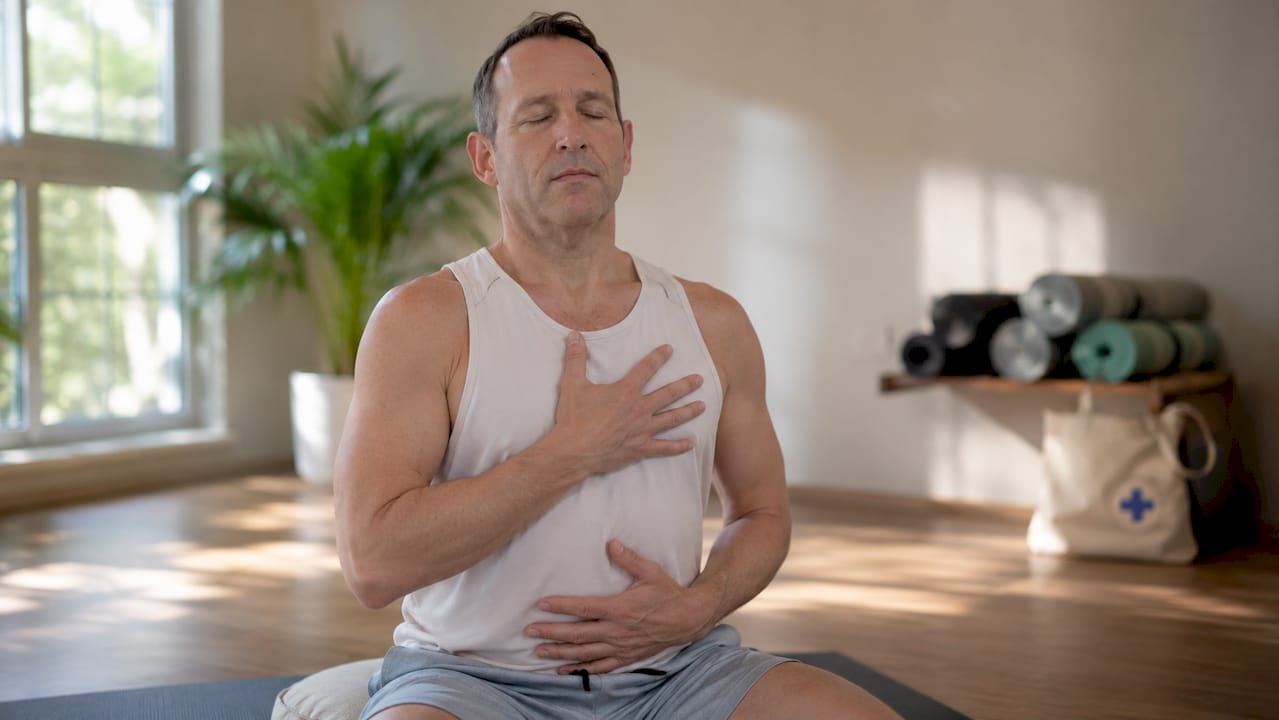
The nervous system consequences go further than breathing. Elevated baseline muscle tone caused by poor posture prevents full parasympathetic nervous system activation, which is the state your body needs for deep sleep and recovery. In practical terms, someone who spends the day hunched over a screen arrives at bedtime with a nervous system that cannot fully downshift. Disrupted posture inhibits parasympathetic down-regulation at night, reducing sleep quality even when total sleep hours appear adequate.
Posture also shapes emotional experience through a mechanism called embodied cognition. The brain reads body position as a signal about internal state. Research from the Pilates Association Australia confirms that upright posture during stress reduces negative emotions and improves self-esteem. The body-mind relationship runs in both directions: depression causes slouching, and slouching reinforces depression.
Here is how posture affects physiology in sequence:
- Slouched alignment compresses the thoracic cavity, reducing lung volume.
- Shallow breathing elevates carbon dioxide sensitivity and triggers low-level stress responses.
- Chronic muscle tension from compensatory patterns keeps the sympathetic nervous system active.
- Parasympathetic suppression reduces melatonin efficiency and disrupts sleep architecture.
- Poor sleep impairs cortisol regulation, which worsens muscle tension the following day.
"Fixing posture isn't merely about standing tall. It entails restoring regulation in the nervous system and muscle tone for true health benefits." — Patient.info
Pro Tip: Try a two-minute upright posture reset before any high-pressure conversation or presentation. Research shows it measurably reduces perceived stress and improves confidence.
What are the long-term health risks of poor posture?
The long-term risks of poor posture extend well beyond back pain. Postural instability, measured clinically by the inability to hold a single-leg stance for 10 seconds, is linked to an 84% higher risk of all-cause mortality. That figure places postural health alongside blood pressure and cholesterol as a genuine longevity marker, not a lifestyle preference.
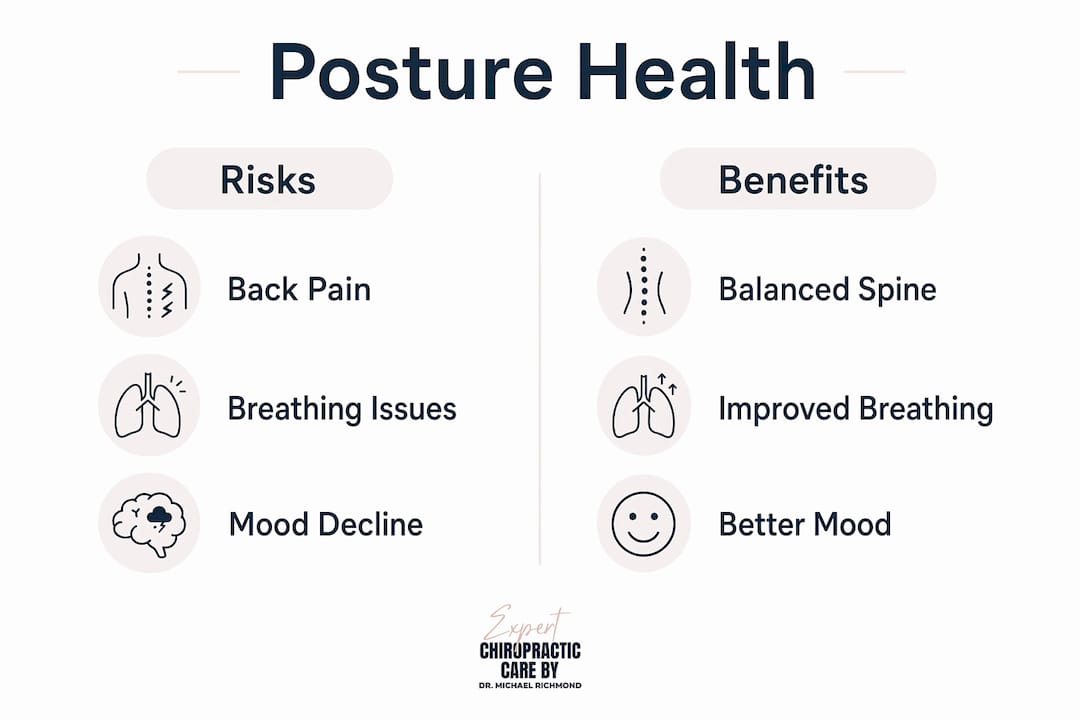
Kyphosis severity independently predicts earlier mortality. More severe kyphosis correlates with increased mortality risk, which means the progressive rounding of the upper spine seen in older adults is not simply a cosmetic change. It signals systemic decline in respiratory function, cardiovascular efficiency, and physical resilience. Chiropractic care for aging populations specifically targets this pattern, as detailed in Sparkmed's resource on posture care for seniors.
Postural instability often begins at the feet. When the arches collapse or ankle stability weakens, the body compensates by leaning forward and looking down, which worsens balance and deepens the instability over time. This feedback loop is why fall risk increases so sharply in people who have never addressed foot mechanics or lower-body alignment.
| Health risk | Mechanism | Evidence |
|---|---|---|
| Increased fall risk | Forward-lean compensation from foot instability | Postural instability feedback loop |
| Reduced lung capacity | Rib cage compression from thoracic kyphosis | 75% unaware of this link |
| Premature mortality | Kyphosis severity and single-leg stance failure | 84% higher all-cause mortality risk |
| Digestive disruption | Abdominal compression from anterior pelvic tilt | Organ crowding reduces motility |
| Sinus and ear pressure | Chronic upper-body compression affects drainage pathways | Structural compression of sinus cavities |
Only 1 in 3 people recognize the full scope of posture's health consequences, including its effects on digestion, sinus health, and swallowing. The majority still think of posture as a back-pain issue, which means the systemic risks go unaddressed until they become clinical problems.
How to correct posture and improve your health outcomes
Correcting posture requires more than reminding yourself to sit up straight. Effective posture correction addresses the movement blueprint by strengthening core muscles and thoracic spine stability, not simply stretching tight muscles or holding a rigid upright stance. Static correction without functional strength training fails because the body reverts to its habitual pattern the moment attention shifts.
Here is a practical framework for improving postural health:
- Assess your baseline. Stand barefoot and try to balance on one leg for 10 seconds without wobbling. Inability to hold a single-leg stance signals postural instability that needs direct attention.
- Build thoracic mobility first. Most people skip this step. The thoracic spine needs rotation and extension before the lumbar spine can stabilize properly. Use foam roller thoracic extensions and seated rotation drills daily.
- Strengthen the deep stabilizers. The transverse abdominis, multifidus, and deep cervical flexors are the postural muscles that hold alignment without conscious effort. Dead bugs, bird dogs, and chin tucks target these specifically.
- Change positions frequently. No single posture is ideal for extended periods. Movement variety prevents the muscle fatigue that causes compensatory slouching. Set a timer to shift position every 25 to 30 minutes.
- Raise your screen to eye level. Lifting a phone or monitor to eye level eliminates the forward head position that accumulates hours of cervical load each day.
- Seek professional assessment. Pilates instructors, physical therapists, and chiropractors each offer structured approaches to postural retraining. Sparkmed's guide on daily spinal health habits outlines evidence-based routines you can start immediately.
Pro Tip: The most effective posture habit is not a stretch or an exercise. It is breaking up static positions. Research consistently shows that frequent movement interruptions outperform any single corrective exercise done once a day.
Pilates specifically targets the deep stabilizing muscles that support spinal alignment, making it one of the most evidence-supported methods for postural retraining. Chiropractic care addresses joint mobility restrictions that prevent the spine from achieving neutral alignment even when muscle strength is adequate. Physical therapy bridges both by combining manual treatment with progressive loading. The most durable results come from combining at least two of these approaches with consistent daily movement habits.
Key takeaways
Posture directly governs musculoskeletal balance, breathing efficiency, nervous system regulation, and longevity, making it one of the most consequential and most overlooked determinants of overall health.
| Point | Details |
|---|---|
| Posture affects more than your back | Poor alignment disrupts breathing, sleep, digestion, and emotional regulation. |
| Young adults are already affected | 81% of young adults show postural distortion patterns, making early correction critical. |
| Postural instability predicts mortality | Inability to stand on one leg for 10 seconds links to 84% higher all-cause mortality risk. |
| Correction requires functional strength | Lasting improvement needs core and thoracic stabilization, not just stretching or reminders. |
| Movement frequency beats static posture | Changing positions every 25 to 30 minutes reduces compensatory muscle fatigue more than any single exercise. |
The posture pandemic nobody is talking about
From where I sit at Sparkmed, working with patients recovering from car accidents and chronic pain, posture problems are the most consistently underestimated health issue I encounter. People arrive focused on a specific pain point and leave understanding that the pain was a symptom of a structural pattern years in the making.
What strikes me most is the age distribution. The data showing 81% of young adults with postural distortion patterns is not surprising to anyone working in clinical practice, but it should alarm public health professionals. We are producing a generation with forward head posture and thoracic kyphosis before they reach 30, and the downstream consequences in respiratory function, sleep quality, and balance will compound for decades.
The term "posture pandemic" is not hyperbole. Smartphones, desk work, and sedentary commuting have created a structural health crisis that does not show up in standard blood panels or annual checkups. By the time kyphosis becomes visible or balance deficits become dangerous, the window for easy correction has closed.
My honest view is that posture should be assessed at every routine health visit, the same way blood pressure is measured. A single-leg stance test takes 10 seconds and predicts mortality risk with remarkable accuracy. The tools exist. The evidence exists. What is missing is the cultural recognition that how you hold your body is a health metric, not a manners issue.
— Spark
Take the next step toward better spinal health

Poor posture compounds quietly over years, and the systemic effects on breathing, sleep, and longevity rarely announce themselves until they become clinical problems. Sparkmed's blog covers the full spectrum of spinal health, from daily maintenance habits to professional treatment options. Read the chiropractic care benefits guide to understand how targeted spinal adjustments address the root causes of postural dysfunction. For patients in North Miami dealing with posture-related pain or post-accident recovery, Sparkmed offers spinal adjustments starting at $25 with no insurance required. Book an appointment at sparkmed.net and get a professional postural assessment from an experienced practitioner.
FAQ
Why does posture affect your overall health?
Posture determines how mechanical loads are distributed across the spine, joints, and muscles. When alignment is disrupted, it compresses organs, restricts breathing, elevates muscle tension, and impairs nervous system regulation, creating cascading effects across multiple body systems.
Can poor posture affect your mood?
Yes. Research confirms that upright posture reduces negative emotions and improves self-esteem during stressful tasks. The brain interprets body position as a signal about internal state, so slouching actively reinforces low mood through embodied cognition.
What are the biggest health risks of poor posture?
The most serious risks include an 84% higher all-cause mortality risk linked to postural instability, reduced lung capacity from rib cage compression, accelerated spinal degeneration, and disrupted sleep from elevated baseline muscle tone.
How long does it take to correct bad posture?
Meaningful postural improvement typically requires 6 to 12 weeks of consistent targeted exercise, combining thoracic mobility work with deep stabilizer strengthening. Chiropractic care and Pilates can accelerate results by addressing joint restrictions and neuromuscular control simultaneously.
What is the easiest way to test your postural health at home?
Stand barefoot and lift one foot off the ground. If you cannot hold a single-leg stance for 10 seconds without significant wobbling, your postural stability needs direct attention. This test is used clinically as a reliable indicator of balance and longevity risk.