

Many older adults assume that chiropractic care is simply too rough for aging bodies. Cracking joints, forceful spinal thrusts, and the image of a practitioner pressing down hard on a frail back — these pictures keep a lot of seniors on the sidelines. But modern chiropractic has shifted dramatically. Practitioners today use gentler, modified approaches specifically designed for older patients, and the evidence increasingly supports their effectiveness. If you're over 60 and dealing with back pain, joint stiffness, or slower recovery after an injury, this guide breaks down what actually works, what to watch out for, and how to get started safely.
Table of Contents
- Why seniors turn to chiropractic care
- Common chiropractic techniques for older adults
- Evidence on benefits and limitations for seniors
- Risks, contraindications, and expert screening advice
- Practical steps for seniors considering chiropractic care
- Why proper screening matters more than any technique
- Connect with trusted chiropractic wellness resources
- Frequently asked questions
Key Takeaways
| Point | Details |
|---|---|
| Chiropractic is safe when adapted | Modified low-force techniques and thorough screening make chiropractic care safe for most seniors. |
| Benefits are modest but real | Older adults can experience significant pain relief and improved mobility, though gains may be smaller than in younger people. |
| Screening is critical | Absolute contraindications like severe osteoporosis must always be checked before starting chiropractic therapy. |
| Expert advice prevents risks | Seniors get the best results when chiropractors coordinate care and adapt treatment based on health status. |
Why seniors turn to chiropractic care
Chronic pain is one of the defining health challenges for people over 60. Conditions like osteoarthritis, spinal stenosis, and degenerative disc disease affect millions of older Americans, limiting daily activity and reducing quality of life. Medications offer some relief, but many seniors are already managing multiple prescriptions and prefer to avoid adding more drugs into the mix.
That's one of the biggest reasons chiropractic care has grown in popularity among older adults. It offers a non-invasive option for pain relief and improved mobility without the side effects that often come with long-term medication use. Practitioners who work with seniors have also adapted their methods significantly. Low-force techniques for seniors like spinal mobilization, the Activator method, and flexion-distraction are now the standard approach, replacing the higher-force adjustments that were more common decades ago.
Here's what's driving the increase in senior chiropractic visits:
- Chronic low back and neck pain that doesn't respond well to rest or over-the-counter medications
- Reduced range of motion in the hips, shoulders, and spine that affects walking, dressing, and everyday tasks
- Post-injury recovery, particularly after car accidents, falls, or joint surgery
- Avoiding opioid dependence, which carries serious risks for older adults
- Desire for a hands-on, personalized approach to care rather than a prescription refill
"Chiropractic care can serve as a frontline, non-pharmacological option for seniors who need pain control but want to stay off heavy medications. The key is selecting the right technique for the right patient."
The evidence backs this up. Seniors who receive regular chiropractic care consistently report modest but meaningful improvements in daily function, sleep quality, and pain levels. The word "modest" is worth emphasizing here. Chiropractic is not a cure-all, and expectations matter. But for many older adults, even a 20 to 30 percent reduction in pain can mean walking to the mailbox without wincing or sleeping through the night.
Common chiropractic techniques for older adults
Understanding why seniors seek chiropractic care sets up the question: what techniques make it safe and effective for them? The answer depends largely on the individual's bone density, overall frailty, and existing health conditions, but some techniques are consistently favored for older patients.
The traditional high-velocity low-amplitude (HVLA) adjustment, which produces that familiar popping sound, involves a fast, controlled thrust to a spinal joint. It's effective for many adults, but it's not always appropriate for seniors. For older patients, spinal mobilization techniques replace the quick thrust with slower, rhythmic movements that gently restore joint range of motion without sudden force.
Here's how the main techniques compare:
| Technique | How it works | Best suited for | Force level |
|---|---|---|---|
| HVLA manipulation | Fast, controlled spinal thrust | Younger, healthier adults | High |
| Spinal mobilization | Slow, rhythmic joint movement | Seniors with moderate stiffness | Low to moderate |
| Activator method | Spring-loaded handheld device delivers tiny impulse | Seniors with osteopenia or frailty | Very low |
| Flexion-distraction | Gentle pumping motion on specialized table | Seniors with disc issues or stenosis | Low |
| Soft tissue therapy | Massage and myofascial release around joints | All seniors, especially with muscle tension | Minimal |
The Activator method deserves special attention for seniors. The device delivers a controlled, low-force impulse directly to a specific joint or vertebra. It's precise, gentle, and generates no twisting or rotational forces. For patients with reduced bone density or who are nervous about manual adjustments, it's often the most comfortable starting point. You can read more about chiropractic healing methods used for injury recovery to understand how these techniques apply across different conditions.
Flexion-distraction uses a segmented treatment table that gently distracts the spine while the practitioner applies light pressure. It creates space between spinal discs, reduces nerve compression, and improves fluid movement within the disc — all without any forceful contact. Seniors with lumbar stenosis or herniated discs often find this technique provides immediate relief.
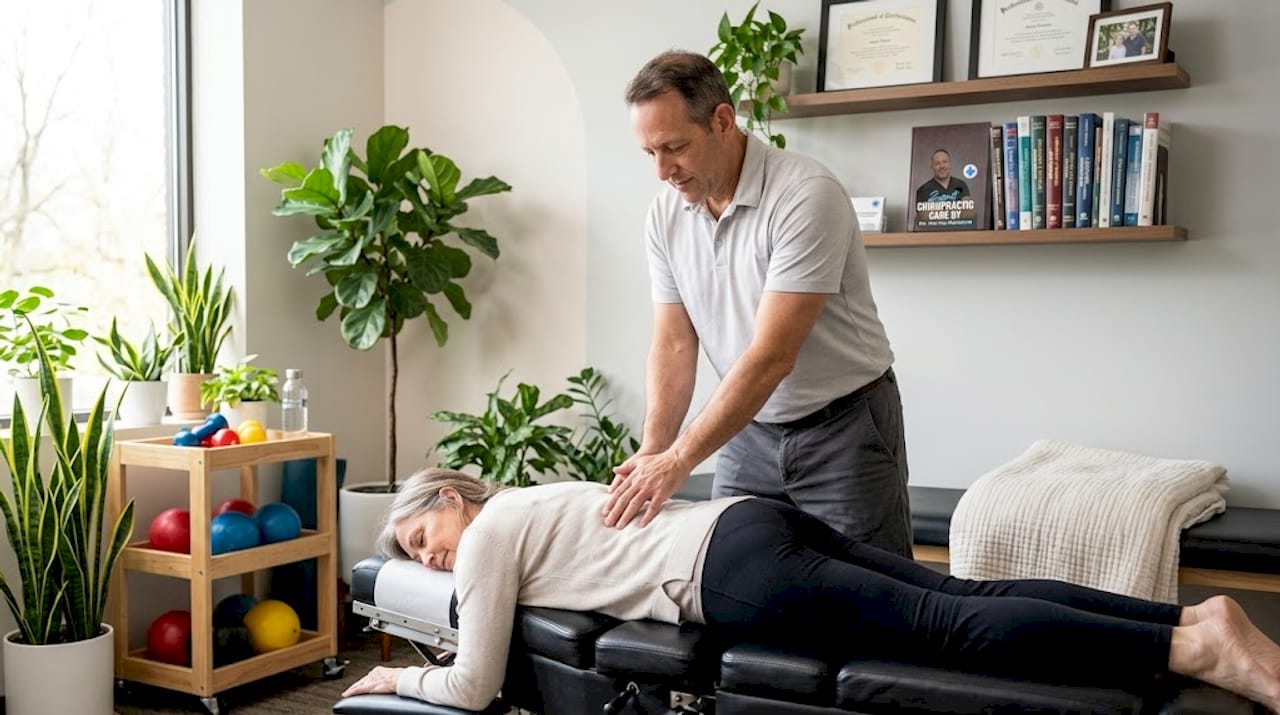
Pro Tip: Before your first appointment, ask your chiropractor specifically which technique they plan to use and why. A good practitioner will explain their reasoning based on your bone density, medications, and medical history, not just their preferred method.
Modern chiropractic offices also use specialized recovery equipment that makes treatment more comfortable for seniors, including adjustable tables with drop mechanisms, cold laser therapy devices, and electrical stimulation units that support tissue healing without physical manipulation.
Evidence on benefits and limitations for seniors
With the methods clarified, it's important to examine what the evidence says about benefits and risks for older adults. The research picture is encouraging but nuanced.
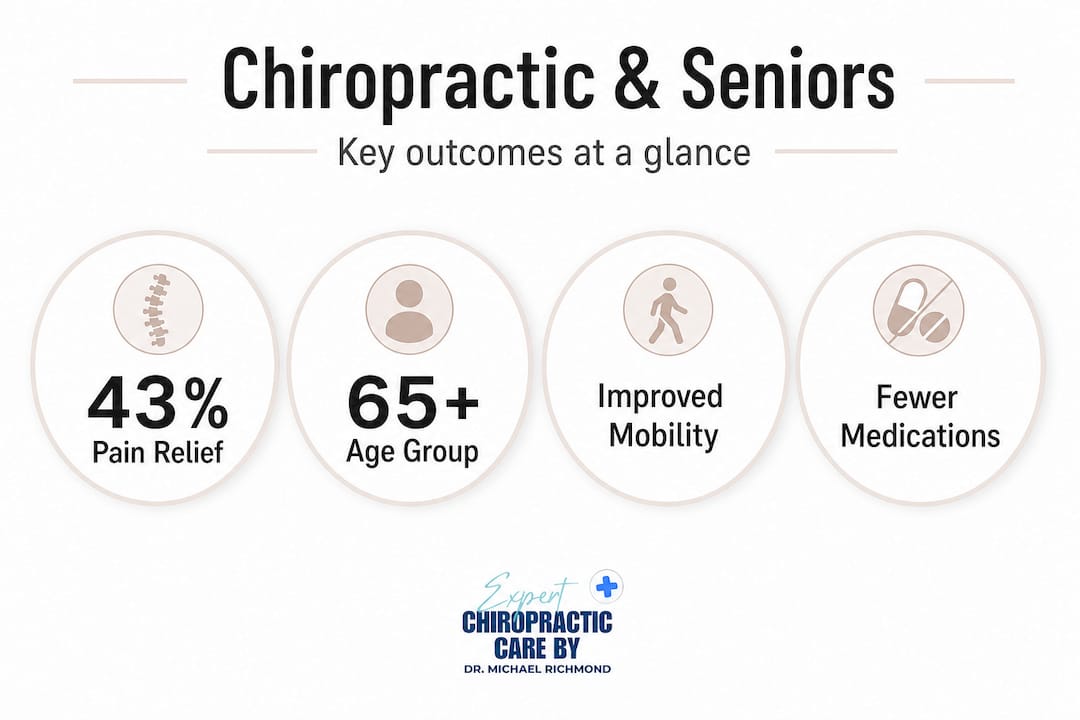
A retrospective study from a publicly funded Canadian clinic found statistically significant pain reductions in adults 60 and older who received chiropractic care for both spinal and extremity pain. These weren't marginal improvements — the reductions were considered clinically meaningful, meaning they translated into real-life functional gains.
However, a key limitation comes from comparative research. Older patients with low back pain typically start with higher disability scores and improve more slowly than younger patients. Factors like existing depression, cardiovascular disease, and the severity of the original injury all predict how much improvement a senior patient will experience.
| Outcome measure | Younger adults (under 60) | Older adults (60+) |
|---|---|---|
| Average pain reduction | 40 to 50% | 20 to 35% |
| Rate of improvement | Faster, often within 4 to 6 visits | Slower, may require 8 to 12 visits |
| Functional gains (ADL) | More pronounced | Moderate but meaningful |
| Risk of adverse events | Very low | Very low with proper screening |
The Cochrane Review on spinal manipulation for chronic low back pain found that spinal manipulative therapy produces small short-term pain relief. Critically, no serious complications were observed in the reviewed studies. "Small" shouldn't be dismissed, though. For a senior who has struggled with daily back pain for years, consistent small improvements can add up to a genuinely different quality of life.
What factors predict better outcomes in older chiropractic patients?
- Lower baseline disability at the start of treatment
- Absence of major comorbidities like severe cardiovascular disease or unmanaged diabetes
- Good mental health, particularly the absence of depression or anxiety, which strongly predict pain perception
- Early intervention, starting chiropractic care sooner after injury rather than months later
- Consistent attendance, following through with a recommended treatment schedule rather than stopping after one or two visits
Supporting your chiropractic care with long-term wellness strategies after an accident or injury also plays a significant role in how well and how quickly you recover.
Risks, contraindications, and expert screening advice
Even with benefits, safety is paramount. Let's clarify contraindications and how experts keep seniors safe during treatment.
First, the reassuring news. A 2026 systematic review specifically examining older adults found no catastrophic adverse events in seniors receiving chiropractic spinal manipulation. The most commonly reported side effects were mild and transient, meaning temporary soreness, stiffness, or fatigue after an adjustment, similar to what you might feel after light exercise.
That said, specific conditions make chiropractic manipulation unsafe or require significant technique modification. Absolute contraindications include:
- Severe osteoporosis (T-score below -2.5), where bones are too fragile for any manipulative force
- Acute vertebral fractures, whether from trauma or compression
- Anticoagulant therapy with unstable INR, such as warfarin at unsafe levels
- Spinal instability from tumors, infections, or severe ligament damage
- Vertebrobasilar insufficiency, a condition affecting blood flow to the brain through neck arteries
- Active cancer involving the spine
Relative contraindications, meaning conditions that require extra care but don't completely rule out chiropractic, include moderate osteoporosis, recent trauma, certain inflammatory arthritis types, and some cardiovascular conditions. In these cases, the chiropractor should modify technique and work in coordination with your primary care physician.
"Screening is not optional. A chiropractor who skips a thorough intake review of your medications, bone density history, and cardiovascular status is cutting corners that matter."
How does proper screening actually look in practice? It should include:
- A full medical history review, including all current medications
- Questions about any history of cancer, fractures, or blood clotting disorders
- Blood pressure measurement
- Neurological screening for reflexes and sensation
- A review of any available bone density scans or imaging
Pro Tip: Bring a complete list of your medications to your first chiropractic appointment. Some blood thinners, steroids, and osteoporosis medications significantly affect which techniques are safe for you.
The safest outcomes happen when chiropractors and primary care physicians communicate directly. Learning how local chiropractors aid recovery after injuries gives you a clearer picture of what an integrated approach looks like. Similarly, consistent follow-up care after the initial treatment phase is one of the strongest predictors of sustained improvement for seniors.
Practical steps for seniors considering chiropractic care
Having reviewed safety, let's focus on how seniors can make their chiropractic journey effective and risk-free. Good outcomes don't happen by accident. They result from preparation, communication, and consistent follow-through.
A thorough pre-treatment screening is the foundation of safe chiropractic care for older adults. But there's a lot you can do on your end to set yourself up for the best results:
- Get medical clearance first. Talk with your primary care doctor before starting chiropractic. Share what you're planning and ask about any conditions that might need special consideration.
- Disclose all medications. This includes supplements like fish oil and vitamin E, which affect blood clotting.
- Ask about technique selection. Find out specifically which method the chiropractor plans to use and why it's appropriate for your health profile.
- Set realistic expectations. Improvement for seniors is real but typically gradual. Plan for a series of visits rather than expecting immediate dramatic results.
- Track your symptoms. Keep a simple pain journal rating your pain and function on a 1 to 10 scale before and after each visit.
- Report side effects immediately. Mild soreness is normal. Sharp worsening pain, numbness, tingling, or dizziness after an adjustment warrants immediate communication with your chiropractor and primary care provider.
- Integrate movement into your plan. Light walking, gentle stretching, and prescribed home exercises dramatically improve outcomes when combined with chiropractic.
- Coordinate your care team. Share chiropractic findings with your other healthcare providers and ask your chiropractor to communicate with your doctor directly when appropriate.
Following a structured chiropractic treatment guide helps seniors understand what to expect at each stage of care and avoid common mistakes that slow recovery.
Why proper screening matters more than any technique
Here's an opinion that often gets left out of chiropractic discussions: the specific technique your chiropractor uses matters far less than the quality of their screening process. We spend a lot of time in this conversation talking about Activators versus mobilization versus flexion-distraction, and those distinctions are real and important. But they're secondary.
The seniors who experience serious complications from chiropractic care, though rare, almost universally share one thing in common. Someone skipped a step. A medication review didn't happen. A bone density history wasn't asked about. A practitioner proceeded with HVLA adjustments on a patient taking blood thinners without checking coagulation status. These are not technique failures. They're communication and screening failures.
The real dividing line between good and great outcomes for seniors is whether every provider involved in your care is actually talking to each other. Your chiropractor needs to know what your cardiologist has flagged. Your primary care doctor needs to understand what techniques are being applied to your spine. When these conversations happen, spinal health restoration becomes a coordinated effort rather than isolated appointments.
We've seen older patients arrive at our clinic after months of ineffective treatment elsewhere, not because the previous practitioners used the wrong technique, but because no one had reviewed the full picture. A patient on corticosteroids for rheumatoid arthritis who wasn't warned about reduced bone density. A patient whose depression was undermining every pain management strategy because no one connected those dots.
The most important question you can ask a chiropractor isn't "do you use the Activator?" It's "how do you coordinate with my other doctors?" That answer tells you everything about whether your care will be truly safe and effective.
Connect with trusted chiropractic wellness resources
If you're ready to take the next step toward safer, smarter chiropractic care as a senior, you don't have to figure it all out alone. Our team at Spark Med has put together a full library of educational content specifically for patients navigating recovery, chronic pain, and mobility challenges. Whether you're just beginning to explore your options or you're already in treatment and want to get more out of it, the resources are here to support you.

Visit our senior wellness articles for in-depth guides on injury recovery, spinal health, and chiropractic wellness written specifically for older adults and their families. From understanding your treatment options to knowing what questions to ask at your next appointment, our blog is designed to help you make confident, informed decisions about your health. Knowledge is one of the best tools you have on the road to recovery, and we're committed to making it accessible.
Frequently asked questions
Is chiropractic care safe for seniors with osteoporosis?
Chiropractic care can be safe for seniors with osteoporosis if modified, low-force techniques are used, but severe osteoporosis with a T-score below -2.5 is an absolute contraindication for spinal manipulation.
How quickly do seniors see results from chiropractic treatment?
Seniors typically see modest but meaningful improvement over several weeks of care, though older patients with low back pain tend to progress more slowly than younger patients due to higher baseline disability and comorbidities.
What are the most common side effects for seniors receiving chiropractic?
Mild, temporary soreness and stiffness are the most common reactions, and a 2026 systematic review confirmed no catastrophic adverse events in older adults when proper screening and technique selection are applied.
Can chiropractic help seniors recovering from injuries?
Yes, evidence shows that significant pain reductions and improved mobility are achievable for older adults recovering from spinal or extremity injuries when care is properly adapted for their age and health profile.