
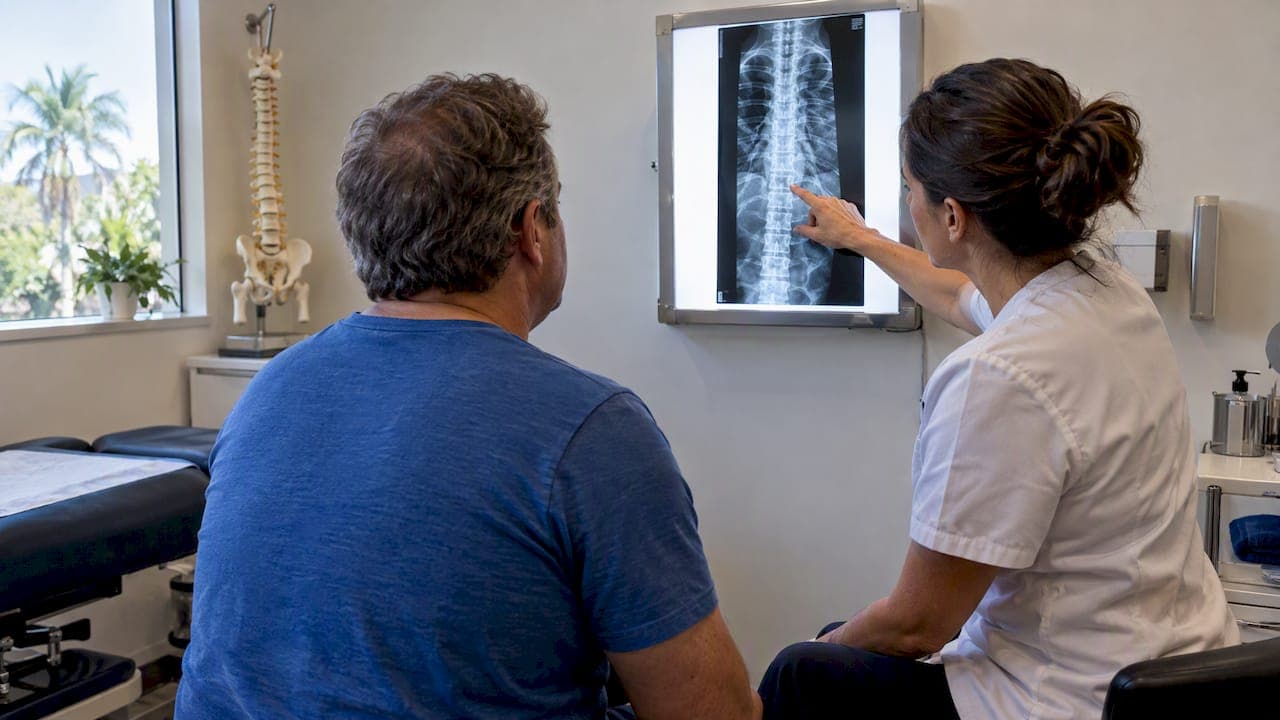
Thoracic, or mid-back, pain after a car accident is common and usually comes from a soft-tissue strain rather than a broken bone or pinched nerve. A small share of cases involve fractures or nerve and spinal cord compression that need urgent care, especially with leg weakness, numbness, or trouble breathing. See a clinician promptly for new midline tenderness, and go to an emergency department right away for any neurologic symptoms or chest pain with shortness of breath.
TL;DR:
- Most thoracic injuries from car crashes are soft-tissue strains or ligament sprains, rarely involving fractures or nerve compression unless impacted by high-energy forces.
- Thoracic pain may peak days after the accident due to inflammation, with initial symptoms often masked by adrenaline and stress hormones.
- Emergency signs include new weakness, numbness, or loss of bladder/bowel control, as well as severe chest pain or difficulty breathing, requiring immediate care.
- Imaging with CT scans is preferred for detecting fractures, while MRI assesses soft tissue and neurologic involvement, guiding treatment decisions.
- Recovery generally takes weeks to months, with early activity and physical therapy supporting the best functional outcomes and reducing the risk of chronic pain.
Table of Contents
- What the thoracic spine is and which structures can hurt after a crash
- Common causes and types of thoracic injuries after motor vehicle collisions
- Symptoms you'll see: immediate versus delayed pain and linked symptoms to note
- Red flags: when thoracic pain needs emergency evaluation now
- How clinicians diagnose thoracic injury: exams and imaging
- Treatment options: from conservative care to surgical decisions
- Recovery timeline and prognosis after thoracic injury
- Practical self-care and prevention after a crash
- How Sparkmed evaluates and treats thoracic pain after a crash
- What patients ask us most after a crash
- Getting evaluated and treated at Sparkmed
- FAQ
- Sources
What the thoracic spine is and which structures can hurt after a crash
The thoracic spine is the section of the backbone that runs from the base of the neck to the bottom of the rib cage, made up of twelve vertebrae that each connect to a pair of ribs. That connection is what separates thoracic pain from neck or lower back pain: the rib cage adds stability but also means an injury here can affect breathing, not just movement.
Several structures in this region can generate pain after a crash, and pinpointing which one is hurting helps guide treatment.
- Muscles and ligaments along the mid-back often strain from the sudden twisting or bracing that happens on impact.
- Facet joints, the small joints linking adjacent vertebrae, can become irritated or inflamed from the same forces.
- Ribs attached to the thoracic vertebrae can bruise or fracture, especially where a seatbelt crosses the chest.
- Discs between vertebrae can bulge or herniate, though this is less common in the thoracic spine than in the neck or lower back.
- Vertebrae themselves can fracture under high-energy impact, and in rare cases the spinal cord or nerve roots can be compressed.
Because the thoracic spine is more rigid than the neck or low back, thanks to the rib cage, it takes more force to injure the bones here. That rigidity also means pain can refer toward the chest or abdomen in ways that confuse the picture.
Common causes and types of thoracic injuries after motor vehicle collisions
Most thoracic pain after a crash traces back to the body's instinctive bracing response. When a collision happens, muscles around the spine and chest contract hard and fast to protect the torso, and that sudden load is often enough to strain muscle fibers and ligaments even in low-speed impacts. Seatbelts, while they prevent far worse injuries, apply concentrated force across the chest and mid-back, which can leave soreness along the belt line for days afterward.
- Muscle and ligament strain is the most frequent cause, producing a deep, achy soreness that worsens with movement and typically improves within days to a few weeks.
- Facet joint irritation happens when the small stabilizing joints between vertebrae get jarred, often causing localized pain that sharpens with twisting or arching the back.
- Thoracic disc herniation is relatively rare compared to neck or lower back herniation, but it can occur with enough rotational force and may cause pain that radiates along a rib or into the chest wall.
- Vertebral fractures are uncommon in lower-speed crashes but become more likely with high-energy mechanisms like rollovers, ejection, or high-speed collisions.
- Rib fractures frequently accompany thoracic spine pain since both structures absorb impact in similar locations, and chest pain that worsens with a deep breath can point to a rib injury rather than, or alongside, a spine injury.
Clinical sources treating thoracolumbar spine fractures note that motor vehicle collisions are a common high-energy mechanism behind these injuries, and that unstable fractures can threaten the spinal cord and require rapid imaging. The key variable is energy transfer: a fender-bender at low speed is far less likely to fracture a vertebra than a crash involving rollover or ejection, even when both leave the occupant sore for weeks afterward. Vehicle damage alone is not a reliable guide, since adrenaline can mask significant injury in the minutes after a crash regardless of how the car looks.
Symptoms you'll see: immediate versus delayed pain and linked symptoms to note
Mid-back pain after a crash often shows up as a deep, dull ache between the shoulder blades that intensifies when you twist your torso, reach overhead, or take a deep breath. Some people describe it as a tight band or a knot that will not release, while others notice sharper pain localized to one side of the spine.
What surprises many people is that the pain is not always immediate. Adrenaline and stress hormones released during a crash can mask pain signals in the first minutes to hours, and inflammation in strained tissue tends to build over the following day or two, which is why soreness often peaks on day two or three rather than at the scene.
- Deep, aching soreness between the shoulder blades that worsens with rotation or reaching is the most common presentation and usually points to muscle or ligament strain.
- Pain that sharpens with a deep breath can suggest rib involvement or chest wall bruising rather than a pure spine issue.
- Numbness, tingling, or radiating pain wrapping around the ribs or into the arms suggests nerve root irritation and deserves a closer look.
- Weakness in the legs or a change in balance is a more serious sign that points toward spinal cord involvement rather than simple muscle strain.
Tracking when symptoms started and how they have changed day by day gives a clinician far more useful information than a vague "it hurts" description, and it also matters if you later need documentation for an insurance claim.
Red flags: when thoracic pain needs emergency evaluation now
Most thoracic pain after a crash is uncomfortable but not dangerous. A short list of symptoms, though, means you should go to an emergency department rather than wait for a routine appointment.
- New weakness, numbness, or tingling in the legs or groin, or any loss of bladder or bowel control, can signal spinal cord compression and needs immediate evaluation.
- Severe tenderness directly over the spine after a high-impact crash, especially one involving a rollover or high speed, raises concern for a vertebral fracture.
- Shortness of breath, severe chest pain, or coughing up blood can point to a rib fracture affecting the lung or a vascular injury, both of which need urgent assessment.
If any of these appear, even hours or days after the crash, treat it as an emergency rather than something to monitor at home. For chest wall pain specifically, understanding rib injury symptoms can help you describe what you are feeling more precisely when you seek care.
How clinicians diagnose thoracic injury: exams and imaging
A clinical evaluation after a crash typically starts with a history of how the collision happened, since mechanism of injury (speed, direction of impact, whether the vehicle rolled) shapes how aggressively a clinician looks for fracture. The physical exam checks for midline tenderness, range of motion, and any neurologic signs like weakness, numbness, or abnormal reflexes, following the same spine precaution principles used in trauma care more broadly.
- Plain X-rays can be used as an initial screen but have real limits, since they can miss subtle or non-displaced fractures.
- CT scans are generally more sensitive than radiographs for detecting fractures after blunt trauma and are the preferred imaging when a fracture is suspected, according to systematic imaging guidance.
- MRI becomes important when there are neurologic symptoms or suspected ligamentous injury, since it can show spinal cord compression or soft-tissue damage that CT cannot.
- Chest imaging is added when rib fracture or lung injury is suspected, particularly with pain that worsens on breathing or any shortness of breath.
Imaging guidelines note that thoracolumbar injuries in blunt trauma often accompany other injuries, which is part of why a thorough exam and the right imaging choice matter more than jumping straight to the most advanced scan available.
Treatment options: from conservative care to surgical decisions
Treatment for thoracic pain after a crash follows a stepwise path, starting conservative and escalating only when the clinical picture calls for it.
- First-line conservative care includes activity modification (not full bed rest), over-the-counter or prescribed analgesics, and alternating ice and heat, along with attention to posture and breathing mechanics that reduce strain on healing tissue.
- Rehabilitation follows once acute pain eases, built around physical therapy, graded mobility work, and manual therapy or chiropractic manipulation for appropriate candidates. Guideline-based rehabilitation reviews associate early active care with better functional recovery than prolonged rest.
- Interventional options like facet or epidural injections are reserved for select patients whose pain does not respond to conservative measures, usually guided by a pain management referral.
- Surgical treatment is reserved for unstable fractures or progressive neurologic deficits. Classification systems such as TLICS and the AO spine classification help clinicians weigh fracture morphology, neurologic status, and ligament integrity to decide between bracing and operative fixation.
Pro Tip: Keep a simple daily log of your pain level and what triggers it. It speeds up clinical decision-making and gives you a clear record if you need it for an insurance claim later.
Guideline reviews acknowledge the evidence in this area is uneven, but they consistently recommend individualized, multimodal evaluation rather than a one-size-fits-all protocol for thoracolumbar injuries. In practice, that means a muscle strain and a stable compression fracture can look similar on day one but need very different plans, which is why the classification step matters even when surgery is never on the table. Manual therapy methods used at this stage are detailed further in a review of chiropractic approaches for accident-related back pain.

Recovery timeline and prognosis after thoracic injury
Most people with thoracic strain improve over weeks to a few months, with pain and stiffness easing gradually as inflamed tissue heals and strength returns. Recovery timelines may vary and some people have symptoms that linger past the initial injury period.
One population study found that mid-back pain after traffic collisions occurs at a certain incidence rate, with a median time to first reported recovery just over three months, and a notable share of people still unrecovered at one year, according to research on traffic collision outcomes. That gap between median recovery and the one-year mark is worth sitting with: it means recovery often takes longer than three months for many people, not the days or couple of weeks some expect.
- Higher initial pain intensity at the time of injury predicts a slower recovery course.
- Multiple symptoms at once, such as combined back and chest pain, tend to slow healing compared to an isolated strain.
- Psychosocial factors, including stress and anxiety about the crash itself, can also extend recovery time and are worth raising with a clinician rather than dismissing.
Reassessing care if pain has not meaningfully improved within a few weeks gives you the chance to adjust treatment before a short-term strain turns into a long-term problem, a distinction covered further in guidance on avoiding chronic pain after an accident.
Practical self-care and prevention after a crash
Early, careful movement tends to serve recovery better than rigid rest. Staying completely still can actually stiffen the muscles around an injured area and slow healing, so the goal is gentle activity within a pain-tolerable range rather than full immobility.
- Alternate ice and heat in the first few days, with ice reducing acute inflammation and heat easing muscle tightness once swelling settles.
- Practice slow, diaphragmatic breathing to keep the chest wall mobile, especially if deep breaths feel tight or painful.
- Progress gradually from gentle mobility exercises to light strengthening and then back to normal daily tasks over the following weeks, rather than jumping straight back into full activity.
- Start a physical therapy or chiropractic evaluation early, since prompt assessment both supports recovery and creates documentation that matters if you file an insurance claim.
A staged approach to regaining motion, detailed in a three-phase rehab framework, can help you pace this progression without overdoing it. Targeted mobility work, including thoracic-specific drills, can also ease stiffness between visits.
Pro Tip: Set a short timer to change position every 30 to 45 minutes during the first week. Staying in one posture too long, whether sitting or lying down, tends to make mid-back stiffness worse.
How Sparkmed evaluates and treats thoracic pain after a crash
An auto accident evaluation is built around documenting exactly what hurts, how it started, and how it has changed, which supports both treatment planning and any insurance claim tied to the crash.
- A first visit typically includes a history of the collision, a physical assessment of the thoracic spine and surrounding muscles, and a discussion of initial therapy options.
- Chiropractic adjustments, shockwave therapy, and other modalities are used based on what the assessment finds, not applied as a blanket protocol.
- When symptoms suggest a fracture or neurologic involvement, a referral for imaging or specialty care is coordinated rather than treating through red flags.
The first visit is also where ongoing wellness plans or additional therapies get discussed if the initial assessment points to a longer recovery course.
What patients ask us most after a crash
Most people who come in after an accident want to know two things: whether what they are feeling is normal, and whether waiting will make it worse. In our experience, early assessment answers both questions better than guessing at home, and it builds a clearer record of what happened and when.
— Spark
Getting evaluated and treated at Sparkmed
Mid-back pain after a crash often responds well to the kind of hands-on, documented care Sparkmed provides, without the cost or scheduling friction of a hospital-based workup for cases that do not need one. 
- Auto Accident Evaluation gives you a structured assessment of thoracic pain and related symptoms, with documentation suited to insurance claims.
- Chiropractic Adjustments are priced at $45 per session and are often a starting point once serious injury has been ruled out.
- Shockwave Therapy is available at $75 per session for persistent muscle and soft-tissue pain that has not responded to rest alone.
- Massage therapy, electrical stimulation, ultrasound, and traction round out the modalities offered depending on what your evaluation finds.
Bring any imaging or exam notes you already have, along with a note of when your pain started and what makes it worse. You can review current plans and pricing, including the Essential, Performance, and Elite options, and book an evaluation directly through Sparkmed's pricing page.
This article is general information, not a substitute for advice from a qualified doctor. Consult a qualified healthcare professional about your own circumstances before acting on anything here.
FAQ
How long does it take to recover from a thoracic strain?
Most thoracic strains improve substantially within a few weeks as inflammation settles and muscle strength returns. Full recovery timelines vary by severity and other symptoms present, and persistent pain beyond a few weeks is a reason to have your treatment plan reassessed.
How long should your chest hurt after a car accident?
Mild chest or mid-back soreness often eases within days to a couple of weeks as bruised muscle and ligament tissue heals. Pain that is severe, worsening, or paired with shortness of breath is not typical of simple soreness and needs prompt medical evaluation rather than waiting it out.
Which organ is most likely to be damaged in a car accident?
The organs most often affected in a car accident depend on the impact pattern, but the lungs and chest wall structures are frequently involved when rib fractures occur alongside thoracic spine injury. Any chest pain combined with difficulty breathing after a crash should be evaluated urgently rather than assumed to be muscular.
What are delayed symptoms after a car accident?
Delayed symptoms happen because adrenaline released during a crash can mask pain signals immediately afterward, with inflammation building over the following hours to days. Mid-back pain, stiffness, and headaches are common examples that often appear or worsen one to three days after the collision rather than at the scene.
Sources
- Mid-back pain following traffic collisions — population study
- Thoracolumbar spine fracture — clinical textbook (NCBI Bookshelf)
- Imaging guidelines for suspected thoracolumbar spine injury (systematic guideline review)
- Treatment algorithm and classification systems for thoracolumbar spinal trauma
- CNS systematic review and guidelines: thoracolumbar spine trauma