

Many people walk into a chiropractic clinic after a car accident expecting their back pain to vanish in one or two sessions. That expectation, while understandable, can lead to disappointment or missed care decisions. Spinal manipulation produces modest improvements in pain and function for chronic low back pain, according to a Cochrane review of 26 clinical trials, but the effects are meaningful rather than miraculous. For anyone recovering from an auto accident in North Miami, knowing what chiropractic genuinely offers and where its limits lie puts you in a far stronger position to make a smart care decision and actually recover well.
Table of Contents
- How chiropractic fits into back pain recovery after accidents
- What the research really shows: Realistic benefits and limits
- Safety and red flags: When chiropractic may not be right
- Types of chiropractic care and how to maximize your results
- What most guides miss: The real value and limits of chiropractic for back pain
- Next steps for affordable, evidence-informed chiropractic care in North Miami
- Frequently asked questions
Key Takeaways
| Point | Details |
|---|---|
| Evidence shows modest relief | Chiropractic care typically results in modest short-term improvement in back pain and function. |
| Best as early conservative care | Guidelines support chiropractic as one first-line option to avoid drugs and surgery after an accident. |
| Safety depends on screening | Red flags like numbness or infection symptoms require medical referral, not spinal manipulation. |
| Multimodal care works best | Combining manual therapy with exercise and education produces the most effective results. |
| Set realistic expectations | Chiropractic isn't a miracle cure but can be a helpful tool for recovery after auto accidents. |
How chiropractic fits into back pain recovery after accidents
After a car accident, your first instinct might be to reach for pain medication or tough it out at home. Both choices can backfire. Chiropractic gives you a third path: hands-on, non-drug, non-invasive care focused on restoring movement and reducing pain in the spine and surrounding structures.
It matters that chiropractic is not fringe medicine for back pain. Non-drug, non-invasive options are first-line for low back pain management, according to 2017 clinical guidelines from the American College of Physicians. Spinal manipulation, the primary tool chiropractors use, is listed among those options. That does not mean it outperforms everything else, but it does mean your care is grounded in accepted clinical practice, not guesswork.
For auto accident patients specifically, the appeal of chiropractic for auto accident recovery runs deeper than just avoiding pills. Car accidents often cause soft tissue injuries like muscle strains, ligament sprains, and whiplash-related neck and back pain. These injuries respond well to gentle, hands-on care early in recovery. Chiropractic adjustments help restore normal joint movement, reduce muscle tension, and give the nervous system a chance to calm down after the stress of trauma.
Here is a quick summary of what chiropractic care typically offers after an auto accident:
- Short-term pain reduction: Most patients notice a meaningful decrease in back pain intensity within the first few weeks.
- Improved range of motion: Stiff, locked joints begin moving more freely after adjustments.
- Reduced reliance on medications: Many accident patients prefer to avoid opioids or anti-inflammatories, and chiropractic provides a real alternative.
- Functional improvement: Everyday tasks like bending, walking, and sitting become less painful.
- Low risk of serious side effects: Temporary soreness after an adjustment is common; serious complications are rare when care is properly delivered.
Key statistic: A 2017 Cochrane review covering 26 randomized controlled trials found that spinal manipulation is one of the guideline-listed options for low back pain, placing it alongside exercise therapy and cognitive behavioral approaches rather than above or below them.
Learning more about how chiropractic therapy works for different types of injuries can help you walk into your first appointment with realistic, productive expectations.
What the research really shows: Realistic benefits and limits
Numbers tell a clearer story than testimonials. So let's look at what clinical research actually shows when people with back pain receive chiropractic spinal manipulation compared to other treatments.
A major Cochrane review of 26 randomized controlled trials found a small but statistically significant short-term effect on pain, with a mean difference of about negative 4.16 on a 100-point scale, and a standardized mean difference of negative 0.22 for functional status. Serious complications were not observed. Those numbers may sound small, but when you're dealing with daily back pain after a crash, even a meaningful reduction in pain intensity can let you sleep better, move more freely, and avoid stronger medications.
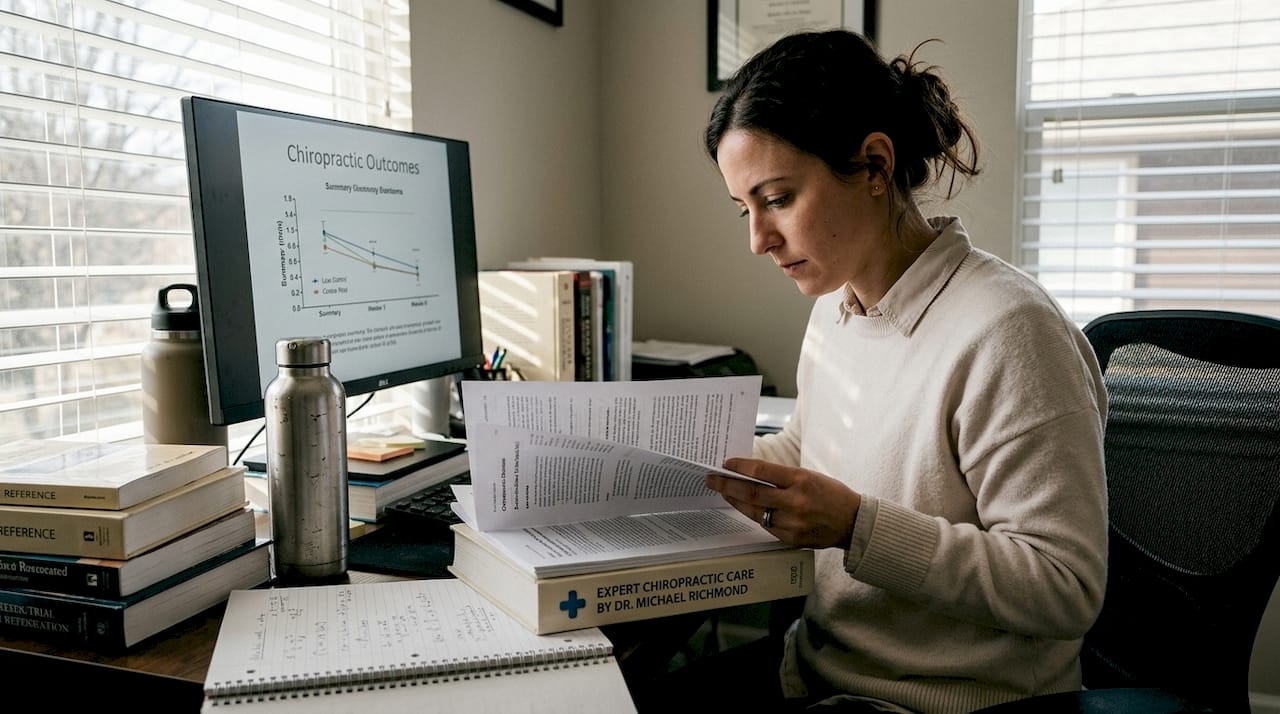
A separate Cochrane review on combined chiropractic interventions found that combined care slightly improved pain and disability in the short term and pain in the medium term, but found no evidence supporting a clinically meaningful advantage over other guideline-recommended treatments.
Here is a side-by-side comparison to put this in perspective:
| Treatment approach | Short-term pain relief | Serious side effects | Medication required |
|---|---|---|---|
| Chiropractic manipulation | Modest improvement | Rare | No |
| NSAIDs (anti-inflammatories) | Moderate improvement | GI and cardiovascular risk | Yes |
| Exercise therapy | Modest improvement | Very rare | No |
| Opioid medications | Higher short-term relief | Dependency, sedation risk | Yes |
| Watchful waiting | Minimal active relief | None | No |
The table makes something clear: chiropractic sits alongside exercise therapy in terms of effectiveness and holds a real advantage in terms of side effect profile compared to medications. That makes it especially attractive for accident patients who need to stay alert, work, and care for their families during recovery.
A practical step-by-step approach to getting genuine results:
- Start within the first two weeks after your accident. Early care helps prevent acute pain from becoming chronic.
- Attend your recommended sessions consistently. Skipping appointments reduces the cumulative benefit.
- Combine adjustments with movement. Ask your chiropractor for simple exercises to do at home between visits.
- Communicate openly. Tell your provider if pain changes in character, location, or intensity.
- Measure your progress. Keeping a simple pain and function journal gives you and your provider real data.
Pro Tip: Track your pain level (0 to 10), how far you can walk, and how well you slept each day during your first four to six weeks of care. If you're not seeing any shift after that window, it's a signal to reassess your care plan with your provider or get a second opinion.
Want to understand how consistent visits pay off? Read about chiropractic follow-up benefits and why spacing your appointments wisely matters for long-term recovery. For those thinking further ahead, there is solid reasoning for building long-term wellness after accidents into your recovery plan rather than stopping care the moment pain fades.
Safety and red flags: When chiropractic may not be right
Safety is not optional. Before you book your first chiropractic appointment after a car accident, you need to know that certain symptoms require medical evaluation first, not chiropractic care first.
Red flag conditions require medical referral, not chiropractic as a first treatment, according to Canadian Chiropractic Guidelines. A responsible chiropractor will screen for these warning signs during your initial intake and refer you to emergency or medical care if anything concerning shows up. This is a sign of competence, not limitation.
Watch for these red flags and get urgent medical care if you experience them:
- Loss of bowel or bladder control: This can signal a spinal emergency called cauda equina syndrome.
- Severe or rapidly worsening leg weakness or numbness: Nerve damage may require imaging and specialist evaluation.
- Fever combined with back pain: This pattern can indicate spinal infection.
- Back pain after significant trauma with possible fracture: High-impact accidents may cause bone injuries that need X-ray or CT scan first.
- Night pain that wakes you from sleep or doesn't respond to any position change: This pattern can sometimes indicate a systemic condition rather than a mechanical injury.
- Unexplained weight loss alongside back pain: A rare but important warning sign for serious underlying conditions.
Pro Tip: When you meet your chiropractor for the first time after an accident, mention any new neurological symptoms right away, including tingling, numbness, weakness, or changes in bladder function. Don't assume these are just normal accident soreness. A good provider will know exactly how to respond.
Understanding the progression of care, from intake to assessment to treatment, is covered in detail in this guide to step-by-step chiropractic recovery. It helps you know what to expect at every stage so nothing feels surprising or unclear.
Types of chiropractic care and how to maximize your results
Not all chiropractic care looks the same. If you've only heard about the spine-cracking adjustment, you may be missing the fuller picture of what a good chiropractic program involves after an auto accident.
The evidence base is strongest for short-term symptom relief when chiropractic care combines manual mobilization or manipulation with exercise and patient education. That combination approach reflects what the best clinics actually do rather than relying on a single technique.
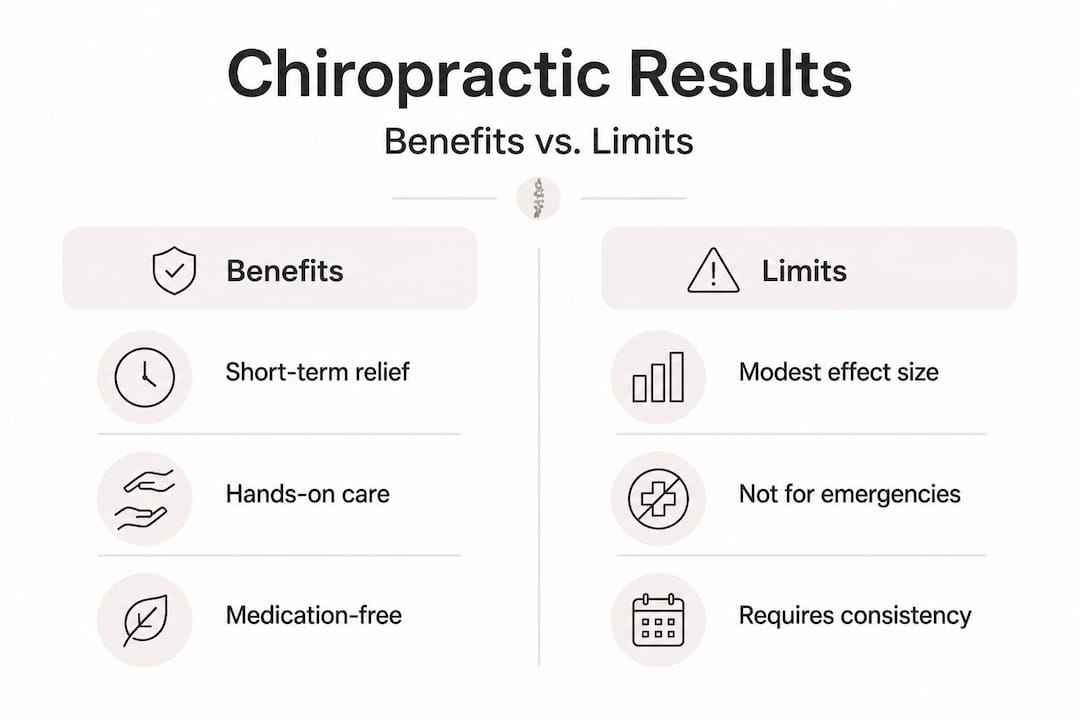
Here's how the most common chiropractic tools compare:
| Technique | What it involves | Best suited for |
|---|---|---|
| Spinal manipulation | Quick, controlled thrust to restore joint movement | Acute and subacute low back pain |
| Spinal mobilization | Slow, gentle joint movement without a thrust | Patients sensitive to manipulation |
| Soft tissue therapy | Muscle and fascia work to reduce tension | Whiplash, muscle strain injuries |
| Therapeutic exercise | Targeted movement programs to rebuild strength | Medium and long-term recovery |
| Patient education | Guidance on posture, movement, and lifestyle habits | All phases of recovery |
To get the most out of your chiropractic program after a car accident, follow these practical steps:
- Show up to every scheduled session, especially in the first three to four weeks when your tissue is most responsive to treatment.
- Do your home exercises as prescribed. The work you do between appointments often matters as much as the in-clinic treatment.
- Avoid complete rest. Extended bed rest slows recovery. Keep moving gently, even when it's uncomfortable.
- Ask about your diagnosis. Understanding what is injured helps you take the right steps to protect it during recovery.
- Set time-bound goals with your provider. Having a clear target, such as returning to work or driving comfortably within six weeks, gives your care a direction.
Exploring the full range of types of chiropractic treatment helps you ask smarter questions at your first appointment. If you want a broader overview, this breakdown of top chiropractic methods after accidents walks through techniques specifically used for car accident injuries. And if you're thinking about your health beyond just the injury itself, understanding chiropractic wellness benefits can reframe how you think about ongoing care.
What most guides miss: The real value and limits of chiropractic for back pain
Here's the honest take that most articles skip entirely: chiropractic is being oversold in some corners and unfairly dismissed in others, and both extremes hurt patients.
We see patients come in after reading breathless blog posts promising that a few adjustments will eliminate their back pain permanently. When they experience modest but genuine improvement instead of a miraculous cure, they feel let down. That disappointment is manufactured by bad information, not by the care itself.
The real argument for chiropractic after a car accident is not that it outperforms everything else. The most defensible reason to choose manipulation is that it is a guideline-listed conservative option with a generally favorable safety profile when the patient is appropriately selected, not a universal fix for everyone. That's exactly how we think about it.
What that means in practice: chiropractic earns its place by being hands-on, conservative, medication-free, and generally safe when delivered by a trained provider who screens properly. For accident victims in North Miami, many of whom are managing the financial stress of a crash alongside physical pain, that combination of accessible, affordable chiropractic methods and guideline-supported care is genuinely valuable.
The patients who get the best results share three traits. They come in with realistic expectations. They communicate openly with their provider about what is and isn't working. And they treat chiropractic as one part of a broader recovery effort that includes movement, rest, nutrition, and when necessary, coordination with other medical providers.
Chiropractic is not a substitute for emergency care, orthopedic evaluation, or surgery when those are needed. Smart patients use it as a first-line conservative tool, not a last resort and not a miracle.
Next steps for affordable, evidence-informed chiropractic care in North Miami
If chiropractic seems right for your back pain recovery in North Miami, here's how to act on what you've learned.
At Spark Med, we specialize in exactly this kind of care: evidence-informed, hands-on treatment designed for people recovering from auto accidents. We offer a $25 chiropractic adjustment that does not require insurance, which removes the most common barrier between you and getting started.
Our team screens every patient carefully, uses modern equipment, and builds individualized recovery plans that combine spinal adjustments with movement guidance and wellness support. We serve the North Miami community in English, Spanish, and Creole so that nothing gets lost in translation when your health is on the line. Explore our affordable chiropractic care resources or read our full auto accident care guide to take your next well-informed step.
Frequently asked questions
How quickly should I expect back pain to improve with chiropractic care?
Most people notice modest pain improvement within two to four weeks; research shows a small short-term effect on pain rather than dramatic or instant relief.
Is chiropractic safe for all types of back pain after an accident?
No. If you have red flag symptoms like numbness, leg weakness, or signs of infection, red flag conditions require medical referral before starting chiropractic care.
How does chiropractic compare with other treatments for back pain?
Chiropractic offers similar short-term benefits to other conservative options; research found no clinically meaningful advantage over other guideline-recommended treatments, but its safety profile is favorable.
Will insurance cover chiropractic after an auto accident?
Coverage depends on your specific policy and the nature of your accident claim; contacting your insurance provider directly is the fastest way to confirm what chiropractic benefits apply to your situation.