
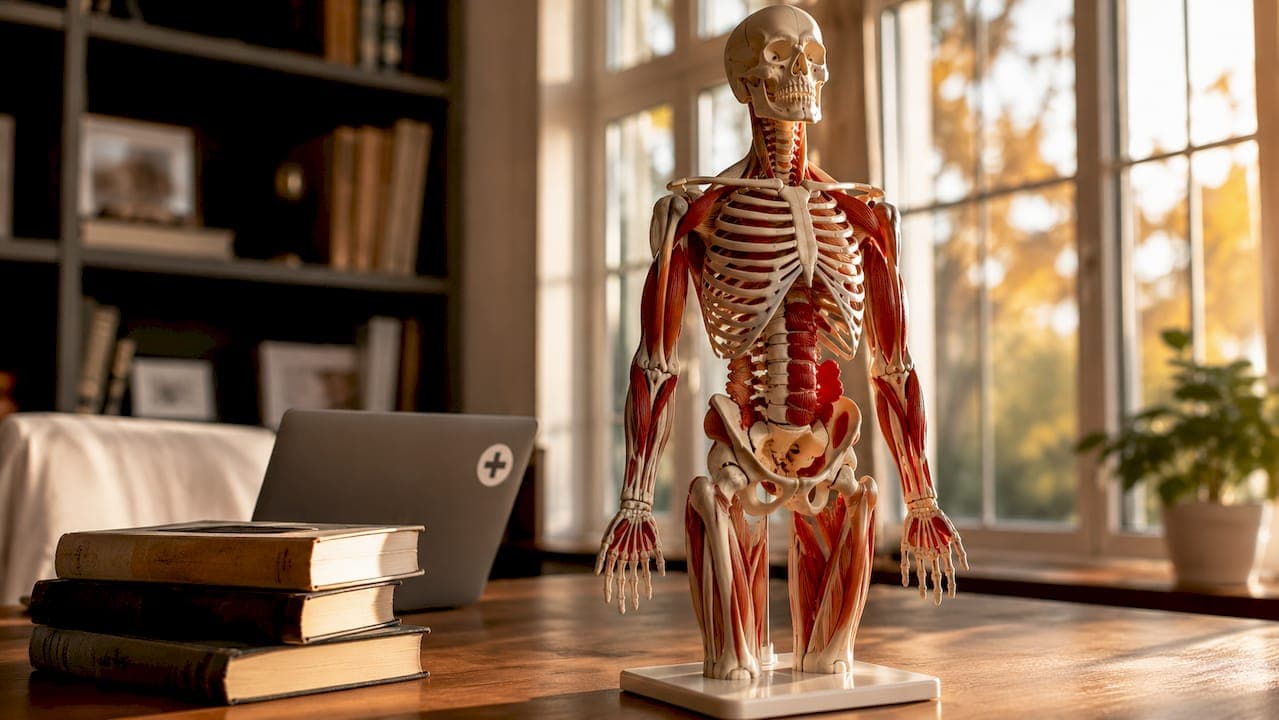
Musculoskeletal pain is discomfort originating from the bones, muscles, joints, ligaments, tendons, or fascia — the connective tissue wrapping your muscles and organs. According to the WHO, it is the most common form of noncancer pain, and virtually everyone experiences it at least once, most often from a simple muscle strain. It can arrive suddenly after an injury (acute) or linger for months as part of a chronic condition like arthritis or fibromyalgia.
The tissues most commonly involved include:
- Bones (fractures, stress reactions, infections)
- Muscles (strains, spasms, overuse)
- Joints (arthritis, bursitis, sprains)
- Ligaments and tendons (tears, tendinitis, repetitive strain)
- Fascia (myofascial pain syndrome)
Understanding which tissue is involved changes everything about how the pain is treated.
What causes musculoskeletal pain?
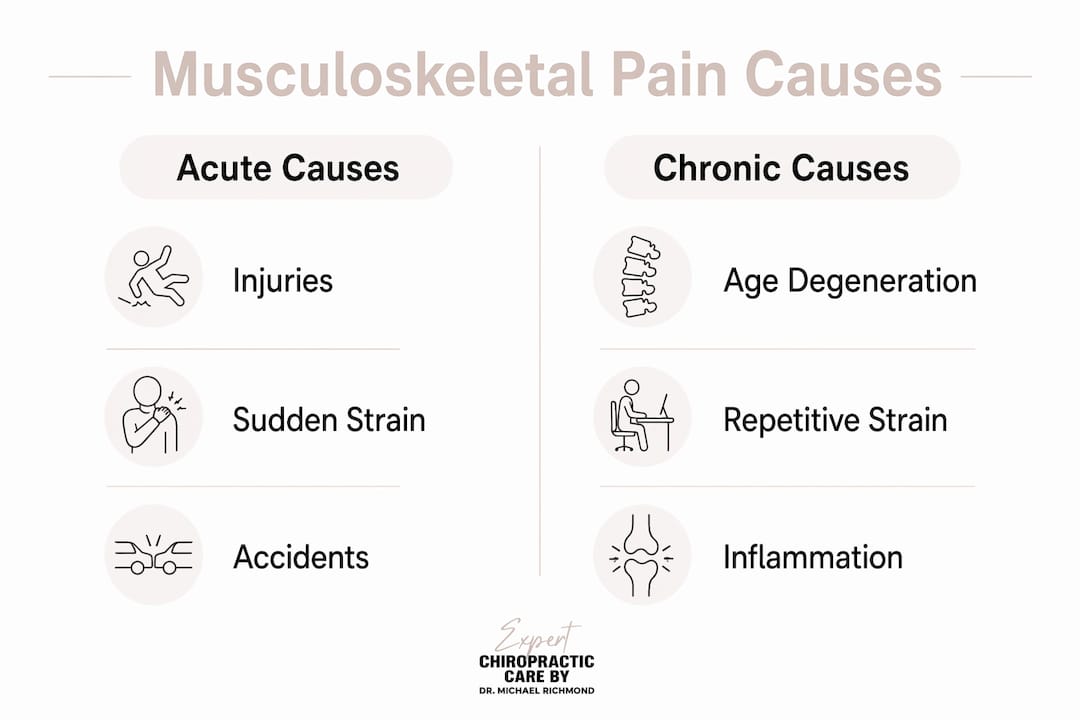
Musculoskeletal pain has two broad origins: sudden injury and gradual deterioration. Knowing which category applies to you shapes the entire treatment path.

Acute causes
Acute pain comes on fast, usually after a specific event. Injuries are the most common trigger, including car accidents, falls, sports collisions, and direct blows. Muscle strains, ligament sprains, and bone fractures all fall here. The pain is sharp, localized, and typically improves with proper care over days to weeks.
Chronic causes
Chronic musculoskeletal pain develops gradually or persists long after an acute injury should have healed. Common drivers include osteoarthritis, rheumatoid arthritis, fibromyalgia, degenerative disc disease, and poorly managed acute injuries that were never fully rehabilitated.
Key causes at a glance:
- Traumatic injuries (fractures, sprains, strains)
- Repetitive motion or overuse
- Poor posture and ergonomic stress
- Degenerative joint and disc disease
- Inflammatory conditions (arthritis, fibromyalgia)
- Infections or metabolic bone disorders
Certain groups face higher risk: older adults due to age-related degeneration, manual laborers from repetitive strain, and people who are sedentary, since weak supporting muscles put more load on joints and connective tissue. Learning how to prevent chronic pain after an acute injury is one of the most practical steps anyone can take.
Pro Tip: If you had a car accident and your pain "went away" after a few days, do not assume the injury resolved. Soft tissue damage often masks itself early and resurfaces weeks later as chronic stiffness or nerve sensitivity.
How do you recognize musculoskeletal pain symptoms?
Symptoms vary considerably depending on which tissue is involved, and that variation is one of the most useful diagnostic clues.
According to the Cleveland Clinic, tissue-specific patterns look like this:
- Bone pain: deep, dull, achy; often present even at rest
- Muscle pain: cramps, spasms, or a steady deep ache; sometimes accompanied by fatigue
- Joint pain (arthralgia): stiffness, grating, or burning; often worse in the morning or after inactivity
- Ligament and tendon pain: sharp, localized, and triggered or worsened by movement
- Fascial pain: diffuse aching that is hard to pin to one spot
Across all tissue types, common symptoms include reduced range of motion, swelling, tenderness to touch, and a general sense of fatigue in the affected area. Pain that wakes you from sleep or spreads unexpectedly beyond the original site deserves prompt attention, since those patterns can signal something beyond a routine strain.
How is musculoskeletal pain diagnosed?
Diagnosis goes well beyond pointing to where it hurts. A thorough evaluation typically combines physical examination, patient history, and imaging such as X-rays or MRIs to identify the specific tissue involved and rule out systemic causes.
Common diagnostic approaches:
- Physical exam: range of motion testing, palpation, strength assessment
- Patient history: onset, duration, severity, prior injuries, occupation
- Imaging: X-rays for bone integrity; MRI for soft tissue detail
- Lab work: when infection, autoimmune disease, or metabolic conditions are suspected
- Neurological screening: to distinguish musculoskeletal from nerve-origin pain
Modern evaluation also considers sleep quality, stress levels, and daily activity patterns. Pain that persists after apparent tissue healing often points to nervous system involvement, which standard imaging alone will not capture. A provider who only orders an X-ray and calls it done is missing half the picture.
How to treat musculoskeletal pain effectively
Treatment depends entirely on what is causing the pain and which tissue is involved. There is no single protocol that works across the board.
Cleveland Clinic guidelines outline the main treatment categories:
- Rest and activity modification for acute injuries
- Physical therapy to restore strength, flexibility, and movement patterns
- Medications: NSAIDs, muscle relaxants, or topical analgesics
- Chiropractic care for spinal and joint alignment issues
- Behavioral strategies: stress management, sleep improvement, pacing
- Advanced therapies: corticosteroid injections, dry needling, or ultrasound therapy
One point that Stanford Medicine specialists emphasize: different tissues respond differently to rest versus movement. Joint pain from arthritis often improves with gentle, consistent motion, while complete rest can worsen stiffness. Muscle strains, by contrast, need initial rest before progressive loading. Getting that balance wrong delays recovery.
| Treatment Type | Best For | Notes |
|---|---|---|
| Rest and ice/heat | Acute strains and sprains | First few days post-injury |
| Physical therapy | Chronic pain, post-injury rehab | Requires consistent attendance |
| Chiropractic care | Spinal, joint, and soft tissue pain | Effective for accident-related injuries |
| NSAIDs / analgesics | Mild to moderate acute pain | Short-term use preferred |
| Behavioral therapy | Chronic pain with psychological overlap | Addresses central sensitization |

For those dealing with musculoskeletal injuries from car accidents specifically, chiropractic care addresses both the structural and soft tissue components that imaging often underestimates. Sparkmed offers a $25 chiropractic adjustment with no insurance required, making early intervention accessible before minor injuries become chronic problems.

How can you prevent musculoskeletal pain and know when to see a doctor?
Prevention centers on reducing mechanical stress and building the physical resilience to handle it. MyHealth Alberta identifies posture maintenance, ergonomic adjustments, and regular exercise as the three most consistent protective factors.
Prevention strategies:
- Maintain neutral spine posture when sitting, standing, and lifting
- Set up your workstation so your screen is at eye level and your feet are flat on the floor
- Strengthen core and stabilizing muscles through consistent exercise
- Warm up before physical activity and cool down after
- Address minor pain early rather than pushing through it
Seek medical attention when pain is persistent beyond a few weeks, severe enough to limit daily activity, worsening rather than improving, or accompanied by swelling, numbness, or unexplained weight loss. "Powering through" is a common mistake. Persistent pain that goes unevaluated tends to become chronic, and chronic pain management is considerably more complex than treating an acute injury caught early.
Why chronic musculoskeletal pain is more complex than it looks
Chronic musculoskeletal pain is not simply an injury that failed to heal. Research published in PubMed identifies central sensitization as a key mechanism: the nervous system becomes hypersensitive, continuing to generate pain signals even after the original tissue damage has resolved. This explains why some patients report severe pain with no structural finding on MRI.
Sleep deprivation, chronic stress, and sedentary behavior all amplify this sensitization. A person who sleeps poorly and works a high-stress desk job will often experience musculoskeletal pain more intensely than the structural damage alone would predict. That is why comprehensive diagnosis now evaluates the whole patient, not just the painful joint or muscle.
The Merck Manual also notes that bone pain in particular can signal systemic issues beyond mechanical injury, including infections or hormonal imbalances, which require a different treatment approach entirely. Manual therapy that addresses nervous system regulation alongside structural correction, as outlined in musculoskeletal recovery research, tends to produce better outcomes for chronic cases than structural treatment alone.
What complications can untreated musculoskeletal pain cause?
Left unmanaged, musculoskeletal pain does not simply stay the same. It tends to worsen and spread its effects beyond the original site.
Physical complications include progressive joint degeneration, muscle atrophy from disuse, and compensatory movement patterns that create secondary injuries in adjacent structures. Someone who limps to protect a painful knee, for example, often develops hip or lower back pain within months.
The quality-of-life impact is equally serious. Chronic pain disrupts sleep, reduces physical activity, and is strongly associated with anxiety and depression. People with long-standing musculoskeletal conditions often withdraw from work, social activities, and exercise, which in turn worsens both the pain and the psychological burden. Early, appropriate treatment is not just about comfort. It protects function, mental health, and long-term independence.
How is musculoskeletal pain different from neuropathic or visceral pain?
The distinction matters because the wrong diagnosis leads to the wrong treatment.
Musculoskeletal pain originates in bones, muscles, joints, or connective tissue. It is typically localized, worsened by movement or palpation, and responds to physical therapies.
Neuropathic pain comes from nerve damage or dysfunction. It presents as burning, shooting, electric-shock sensations, or numbness, often following a nerve distribution rather than a muscle or joint line. Conditions like sciatica and diabetic neuropathy fall here.
Visceral pain originates from internal organs and is often diffuse, cramping, and hard to localize. Back pain that turns out to be a kidney stone is a classic example of visceral pain mimicking a musculoskeletal problem.
Musculoskeletal pain can also be referred from visceral organs, meaning a heart or kidney issue can produce shoulder or back pain that feels entirely structural. This overlap is why a thorough history and physical exam are non-negotiable before assuming any localized pain is purely mechanical. Targeted pain therapy approaches that account for these distinctions tend to produce faster, more accurate relief than generic protocols.
Key Takeaways
Musculoskeletal pain affects bones, muscles, joints, ligaments, tendons, and fascia, and effective care depends on correctly identifying the tissue, cause, and whether the nervous system is involved.
| Point | Details |
|---|---|
| Tissue type drives treatment | Bone, muscle, joint, and tendon pain each respond to different therapies and activity levels. |
| Acute vs. chronic distinction | Acute pain follows injury; chronic pain often involves central sensitization beyond the original damage. |
| Diagnosis requires full evaluation | Physical exam, imaging, and lifestyle factors together give a complete picture. |
| Early care prevents chronic pain | Untreated acute injuries frequently progress to chronic conditions with broader quality-of-life impact. |
| Movement vs. rest depends on tissue | Joint pain often improves with gentle motion; muscle strains need initial rest before progressive loading. |